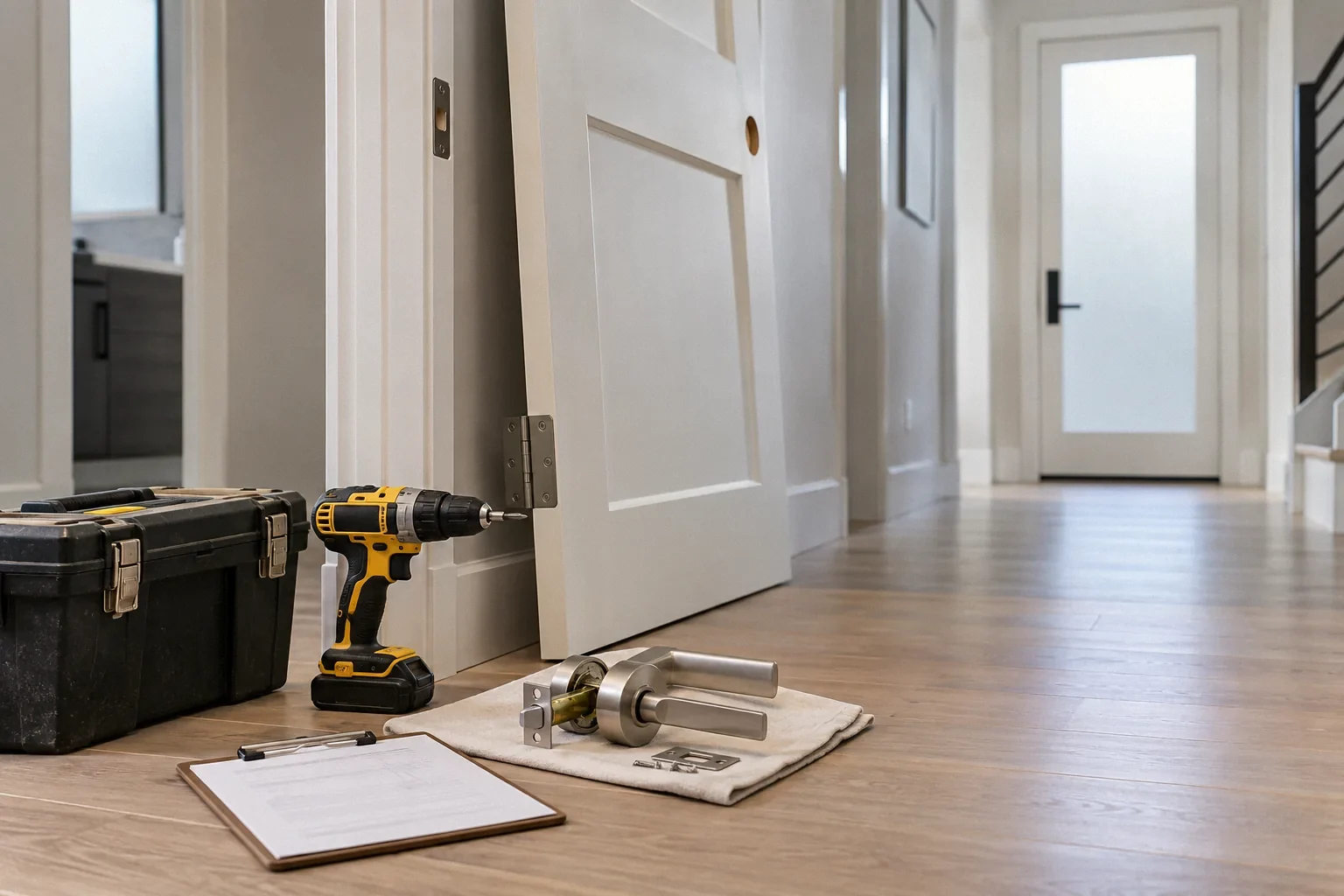
Short answer: an unlicensed handyperson working as an independent contractor in California can rely on the minor-work exemption only if all of these are true: the total price for labor, materials and everything else is under $1,000; the work is casual, minor or inconsequential; and it does not require a building permit. The exemption in Business and Professions Code § 7048 is lost if the work is part of a larger operation, if a job is split into smaller contracts to get under the limit, or if the person advertises as a contractor or employs others. CSLB's summary is that unlicensed work is illegal where the project requires a building permit, uses employee labor, or is valued at $1,000 or more. Anything beyond that needs a licensed contractor with the right classification.
This is general information current to 3 October 2026, not legal advice.
Why the question matters
Homeowners often have a trusted person who fixes things around the house, and the question is how far to take that relationship. A Bay Area owner asked whether their reliable unlicensed worker could take on a kitchen and bathroom update. In San Jose, an owner asked whether replacing fixtures in their original locations needed plans or just a permit, a reminder that 'just swapping things' can still involve a permit. These accounts are anecdotal, but they show where the line tends to blur.
The three conditions, one at a time
1. Under $1,000, everything included
The $1,000 figure is the aggregate contract price for labor, materials and all other items. It is not labor alone, and it is not per visit. If you buy the materials yourself, that does not make the handyperson's portion a separate job. The question is the whole operation. Section 7048 was most recently amended by AB 1170, effective 1 January 2026. Older articles quoting a $500 threshold do not reflect the current statute.
2. Casual, minor or inconsequential, and no permit
Work that needs a building permit is outside the exemption whatever it costs. Permit triggers are set locally under the California codes, so a task that is permit-free in one Bay Area city may need a permit in another. Typical examples that often need permits include new or extended electrical circuits, moving plumbing, water heater replacement, and structural changes. Check with your building department rather than relying on the handyperson's view. See when Bay Area remodels need permits.
3. Not part of a larger job, not split, no employees, no contractor advertising
Section 7048 says the exemption does not apply where the work is part of a larger operation, or where the work is divided into contracts under $1,000 to evade the law. It also does not apply to anyone who advertises as a contractor or employs others to do the work. The last condition matters in practice: a 'handyman' who shows up with paid helpers is not exempt.
Examples
| Scenario | Likely within the exemption? | Why |
|---|---|---|
| Rehang a sticking interior door and replace its hardware, $250 total, working alone | Usually yes | Minor, under $1,000, typically no permit, no employees |
| Re-caulk a bathtub and replace a towel bar and toilet seat, $200 | Usually yes | Minor, under $1,000, no permit, no employees, not part of a larger project |
| Replace a bathroom vanity and faucet in place, $900 with materials | Depends | Under $1,000, but check whether your jurisdiction requires a permit |
| Add a new outlet on a new circuit, $600 | No, where a permit is required | Permit-required electrical work |
| Retile a shower in three $900 'phases' | No | Splitting to evade the limit; often permit work too |
| Punch-list items carved out of a licensed kitchen remodel | No | Part of a larger operation |
| Small deck repair with two hired helpers, $800 | No | Employs others |
These are illustrations of how the conditions interact, not determinations. Whether a specific task needs a permit is a local question.
What goes wrong when the line is crossed
- No license record to check. No license bond, no insurance information in CSLB records, and no licensing history. The absence of a license does not exempt the person from California's consumer and contract laws. It just leaves you with nothing to verify. See unlicensed contractor risks.
- Injury questions. Under Labor Code § 2750.5, a person doing work that requires a license must hold a valid license to be treated as an independent contractor. How that affects you after an injury depends on the facts and your insurance policy, so ask your insurer.
- Permit and resale problems. Permit-required work done without a permit may need to be disclosed and legalized later.
- Payment disputes. BPC § 7031 generally bars unlicensed persons from suing to collect for work that requires a license, and lets owners bring a claim to recover payments. That is a litigation tool, not a refund guarantee, and it is no reason to set up an arrangement you know is outside the law.
How to work with a handyperson responsibly
- Define the job in a short written description with a total price.
- Ask the permit question first. If you hire an independent contractor for permit-required work, verify the required license. An owner-builder permit does not turn an unlicensed independent contractor into a lawful licensed one; owner-performed work and genuine employee arrangements involve separate rules and responsibilities.
- Ask whether they hold a specialty license. Some handypersons are licensed in a classification such as painting or tile. Check the number on the CSLB lookup.
- Keep jobs genuinely separate. Do not break a remodel into small invoices, and do not hand over the 'finishing' of a licensed project.
- Pay after the work, by traceable means. Avoid cash, which CSLB lists among warning signs in its senior guidance.
Red flags
- 'We can do it in a few small invoices.'
- 'You don't need a permit for that,' on electrical, plumbing or wet-area work, without checking.
- A crew of helpers on a supposedly one-person job.
- Advertising as a 'contractor' or 'remodeler' with no license number.
- Requests for large cash payments up front.
Bay Area applicability
The $1,000 rule is statewide. Bay Area variation comes from permit scope. Building departments apply the 2025 California codes, effective 1 January 2026, through their own procedures, and some publish lists of work exempt from permits while others ask you to call. Because the exemption fails whenever a permit is required, confirm with your city or county building department before treating a task as handyperson work.
Current to 3 October 2026.
Questions that come up next
Can a handyman do jobs over $1,000 in California?
Not without a contractor's license. The § 7048 exemption covers only casual, minor work with an aggregate price under $1,000 for labor, materials and everything else, and only if no building permit is required.
Can a handyman do work that needs a permit if it costs under $1,000?
No. The minor work exemption does not apply to work that requires a building permit, whatever the price.
Can I split a bigger job into several small handyman jobs?
No. Section 7048 excludes work that is part of a larger operation and work divided into smaller contracts to evade the limit.
Can a handyman bring helpers?
The exemption does not apply to a person who employs others to do the work. CSLB likewise treats employee labor as requiring a license.
Sources and further reading
Community questions behind this guide
These discussions identify homeowner concerns. Forum comments are personal accounts, not code or legal authority.