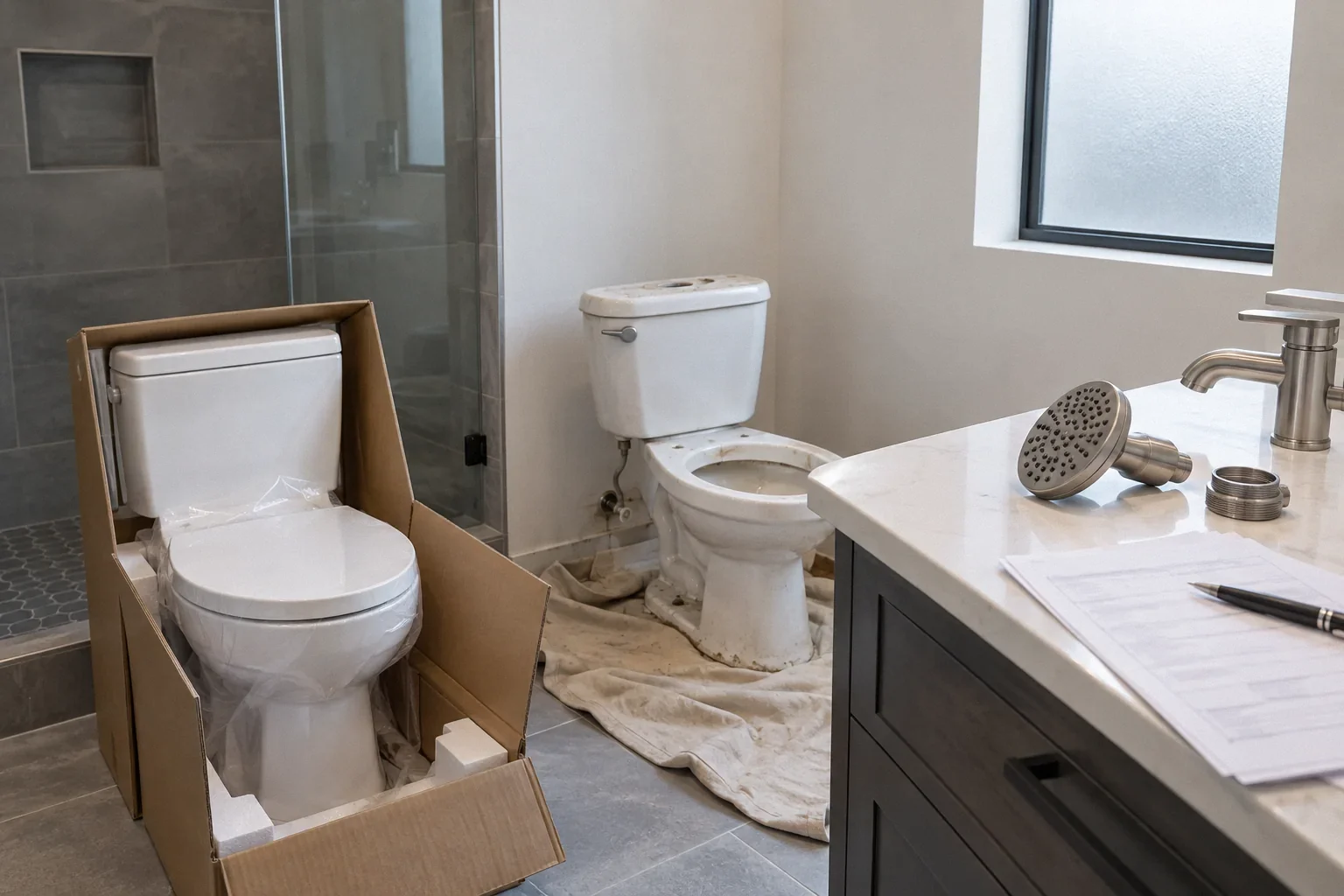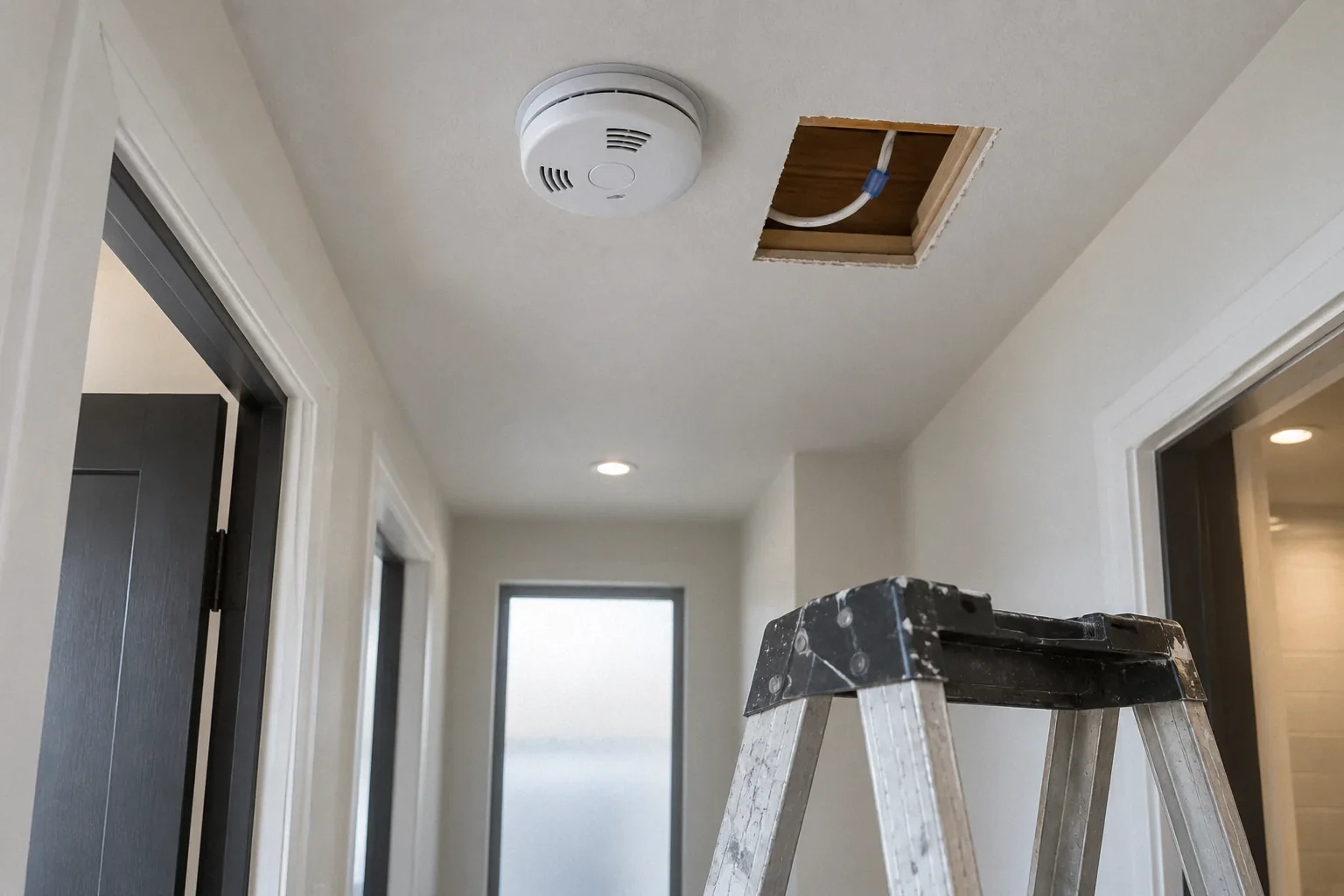
Short answer: it depends on your city or county, and on what the remodel touches. The model California Residential Code lists some finish work, such as painting, tiling, cabinets and countertops, as exempt from a building permit. But that administrative chapter applies as each local department adopts and amends it, and trade work (electrical, plumbing, mechanical) has its own, much narrower exemptions. Bay Area departments draw the line differently: Oakland requires a permit for any kitchen or bathroom remodel, while other cities process like-for-like remodels with a simple application or over the counter. Anything that touches plumbing, wiring, gas, ventilation, structure, windows or shower waterproofing is very likely to need a permit wherever you are. Confirm with the department that has jurisdiction over your address.
This is general information current to 3 October 2026, not legal advice. The 2025 California codes took effect on 1 January 2026 (California Building Standards Commission) and generally apply to permit applications submitted on or after that date; permits applied for earlier may proceed under the prior edition.
Why homeowners get conflicting answers
A San Mateo County owner wrote that two contractors called shower retiling 'cosmetic', then learned permits had been required when planning a later project. In San Jose, an owner asked whether replacing fixtures in place needed plans or just a permit. A Bay Area thread attributed skipped permits to slow processes and property tax worries. These are anecdotal accounts. Advice conflicts because the answer really does vary by jurisdiction and by scope.
Three Bay Area examples
| Department | Summary of its published approach |
|---|---|
| Oakland | Building permit required for any kitchen or bathroom remodel before work starts; separate trade permits for buildings other than a house or duplex (Oakland) |
| San Francisco | Kitchen and bath remodels processed over the counter; plans when layout, floor plan or walls change; separate electrical and plumbing permits (sf.gov) |
| Pleasanton | Permit for new, relocated or remodeled kitchens; like-for-like processed by application without plans; plans for layout, window and wall changes (JLA 01.26) |
These are brief summaries of each source as read on 3 October 2026. Open the linked page for your city's full requirements.
Your scope worksheet
Before calling the department, fill in a short worksheet like this. It turns 'is this cosmetic?' into a precise question the department can answer.
| Element | Same as now? | New, moved or enlarged? | Notes for the department |
|---|---|---|---|
| Walls (any removed or moved?) | Load-bearing? Who confirmed? | ||
| Cabinets and countertops | Layout unchanged? | ||
| Sink, dishwasher, toilet, shower or tub | Drain or valve moved? | ||
| Shower enclosure and waterproofing | Down to studs? New pan? | ||
| Electrical: circuits, receptacles, lighting | Any new circuit? | ||
| Ventilation: hood, bath fan | Ducted where? | ||
| Gas: range, water heater | Any new piping? | ||
| Windows and doors | Size or location change? |
If every row is 'same as now' and only finishes change, ask whether your department treats it as exempt finish work or still requires a remodel permit. If any row is 'new, moved or enlarged', expect a permit and ask what documentation is needed.
A decision checklist
- Identify the department. City address or unincorporated county? Unincorporated areas, such as Castro Valley, go to the county.
- Fill in the worksheet above.
- Find the department's current page or handout, ideally one reflecting the 2025 codes.
- Ask directly if anything is unclear, and record the answer, the date and who gave it.
- Put permit responsibility in the contract. See our contract checklist.
Attach the completed worksheet and the department's written answer to the contract so both sides price the same scope. Once the permit is issued, ask the contractor to send you the permit number and scope description, and check that they match the work you agreed.
A worked example
Hypothetical. An owner plans to replace cabinets and countertops in the same layout, swap the faucet and dishwasher, add under-cabinet lighting on a new circuit, and replace a recirculating hood with a ducted one. On the worksheet, most rows are 'same as now', but two are not: a new electrical circuit and a new duct through the wall or ceiling. Those two items make this permit work in essentially any jurisdiction. Whether the rest also needs a building permit depends on local practice: required in a city that permits every kitchen remodel; handled within the same remodel permit elsewhere. The owner's call to the department should lead with the circuit and the hood duct.
Edge cases worth asking about
- Condos and townhomes. Your HOA may require its own approval, and work affecting shared walls, floors or building systems can raise different code questions than a detached house. Ask both the HOA and the department.
- Replacing a range or cooktop. Swapping a gas range on an existing connection is different from adding gas piping or converting to an electric range that needs a new circuit. The new piping or circuit is what usually triggers the permit.
- 'Refreshing' a bathroom. A new vanity on the same drain is often minor, but a new exhaust fan, a moved light over the tub, or removing the shower down to the studs changes the answer.
- Work started before you knew. If demolition reveals more than planned, such as rot or old wiring, stop and ask the department before expanding the scope. See change orders.
- Historic or design-review areas. Exterior changes, like windows, may also need planning approval, separate from the building permit.
Why skipping a required permit tends to cost more later
- Later permitted work can bring earlier unpermitted work to light. One owner had to legalize an unpermitted kitchen before a new remodel could be signed off.
- Work done without a required permit may need to be disclosed and legalized when you sell. See unpermitted work and disclosure.
- Inspections are an independent check on hidden work like waterproofing and wiring. See remodel inspections.
- A contractor who insists permit work is 'cosmetic' without checking deserves a second look.
Bay Area applicability
This whole article is about local variation. Dozens of Bay Area building departments, city and county, adopt the California codes with their own amendments, procedures and handouts. Always confirm which agency has jurisdiction over your address, and use that agency's current guidance.
Current to 3 October 2026.
Questions that come up next
Do I need a permit to replace kitchen cabinets and countertops?
It depends on your city. The model code lists cabinets and countertops as finish work exempt from a building permit, but local adoption varies, and some Bay Area cities require a permit for any kitchen remodel. Adding circuits, moving plumbing or adding a ducted hood generally needs permits regardless.
Do I need a permit to retile a shower in the Bay Area?
Often yes when the work removes and rebuilds the shower, including its waterproofing. Check with your building department, because treatment of wall-only retiling varies.
Can I get a remodel permit quickly?
Many departments process like-for-like or non-structural remodels over the counter or by simple application, while layout or wall changes need plans. Ask your department what applies to your scope.
How do I find out exactly what my city requires?
Identify the department with jurisdiction, find its current remodel guidance, and call or email with a precise scope list, like the worksheet in this article.
Sources and further reading
- City of Oakland: Bathroom and Kitchen Remodels
- San Francisco: Get an OTC permit for your interior residential remodel
- City of Pleasanton: Residential Kitchen Alteration Requirements (JLA 01.26)
- 2025 California Residential Code, Chapter 1 (administration)
- California Building Standards Commission: Codes
- CSLB: Do I Need a Building Permit for My Project?
Community questions behind this guide
These discussions identify homeowner concerns. Forum comments are personal accounts, not code or legal authority.