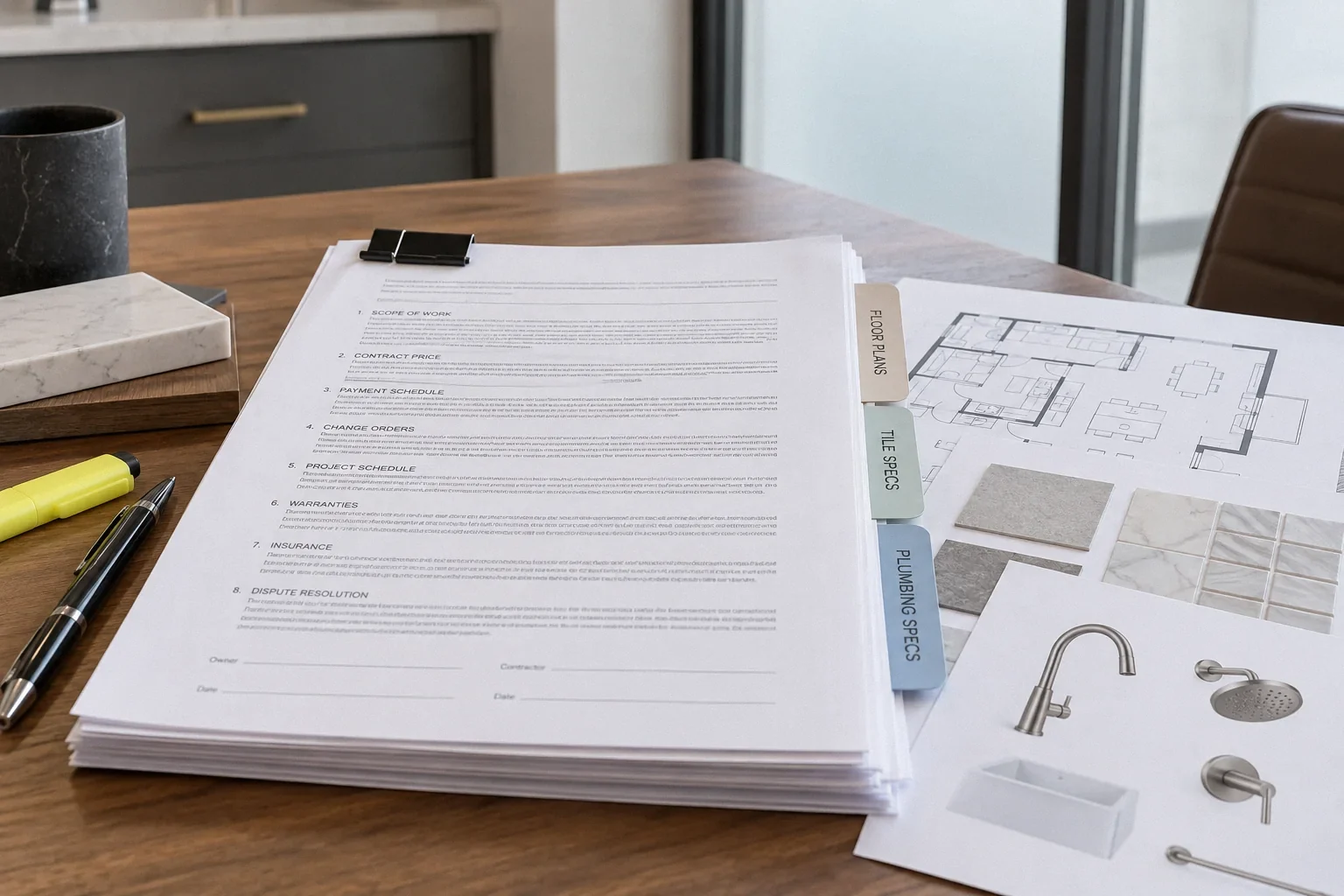
Short answer: on a California home improvement contract, extra work and changes become part of the contract once they are written and signed by both parties before the changed work begins. Each change order should state the scope, the price added or removed, and the effect on payments and completion date. That rule comes from Business and Professions Code § 7159, and CSLB's consumer guide Terms of Agreement puts it plainly: if the contract price needs to change, it must be done with a written change order. If you are billed for extras you never signed, do not just pay or refuse. Put your position in writing, separate the items you actually approved from those you did not, and get advice before withholding money the contract otherwise makes due.
This is general information current to 3 October 2026, not legal advice.
The problems homeowners describe
Change order disputes came up in several of the homeowner and contractor discussions we reviewed. Some representative accounts (anecdotal, not verified):
- An owner about 80% through a fixed-price renovation received about $9,000 in added change orders in a draw request. These included HVAC work they said they had declined by email and lumber price increases reported after the fact. Their contract required written approval for changes.
- On a year-long remodel, an owner reported eight change orders. Most had been approved, but one large one had not been discussed before subcontractors had worked on it for months.
- A homeowner who noticed missing items right after signing asked whether a change order or a contract amendment was the better route.
- An owner on a $300,000 remodel who would deal with the contractor through a designer asked how to tell whether change order prices were fair.
Contractors describe the other side. In one thread a remodeler wrote about small unwritten extras piling up until the end of a job, and a commenter listed an ice maker line, backer board and a doorbell as typical items that were never written up. Another asked how to set expectations early. Undocumented changes are a problem for both sides, and writing them down protects both.
What California law requires
Section 7159 requires the contract to contain a change order notice and requires change orders to be:
- in writing;
- signed by both parties;
- signed before the work covered by the change begins;
- describing the scope of the change, the amount added to or subtracted from the price, and the effect on progress payments or the completion date.
CSLB's contract guidance page lists what to record on a change order: added or removed work, substituted materials or equipment, a changed completion date, and any price change. A substitution or a schedule change is a change order even when the price stays the same.
What the statute does not decide for you
The statute sets what a valid change order looks like. It does not, by itself, settle every dispute over work done without one. A commenter in one thread passed on their lawyer's view that, without a signed change order, a small claims court would likely favor the owner. That is one person's report of advice about their own facts, not a rule you can rely on. Whether a contractor can recover anything for unsigned extra work depends on the facts: what was said, what you knew, whether you accepted the benefit, and what your contract says. If a large amount is at stake, a California attorney can assess your situation.
Change order or contract amendment?
| Situation | Usual tool | What to watch |
|---|---|---|
| Scope missed in the signed contract, caught before work starts | Amendment or change order; both must be written and signed | Ask for the price both ways. One commenter suggested contractors sometimes keep original rates if gaps are caught early, but that is not guaranteed |
| Owner-requested upgrade mid-project | Change order before the work | Effect on schedule and on materials already ordered |
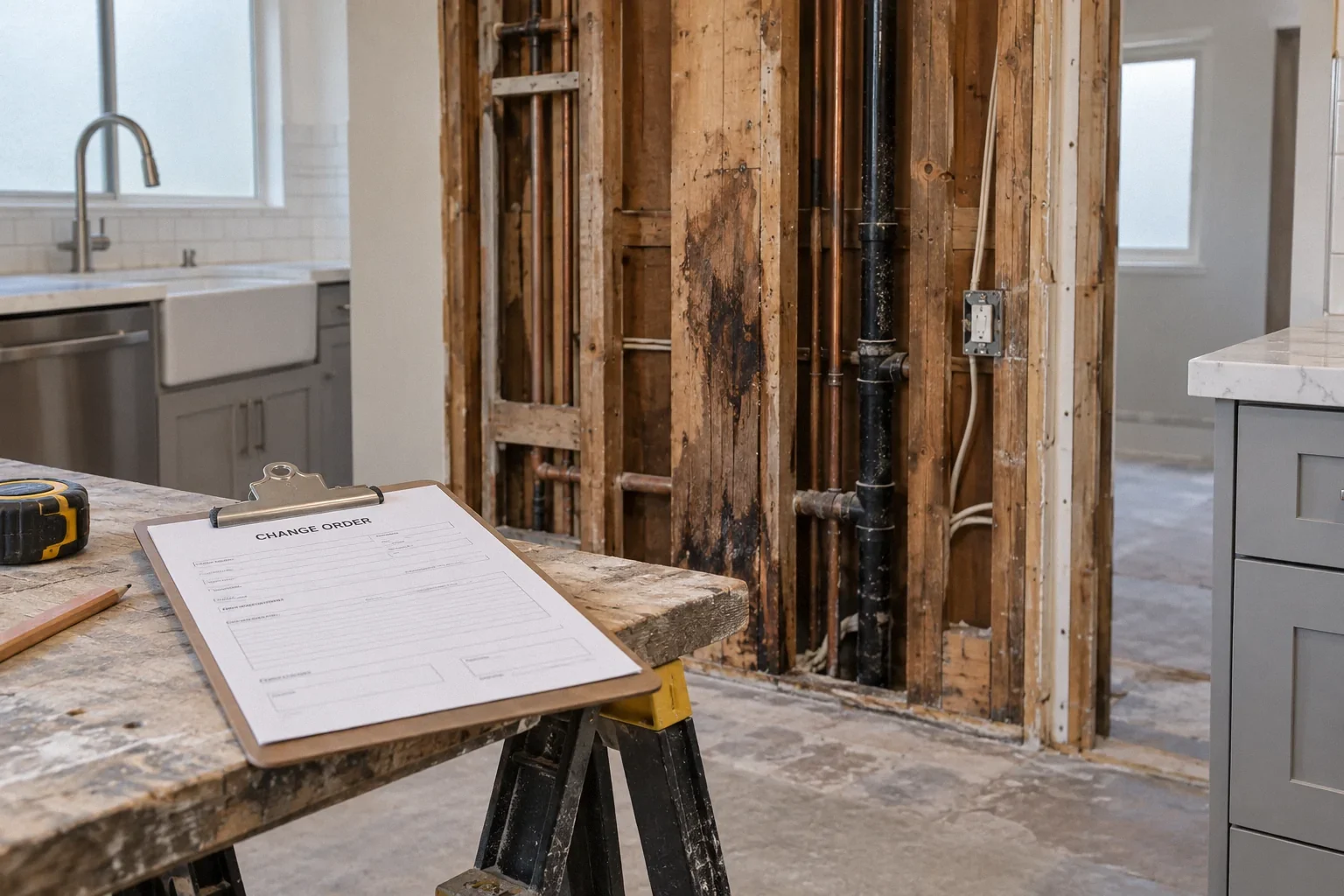
| Hidden condition found during demolition (rot, old wiring, framing) | Change order, ideally priced under a method agreed in the original contract | Photos of the condition before it is covered; whether a permit revision is needed |
| Material substitution because a product is unavailable | Change order even if no price change | Equivalence in specification and warranty |
| Schedule extension | Change order stating the new completion date | Whether the payment schedule shifts too |
Pricing: how to judge whether a change order is fair
There is no official price list for change orders. As one commenter put it, the contractor is telling you what the change is worth to them, and you decide whether to accept. You can still improve your position:
- Agree the method in the original contract. Examples: unit prices for likely items (per linear foot of replaced framing, per outlet), or an hourly rate plus a stated markup for time-and-materials work.
- Ask for a breakdown. Labor hours, materials and markup for each change. For larger items, a second quote is reasonable.
- Deal with items one at a time. A single change order with five items is harder to evaluate than five short ones.
- Price before work, not after. A signed price before work begins is what the statute expects, and it avoids the end-of-job surprise both owners and contractors complain about.
See our comparison of fixed-price and time-and-materials contracts for how each structure affects extras.
Hidden conditions in older Bay Area homes
In an older house, walls can hide conditions no bid could price. An owner who opened up the kitchen of an older house wrote that once you start opening up walls, you start finding problems, and the project needed beam work to remove load-bearing walls. These situations need a quick, documented decision process, not a verbal yes on a busy morning:
- The contractor photographs the condition and sends a short written description.
- A priced change order follows, or a time-and-materials authorization with a cap.
- You sign before the condition is covered or the extra work starts.
- If the fix changes structure, layout or anything in approved plans, ask whether the building permit needs a revision. Pleasanton's kitchen handout, for example, requires plans for layout changes and structural calculations for load-bearing wall removal. Your department's thresholds may differ.
Billed for extras you didn't approve: a step-by-step response
- Sort the items. Put each extra into one of three groups: signed change order; approved in writing (email or text) but not on a formal change order; never approved. In the first thread above, the owner did this naturally: one item declined in writing, one reported after the fact, one roughly known.
- Respond in writing. State which items you accept, which you dispute and why, and ask for documentation (the change order, dates, a breakdown) for the disputed ones.
- Keep paying what is clearly earned. Withholding an undisputed progress payment can put you in breach. Paying disputed extras just to keep the job moving can be read as acceptance. Pay the undisputed portion and say in writing that the disputed items remain unresolved. Get advice before withholding anything substantial.
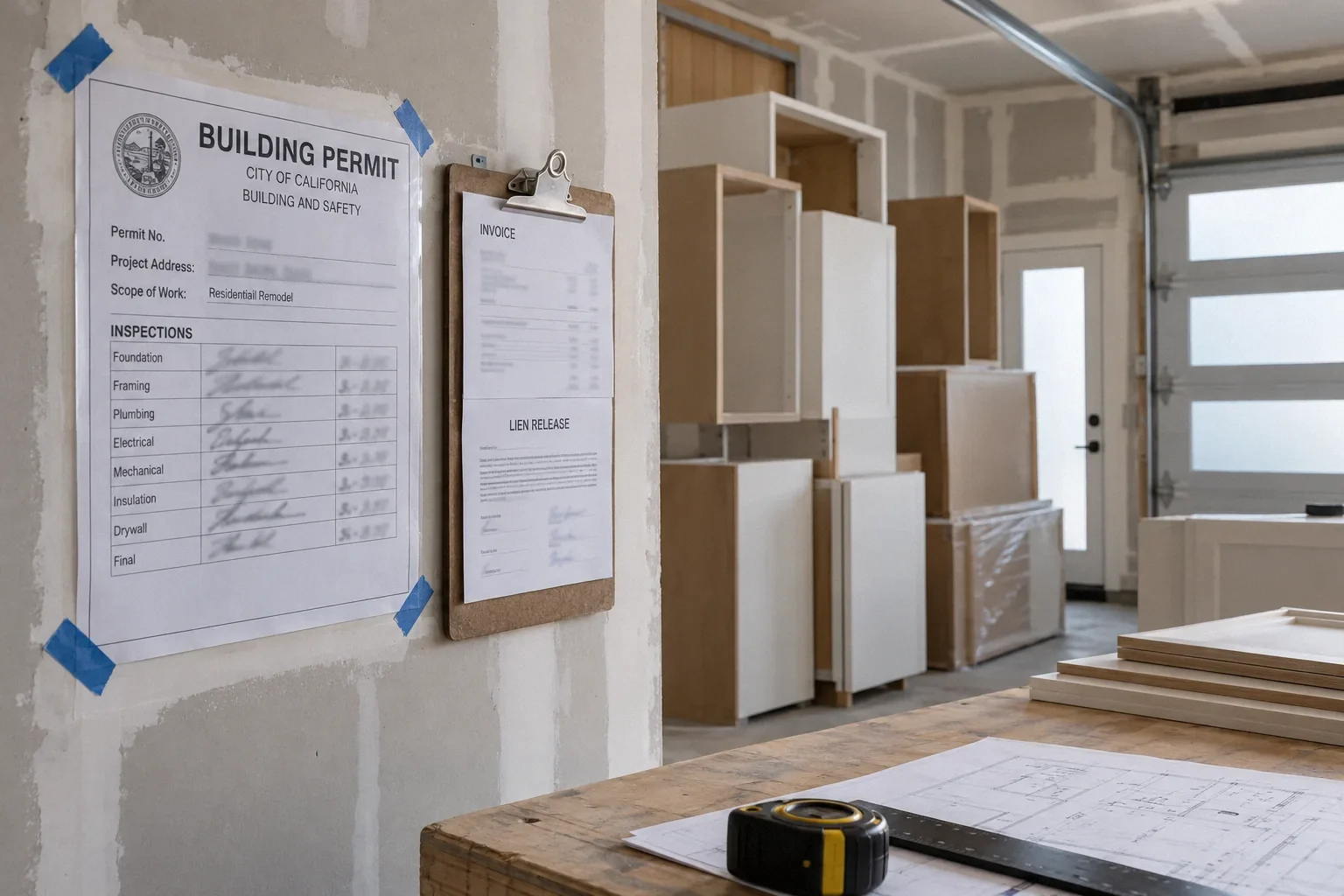
- Ask for lien releases with payments. Under § 7159.5, you may request lien releases covering amounts you have already paid before you make further payments.
- Escalate in proportion. Options include a meeting with written notes, CSLB's complaint process, mediation or arbitration if your contract provides for it, small claims for amounts within its limit, or an attorney for larger sums. See small claims and contractor disputes.
Mistakes that create change order disputes
- Saying 'sure, go ahead' on site without asking for a price.
- Letting a designer or project manager approve changes without written authority from you.
- Approving a change without asking about schedule impact.
- Accepting a lump-sum change order that bundles unrelated items.
- Leaving all changes to be reconciled at the end of the job.
Change order template fields
- Change order number and date
- Description of the change (what is added, removed or substituted)
- Reason (owner request, hidden condition, unavailable product, inspector correction)
- Price change, with labor, materials and markup if available
- Revised contract total
- Effect on the payment schedule
- Effect on the completion date
- Whether a permit revision is needed, and who handles it
- Signatures and dates of both parties, before the work starts
Current to 3 October 2026. Pleasanton's handout is used only as one city's example of permit thresholds. Check your own building department.
Questions that come up next
Does a change order have to be signed before the work in California?
Under Business and Professions Code § 7159, change orders on home improvement contracts become part of the contract once written and signed by the parties before the work covered by the change begins, and they should state scope, price change and effect on payments or schedule.
Do I have to pay for extra work I never signed for?
The statute requires written, signed change orders, but the outcome of a dispute over unsigned work depends on the facts, including what you approved in writing elsewhere and whether you accepted the benefit. Dispute in writing, pay undisputed amounts, and get advice for large sums.
Is a material substitution a change order?
Yes. CSLB guidance says to record substituted materials or equipment and changed completion dates on a written change order, even if the price does not change.
How can I tell if a change order price is fair?
Agree unit prices or a time-and-materials rate and markup in the original contract, ask for labor and material breakdowns, price changes before work starts, and get a second quote for large items.
Sources and further reading
Community questions behind this guide
These discussions identify homeowner concerns. Forum comments are personal accounts, not code or legal authority.
- Contractor charging us for change orders we didn't sign off on
- Pointers for Contractor Conversations
- Change order vs updating original contract?
- Contractor change orders
- Payment/Change Order Advice
- How do you set expectations around change orders?
- Remodel of kitchen - before and after. Lots of lessons learned.