Short answer: under California law, the down payment on a home improvement contract may not exceed $1,000 or 10% of the contract price, whichever is less. After that, every payment must match work already performed or materials already delivered. A contractor who asks for 30%, 45% or 50% at signing is asking for more than the statute allows, unless they are one of the few contractors covered by a specific bond exception described below. The rule comes from Business and Professions Code § 7159.5, and the same words must be printed in the contract itself under § 7159.
This guide explains how the cap works, how it differs from other California dollar thresholds that people often confuse with it, and how to set up a payment schedule that protects both sides. It is general information current as of 3 October 2026, not legal advice. It is not a contractor and does not review individual contracts.
Why this question keeps coming up
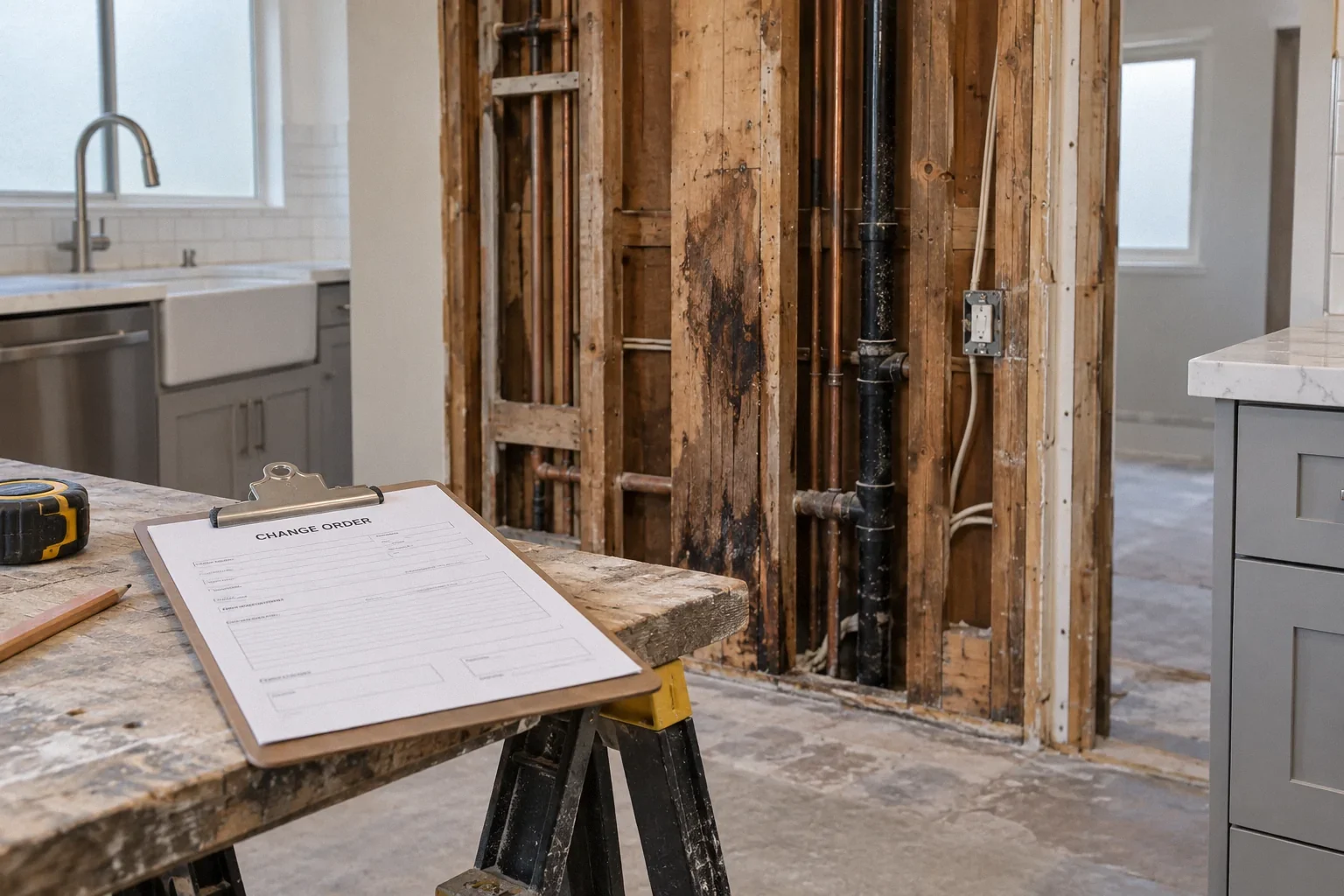
Homeowners regularly ask online whether a front-loaded payment request is normal. One owner of a roughly $50,000 remodel described a proposed schedule of a $1,000 deposit followed by 45% at the start, then 30%, 18% and 5% at completion. A commenter replied that the contractor was using the owner to cash-flow the project. In another thread, an owner on a 50% at signing / 50% at completion contract worried that refusing an extra draw would stall the job, while paying it might mean the work never finished. A kitchen owner wrote that a design firm held a $30,000 deposit for cabinets, countertops and demolition, and said that deposit was why they did not walk away when the work went wrong. These are personal accounts from discussion threads, not verified facts about any company. They show the pattern this law was written to prevent: once your money is ahead of the work, you have lost most of your leverage.
The two payment rules, in plain terms
1. The down payment cap
Section 7159.5 says that if a down payment is charged, it shall not exceed one thousand dollars ($1,000) or 10 percent of the contract amount, whichever amount is less. Because it is the lesser of the two, the $1,000 figure controls for any contract above $10,000:
| Contract price | 10% of price | Maximum down payment |
|---|---|---|
| $4,000 | $400 | $400 |
| $10,000 | $1,000 | $1,000 |
| $60,000 | $6,000 | $1,000 |
| $250,000 | $25,000 | $1,000 |
The prices in this table are arithmetic examples, not cost estimates. For any contract above $10,000 the legal deposit stays at $1,000, however large the job.
2. No payment ahead of the work
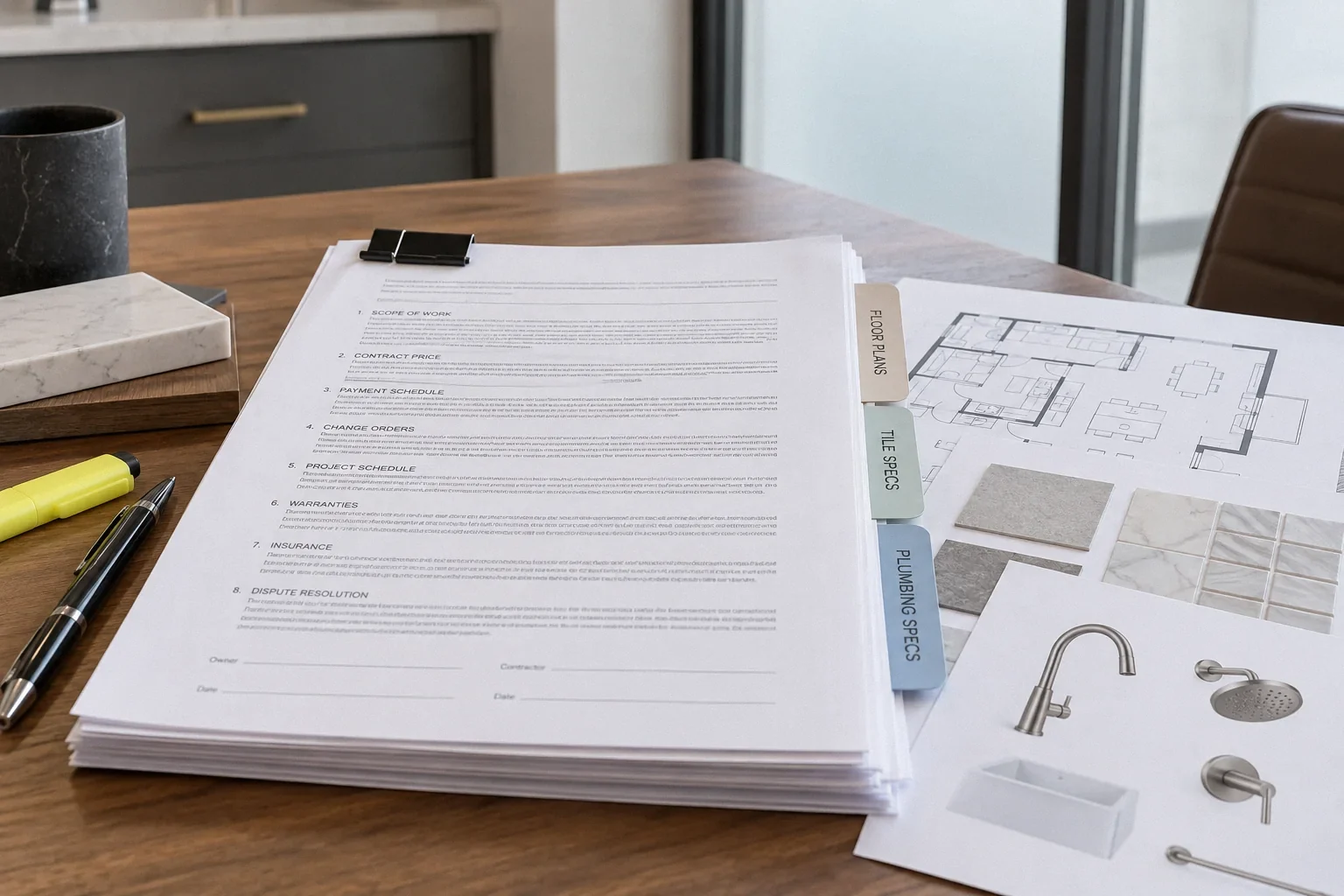
The second rule matters more over the life of a project. Under § 7159.5 the contractor shall neither request nor accept payment that exceeds the value of the work performed or material delivered. Section 7159 requires the contract to carry this notice in capital letters: It is against the law for a contractor to collect payment for work not yet completed, or for materials not yet delivered. However, a contractor may require a downpayment. The statute also requires the payment schedule to say what work or materials each payment covers, so a progress payment should name something you can see on site, such as framing inspected or cabinets delivered and stored in the garage. A calendar date alone does not do that.
The exception: blanket performance and payment bonds
The Contractors State License Board notes on its contract guidance page that a contractor holding a Blanket Performance and Payment Bond may request the full contract amount upfront. Such a contractor is also exempt from providing the mechanics lien information otherwise required. This is a specific bonding arrangement and it is uncommon. If a contractor cites it to justify a large deposit, ask for the bond details and check them against the contractor's record on the CSLB license lookup before you pay. An ordinary contractor's license bond is not the same thing.
Do not mix up California's dollar thresholds
Three numbers turn up in these conversations, and each answers a different legal question.
| Threshold | What it controls | Source |
|---|---|---|
| More than $500 | When a job counts as a home improvement contract with the statutory content rules (written contract, required notices, payment schedule, change orders) | BPC § 7159; CSLB |
| Less than $1,000 and no permit required | Whether the work can be done without a contractor's license at all (the minor work exemption) | BPC § 7048 |
| $1,000 or 10%, whichever is less | The maximum down payment on a home improvement contract | BPC § 7159.5 |
The $1,000 in the licensing exemption and the $1,000 down payment cap are unrelated, even though the figure is the same. The licensing exemption also has two conditions, not one: the total for labor, materials and everything else must be under $1,000, and the work must not require a building permit. It is lost if a larger job is split into small contracts, or if the person advertises as a contractor or uses employees. A $900 job that needs an electrical permit is not exempt work. We cover this in more detail in our guide to what a handyman can legally do in California.
What a lawful, practical payment schedule looks like
The statute does not prescribe milestones, so the schedule is negotiated. A schedule built on the value-of-work rule usually has these features:
- A small deposit within the cap. On most remodels that means $1,000 at most.
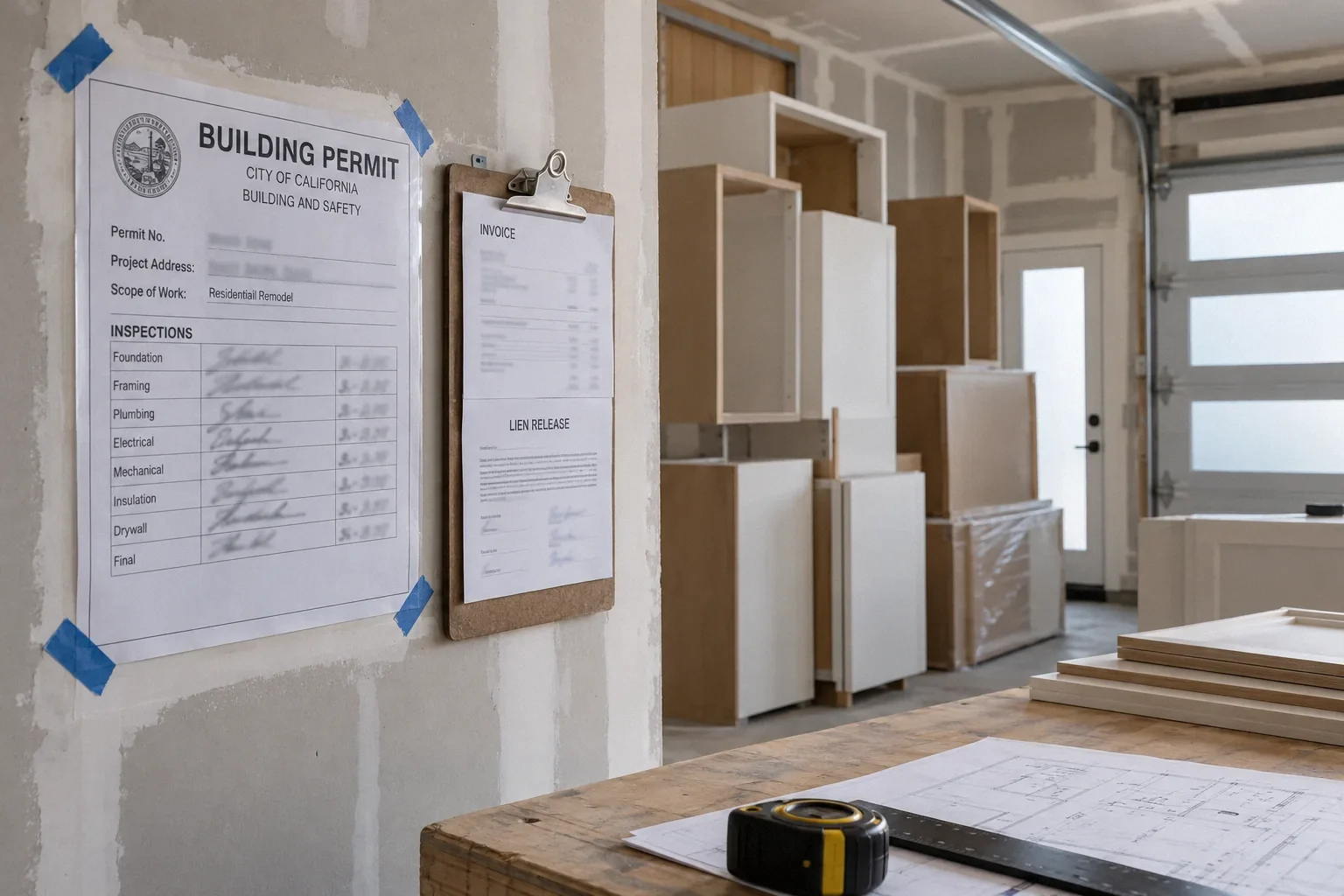
- Payments tied to verifiable events. Good triggers are events that leave evidence: a passed rough inspection, a passed insulation inspection, cabinets delivered to site, countertops installed. Local building departments publish their inspection sequences. The City of Pleasanton's kitchen alteration handout (JLA 01.26), for example, lists rough frame, insulation and final inspections. Your city may use different names and steps.
- Materials paid on delivery, not on order. The law speaks of materials delivered. CSLB's consumer guide Terms of Agreement is explicit that there are no exceptions for special order materials to the down payment limit. Custom cabinets or slab stone do not justify a bigger deposit. If a long-lead item must be ordered early, the contractor carries that cost until delivery, so agree in advance how delivery will be documented, for example delivery to your property and an itemized invoice.
- A meaningful final payment (a negotiated term). Many owners ask for the last payment to be large enough to cover the punch list and to fall due after final inspection sign-off. The statute does not create this. It works only if both parties write it into the contract, and it does not give either side an automatic right to hold money back in a later dispute. See withholding final payment until defects are fixed for the limits of this approach.
- Lien releases with each payment. Under § 7159.5 you may ask for mechanics lien releases before making further payments, and you may withhold payments until they are provided. Our mechanics lien guide explains why this matters when subcontractors and suppliers are involved. Under Civil Code § 8200, many of them must send preliminary notice to the owner before they can record a valid lien, so keep any notices you receive.
Comparison: schedules homeowners report vs. what the statute requires
| Reported request | Problem under §§ 7159 and 7159.5 | Lawful alternative |
|---|---|---|
| 50% at signing, 50% at completion | Down payment far above $1,000; the first payment precedes any work | Deposit within cap, then payments for each completed phase |
| 45% at start after a $1,000 deposit | A large payment before work or delivery is still a payment ahead of the work | Pay for demolition, rough-in and other phases once each is done |
| Large deposit to hold cabinets or stone | Paying for materials not yet delivered | Pay when materials are delivered and invoiced |
| Draw demanded before the next phase starts | Payment requested for work not yet completed | Pay after the phase is complete and verified |
| Extra draw on a fixed-price contract | Depends on whether the work already done is worth that much | Ask for an itemized statement of work completed to date |
Mistakes that cost homeowners leverage
- Accepting a percentage deposit because a contract is large. The cap does not scale. Above $10,000 it is $1,000.
- Paying by date instead of by progress. Weekly or monthly draws with no link to completed work make it hard to know whether you are ahead.
- Paying cash. The CSLB guidance for seniors (useful for everyone) recommends paying by check and lists cash demands among warning signs.
- Approving extras verbally. Section 7159 says extra work and change orders become part of the contract once they are written and signed before the changed work begins. Unsigned add-ons are a common source of payment fights. See our guide to change orders.
- Signing an incomplete contract. CSLB advises never to sign a blank or partly filled contract, and to make sure the contract states who obtains building permits.
What to do if you have already paid too much
- Gather documents. Collect the contract, payment records, messages and dated photos of the work actually completed.
- Compare payments with progress. Write down what you have paid next to what has been done or delivered. This shows whether, and by how much, payments are ahead of the work.
- Stop prepaying unearned work, and keep paying what is earned. This step is about not sending more money ahead of the work. It does not mean withholding a payment the contract says is due for work that has actually been done. Before the next payment, ask in writing for an itemized statement of work completed and for lien releases covering amounts already paid. Under § 7159.5 you may withhold payment until requested lien releases are provided. If you dispute an amount, document what you dispute and why, and get advice before withholding an earned payment or terminating the contract. Either step can expose you to a breach-of-contract claim if the contractor was entitled to the money.
- Check the license. Use the CSLB lookup to confirm the license is active and covers the work. If the person was unlicensed for work that needed a license, BPC § 7031(b) allows the owner to sue to recover compensation paid, and § 7031(a) bars an unlicensed person from suing to collect.
- Use official channels. Violations of the down payment and payment rules are misdemeanors under § 7159.5, punishable by a fine of $100 to $5,000, up to one year in county jail, or both. A payment schedule that breaks these rules is a statutory payment problem in its own right. It is not, by itself, proof that the contractor intended to defraud you. A payment schedule alone does not establish the contractor’s intent. Describe what happened factually when you complain. The CSLB consumer pages are the starting point for complaints. For a significant dispute, talk to a California-licensed attorney about your facts.
If the contractor has stopped work altogether, see what to do when a contractor abandons a job.
How this applies in the Bay Area
These payment rules are state law. They apply the same way in San Francisco, San Mateo, Santa Clara, Alameda, Contra Costa, Marin and the other Bay Area counties, and a city cannot waive them. What varies locally is the permit side: whether a project goes over the counter or through plan review, the inspection steps, and how long review takes. That affects how you name milestones. A passed rough or insulation inspection in your city is a clear, documented event to tie a payment to, but the inspection names and steps differ between departments, so copy them from your own permit card or your department's published handout rather than from another city's. Because the cap is a fixed dollar figure, it limits the deposit the same way whatever the size of the project. Some contractors may still present percentage deposits as standard practice. Check every proposal against the statute, not against what a contractor tells you is usual.
Before you sign: payment checklist
- Deposit is no more than $1,000 or 10% of the price, whichever is less, or the contractor has shown a blanket performance and payment bond you have checked
- Each payment names the specific work or delivered materials it covers
- No payment is due before the matching work is done or the materials are on site
- Recommended, if the contractor agrees: the final payment is written as due after final inspection sign-off and punch-list completion (a negotiated term, not a statutory right)
- The contract states that lien releases will accompany payments
- The contract says change orders must be written and signed before the changed work starts
- The contractor's name, address and license number appear on the contract and match CSLB records
- The contract states who pulls the building permit
- You know whether a cancellation right applies to your contract. For covered home improvement contracts, § 7159 provides three business days, five for senior citizens, and seven for certain disaster repairs. There are statutory exceptions: CSLB notes that service and repair contracts requested by the consumer, and contracts negotiated at the contractor's place of business, generally do not carry the three- or five-day right
Verification note: statutes were read on leginfo.legislature.ca.gov on 3 October 2026. Section 7159 was last amended by SB 517 (Stats. 2025, ch. 585), effective 1 January 2026, and § 7159.5 by SB 601 (Stats. 2023, ch. 403). Laws change, so recheck the linked text before relying on it.
Questions that come up next
Is a 50% deposit legal for a remodel in California?
Not for an ordinary home improvement contract. Business and Professions Code § 7159.5 limits the down payment to $1,000 or 10% of the contract price, whichever is less, and bars payments that exceed the value of work done or materials delivered. CSLB notes an exception for contractors holding a Blanket Performance and Payment Bond, so check that before assuming a violation.
Can a contractor charge a bigger deposit for special-order materials?
No. CSLB's consumer guide states there are no exceptions to the down payment limit for special order materials, and the statute ties progress payments to materials actually delivered. The only down payment exception CSLB describes is for contractors with a blanket performance and payment bond on file.
Does the $1,000 deposit cap mean jobs under $1,000 don't need a licensed contractor?
No. These are separate rules. The down payment cap is in § 7159.5. The licensing exemption in § 7048 applies only when the total job is under $1,000 and no building permit is required, and it is lost if work is split up to evade the law.
What should I do if I already paid ahead of the work?
Document what you paid against what is completed. Stop prepaying for work that has not been done, but keep paying amounts the contract says are due for completed work. Ask in writing for an itemized progress statement and lien releases, and confirm the license on CSLB's website. Get advice before withholding an earned payment or terminating. A CSLB complaint or a consultation with a California attorney may be appropriate. Note that an unlawful payment schedule is not, on its own, proof of fraud.
Do Bay Area cities have different deposit rules?
No. The deposit and progress payment rules are state law and apply everywhere in California. Local building departments control permits and inspections, which you can use as payment milestones, but not the payment rules themselves.
Sources and further reading
- California Business and Professions Code § 7159.5
- California Business and Professions Code § 7159
- California Business and Professions Code § 7048 (minor work exemption)
- California Business and Professions Code § 7031
- California Civil Code § 8200 (preliminary notice)
- CSLB: What Should I Look For in Contracts and Binding Agreements?
- CSLB: What Seniors Should Know
- CSLB: Terms of Agreement, A Consumer Guide to Home Improvement Contracts (13P-045/1024)
- CSLB: Check a License
- City of Pleasanton: Residential Kitchen Alteration Requirements (JLA 01.26)
Community questions behind this guide
These discussions identify homeowner concerns. Forum comments are personal accounts, not code or legal authority.
- contractor wants aggressive, more in the beginning, payment schedule. Normal?
- Contractor asking for more money
- Designer Nightmare: They Didn't Follow Rendering
- Payments to contractors for renovation projects
- Lots of ADU contractors argue the 10% deposit rule, so here is exactly what California law says
- Dispute with GC Regarding Phase Payment