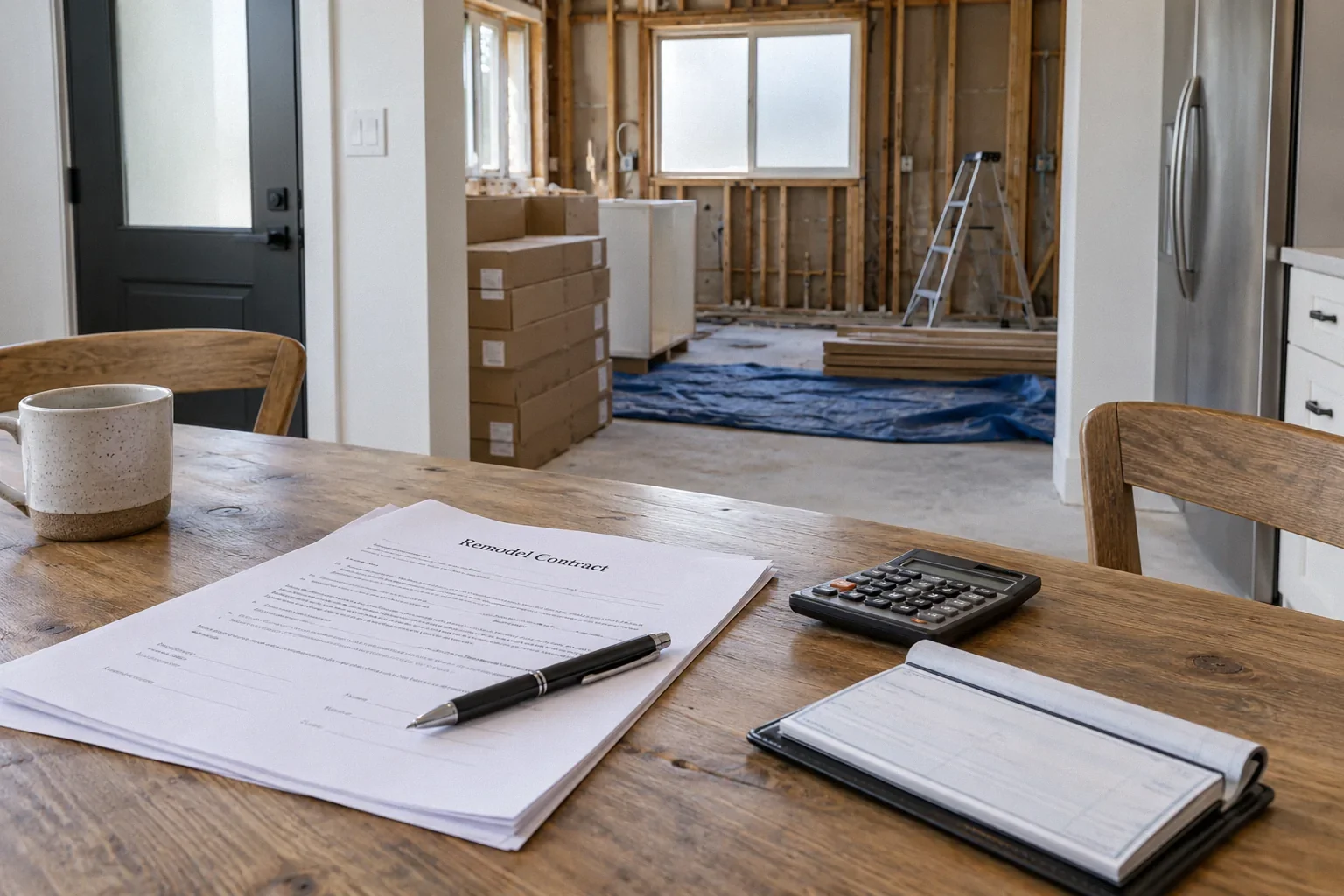
Short answer: yes. If your claim is $12,500 or less and you are an individual, California small claims court can be a practical way to resolve a contractor dispute. Businesses and other entities are limited to $6,250. Filing fees are modest (the court's self-help site cites roughly $30–$100), the statewide guide describes trials about one to two months after filing, although local scheduling and service can take longer, and lawyers cannot represent parties at the hearing (California Courts self-help). There are trade-offs. If you start the case and lose, you cannot appeal; the defendant can. And if you win, you must collect the money. For larger or more complex disputes, CSLB's arbitration programs, a bond claim or a civil lawsuit may fit better.
This is general information current to 3 October 2026, not legal advice.
When small claims fits, and when it doesn't
In one homeowner thread about closing out a large remodel, a commenter noted that the amount in dispute was probably over the small claims limit. In another, an owner relayed a lawyer's view about how unsigned change orders might be treated in small claims. That is one person's account of advice on their own facts. A contractor-side thread discussed how a corporation's lower small claims limit pushed a $15,000 dispute into civil court. These anecdotes illustrate the main sorting question: amount and complexity.
| Your situation | Small claims a good fit? | Alternatives |
|---|---|---|
| Clear loss of $12,500 or less: refund of an unearned deposit, cost to fix specific defects | Often yes | CSLB complaint alongside; bond claim |
| Loss above $12,500 | Only if you give up the excess | CSLB arbitration for disputes the board finds eligible (mandatory program up to $25,000; voluntary program for qualifying $25,000–$50,000 disputes); civil court |
| Need an order to finish or correct work, not just money | Limited | CSLB process; civil court |
| Contractor unlicensed | Possibly, including a claim to recover payments under BPC § 7031(b) | CSLB unlicensed activity complaint; civil court |
| Contractor insolvent or vanished | A judgment may be hard to collect | Bond claim with the surety; see bond claims |
| A mechanics lien is recorded on your home | Not the main tool | Attorney advice about lien release procedures; see our lien guide |
Key rules at a glance
- Limits: $12,500 for individuals; $6,250 for corporations, partnerships and other entities (San Francisco Superior Court).
- Frequency: no more than two claims over $2,500 per calendar year statewide. Claims of $2,500 or less are unlimited (Contra Costa Superior Court).
- Representation: no lawyers at the hearing, though you may consult one beforehand.
- Appeals: the person who filed cannot appeal a loss. A defendant who loses, or a plaintiff who loses on the defendant's counterclaim, can.
- Collection: the court does not collect for you.
Step-by-step
- Send a demand letter. Give a clear amount, the basis for it and a deadline. It often prompts settlement and shows the judge you tried.
- Name the right defendant. Use the contracting entity exactly as it appears on the contract and on CSLB's license record. A corporation and its owner are different parties. Ask the court's small claims advisor if unsure.
- File in the right court. Use the court's guidance on venue, which usually turns on where the defendant is or where the contract was made or performed. Your county's superior court website has the forms and local procedures.
- Serve the defendant by a method the court allows, within its deadlines.
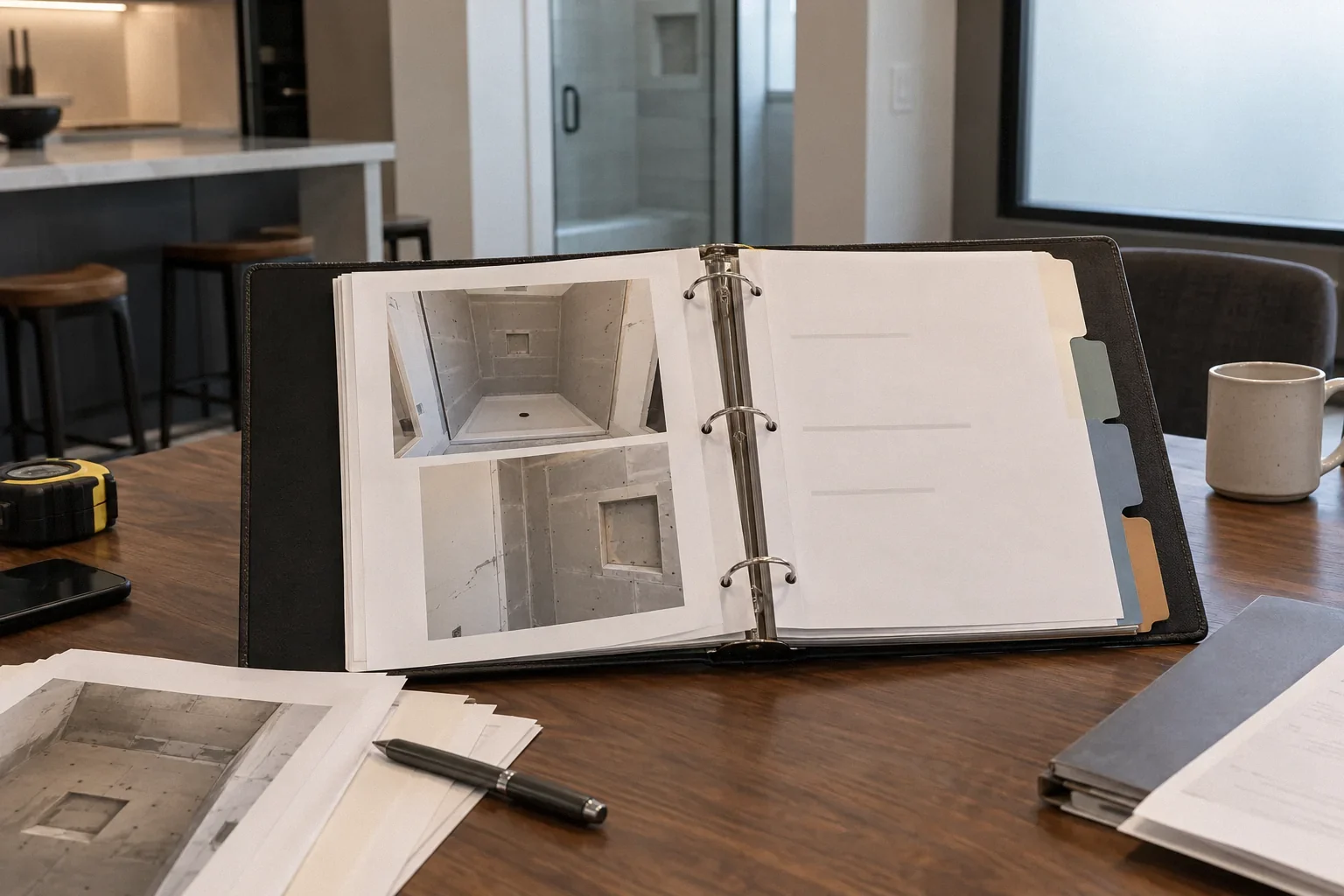
- Prepare your evidence, using the binder below.
- Present clearly: what was agreed, what happened, what it costs to fix or what you overpaid, and why the defendant is responsible.
- If you win, collect. The self-help site explains post-judgment collection tools. If the contractor is licensed and does not pay a judgment, ask CSLB about its process for licensees with unsatisfied judgments.
The evidence binder
| Tab | Contents |
|---|---|
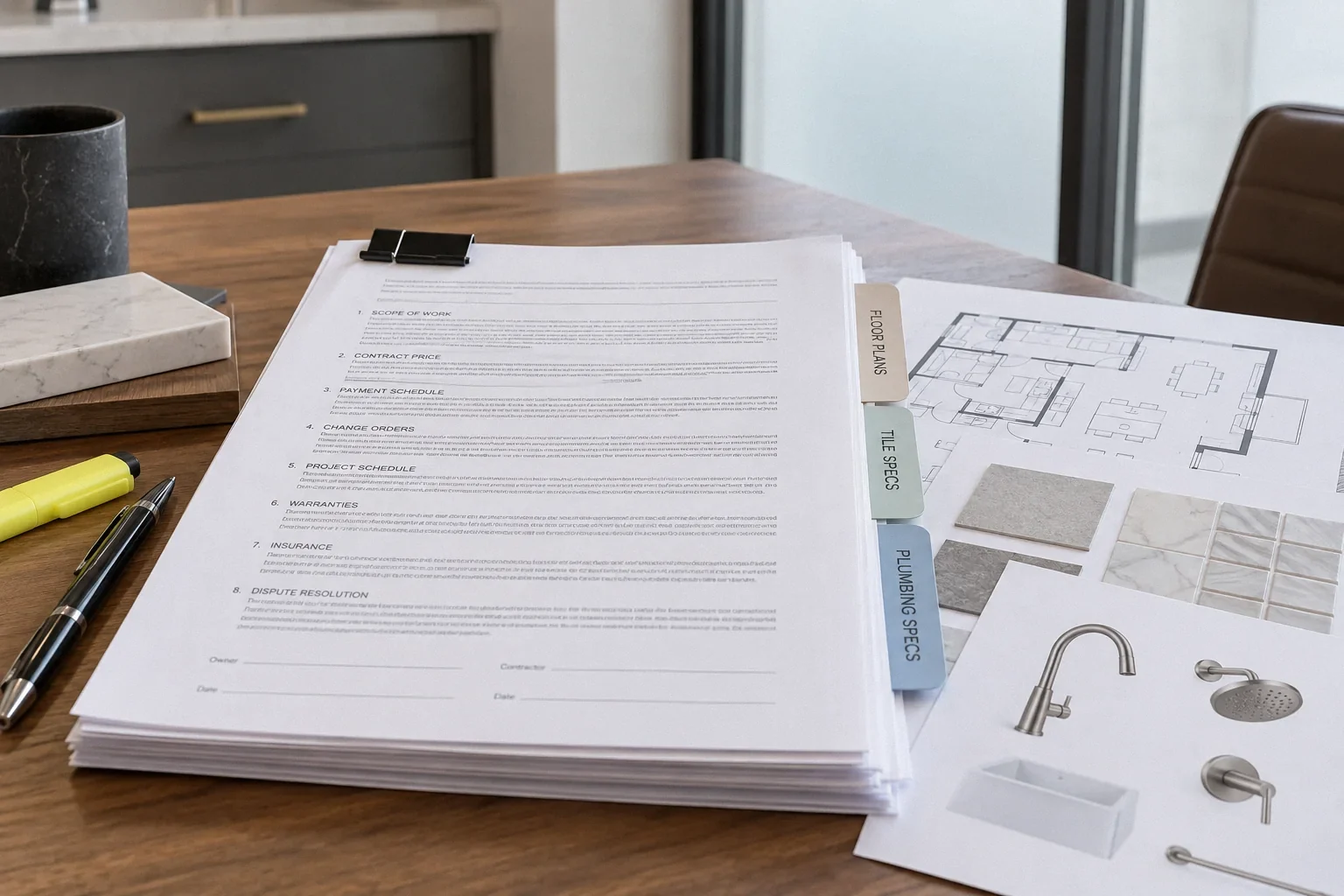
| 1. Contract | Signed contract, plans, specifications, allowance schedule |
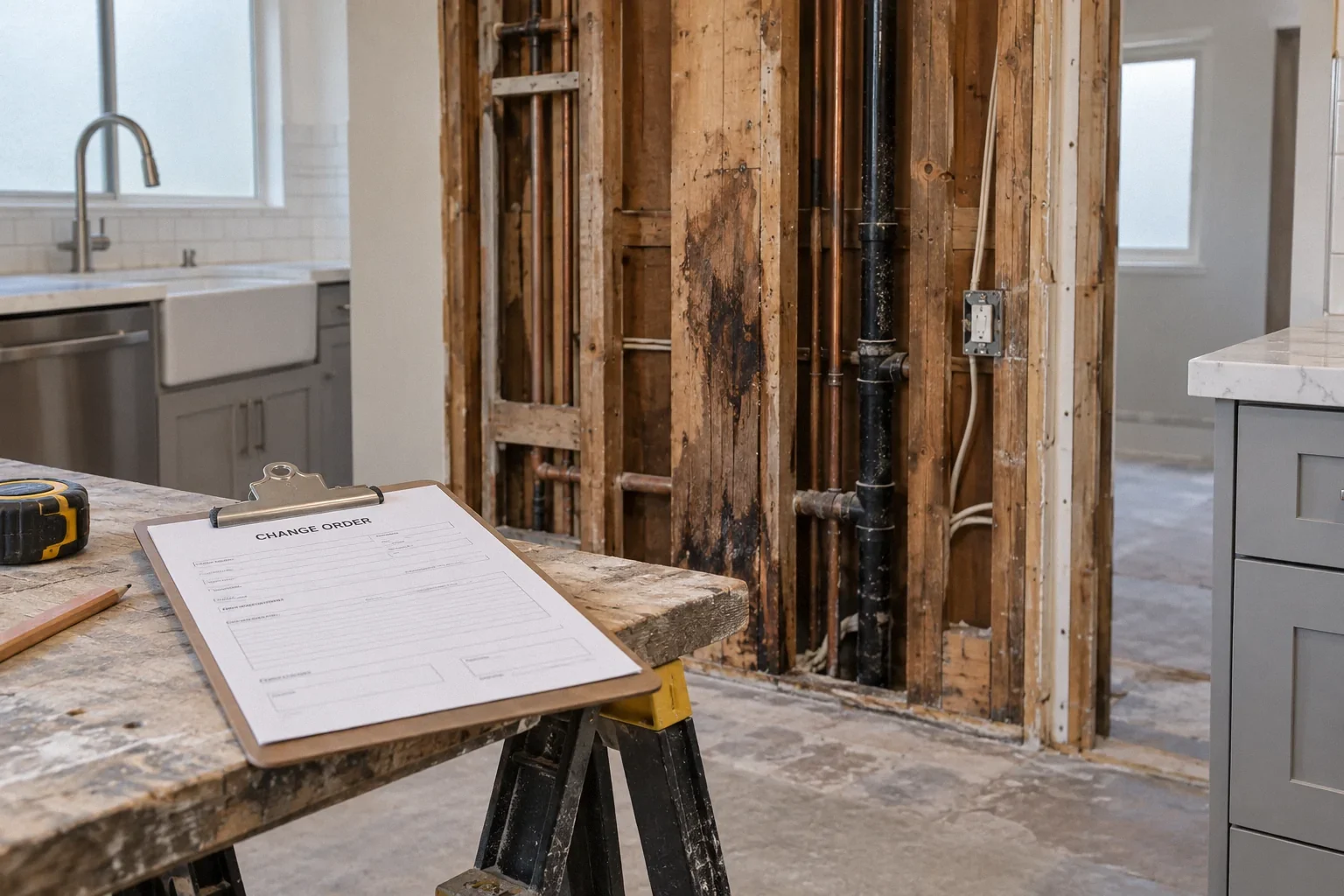
| 2. Changes | Signed change orders; emails approving or declining extras |
| 3. Payments | Invoices, cancelled checks or bank records, lien releases |
| 4. Timeline | One-page dated summary of key events |
| 5. Photos | Dated photos of the defects or incomplete work, labelled to match the timeline |
| 6. Independent assessment | Written report and estimate from another licensed contractor |
| 7. Communications | Demand letter, the contractor's replies, notices |
| 8. Official records | Inspection results or correction notices; CSLB license printout |
A worked example: calculating the claim
Hypothetical figures, for method only. A contractor stopped work on a bathroom after receiving $14,000 of an $18,000 contract. The shower waterproofing was installed but failed a flood test; tile is half done. An independent licensed contractor estimates $9,500 to remove the failed work and complete the original scope.
- Original contract: $18,000. Paid: $14,000. Unpaid balance: $4,000.
- Cost to complete and correct with a new contractor: $9,500.
- Overrun versus the original price: paid $14,000 + $9,500 = $23,500, which is $5,500 more than the $18,000 originally agreed.
- This example assumes an ordinary completion-cost claim against a properly licensed contractor. Claims involving unlicensed work under § 7031 can use a different recovery framework. How damages are measured depends on the facts. A small claims advisor can help you frame it.
At $5,500, the claim fits within the individual limit. If the overrun were $20,000, the owner would need to give up the excess or choose another route.
Mistakes that hurt claims
- Suing the wrong party, such as the individual when the contract was with a corporation, or the reverse
- No independent estimate, so the judge has only your opinion of the repair cost
- Claiming for upgrades you chose to add during the repair
- Dumping hundreds of photos without a timeline
- Waiting too long. Separate time limits apply to court claims, CSLB complaints and bond claims, and they run independently
Bay Area applicability
Small claims cases are filed in the superior court of the appropriate county. Bay Area courts, including San Francisco and Contra Costa, publish small claims self-help pages and offer small claims advisors. Check your county court's site for current forms, fees, hearing locations and any remote-appearance options.
Current to 3 October 2026.
Questions that come up next
What is the small claims limit in California for a contractor dispute?
$12,500 for individuals and $6,250 for businesses and other entities. You may file no more than two claims over $2,500 per calendar year statewide.
Can I bring a lawyer to small claims court?
No. Lawyers cannot represent parties at the hearing, though you can consult one beforehand.
Can I appeal if I lose my small claims case against a contractor?
If you filed the case, no. The defendant can appeal if they lose, and a plaintiff can appeal a loss on the defendant's counterclaim.
Is CSLB arbitration better than small claims?
It depends on the amount and situation. CSLB runs mandatory arbitration for qualifying disputes with licensed contractors of $25,000 or less and voluntary arbitration up to $50,000. For smaller claims, CSLB may direct you to small claims or the bond.
Sources and further reading
Community questions behind this guide
These discussions identify homeowner concerns. Forum comments are personal accounts, not code or legal authority.