Short answer: stop all work immediately except anything the inspector specifically tells you to do to make the site safe, read the notice carefully, and contact the inspector or code enforcement office named on it. To lift the order you will usually need to correct the listed problem, obtain or revise a permit, pay any enforcement or penalty fees, and pass a field inspection. In the Bay Area those penalties can be substantial: San Francisco charges nine times the permit issuance fee plus the original fee for work done without a building permit, and Oakland says permit fees can be twice or more the normal amount when a permit originates from a stop work order.
This guide covers what a stop work order is, what local departments publish about clearing one, the decisions you will face (legalize, revise or remove), and the mistakes that turn a delay into a long enforcement case. It is general information verified on 3 October 2026, not legal advice.
How it happens
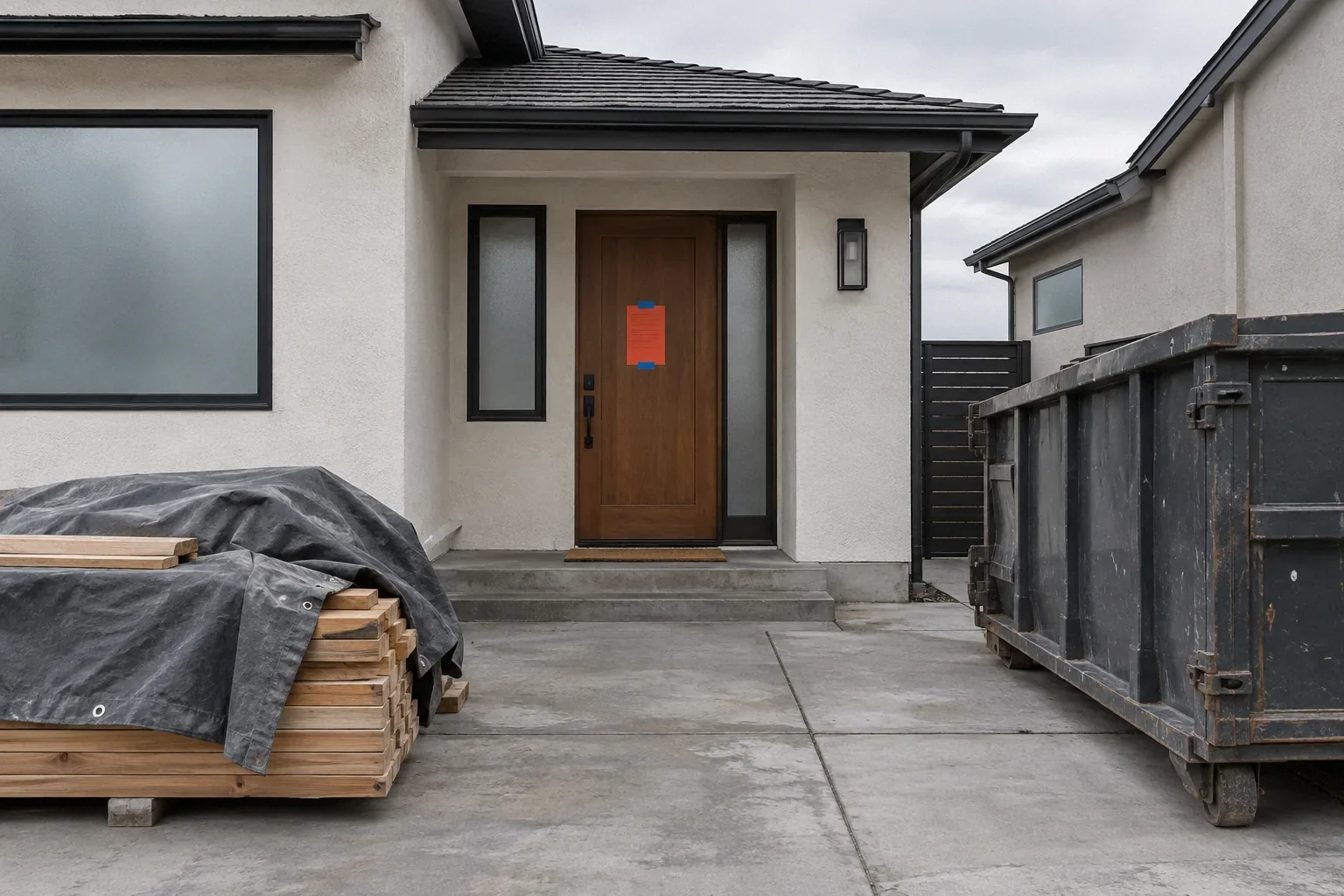
Homeowners describe stop work orders arriving in two ways: an inspector notices work during an unrelated visit, or someone complains. In a Bay Area thread about an inherited house with an unpermitted addition, one commenter recalled visiting friends' job site and finding "a big red stop work order on the front door," adding that the whole thing "turned into a big mess." In a San Mateo County thread, a commenter who identified as a licensed general contractor warned that a licensed contractor who fails to pull a required permit risks their license. These are personal accounts and opinions, not verified facts. The licensing point is consistent with Business and Professions Code § 7110, which makes willful or deliberate disregard of state or local building laws, including laws on building permits, a cause for discipline.
What a stop work order is
Building codes give the building official authority to stop work that violates the code or is being done in a dangerous or unsafe way. Oakland's stop work order procedures page lists the situations it covers: work that does not follow approved plans, violations of city ordinances or site management rules, and work done without required permits. It says plainly that if you receive a stop work order from a City of Oakland building inspector, "you must stop all construction work right away."
Oakland's October 2025 stop work brochure adds that inspectors issue stop work orders "after receiving complaints OR as they perform their duties," and quotes Oakland Municipal Code § 15.04.030, under which a violator can also be liable for the city's costs of correction, abatement and prosecution.
San Francisco also uses a Notice of Violation, which can include a direction to stop work. Read the actual corrective actions on your notice. SF.gov says you may receive one from a complaint, after an inspection, while a permit is being processed, or if you need to stop construction work, and that the NOV lists the corrective actions you must follow and have inspected.
Two different situations, two different paths
| Situation | What Oakland asks for | What it usually means for you |
|---|---|---|
| Work has a permit but departs from approved plans or conditions | Submit a Building Worksheet revision to the existing permit, noting "Revision-Stop Work" | Designer updates drawings; plan review of the change; inspection before work resumes |
| Site management violation (debris, hours, protection, etc.) | Correct the listed violations and contact the issuing inspector | Often fastest to clear if you act quickly |
| Work done without a required permit | Register on the online permit center, apply for the appropriate permit noting "Stop Work Order Issued," schedule a field check | Plans may be needed; walls may need to be opened for inspection; enforcement fees and multiplied permit fees |
The table summarizes Oakland's published process. Other cities use different forms and names, but the structure is similar: fix the paperwork, fix the work, prove it with an inspection.
What it costs: published Bay Area examples
- San Francisco: SF.gov states that for work without a building permit "the penalty is nine times the issuance fee plus the original permit fee," and that investigation fees reimburse the department for enforcement, usually paid when the corrective permit is issued. If the owner does not take the required steps, the case can move to a Director's Hearing with a different inspector.
- Oakland: the brochure says unpermitted work that necessitates a stop work order is assessed an enforcement fee in addition to permit fees, is subject to additional administrative charges and penalties, and that permit fees may be assessed at two times or more. The procedures page says unauthorized demolition can carry a fee of 10 times the normal permit fee, plus the stop work fee.
We have not listed other cities because we could not verify their current fee rules from official pages on the date of writing. Ask your department for its fee schedule rather than relying on figures in forums.
Step-by-step: clearing a stop work order
- Stop, and make the site safe. Do only the work the inspector authorizes, such as covering an open roof or securing an excavation. Continuing other work is itself a violation and invites further penalties.
- Read the notice and keep it. Photograph it where it is posted. Note the code sections cited, the inspector's name and the deadline.
- Call or email the inspector. Ask what exactly triggered the order, which permit or revision is needed, and whether plans, engineering or a field check are required. Confirm the conversation in writing.
- Look up the permit record. If you believed the work was permitted, check the record and your contract. Sometimes the problem is a missing revision, not missing permits.
- Talk to your contractor in writing. If the contract said the contractor would obtain permits, put that in your message. Our guide to communicating with a contractor in writing explains how to document this without escalating.
- Decide the path for each piece of work: legalize it, revise the design, or remove it. Our guide to legalizing unpermitted work in the Bay Area walks through that choice.
- Expect opening up. Ask the inspector which concealed conditions require exposure and whether existing records or another verification method are acceptable. Budget for any required removal of drywall or tile and the repairs afterward.
- Pay fees and pass the inspections, then get written confirmation that the order is lifted before work resumes.
Questions to settle with your contractor
A stop work order often exposes a contract problem. California's CSLB contract guidance says the contract should state who obtains building permits. If it named the contractor, the cost of the missing permit and the delay is a fair topic for a written discussion. If you were asked to pull an owner-builder permit for work a contractor is actually doing, read the CSLB owner-builder warning before agreeing to anything further. Verify the contractor's license on the CSLB license lookup. For serious disputes, talk to a California attorney about your facts.
Mistakes that make it worse
- "Finishing quickly" before anyone comes back. Covering work that must be inspected forces more demolition later and undermines your credibility with the department.
- Removing the notice. Leave it posted unless the department tells you otherwise.
- Hiding unpermitted spaces during the inspection. In the Bay Area thread above, one commenter suggested folding unpermitted spaces into the plans while removing anything that "screams unpermitted space" because inspections happen later. That is concealment, not a solution. It exposes you to further enforcement, misleads future buyers and can leave real hazards in place. See unpermitted work red flags and disclosure.
- Ignoring deadlines. San Francisco describes escalation to a Director's Hearing when owners do not act.
- Assuming insurance outcomes. Whether a policy covers a loss involving unpermitted work depends on the policy and facts. Read unpermitted work and homeowners insurance and ask your insurer or agent directly.
Bay Area applicability
State law gives building officials stop work authority, but the procedure, fees and terminology are local. Unincorporated areas are handled by the county building department, not a city. Before restarting, confirm with your own department what it needs, and keep every email.
Checklist
- All work stopped except authorized safety work
- Notice photographed; inspector, code sections and deadline recorded
- Written summary of the inspector conversation sent
- Permit record and contract reviewed (who was responsible for permits?)
- Path chosen for each item: legalize, revise or remove
- Designer or engineer engaged if plans are needed
- Budget for opening finishes and multiplied fees
- Written confirmation that the order is lifted before resuming
Verification note: Oakland's stop work procedures page and October 2025 brochure, SF.gov's Notice of Violation page and BPC § 7110 were read on 3 October 2026. Fees and procedures change; confirm with your department.
Questions that come up next
Can I keep working after a stop work order if I am almost finished?
No. Oakland's published procedure says you must stop all construction work right away. Only work the inspector directs you to do, such as making the site safe, should continue. Continuing other work can bring additional penalties.
How much does a stop work order cost in the Bay Area?
It depends on the jurisdiction. San Francisco says the penalty for work without a building permit is nine times the issuance fee plus the original permit fee. Oakland charges a stop work fee and says permit fees may be two times or more when the permit results from a stop work order. Ask your department for its fee schedule.
Who pays if the contractor was supposed to get the permit?
That depends on your contract and the facts. CSLB advises that contracts state who obtains permits. If it was the contractor, raise the cost in writing. A licensed contractor's willful disregard of permit laws can also be a cause for discipline under BPC § 7110.
Will the inspector make me open finished walls?
Often, for work that needs inspection of framing, wiring, plumbing or waterproofing. Inspectors generally need to see the work they approve, so budget for opening and repairing finishes.
Sources and further reading
- City of Oakland: Stop Work Order Procedures
- City of Oakland: Stop Work Notice brochure (October 2025)
- SF.gov: Notice of Violation (NOV)
- California Business and Professions Code § 7110 (disregard of building laws)
- CSLB: What Should I Look For in Contracts and Binding Agreements?
- CSLB: Owner-Builder warning
- CSLB: Check a License
Community questions behind this guide
These discussions identify homeowner concerns. Forum comments are personal accounts, not code or legal authority.