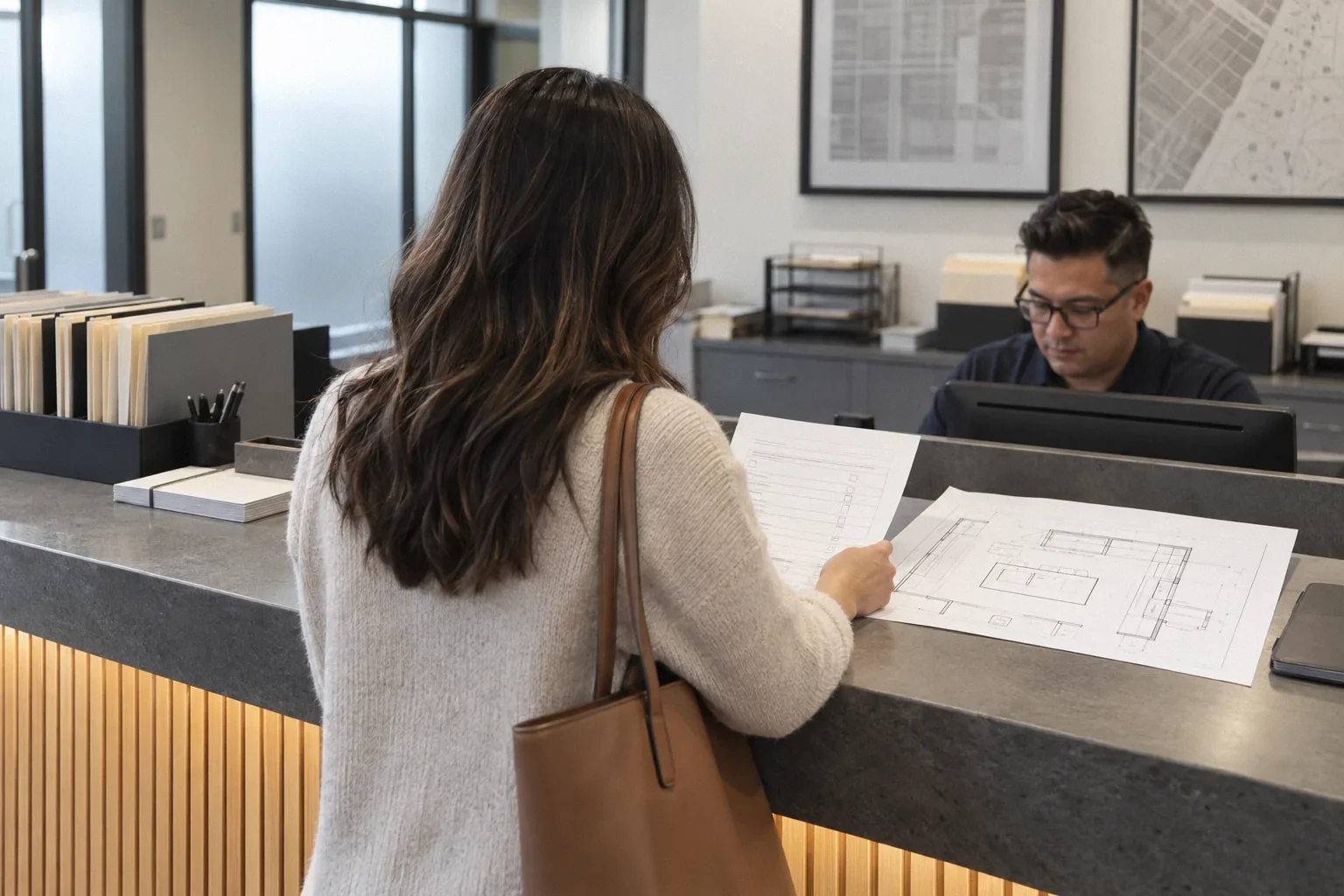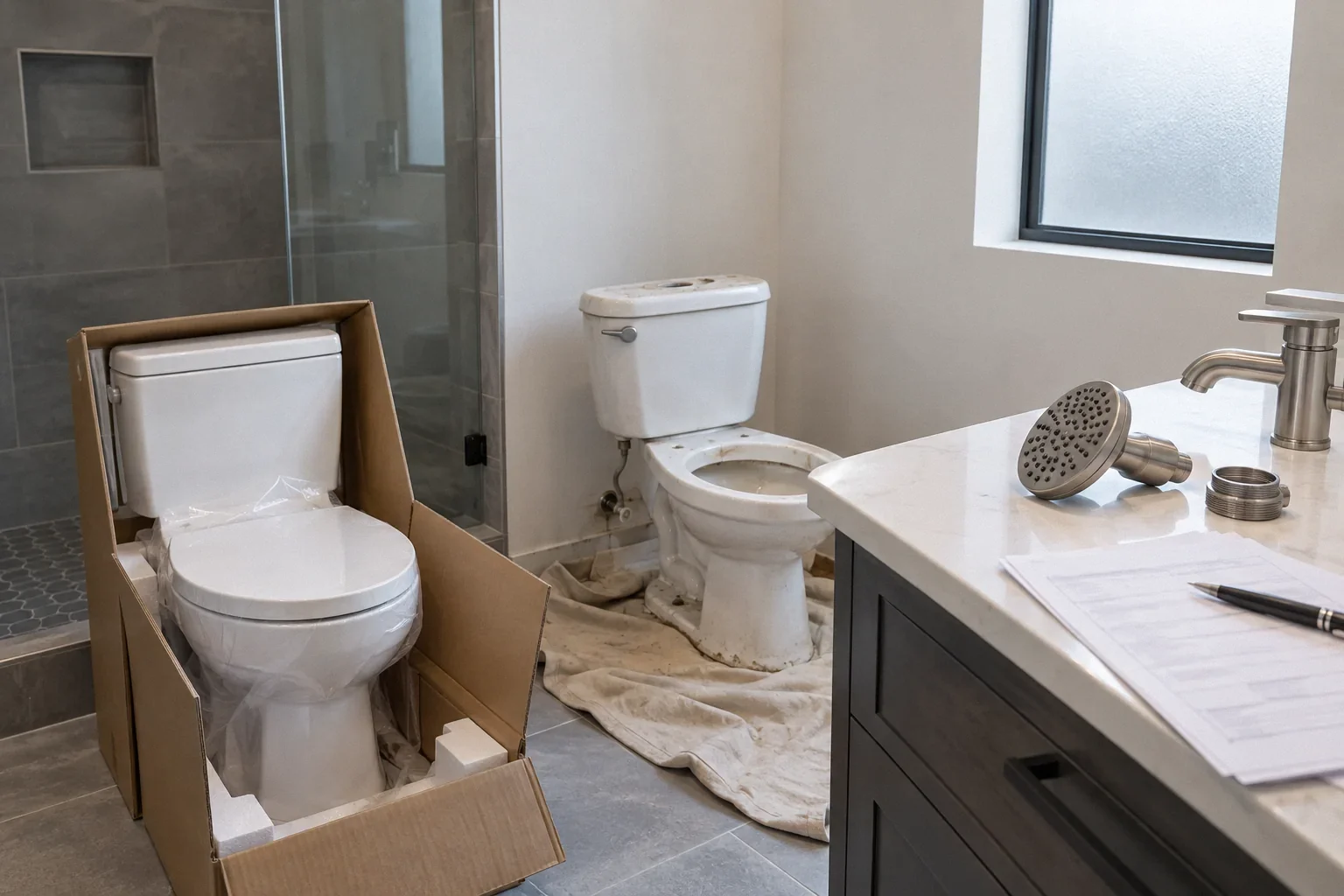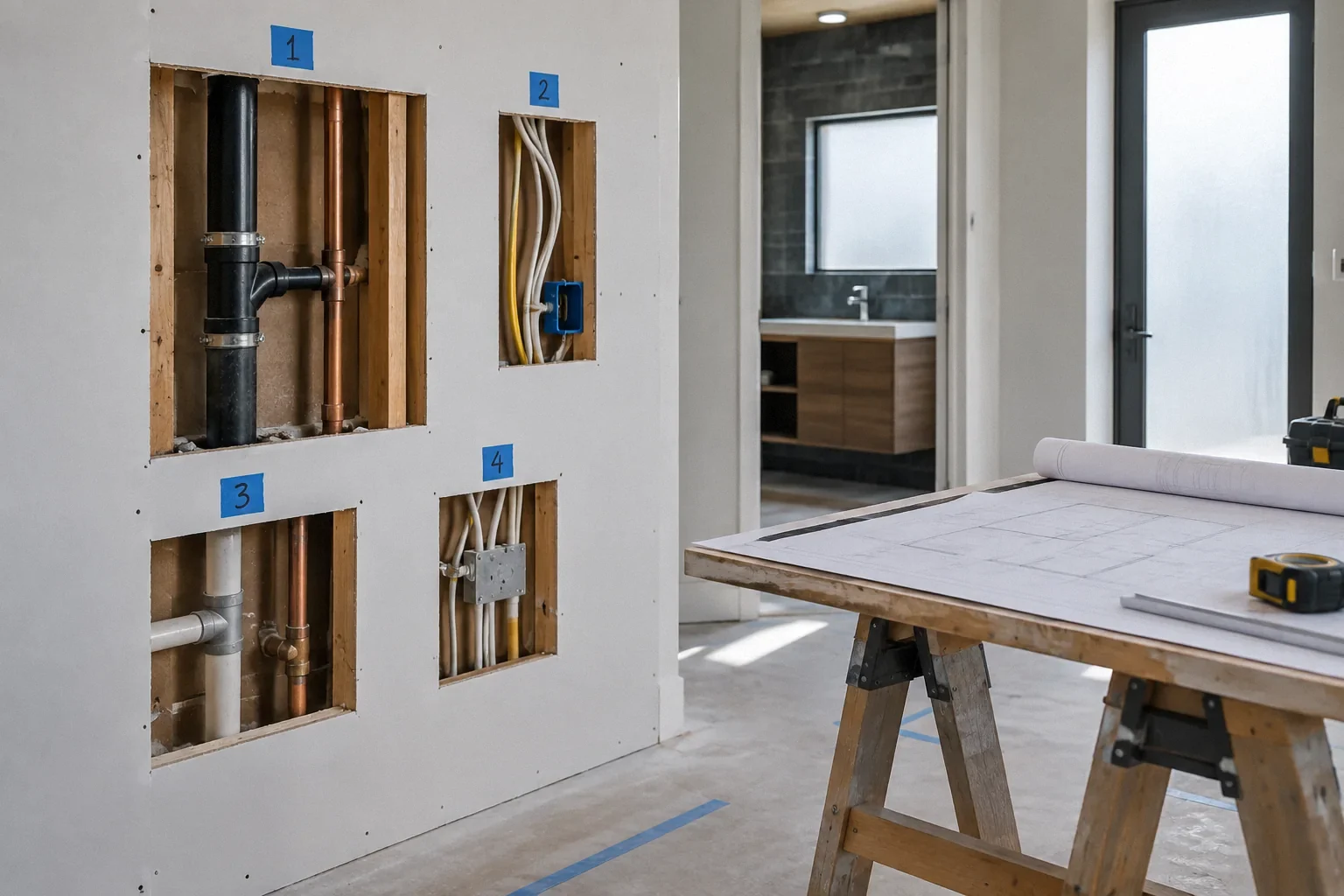
Short answer: legalizing unpermitted work generally means applying for a permit for work already built, often called an 'as-built' or after-the-fact permit. You document existing conditions, usually with drawings and sometimes engineering. Concealed work is then exposed so it can be inspected. You correct whatever does not meet the applicable code, and you obtain final approval. Whether you start the process voluntarily or after the city discovers the work can affect cost. San Francisco, for example, lists a penalty of nine times the issuance fee plus the original permit fee for work done without a permit when a Notice of Violation is involved (sf.gov). For accessory dwelling units built before 1 January 2020, state law limits when a local agency may deny a permit to legalize the unit. HCD's March 2026 ADU Handbook cites this rule as Gov. Code § 66311.7 (HCD ADU Handbook). Some work, such as an addition on inadequate footings, may not be economically legalizable and may need to be rebuilt or removed.
This is general information current to 3 October 2026, not legal advice.
The situations owners describe
A Castro Valley owner who bought a house marketed with a bedroom and half-bath not in the county record asked whether to legalize now, during a planned remodel, or wait until selling. They were unsure of the process, the cost and the property tax effect. An owner who inherited a house with an unpermitted sunroom addition was told by architects and engineers that it might not be realistically legalizable because the perimeter footings were too shallow. Another owner had to legalize an unpermitted downstairs kitchen before an unrelated remodel could be signed off, opening a wall for the plumber and removing a gas line and an undersized hood vent. These are anecdotal accounts. They show the range: some legalizations are paperwork plus inspection, some are partial rebuilds.
The general process
- Inventory the work. List each unpermitted item: room, bathroom, wiring, plumbing, structure. Note approximate dates if known. Some departments evaluate work against the codes in effect when it was built, others against current codes. Ask.
- Talk to the building department early. Ask what documentation is needed, whether drawings or engineering are required, and what inspections to expect. If you are not yet under enforcement, ask how voluntary applications are handled.
- Prepare as-built documents. Existing and proposed plans, structural calculations if needed, and energy compliance forms where applicable.
- Expose concealed work for inspection. Expect openings in drywall at plumbing, electrical and framing locations. The inspector decides what needs to be seen.
- Correct deficiencies. Undersized circuits, missing GFCI protection, improper venting, inadequate egress or fire separation, and drainage problems are typical candidates.
- Obtain final approval, and keep every document. You will want them at sale.
What can make legalization hard or impossible
| Issue | Why it matters | Possible outcome |
|---|---|---|
| Inadequate foundations or footings | Structural safety; hard to retrofit | Engineering retrofit, or removal and rebuild |
| Bedroom without code-compliant egress | Life safety | Enlarge the window or door to meet code. Reclassifying the room, for example as an office, requires the department's acceptance, and does not legalize or excuse other unsafe conditions |
| Zoning or setback conflicts | Planning rules, not just building code | Planning approval, design change or removal |
| Plumbing drain path problems | Health and sanitation | Re-route, or remove the fixture |
| Fire separation between garage and living space | Fire safety | Add required separation, or change the use |
Voluntary vs. enforcement
The financial difference can be significant. In San Francisco's published structure, a Notice of Violation for work without a permit brings a penalty of nine times the issuance fee plus the original permit fee, and work exceeding a permit's scope brings two times the issuance fees for the uncovered work. Other Bay Area departments have their own fee and penalty rules. Ask yours how it treats voluntary applications compared with enforcement cases, and get the answer in writing if you can.
The special path for older unpermitted ADUs
AB 2533 (Stats. 2024, ch. 834) created protections for unpermitted ADUs and JADUs built before 1 January 2020. HCD's current ADU Handbook (updated March 2026, with an addendum on 2026 law changes) describes the rule under Gov. Code § 66311.7 as follows. A local agency may not deny a permit for such a unit merely because it violates building standards, state ADU law or a local ADU ordinance. However, the agency may deny the permit if it finds that correcting the violation is necessary to protect the health and safety of the public or occupants, or if the building is substandard under Health and Safety Code § 17920.3. Agencies must publish a checklist of those substandard conditions, and tell owners they may get a confidential third-party code inspection from a licensed contractor before applying. HCD notes that code corrections remain within the local agency's discretion, and that applicants can use the agency's appeal process. Whether your unit qualifies, and what corrections are needed, is a question for your department. This is not a general amnesty for other kinds of unpermitted work.
A worked decision: legalize now or later?
Hypothetical, modelled on the Castro Valley question. A family plans to open a kitchen wall and refinish floors. The house has an unpermitted bedroom and half-bath.
| Option | Advantages | Drawbacks |
|---|---|---|
| Legalize now, during the remodel | Walls are already open; one contractor and one inspection schedule; documentation ready at sale | Upfront cost; possible scope growth if corrections are needed; possible change to assessed value |
| Permit only the kitchen now | Smaller immediate scope | Inspectors may notice the unpermitted rooms; some departments require existing violations to be addressed before signing off new work |
| Defer, where no hazard or enforcement order exists | Avoids legalization cost for now | The issue remains for disclosure and future work; costs may follow later; risk of enforcement on discovery. Not available as a choice if the department has issued a notice or deadline, or if there is a safety hazard |
These are planning options only while no authority has ordered anything. If the department issues a notice of violation or correction deadline, its order controls. Deferring is never a way to keep using unsafe space. If an unpermitted room has a safety problem, such as no egress or questionable wiring, stop using it for sleeping until it is resolved. For the property tax side, see property tax after a remodel.
Practical tips
- Hire a designer or contractor who has done legalizations with your specific department.
- Budget a contingency for corrections found once walls are opened.
- Ask before opening walls whether a hazardous materials survey is needed, such as asbestos or lead in older homes.
- Keep the work and the paperwork connected: photos of each exposed area, inspection results, final approval.
- Never try to disguise unpermitted work to get around an inspection. Beyond the ethical and legal problems, the defects remain. See unpermitted work and disclosure.
Bay Area applicability
Each Bay Area city, and each county for unincorporated areas, sets its own legalization procedures, fees and penalties under the 2025 California codes. Castro Valley, for example, is unincorporated Alameda County, so its permits are handled by the county, not a city. Start by identifying the department with jurisdiction over your address.
Current to 3 October 2026.
Questions that come up next
How do I legalize unpermitted work in California?
Generally by applying for a permit for the existing work: providing as-built plans and any engineering, exposing concealed work for inspection, correcting deficiencies and obtaining final approval. Your building department sets the specific steps.
Is it cheaper to legalize before the city finds it?
Often. San Francisco, for example, lists a penalty of nine times the issuance fee plus the permit fee for work without a permit under a Notice of Violation. Ask your department how it treats voluntary applications.
Can an unpermitted ADU be legalized more easily?
For ADUs and JADUs built before 1 January 2020, state law (described in HCD's March 2026 handbook under Gov. Code § 66311.7) bars denying a permit merely for building-standard or ADU-rule violations, but allows denial where correction is needed for health and safety or the building is substandard. Confirm eligibility and required corrections with your department.
What if the unpermitted work can't be legalized?
It may need structural retrofit, a department-approved change of use, or removal. A change of use does not legalize unsafe construction. Get engineering advice early for additions and foundations, and follow any department orders.
Sources and further reading
Community questions behind this guide
These discussions identify homeowner concerns. Forum comments are personal accounts, not code or legal authority.