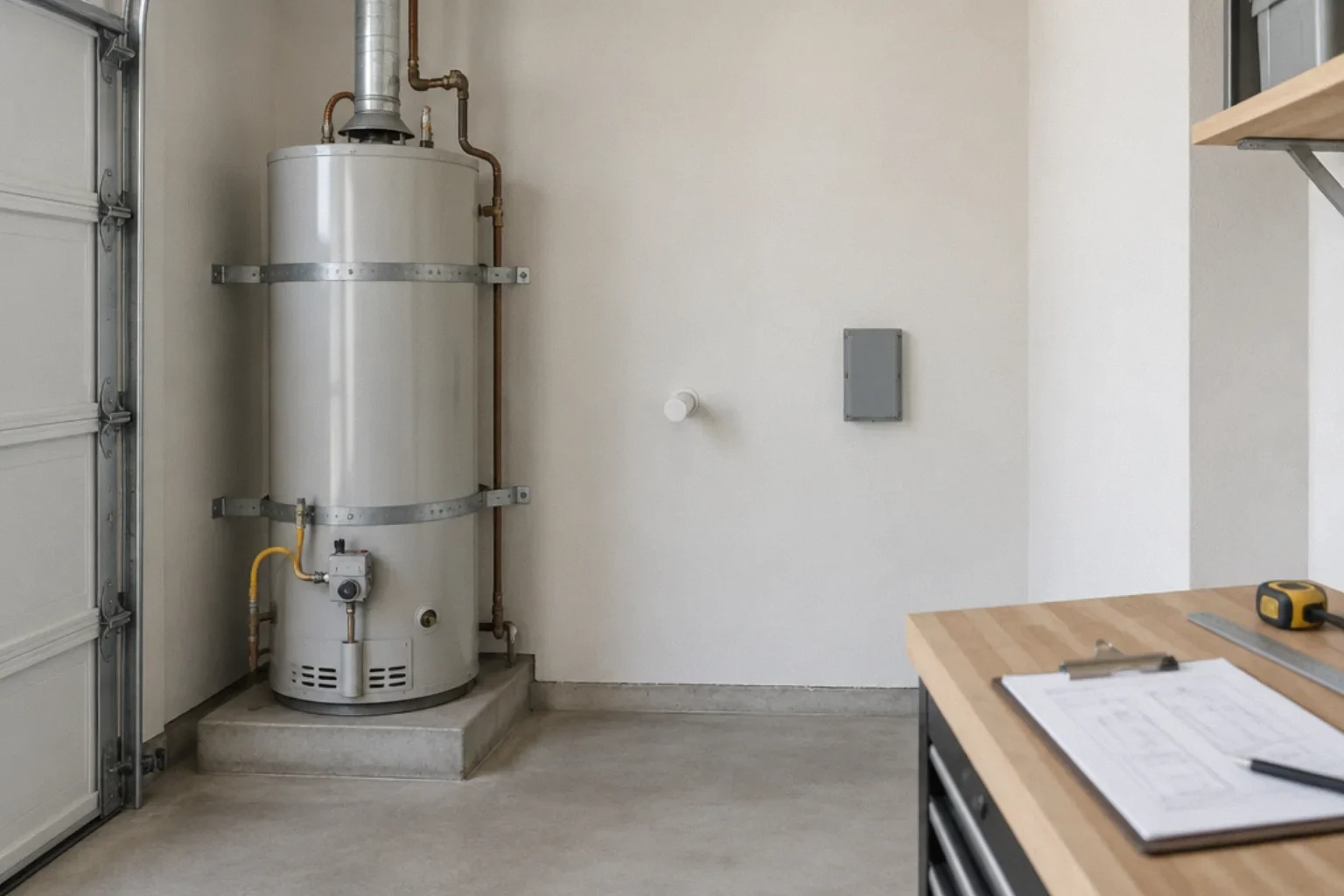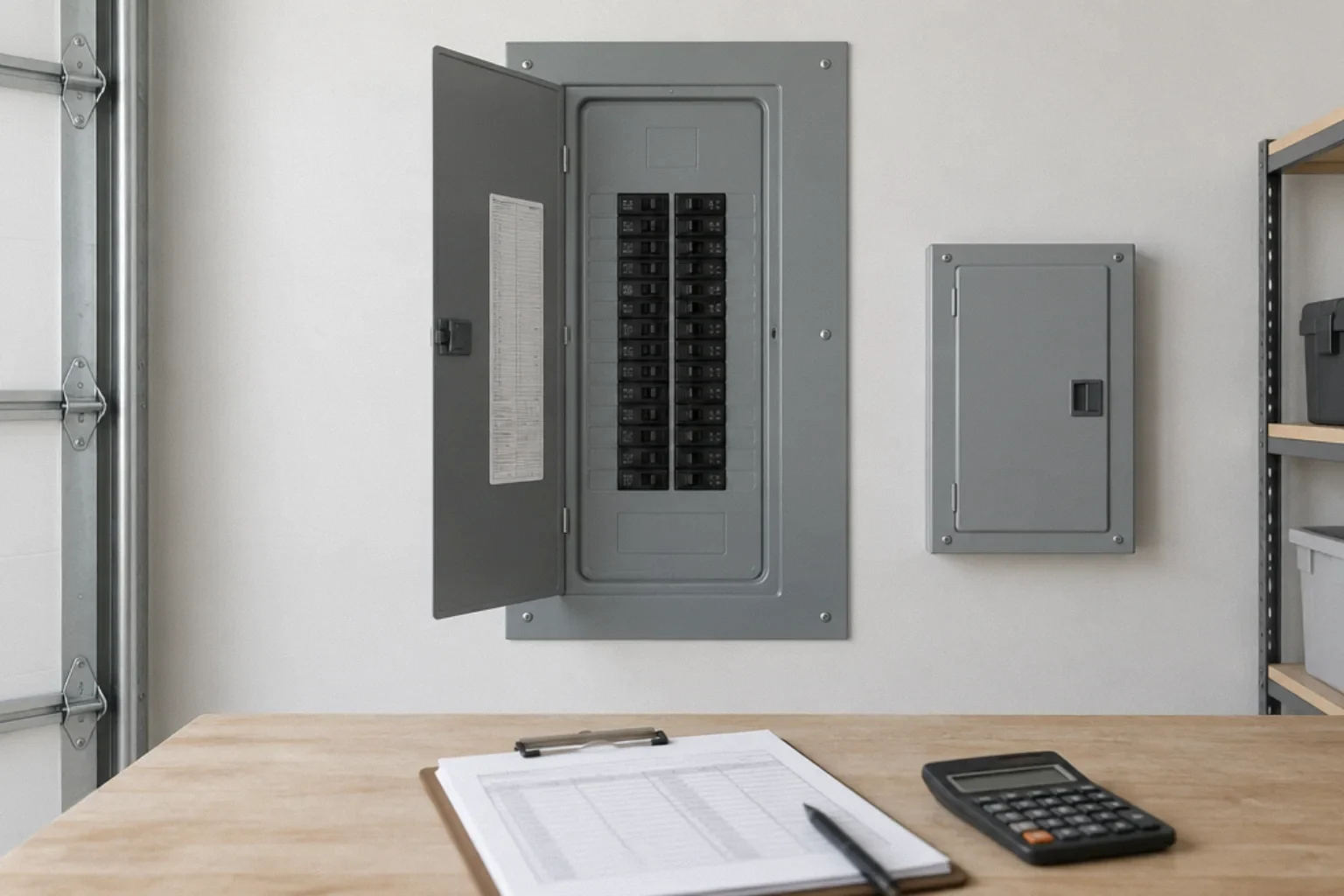
Short answer: not necessarily. A kitchen remodel adds required circuits, and switching to induction, a heat pump, a heat pump water heater or an EV charger adds large loads. Whether your existing equipment can handle them is answered by a load calculation for your planned equipment plus an inspection of the panel's condition, available spaces and compatibility. There are several possible answers: no change; an approved subpanel or listed breaker arrangement to solve a space problem; a new panel; a larger utility service; or load management that keeps new loads within the existing service. Start early, because anything involving the utility runs on its schedule.
This is general information verified on 3 October 2026. This guide assumes work by a licensed electrician under permit; some jurisdictions allow owners to do limited electrical work on their own homes under an owner-builder permit, with its own responsibilities and risks.
What Bay Area owners run into
A homeowner with a 100-amp panel and underground service reported being quoted widely different timelines for a 200-amp upgrade. Another owner adding a heat pump during a permitted remodel was told a calculation put the house at about 104 amps on 100-amp service. A Bay Area owner described using a load-management device to stay on 100-amp service while adding a heat pump and HPWH. An HVAC designer said they determine what the equipment actually requires electrically so the panel decision is not an assumption. Forum accounts are anecdotal; they show why the calculation and utility step need early attention.
What city handouts say
Kitchens carry fixed circuit requirements under the 2025 California Electrical Code, which applies to permits from 1 January 2026. Cupertino's current handout lists required kitchen circuits and protection and warns that the main panel may need upgrading based on field verification (Cupertino kitchen remodel handout). Pleasanton's says the existing main or distribution panel may require upgrading to accommodate required breakers (Pleasanton JLA 01.26). Both say to verify; neither says every remodel needs a new panel.
Space, capacity and condition are different problems
| Problem | What it means | Typical options (electrician evaluates) |
|---|---|---|
| No breaker space | Capacity may be fine, but no slots remain | An approved subpanel fed properly from the main, a listed and compatible breaker arrangement the panel is rated for, or panel replacement. No improvised or non-listed breakers. |
| Not enough capacity | Calculated load exceeds what the service or main can supply | Load management, lower-demand equipment choices, or a service upgrade with the utility |
| Panel condition or compatibility | Old, damaged, recalled or unsupported equipment, or no compatible breakers available | Panel replacement, sometimes regardless of load |
| Feeder or subpanel limits | An existing subpanel or its feeder is too small for new loads there | Larger feeder, relocated loads, or a new subpanel |
Panel replacement, subpanel, service upgrade: how they compare
| Option | Solves | Utility involvement | Watch for |
|---|---|---|---|
| Subpanel | Space near new loads | Usually none for the subpanel itself; ask whether new loads require utility notification | Main panel and feeder must support it |
| Panel replacement (same service) | Space, condition, compatibility | Typically a disconnect and reconnect | Does not add capacity |
| Service upgrade | Capacity | Application and evaluation; possible infrastructure work and deposits | Timeline and cost uncertainty |
| Load management | Capacity at peak | Ask; device and inspector acceptance vary | Equipment must be listed and approved for the purpose |
The PG&E process, briefly
PG&E's own panel upgrade roadmap says any new load addition requires an evaluation and an application through its Your Projects portal. PG&E then assesses whether lines and transformers can serve the new load, may require an upfront advance for that assessment, and, if infrastructure work is needed, provides a design, estimate and contract before scheduling. After the panel work passes city inspection, PG&E reconnects. PG&E says timing varies with project complexity and request volume, and recommends submitting early with a full list of planned loads, site photos and the proposed panel location. Because PG&E says new load additions require evaluation, ask your electrician whether your project needs a PG&E application even when you are not upgrading service. If another utility serves you, follow its process.
Worked example: one remodel, three paths
A hypothetical 1,600-square-foot 1960s house has 100-amp service and a full panel. The owners plan a kitchen remodel with an induction range and expect to add a heat pump and HPWH within two years, and perhaps an EV charger.
- Path A, kitchen now. The calculation shows the kitchen circuits and range fit within 100 amps, but there are no spaces. The electrician evaluates whether the panel is in good condition and compatible with an approved subpanel or listed breaker option; if not, a same-size panel replacement solves space.
- Path B, everything at once with high-demand equipment. The calculated load exceeds 100 amps. That points toward a service upgrade, with the utility's evaluation and timeline, unless the design changes.
- Path C, everything with managed demand. The same goals, but with a 120-volt HPWH, a modest EV charging rate and a listed load-management device. The calculation now fits within 100 amps, subject to inspector acceptance. Exceeding 100 amps in Path B did not automatically mean a service upgrade; it meant that design choices matter.
The owners choose based on cost, timeline and certainty about future loads. This is illustrative, not a calculation for any real house.
Energy Code readiness items
The CEC's 2025 single-family mandatory measures summary includes readiness provisions that reserve panel space and wiring: "240V ready" provisions near gas cooktops, furnaces and dryers, and battery-storage readiness for single-family homes whose utility electrical service is greater than 125 amps (§§ 150.0(s), (t), (u), (v)) (CEC 2025 mandatory measures summary). How they apply to an alteration depends on scope; ask your designer and plan panel space accordingly.
Mistakes to avoid
- Assuming the main breaker rating tells you whether you have room.
- Asking about the panel only at rough-in.
- Adding non-listed or incompatible breakers to squeeze in circuits.
- Applying to the utility with an incomplete list of future loads.
- Buying appliances before the electrician confirms circuits.
- Treating forum timelines as forecasts.
Checklist
- List of planned and likely future electric loads
- Load calculation, panel-space check and panel condition assessment
- Decision among subpanel, listed breaker option, panel replacement, service upgrade or load management
- Utility evaluation or application asked about early
- Budget for possible utility deposits and infrastructure costs
- Permits pulled; inspection before reconnection
- Readiness provisions checked with your designer
- Panel work written into the contract (BPC § 7159)
Questions that come up next
Does every kitchen remodel need a panel upgrade?
No. City handouts such as Cupertino's and Pleasanton's say the panel may need upgrading based on verification. An electrician's load calculation, space check and condition assessment decide.
My panel is full but has enough capacity. Do I need a new panel?
Not always. Depending on the panel's condition and listing, an electrician may use an approved subpanel or a listed, compatible breaker arrangement. Replacement may be needed if the panel is outdated, damaged or incompatible. Never use improvised or non-listed breakers.
What is the difference between a panel upgrade and a service upgrade?
A panel replacement changes the breaker panel, often for space or condition. A service upgrade increases the capacity of the utility connection and involves the utility's application and evaluation.
If my calculated load is over my service size, must I upgrade service?
Not automatically. Lower-demand equipment choices or listed load-management devices may bring the calculation within capacity, subject to inspector acceptance. Otherwise a service upgrade may be needed.
Do I need to contact PG&E if I am not upgrading service?
Possibly. PG&E's roadmap says any new load addition requires an evaluation and application. Ask your electrician whether your project needs one.
Sources and further reading
- PG&E: A roadmap to your electrical panel upgrade (CRS-0825-5760)
- City of Cupertino: Kitchen Remodel Handout (2025 codes, rev. 01.15.2026)
- City of Pleasanton: Residential Kitchen Alteration Requirements (JLA 01.26)
- California Energy Commission: 2025 Single-Family Residential Mandatory Requirements Summary
- California Business and Professions Code § 7159
Community questions behind this guide
These discussions identify homeowner concerns. Forum comments are personal accounts, not code or legal authority.