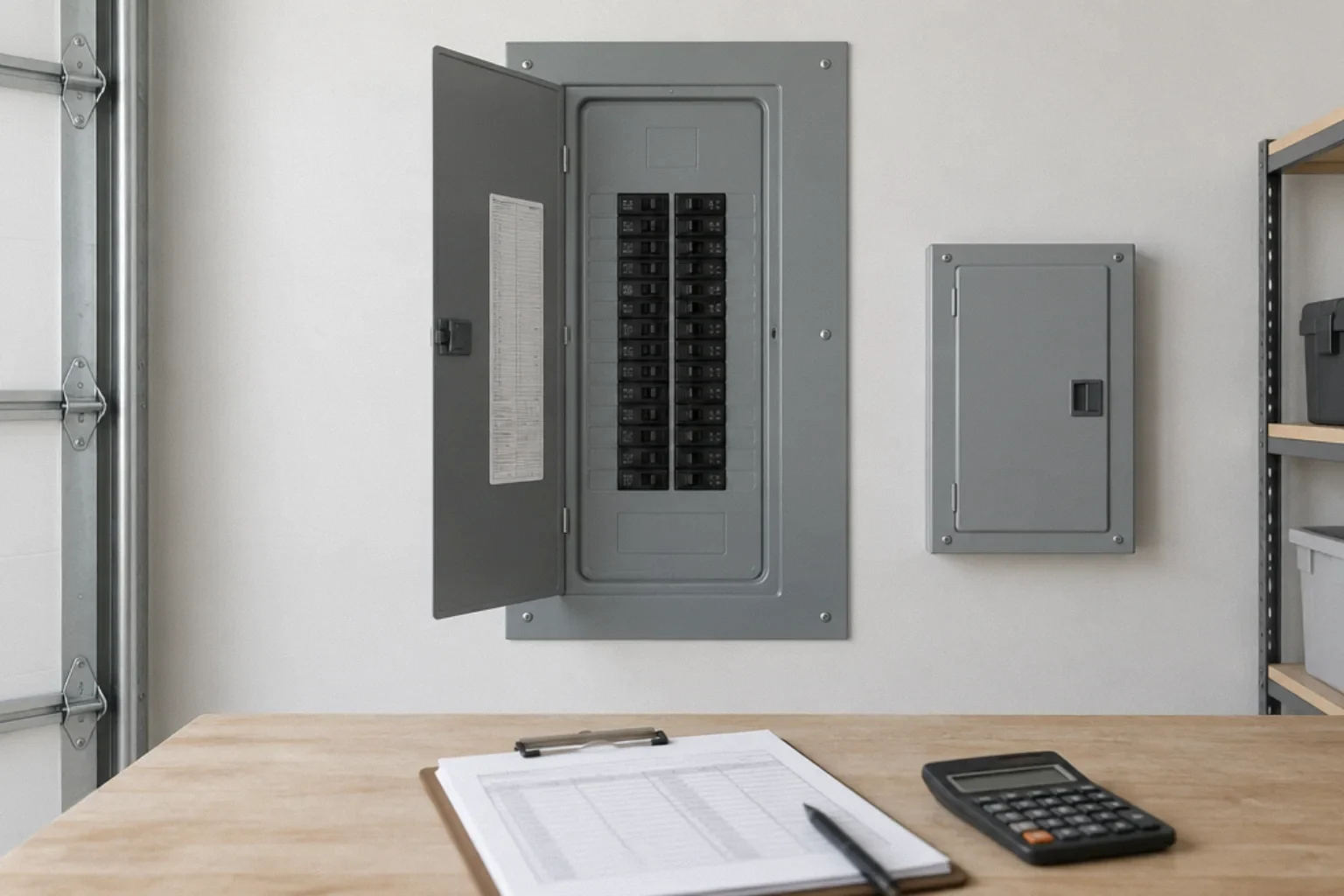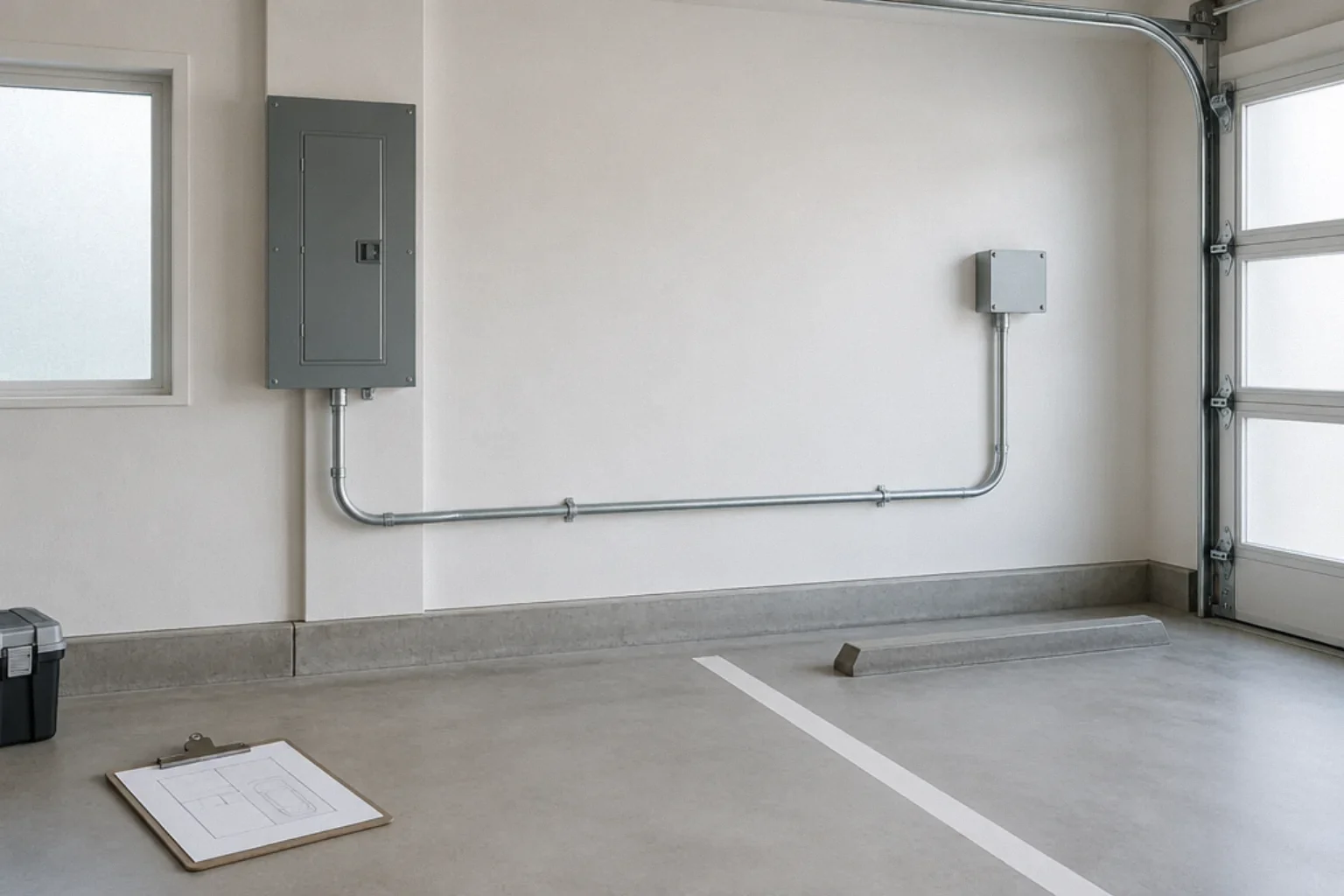
Short answer: start from how much charging you actually need, then have an electrician design the circuit around the specific equipment and a load calculation for your home. Many drivers meet daily needs with slower overnight charging; others want a 240-volt Level 2 charger. EV charging is treated as a continuous load, which affects how circuits and services are sized, and Bay Area permit offices ask for load calculations when you add Level 2 equipment. If you are remodeling the garage but not buying a car yet, the practical step is usually to run conduit or wiring and reserve panel space now, so the charger can be added later without opening finished walls.
This is general information verified on 3 October 2026. Current permits use the 2025 California Electrical Code, effective 1 January 2026.
Why this comes up in remodels
In the Bay Area threads we reviewed, EV charging came up alongside other electrification loads. A poster about San Francisco's renovation rule listed electric HVAC, heat pump water heaters, EV chargers and dryers as loads that can push older 100-amp homes toward upgrades. A buyer of an early-1970s house sketched a plan of insulation, a service upgrade, heat pumps and solar. An owner rewiring a whole house, outside the Bay Area, said they were adding induction and planning EV charging with a 200-amp panel. Forum accounts are anecdotal; they show that charging is best planned with other electric loads.
Level 1 and Level 2
The U.S. Department of Energy's Alternative Fuels Data Center says many EV owners meet daily driving needs by charging overnight with Level 1 from a standard outlet, ideally on a dedicated branch circuit, while Level 2 uses 240 volts, charges faster and needs professional installation (AFDC: charging at home). Foster City's current EV submittal guide summarizes Level 1 as 120 volts and Level 2 as 208/240 volts in its charger-level table and requires EV equipment to be listed by a nationally recognized testing laboratory (Foster City EVCS submittal requirements, updated 05/2026).
Using an existing outlet for Level 1
Santa Clara County's residential EV bulletin, last revised in July 2025 (before the 2025 code took effect, so check for an update), says using an existing 120-volt receptacle for Level 1 does not require a permit in its jurisdiction, while adding a new circuit for a Level 1 receptacle does (County of Santa Clara Bulletin EL009, revised 07/15/2025). Other jurisdictions may differ. Even when no permit is needed, have an electrician check that the outlet and circuit are in good condition, appropriately protected and not shared with other heavy loads. Do not use extension cords or adapters for EV charging.
How Bay Area permit offices treat EV loads
- Load calculation. Foster City's guide requires a residential electrical load calculation on existing loads per California Electrical Code Article 220 and Annex D, plus a line diagram showing wire, breaker, conduit, charger model and panel sizes. Santa Clara County's July 2025 bulletin set its own thresholds for when plans and load calculations are needed; because that bulletin predates the 2025 code cycle, confirm current thresholds with the County or your city.
- Continuous load. Cupertino's residential load calculation form, revised 5 May 2026, treats EV chargers as continuous loads and, for EV-ready and charger installations, requires the calculation to use the larger of 125% of nameplate or a Cupertino baseline it states as 9,600 VA (Cupertino residential load calculation form). That baseline is a Cupertino rule; your city may use a different approach.
- GFCI for receptacles. Santa Clara County's 2025 bulletin lists, under CEC 625.54, that all receptacles installed for EV equipment must have GFCI protection; confirm the current requirement with your department under the 2025 code. A hard-wired charger is a different installation type; ask your electrician what protection requirements apply to the specific listed equipment and connection method.
- Breakers, clearance and disconnects. The County's (2025) inspection list includes properly rated breakers (CEC 625.41), working clearances, anchorage per the manufacturer and a lockable disconnect for equipment rated over 60 amps (CEC 625.43).
- Vehicle impact. Both Foster City and the County ask for protection where the equipment could be struck by a vehicle.
- Inspections. The County lists rough wiring inspection where wiring will be concealed and underground inspection for buried runs, before final.
Reduced charger settings and load management: how they must be done
Two strategies can keep a charger within your existing service:
- A reduced, fixed charger setting. Many Level 2 chargers can be set to draw less than their maximum. For the load calculation to rely on a lower figure, the reduction generally has to be a setting configured by the installer in the way the listed equipment allows for that purpose, and accepted by the inspector. An owner-adjustable app slider is not a substitute for a compliant, documented setting.
- An EV energy management system (EVEMS). These devices monitor household load and reduce or pause charging so total demand stays within capacity. They need to be listed and compatible with the charger, monitor the right loads, and be designed by the electrician so that a failure does not overload the service. Inspector acceptance varies; ask before buying.
Neither is a workaround for an undersized service; both are design options your electrician evaluates and documents on the permit.
The utility
PG&E's panel upgrade roadmap says any new load addition requires an evaluation and an application through its Your Projects portal, and that timing varies with complexity and volume (PG&E panel upgrade roadmap). Ask your electrician whether your EV circuit requires a PG&E application in your case; do not assume either way. Santa Clara County's bulletin also reproduces PG&E clearance rules between gas meters and electrical equipment, which can affect where new service equipment goes. See panel upgrades before a remodel.
What to rough in during a remodel
- Choose the location based on the car's charge port, parking position, cord reach and walkways, and avoid spots exposed to vehicle impact or plan protection.
- Run conduit or wiring from the panel to that location while walls and ceilings are open, as your electrician recommends. Conduit preserves flexibility.
- Reserve panel space and label it.
- Plan outdoor or detached locations with equipment rated for the location; buried runs need underground inspection.
- Include it in the permit if you are wiring now, so rough-in can be inspected before walls close.
- Photograph and record the route for the future installer.
Worked example (hypothetical)
A household in a 1950s ranch with 100-amp service is converting part of the garage into a laundry area and adding a heat pump water heater, and expects to buy an EV within a year. The electrician's load calculation shows the water heater fits, but a full-power Level 2 charger would exceed capacity when calculated with the range and dryer. During the remodel the household has conduit run to the parking spot and panel space reserved, included in the permit for rough inspection. When the car arrives, the electrician proposes either an installer-configured reduced setting or a listed EVEMS, documents the choice in the permit's load calculation, and the household agrees to revisit a service upgrade if they later add a heat pump for space heating.
Mistakes to avoid
- Buying the most powerful charger without a load calculation.
- Relying on an app setting to justify a smaller circuit.
- Using extension cords, adapters or overloaded shared circuits for charging.
- Closing garage walls without conduit when an EV is coming.
- Installing without a permit where one is required.
- Assuming the utility does or does not need to be notified.
Checklist
- Daily charging need estimated; Level 1 or Level 2 chosen
- Listed equipment selected; spec sheet and installation instructions in hand
- Load calculation per your jurisdiction's method
- Reduced setting or EVEMS designed and documented if needed
- GFCI and disconnect requirements confirmed for the connection type
- Conduit or wiring roughed in and inspected before walls close
- Vehicle impact protection where needed
- Utility application question answered by your electrician
- Work written into the contract (BPC § 7159)
Questions that come up next
Do I need a permit to charge an EV from an existing outlet?
It depends on the jurisdiction. Santa Clara County's July 2025 bulletin said using an existing 120-volt receptacle for Level 1 did not require a permit there, while adding a new circuit or a Level 2 charger did. Check your city's current rules, have an electrician confirm the outlet and circuit are suitable, and do not use extension cords.
Can I set my charger lower to avoid a panel upgrade?
Possibly, but for the load calculation to rely on a lower figure, the reduction generally must be an installer-configured setting allowed by the listed equipment for that purpose and accepted by the inspector, or a listed energy management system designed by the electrician. An owner-adjustable app slider is not a substitute.
Why do permit offices treat EV chargers as continuous loads?
Charging can run for hours, and the electrical code treats it as continuous, which increases how much capacity is counted. Cupertino's 2026 load calculation form, for example, uses the larger of 125% of nameplate or a city baseline.
Does an EV charger outlet need GFCI protection?
Santa Clara County's July 2025 bulletin cites CEC 625.54 requiring GFCI protection for all receptacles installed for EV equipment; confirm under the current code with your department. Hard-wired chargers are a different installation type; your electrician should confirm requirements for the specific listed equipment.
What should I rough in for a future charger?
Conduit or wiring from the panel to the planned location, reserved and labeled panel space, and inspection of concealed or buried runs under the permit before walls close.
Sources and further reading
- U.S. Department of Energy, Alternative Fuels Data Center: Charging at Home
- City of Foster City: EVCS Submittal Requirements (updated 05/2026, 2025 code cycle)
- City of Cupertino: Residential Electrical Load Calculation form (revised 5/5/2026)
- County of Santa Clara: Bulletin EL009 Residential EV Charging Permits (revised 07/15/2025)
- PG&E: A roadmap to your electrical panel upgrade
- California Business and Professions Code § 7159
Community questions behind this guide
These discussions identify homeowner concerns. Forum comments are personal accounts, not code or legal authority.