Short answer: pick the exact induction cooktop or range first, then read its installation instructions for the electrical requirement. Most conventional built-in induction cooktops and full-size ranges are high-power appliances that need a 240-volt (or 208-volt) circuit whose breaker size depends on the model; GE Appliances, for example, lists 40 amps for its 30-inch and 50 amps for its 36-inch Monogram induction cooktops while stressing that each model's installation instructions control (GE Appliances: amp size). Lower-power options exist too, such as portable single-burner 120-volt units and some full-size ranges that use built-in batteries to work from a standard outlet; their trade-offs are different, so check the specific product. If your kitchen has only the 120-volt outlet that powered a gas range's igniter, plan on a licensed electrician assessing a new circuit and your panel. Then handle the gas line, the hood and your cookware.
This is general information verified on 3 October 2026. Electrical and gas work need appropriate permits and qualified trades.
Why owners hesitate
A San Mateo owner who switched to a heat pump water heater mentioned that they still needed to pull 240 volts for an induction stove. A buyer of an early-1970s house asked how big a deal induction is compared with other electric cooking while planning a panel upgrade and heat pumps. A poster about San Francisco's renovation rule worried that older homes with 100-amp service may need upgrades as electric loads are added. Forum accounts are anecdotal; the steps below address the shared concern.
Step 1: choose the model with the electrical in mind
Before buying, compare candidate models on these points from their spec sheets and installation instructions:
| Check | Why it matters |
|---|---|
| Voltage and required breaker size | Determines wire size, breaker and panel impact; differs by model and width |
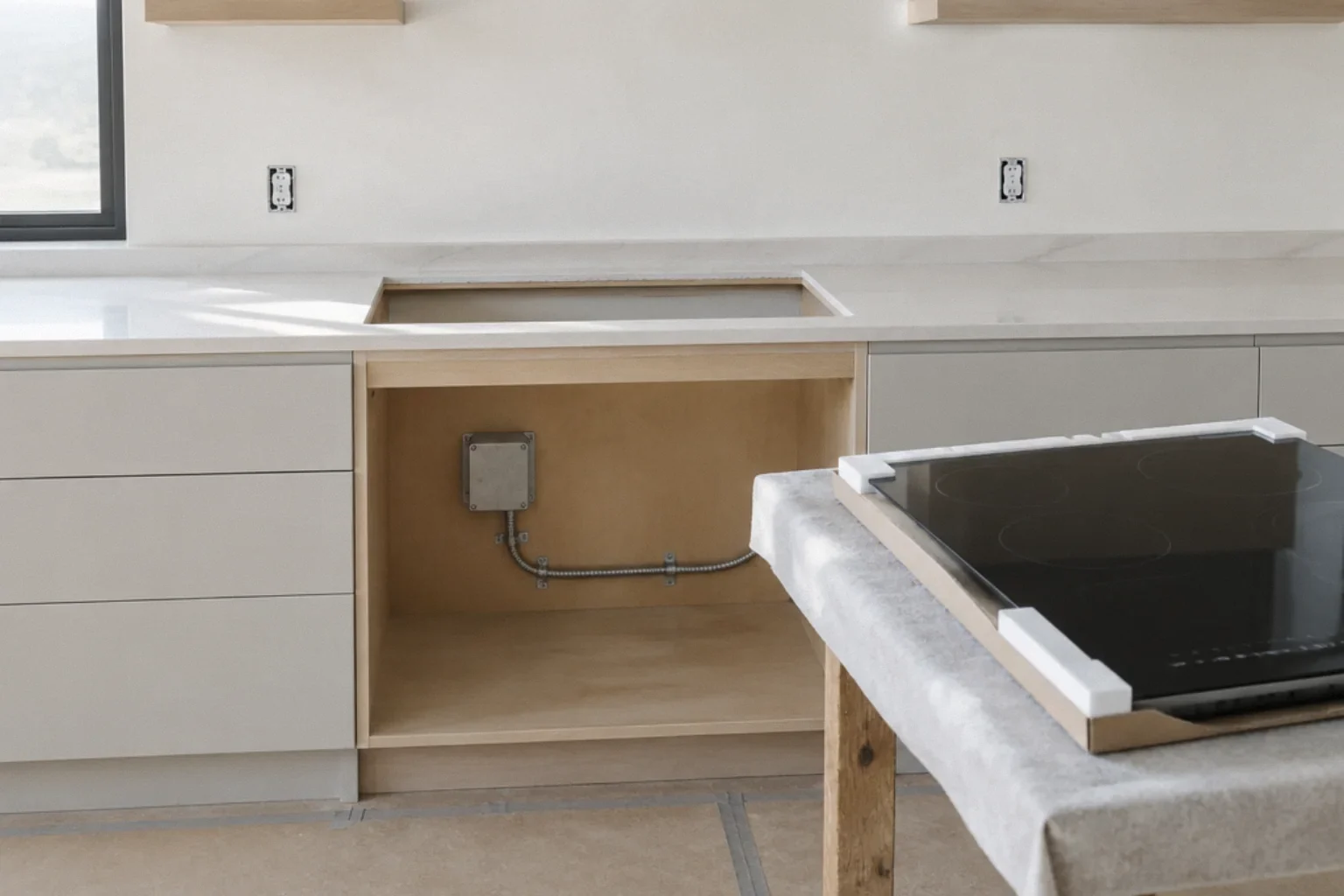
| Connection type (hard-wired junction box or cord and receptacle) | Affects rough-in location and whether a receptacle is needed |
| Cutout and cabinet dimensions | Built-in cooktops need a matching countertop opening and may limit the drawer below |
| Venting or clearance below the cooktop | Some models need airflow space underneath |
| Number of zones and bridge or boost features | Matches how you cook; higher-power features may come with higher electrical demand |
| Standard-outlet or battery-assisted options | May avoid new 240-volt wiring, with their own performance and space trade-offs |
Household scenario (hypothetical). A couple who cook nightly and occasionally host want a 36-inch cooktop. The model they like calls for a larger breaker than a 30-inch model. Their electrician's load calculation shows the 30-inch model fits their 100-amp service with the other planned kitchen circuits, while the 36-inch model would require load management or a service upgrade. They weigh the extra burner against cost and timeline and choose based on that, not on showroom appeal. A different household cooking mostly for one might find a lower-power option adequate. The point is to let the circuit question inform the model choice early.
Step 2: confirm circuit and panel
- Follow the installation instructions for breaker size and wire; do not oversize to "future-proof."
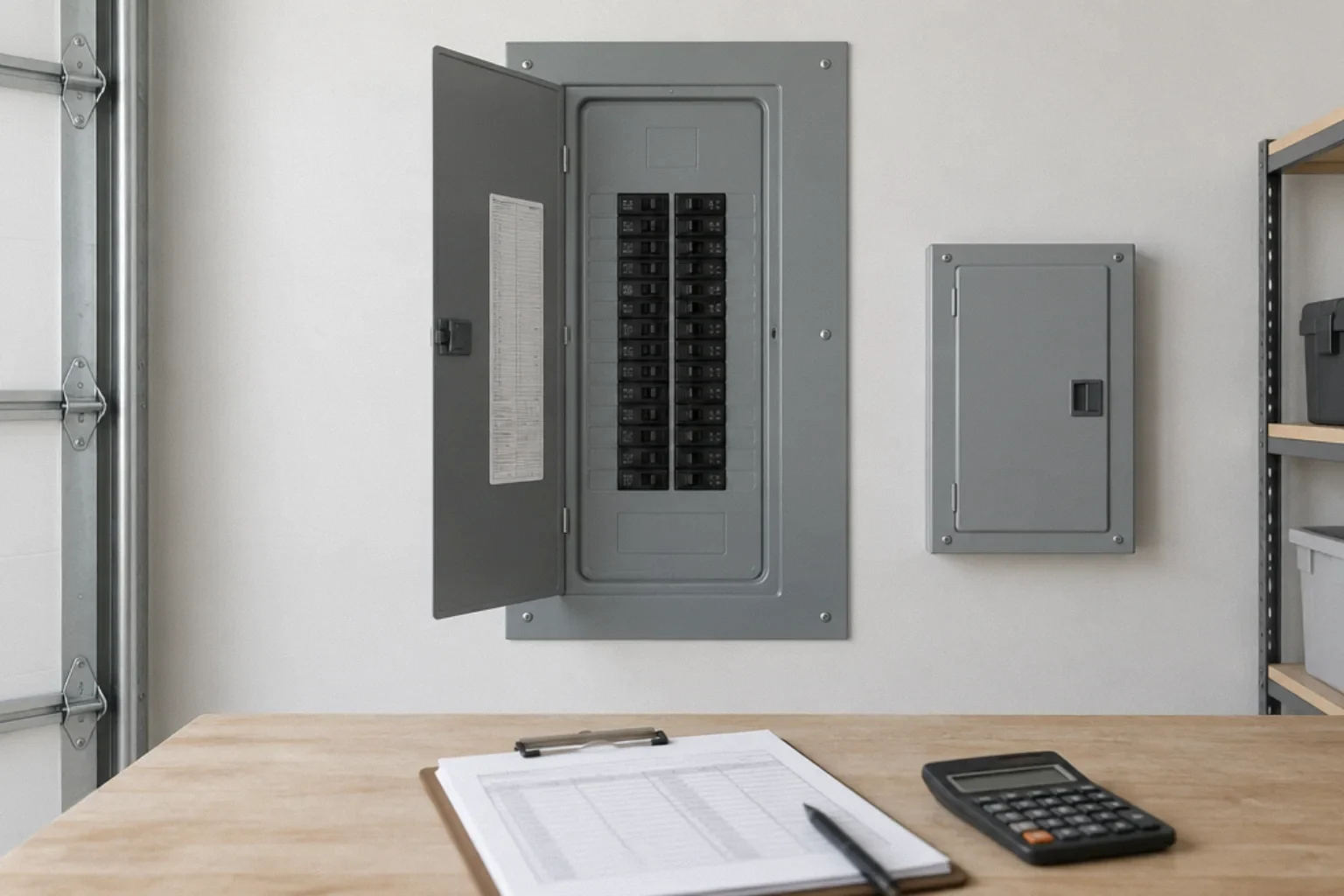
- Panel space and capacity are separate. A 240-volt circuit typically uses a double-pole breaker, though available panel arrangements vary; capacity is answered by a load calculation. See panel upgrades before a remodel.
- Kitchen circuit protection. Current Bay Area handouts list GFCI protection for kitchen receptacles rated up to 250 volts, including those serving ranges and cooktops, and AFCI requirements for 120-volt kitchen circuits (Pleasanton JLA 01.26; Cupertino 2025-code handout). How these apply to a hard-wired cooktop versus a receptacle-connected range is for your electrician and inspector.
- Cooktop plus wall oven. Plan the connection and circuit for both appliances. Depending on their ratings, the code and the manufacturers' instructions, they may need separate circuits or may be allowed on a shared cooking-appliance branch; your electrician should verify.
Step 3: what the Energy Code's "cooktop ready" provision says
The California Energy Commission's 2025 single-family mandatory measures summary describes "electric cooktop ready" for dwellings with gas or propane cooktops: dedicated, unobstructed 240-volt branch circuit wiring installed within 3 feet of the cooktop, with conductors rated at least 50 amps and a blank cover identified as "240V ready," plus reserved panel space for a double-pole breaker marked "For Future 240V use" (§ 150.0(u)) (CEC 2025 mandatory measures summary). That describes wiring and reserved space for the future, not necessarily an energized circuit. The summary is written for buildings subject to these mandatory measures; whether and how it applies to your alteration depends on scope, so ask your building department. If you keep gas for now, asking for this readiness during a remodel makes a later switch simpler.
Step 4: the gas line
Removing a gas range leaves a gas outlet that must be properly terminated or removed. Have a qualified, licensed plumber design and do this work to code and under permit where required, and test it as required. If you are electrifying fully, the utility may be involved with the meter.
Step 5: the range hood
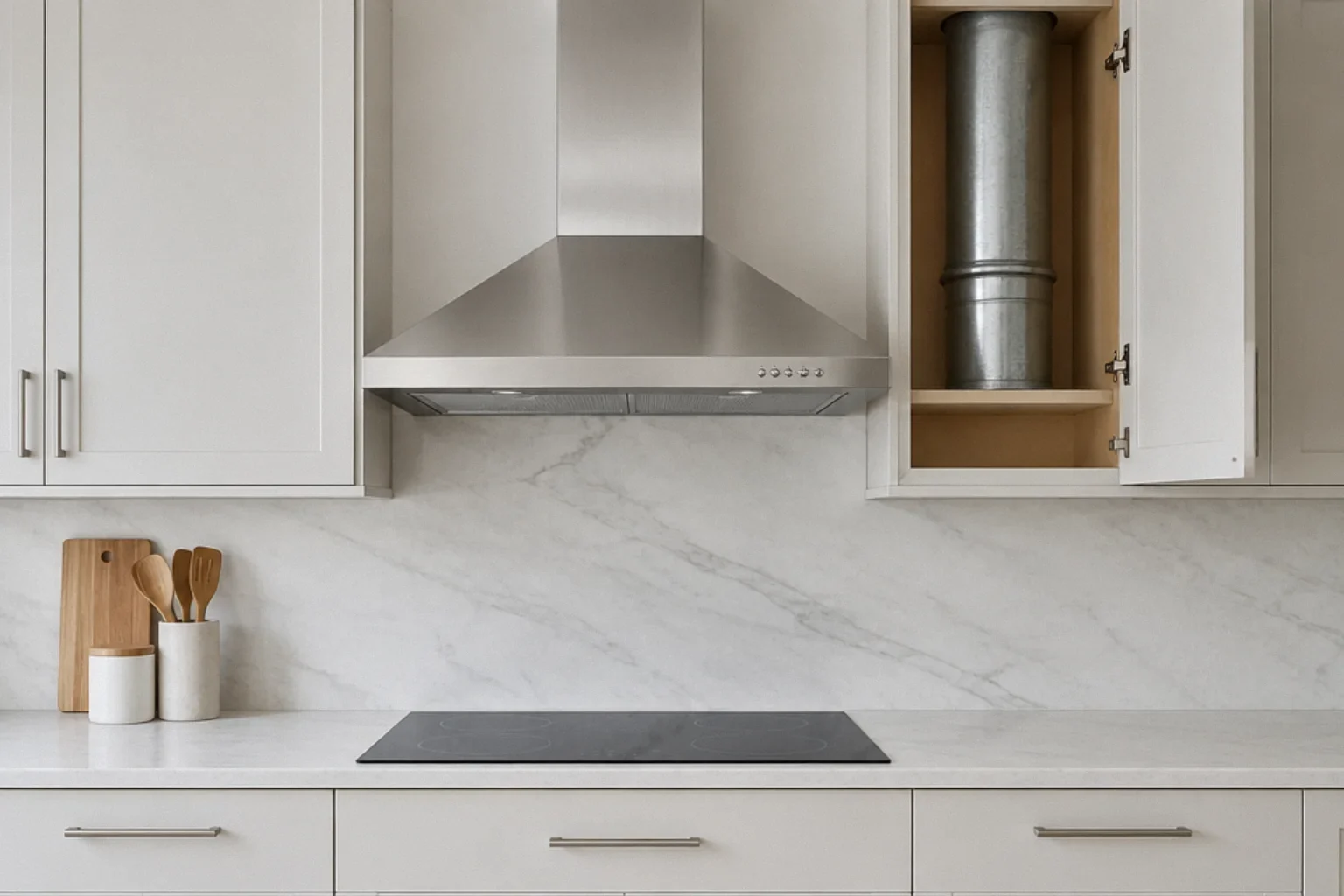
For single-family homes, Energy Code Table 150.0-G, reproduced in Pleasanton's handout, sets lower hood requirements over electric ranges than over gas ranges. Switching fuel can change which hoods qualify. Applicability depends on building classification and alteration scope; see our range hood guide, which explains the single-family versus multifamily distinction.
Step 6: cookware and cooking
Induction heats magnetic cookware directly. ENERGY STAR describes induction tops as transferring energy to compatible cookware with about 85% efficiency, about 5–10% more efficient than conventional electric resistance and about three times as efficient as gas (ENERGY STAR: residential induction cooking tops). A common home test is whether a magnet sticks firmly to the pan's base; follow your cookware maker's guidance. Many cast iron and some stainless pieces work; plain aluminum, copper and glass generally do not unless they have a magnetic base. Expect a learning curve: induction responds quickly, and some pans make a faint hum at high settings.
Mistakes to avoid
- Buying the appliance before confirming the electrical requirement and panel capacity.
- Assuming one breaker size fits every induction model.
- Leaving the gas outlet improperly terminated, or doing gas work without a qualified plumber.
- Cutting the countertop before having the cooktop's template.
- Keeping a hood chosen for gas without rechecking, or vice versa.
- Skipping permits for new circuits.
Checklist
- Model chosen; installation instructions and spec sheet in hand
- Circuit planned to the model's voltage and breaker size
- Panel space and load calculation confirmed by an electrician
- Wall oven connection planned and verified with cooktop
- Gas outlet termination or removal by a qualified plumber
- Hood requirement rechecked for the new fuel and your building type
- Countertop cutout matched to the template
- Cookware checked for induction compatibility
- Permits pulled; work written into the contract (BPC § 7159)
Questions that come up next
What size circuit does an induction cooktop need?
It depends on the model; the installation instructions specify it. GE lists 40 amps for its 30-inch and 50 amps for its 36-inch Monogram induction cooktops at 240/208 volts. Other brands and sizes differ.
Can an induction cooktop run on a regular 120-volt outlet?
Conventional built-in cooktops and most full-size ranges need a 240-volt circuit. Portable single-burner units and some battery-assisted full-size ranges are designed for standard outlets, with their own trade-offs. Check the specific product.
Does California require a 240V outlet near a gas cooktop?
The 2025 Energy Code summary describes cooktop-ready provisions: 240-volt branch circuit wiring rated at least 50 amps within 3 feet of a gas cooktop behind a blank cover marked 240V ready, plus reserved panel space. That is wiring and space for the future, not necessarily a live circuit. Applicability to alterations depends on scope.
Do a cooktop and wall oven need separate circuits?
Not always. Depending on appliance ratings, the electrical code and manufacturers' instructions, they may need separate circuits or may share a cooking-appliance branch. Your electrician should verify.
Will my pots work on induction?
Only magnetic cookware works. A common test is whether a magnet sticks firmly to the pan's base. Cast iron and many stainless pans work; plain aluminum, copper and glass generally do not without a magnetic base.
Sources and further reading
- GE Appliances support: Monogram appliance amp size (induction cooktops)
- California Energy Commission: 2025 Single-Family Residential Mandatory Requirements Summary
- ENERGY STAR: Residential Induction Cooking Tops
- City of Pleasanton: Residential Kitchen Alteration Requirements (JLA 01.26)
- City of Cupertino: Kitchen Remodel Handout (2025 codes, rev. 01.15.2026)
- California Business and Professions Code § 7159
Community questions behind this guide
These discussions identify homeowner concerns. Forum comments are personal accounts, not code or legal authority.