Short answer: the Natural Hazard Disclosure (NHD) Statement tells you whether a property is located in any of six state- or federally-mapped zones: a FEMA special flood hazard area, a dam failure inundation area, a high or very high fire hazard severity zone, a wildland area with forest fire risk, an earthquake fault zone, or a seismic hazard zone for liquefaction or landslide. The form is required by Civil Code § 1103.2, last amended effective 1 January 2025. It is a map check, not a site evaluation. The form itself warns, in capital letters, that the maps "estimate where natural hazards exist" and "are not definitive indicators of whether or not a property will be affected by a natural disaster." For buyers, a zone is a reason to ask specific questions about insurance, foundations and slopes. For owners planning a remodel or addition, it can affect what the building department asks for.
This guide explains each zone, what to do when you see a "yes," and how to use the state's own map tools. It is general information current as of 3 October 2026, not legal, geologic or insurance advice.
What people ask
An explainer post in a California mortgage forum summarized the six zones and argued that flood and fire zones are where buyers most often feel the effect, through lender-required flood insurance and difficulty finding fire coverage. That post is one writer's summary, not legal authority, and its premium figures are not verified here. In a Bay Area thread about Eichler homes, owners discussed seismic retrofits and pointed each other to California Earthquake Authority resources. These discussions show the two practical questions buyers bring to an NHD: what will it cost to insure, and does the house need strengthening.
The six zones, in plain terms
| Zone | What it maps | Questions to ask |
|---|---|---|
| Special flood hazard area (FEMA zones A or V) | Areas FEMA maps as subject to flooding | Will my lender require flood insurance? What is the quote? Is there an elevation certificate? |
| Dam failure inundation area | Areas that could flood if a dam failed | How does this affect insurance options? Is flood coverage worth considering even if not required? |
| High or very high fire hazard severity zone | Areas mapped for fire hazard | Can I get a homeowners policy, and at what cost? What do defensible space rules require? Will exterior remodel work need fire-resistive materials? |
| Wildland area | Wildland fire risk areas where the state has fire protection responsibility | Same insurance and maintenance questions as fire zones |
| Earthquake fault zone | Areas around active faults mapped for surface fault rupture | Is the house near a mapped trace? Would an addition need a geologic study? |
| Seismic hazard zone (liquefaction or landslide) | Areas where ground may liquefy or slide in an earthquake | What does the foundation sit on? Is a geotechnical evaluation advisable before buying or adding on? |
Check the maps yourself
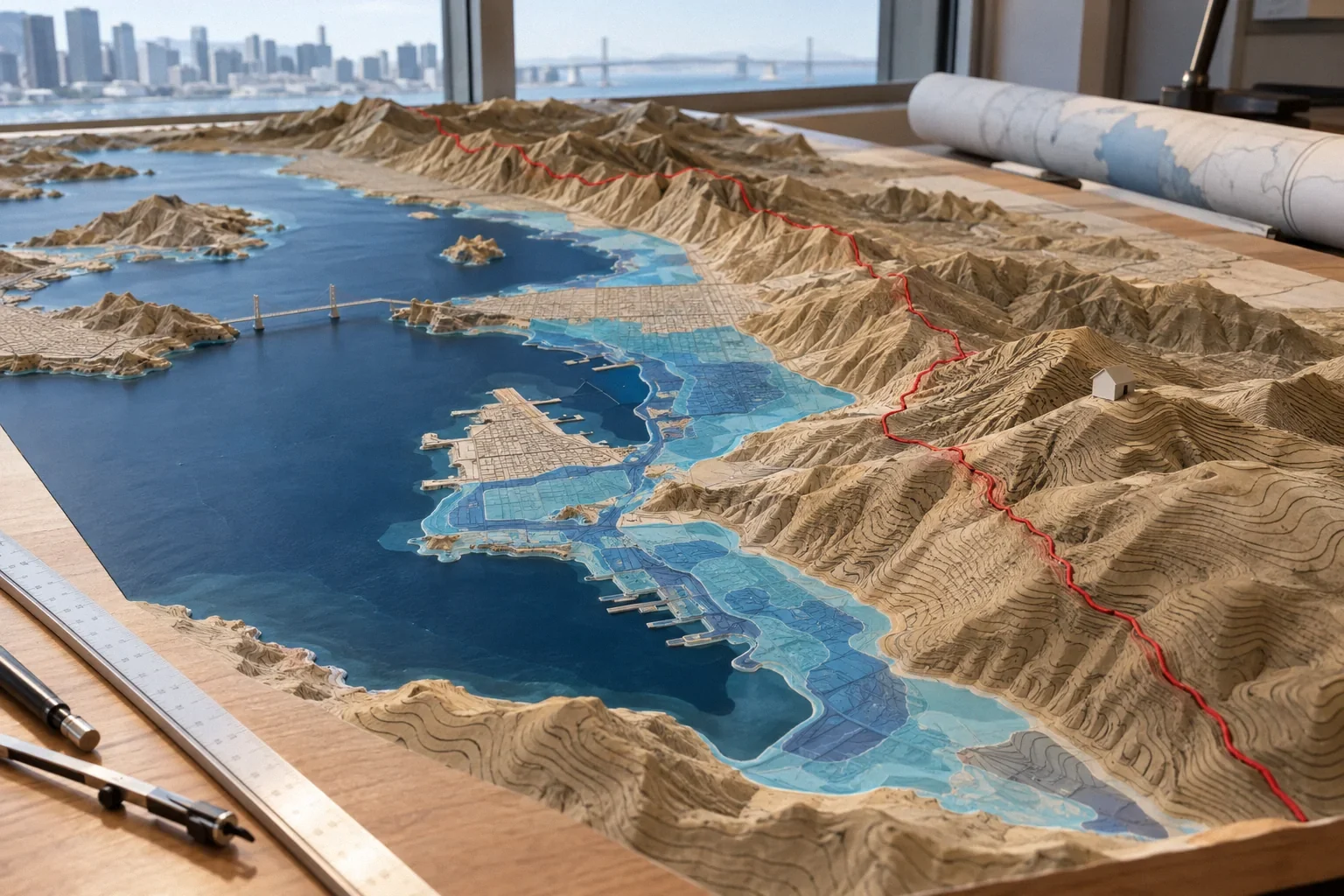
The California Geological Survey's EQ Zapp map lets anyone check whether a property is in an earthquake fault zone or a seismic hazard zone for liquefaction or earthquake-induced landslides. CGS cautions that mapped zones do not include every potentially active fault and do not replace required site-specific geological or geotechnical investigation. Use it to confirm what the NHD report says and to see how close the property is to a zone boundary.
For fire mapping, use the State Fire Marshal's FHSZ maps and confirm local adoption with the jurisdiction. These maps describe long-term hazard, not an individual home's risk after mitigation. They are not an insurance quote or a prediction that a carrier will reject the property.
What a "yes" means for a buyer
- Read the actual NHD and the report behind it. Third-party NHD reports often include additional local information beyond the six statutory zones; read which parts are statutory and which are supplemental.
- Get insurance quotes during the contingency period. Ask about homeowners, flood and earthquake coverage separately. For questions on code upgrade coverage and dwelling limits, see insurance and renovations.
- Match the zone to an inspection. A seismic hazard or fault zone suggests asking a structural or geotechnical engineer about the foundation and any retrofit history. A slope or landslide zone suggests looking at drainage, retaining walls and cracks. A flood zone suggests looking at grade, drainage and the lowest floor elevation.
- Check the property's permit history for foundation work, retrofits and additions.
- Ask the seller in writing about past flooding, drainage problems, settlement, and earthquake or fire damage. The Transfer Disclosure Statement asks about these too; see seller disclosures.
What a zone means if you are planning to renovate
- Fire zones. If you will replace roofing, siding, windows, decks or vents, ask the building department which wildland-urban interface construction requirements apply to your scope.
- Earthquake fault and seismic hazard zones. CGS notes that site investigations are required under the state laws for certain projects. Ask the department early whether your addition or foundation work triggers a geologic or geotechnical report.
- Flood zones. Substantial improvements in mapped flood zones can trigger floodplain management requirements; ask the floodplain administrator at your city or county.
- Retrofits. Opening walls for a remodel can be a practical time to add seismic connections recommended by an engineer, as Eichler owners discussed. See structural changes.
Worked example
An NHD report on a Bay Area hillside home shows "In" for a seismic hazard zone (landslide) and "Not in" for everything else. The listing mentions a remodeled kitchen and a new deck. A careful buyer would: confirm the zone on EQ Zapp and note how much of the lot it covers; ask the seller about cracks, drainage repairs and any geotechnical reports from past permits; pull permits for the deck and any retaining walls; schedule a structural or geotechnical consultation during the contingency; and get insurance quotes. If the buyer later wants to add a room, they would ask the city at the outset whether a geotechnical report is required. None of these steps assumes the house will slide; each turns a map flag into facts.
Mistakes to avoid
- Treating "Not in" as "no risk." The maps are estimates.
- Treating "In" as a verdict. A zone is a reason to investigate, not proof of a problem with the house.
- Waiting until after the contingency to get insurance quotes.
- Assuming the NHD replaces the TDS or other disclosures. The form says it does not represent all of the seller's or agent's disclosure obligations.
- Planning an addition without asking whether a zone triggers extra studies.
Checklist
- NHD statement and full report read; statutory vs supplemental items noted
- Zones confirmed on EQ Zapp and FEMA flood maps where relevant
- Homeowners, flood and earthquake insurance quotes obtained
- Engineer or specialist consulted for zones that matter to the house
- Seller asked about past flooding, settlement and damage
- Renovation plans checked against zone-related requirements with the building department
Current as of 3 October 2026. Hazard maps are updated over time; confirm the current maps and requirements for your property.
Questions that come up next
What are the six natural hazard zones on a California NHD?
A FEMA special flood hazard area, a dam failure inundation area, a high or very high fire hazard severity zone, a wildland area with forest fire risk, an earthquake fault zone, and a seismic hazard zone for liquefaction or landslide, under Civil Code § 1103.2.
Does being in a liquefaction zone mean I should not buy?
Not necessarily. The NHD form says the maps estimate where hazards exist and are not definitive indicators that a property will be affected. Ask an engineer about the foundation and soils, get insurance quotes, and decide based on those facts.
How can I check hazard zones myself?
The California Geological Survey's EQ Zapp map shows earthquake fault zones and seismic hazard zones for liquefaction and landslides. CGS warns that the map may not show all faults and is not a substitute for required site investigations.
Can a hazard zone affect my remodel?
It can. Fire zones may affect exterior materials, earthquake and seismic hazard zones may trigger geologic or geotechnical studies for certain projects, and flood zones can trigger floodplain requirements for substantial improvements. Ask your building department early.
Sources and further reading
Community questions behind this guide
These discussions identify homeowner concerns. Forum comments are personal accounts, not code or legal authority.