Short answer: unpermitted work is not automatically a reason to walk away, but it is a reason to slow down and investigate. Find out exactly what was done, when and by whom. Compare it with the city's permit records. Have the work assessed by people qualified to judge it, such as a licensed contractor or engineer, not only a general home inspector. Ask the building department what legalizing it would involve. Then price the risk, or negotiate repairs, credits or a longer contingency. For transfers that require it (the statute exempts certain transactions), California's statutory Real Estate Transfer Disclosure Statement asks sellers whether they are aware of room additions, structural modifications or other alterations or repairs made without necessary permits, or not in compliance with building codes (Civil Code § 1102.6). For covered residential sales, a seller who accepts an offer within 18 months of acquiring title must also disclose contractor-performed work and permits under Civil Code § 1102.6h. Disclosure tells you what the seller knows. It does not tell you whether the work is safe or legalizable.
This is general information current to 3 October 2026, not legal advice.
What Bay Area buyers are asking
Several recent threads describe the same dilemma. A buyer looking at a recently remodeled house in San Francisco's Sunset asked whether to worry that the kitchen and two baths were unpermitted. Commenters drew distinctions: new square footage is a serious concern, a new kitchen, bath or bedroom is a yellow flag, and for cosmetic work the question is what might have been covered up. A buyer in San Jose and Santa Clara found flips with no permit records for remodels done within two months of purchase, and asked about fines, forced removal and insurance. Another noticed listings counting unpermitted rooms as bedrooms. These are anecdotal accounts, but the questions are the right ones.
Step 1: read the disclosures closely
- Transfer Disclosure Statement: look for the seller's answers about unpermitted additions, alterations or repairs and code compliance. A 'no' answer means the seller says they are not aware. It does not mean the work was permitted.
- Flip disclosures: for covered residential property, if the seller accepted your offer within 18 months of acquiring title, § 1102.6h requires disclosure of contractor-performed additions, structural modifications, alterations or repairs since they took title, contractor contact details for jobs above the statutory threshold, and permits or where to get them.
- Timing: if the TDS is delivered after you make your offer, § 1102.3 gives you a short window to terminate, three days after in-person delivery or five after mail or electronic delivery (Civil Code § 1102.3). Your purchase contract's contingencies matter too.
See our guide to the flipped-house disclosure law.
Step 2: compare against permit history
Request the property's permit history from the city or county building department, or use its online lookup where one exists. Coverage and completeness vary, so ask the department if records look thin. Compare it against:
- the listing's room and bathroom count;
- the county assessor's recorded square footage and room count;
- visible conditions: a finished garage, a newer bathroom, an added room.
One Castro Valley buyer described a house marketed as four bedrooms and two and a half baths that the county recorded as three and two. Mismatches like that are a prompt for questions, not an automatic deal-breaker.
Step 3: get the right inspections
| What you see | Who should look | What to ask them |
|---|---|---|
| New kitchen or bath, no permit | Licensed general contractor; electrician or plumber as needed | Visible wiring and plumbing quality, venting, GFCI, waterproofing signs; what legalizing might involve |
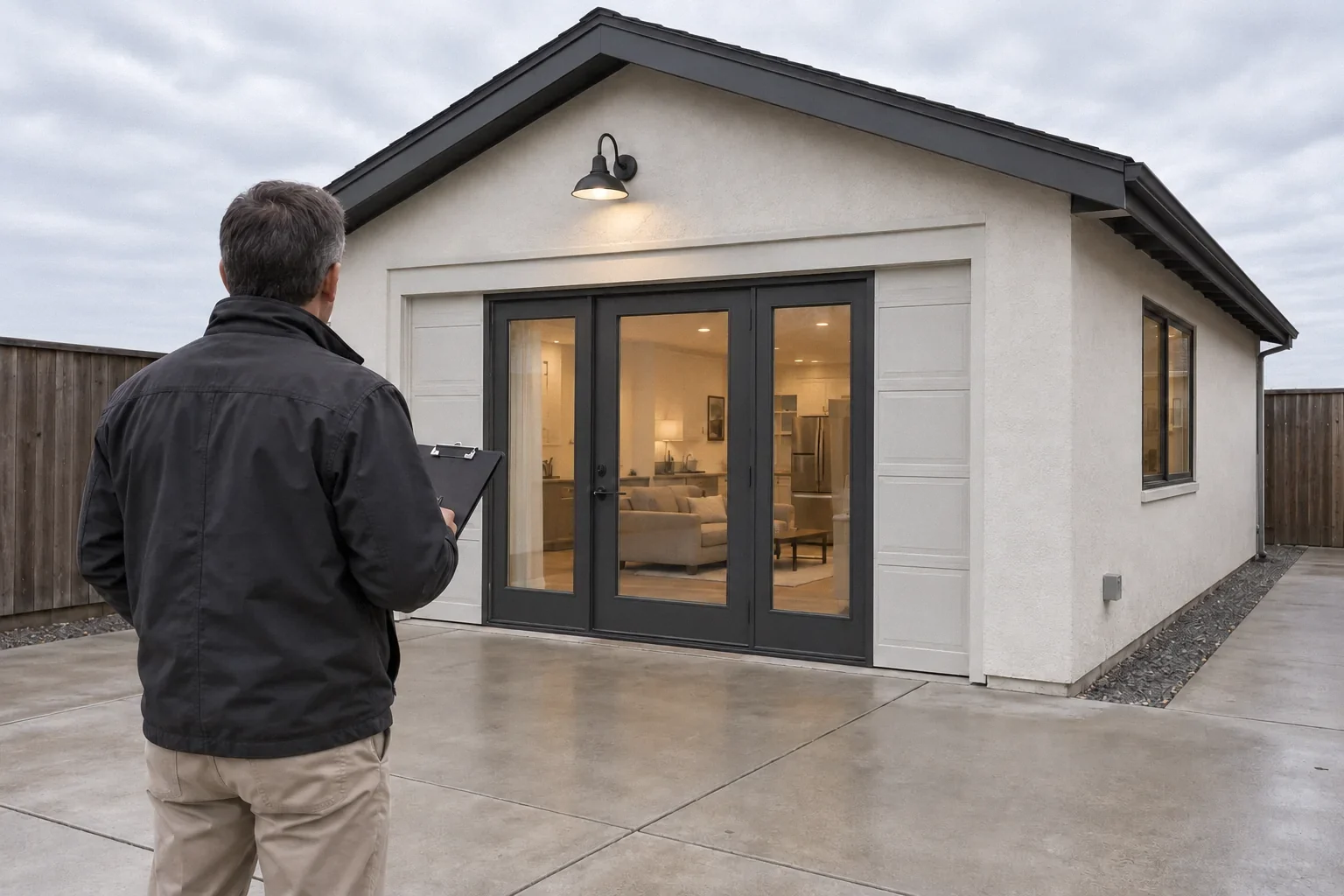
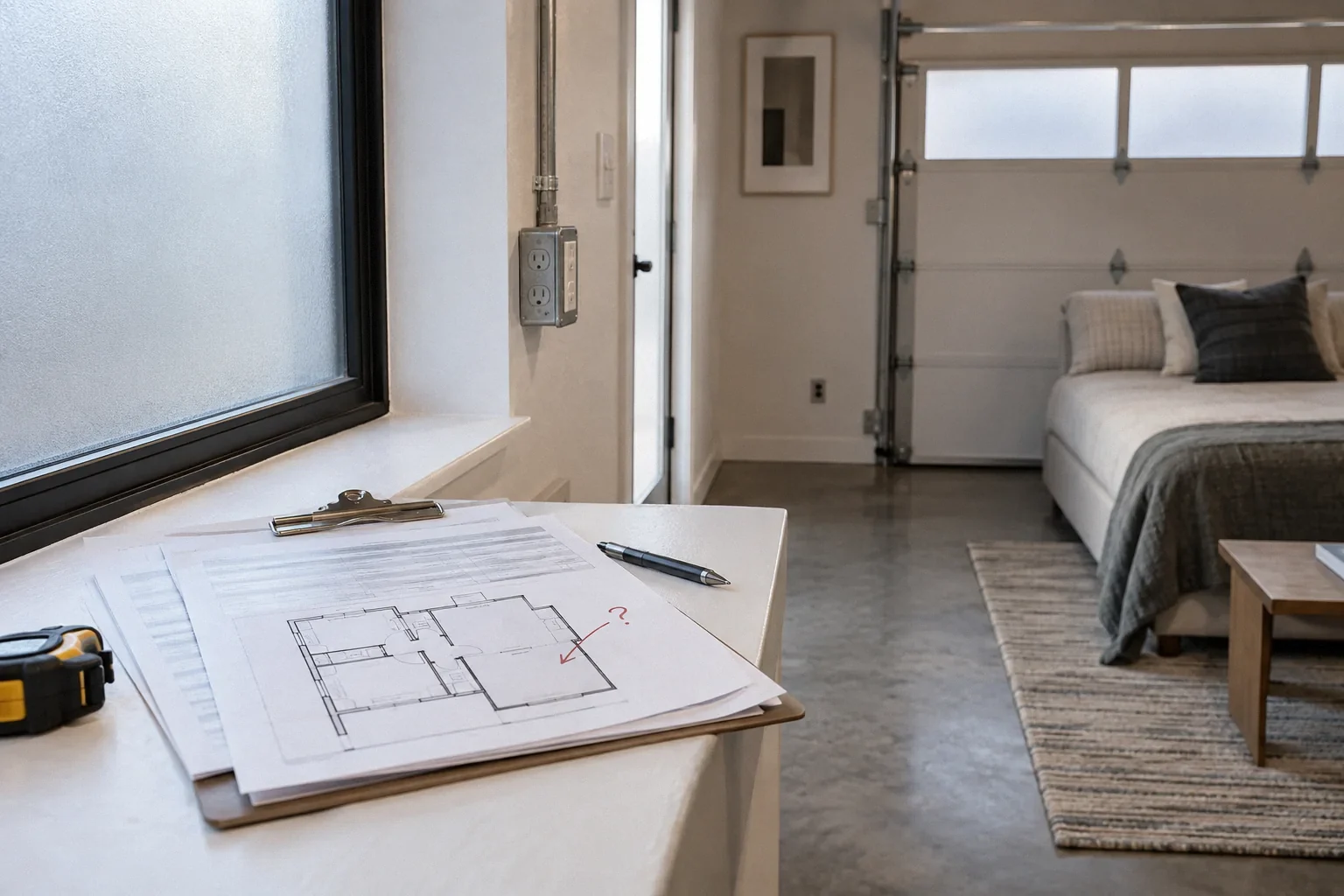
| Garage converted to living space | Contractor or designer familiar with conversions; possibly an engineer | Egress, ceiling height, ventilation, fire separation, slab moisture, electrical capacity |
| Room addition | Structural engineer and contractor | Foundation and footings, framing, roof tie-in, drainage |
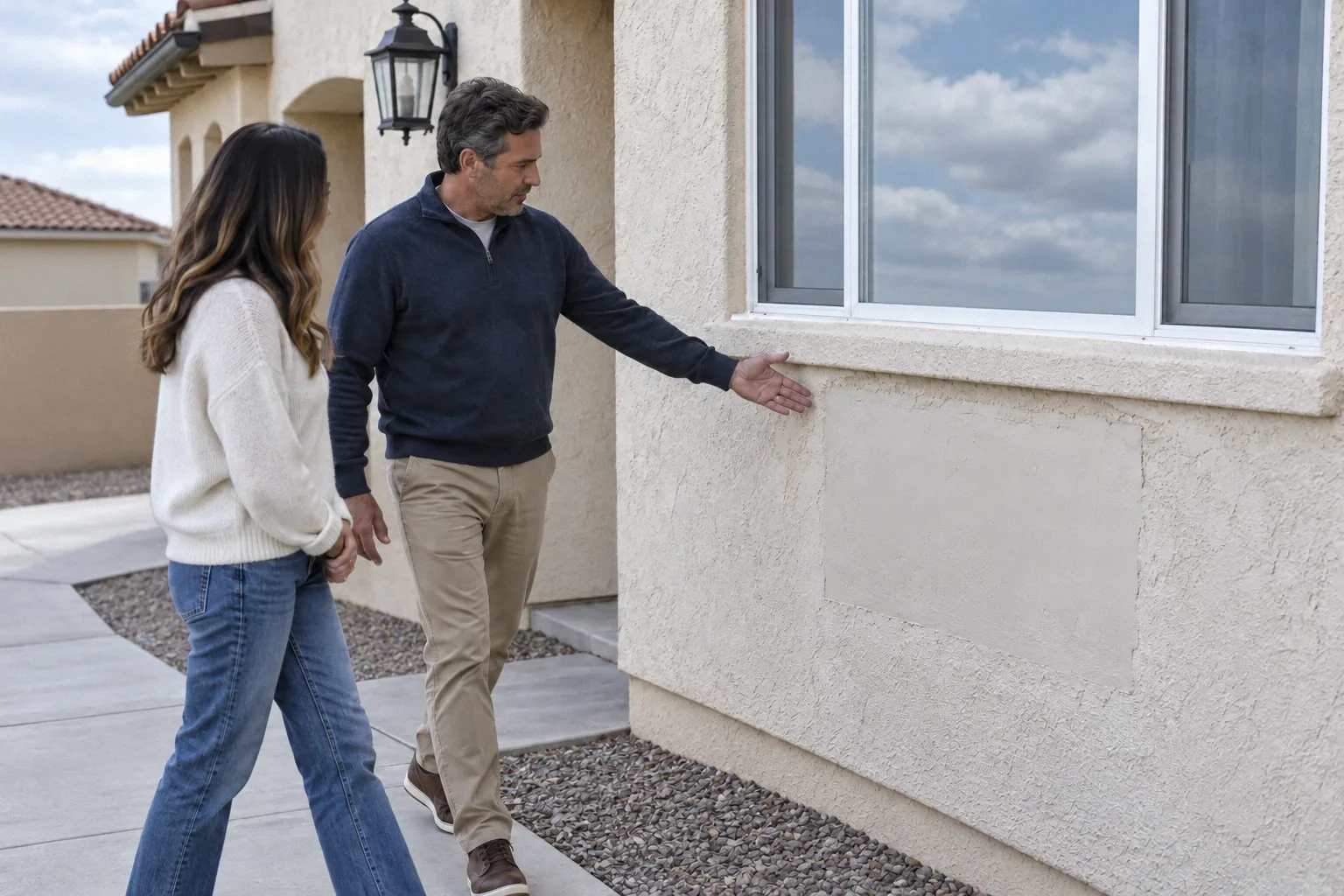
| Flipped house with cosmetic finishes everywhere | General inspector plus targeted specialists | Signs of covered moisture, sloped floors, recent patching, new paint over stains |
A general home inspection is a non-invasive visual inspection. It is not a code-compliance certification and does not open walls, though inspectors can and do report visible conditions that look like code issues. See what home inspections cover.
Step 4: ask about legalization before you commit
Talk to the building department, or have a designer or contractor do so, about what legalizing the work would require: plans, inspections, opening walls, corrections, and possibly removal if the work cannot meet code. One owner reported that architects and engineers said an unpermitted addition may not be realistically legalizable because of shallow footings. See legalizing unpermitted work.
Step 5: price the risk and negotiate
- Estimate costs to legalize or correct, with written estimates where possible.
- Negotiate: a price reduction, a seller credit, seller-completed legalization before closing, or a longer inspection contingency to finish due diligence.
- Ask your insurer before closing how the policy treats unpermitted areas and work. A commenter in a San Mateo thread claimed adjusters look for unpermitted work and may deny claims. Coverage depends on the policy and facts, so get the answer from the insurer, not from a forum.
- Ask your lender and appraiser how unpermitted rooms will be treated in valuation.
- Consider property tax. Legalized new construction can affect assessed value. See property tax after a remodel.
A worked example
Hypothetical. A listing shows a three-bedroom house with a 'bonus room' behind the garage. Records show no permits since the 1980s. The bonus room has a bathroom.
- Disclosures: the seller checks 'yes' for alterations without permits and describes the bonus room as 'built by previous owner'.
- Inspection: the contractor finds the bathroom drains into a line of unclear origin, the room's only window is small, and the wiring is a mix of cable types.
- Department conversation: legalizing would need plans, opening walls for inspection, verification of the drain connection, egress compliance and electrical corrections. Whether a bathroom can stay depends on the drain path.
- Decision: the buyer asks for a credit based on two written estimates and extends the contingency by a week to get them. Valuing the room as non-bedroom space for price purposes is a negotiating approach, not a fix. It does not legalize the room or make an unsafe bathroom drain or wiring acceptable to use. The buyer plans to legalize or correct the room, or to stop using the unsafe elements, under the department's direction after closing.
Red flags that call for extra caution
- Fresh paint or new flooring in patches, especially on ceilings below bathrooms
- Rooms counted as bedrooms without proper egress
- New square footage with no permits
- Electrical or plumbing work that looks amateur at visible points
- Advice to 'just say it was like that when you bought it'. That is an attempt to hide information from future buyers and from building officials, not a strategy. See unpermitted work and disclosure
Bay Area applicability
Bay Area threads describe unpermitted work as common in some older neighborhoods. We cannot measure how common, and it does not make any particular house safe. Permit records are kept by each city or by the county for unincorporated areas, and their lookup tools differ. Ask the department that actually has jurisdiction over the address.
Current to 3 October 2026.
Questions that come up next
Should I walk away from a house with unpermitted work?
Not automatically. Find out what was done, check permit records, get qualified assessments, ask the building department what legalization would involve, then price the risk or negotiate. New square footage and structural or system work deserve the most caution.
Does the seller have to tell me about unpermitted work in California?
For covered residential transfers, the statutory Transfer Disclosure Statement asks whether sellers know of alterations or repairs made without necessary permits or not in compliance with code. Some transactions are exempt from the form, but other disclosure duties may still apply. Covered sellers who accept an offer within 18 months of acquiring title also have the additional work and permit disclosures in Civil Code section 1102.6h.
Will my insurance cover unpermitted parts of the house?
It depends on your policy and the facts. Ask your insurer in writing before closing how unpermitted areas and work are treated.
Can the city make me remove unpermitted work I didn't do?
Departments can require legalization, correction or removal when unpermitted work is identified, and responsibility generally follows the property. Ask the department what applies before you buy.
Sources and further reading
Community questions behind this guide
These discussions identify homeowner concerns. Forum comments are personal accounts, not code or legal authority.