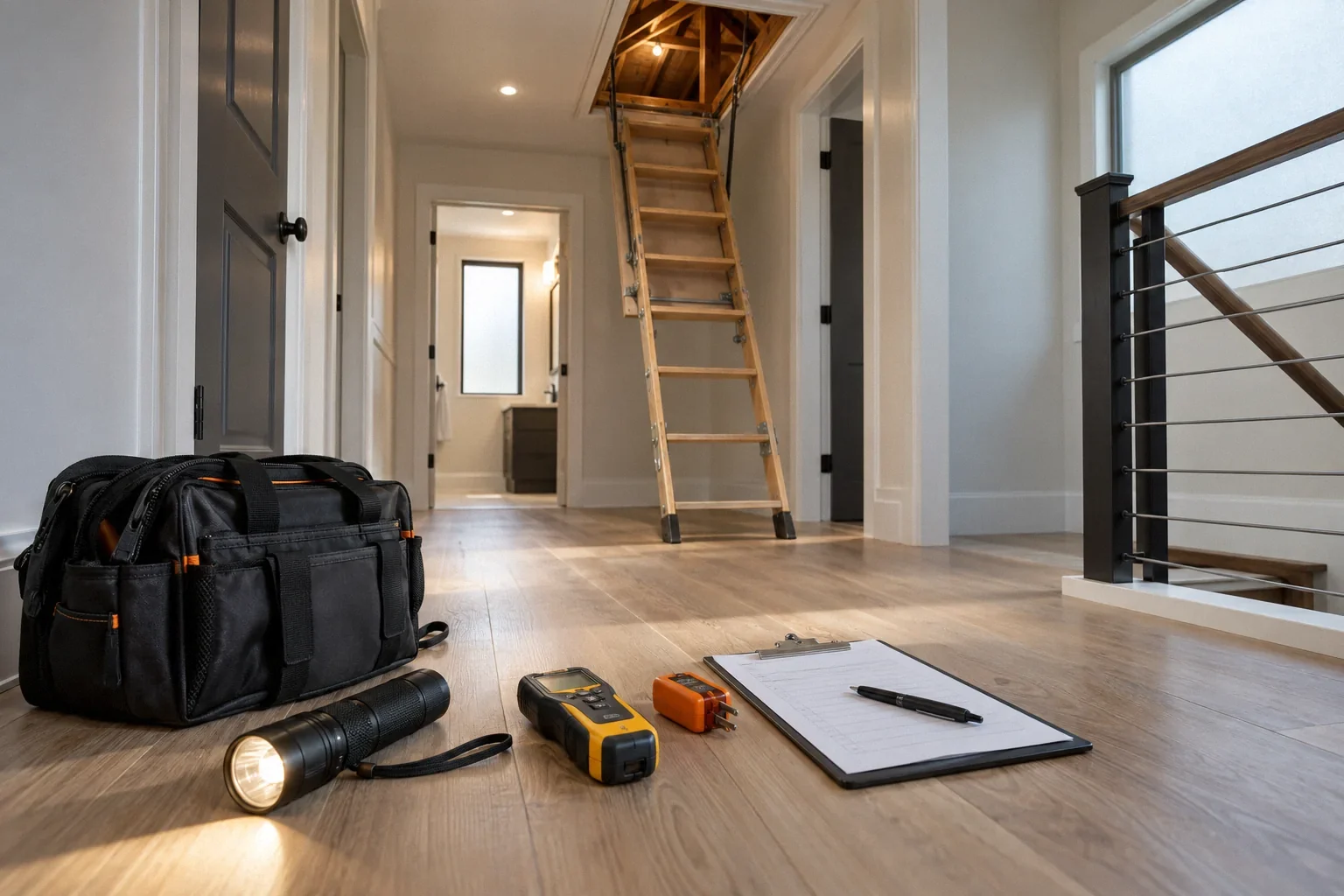
Short answer: a general home inspection in California is a noninvasive physical examination. Under Business and Professions Code § 7195 it covers the mechanical, electrical and plumbing systems and structural and essential components of a one-to-four unit dwelling, looking for material defects. Inspectors do not open walls, pull up flooring or dig. That means conditions hidden behind finishes, under a slab or inside a sewer line can be outside what a reasonably careful inspector could see. The solution is not to distrust inspectors but to read the report's scope and limitations and to order specialist inspections where the house gives you reason to.
This guide explains the legal standard, the typical blind spots, how to choose specialists, and how to read a report on a recently renovated home. It is general information current as of 3 October 2026.
When the inspection and reality diverge
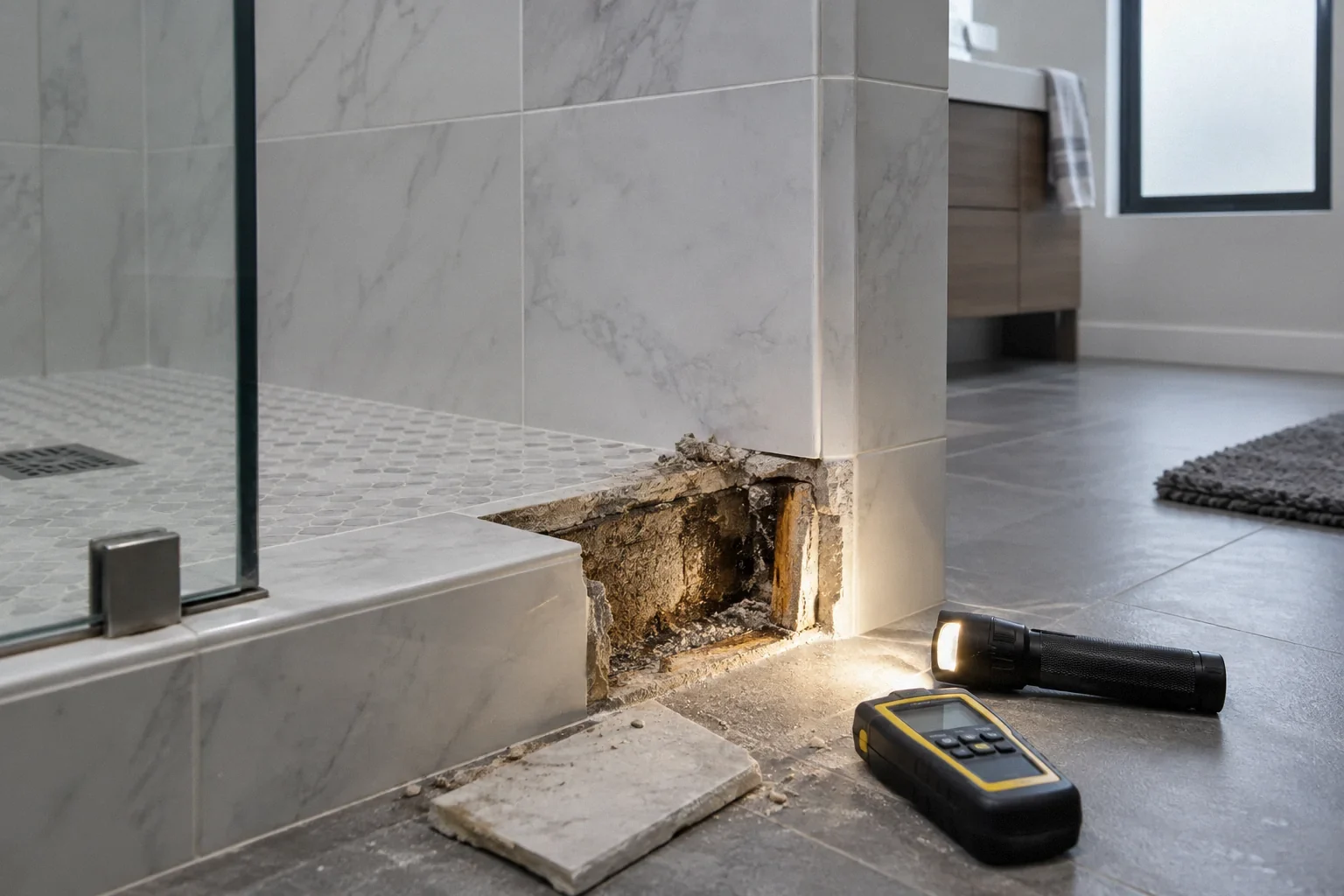
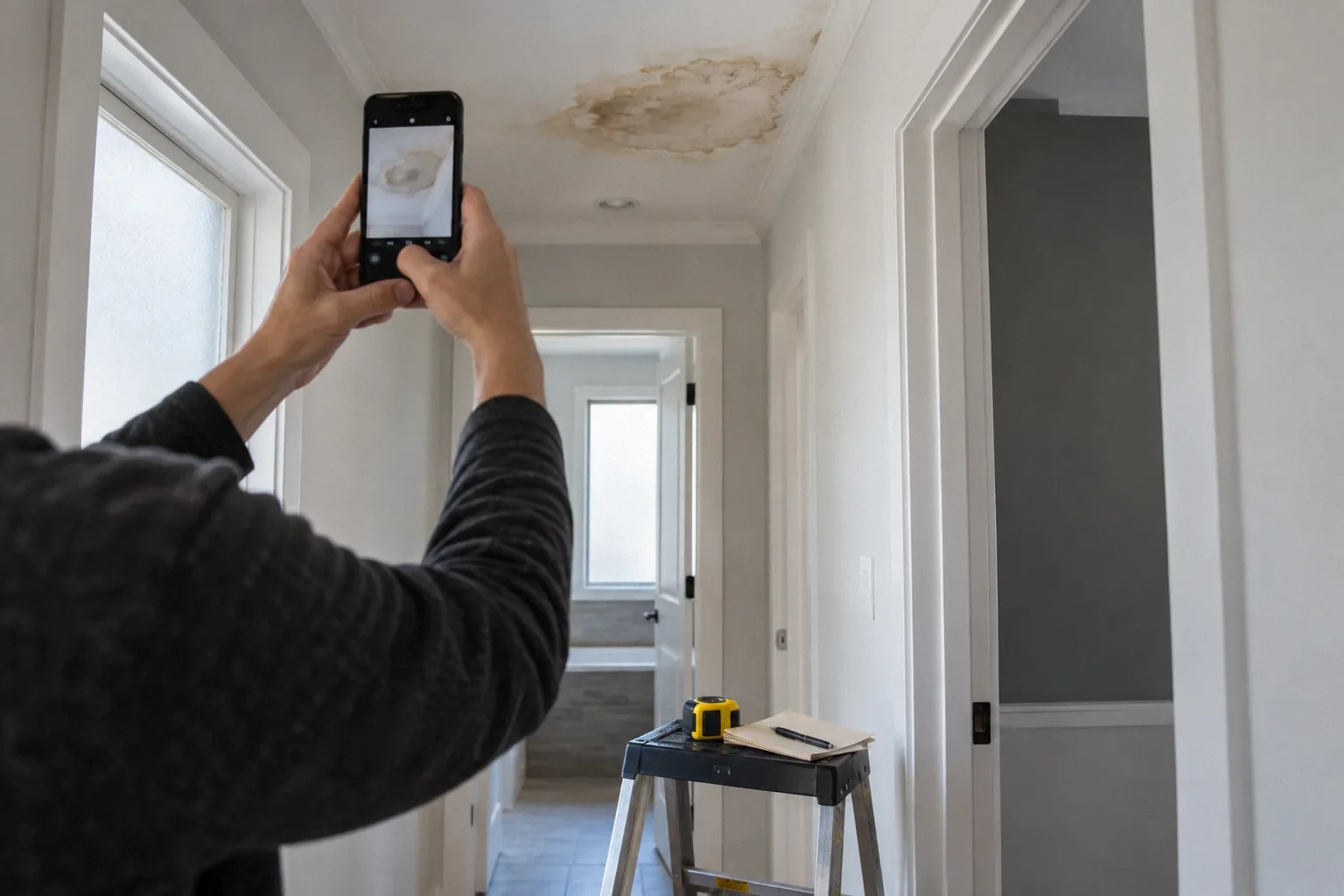
Buyers describe both sides of this. One first-time owner found a ceiling leak during their first shower, though the inspection "came out good"; the owner reported that the leak stopped in one quick test when the shower head was pointed away from the door. That is the poster's observation, not a diagnosis, but it shows how a leak can depend on how a fixture is used on a given day. Another buyer's inspector did flag moisture at the edge of a shower pan, with a moisture reading and visible damage, and recommended replacement, which then left the buyer unsure which trade to call. A house hunter brought a laser measure to showings, and a commenter suggested a moisture meter to compare exterior and interior walls. These are personal accounts, not technical authority. They show that an inspection is a sampling of conditions on one day, not a guarantee.
What the law requires of inspectors
- Scope. § 7195 defines the inspection as noninvasive and physical, performed for a fee in connection with a transfer, of readily accessible areas. The section was amended effective 1 January 2025 to update requirements for reporting on pool and spa safety features.
- Standard of care. § 7196 requires an inspection with the degree of care a reasonably prudent home inspector would exercise.
- Conflicts of interest. § 7197, subject to exceptions stated in the statute, generally bars inspectors from offering to do repairs for a fee on a structure they inspected in the past 12 months, inspecting property in which they have a financial interest, paying referral compensation to owners or agents, and accepting engagements where the fee depends on the report's conclusions.
Those rules shape what you can expect: a careful visual and operational check, honestly reported, by someone without a stake in repairs. They do not promise that every concealed defect will be found. A buyer's home inspection is also not a municipal building inspection: it does not approve work, close a permit or confirm code compliance. A permit final comes only from the building department; see open and expired permits.
Common blind spots and who covers them
| Area | Why a general inspection is limited | Specialist to consider |
|---|---|---|
| Inside walls and under tile | Noninvasive; finishes hide framing, piping and waterproofing | Leak detection or a shower/waterproofing specialist where there are stains, soft spots or new finishes in wet areas |
| Sewer lateral | Underground; not visible | Plumber with a camera; in participating East Bay communities, EBMUD's compliance process (below) |
| Roof | Access and safety limits; some roofs are not walked | Roofer |
| Foundation, settlement, slopes | Visual signs only | Structural engineer; geotechnical engineer on hillsides |
| Wood-destroying organisms | Separate licensed field | Structural pest control inspection |
| Electrical panel and wiring concealed in walls | Covers removed only as safe and accessible | Licensed electrician |
| HVAC heat exchanger, ducts | Operational check only | HVAC contractor |
| Asbestos, lead | Sampling and lab analysis are outside a general inspection | Certified asbestos consultant or lead inspector before renovation; see asbestos testing |
East Bay sewer laterals: a local requirement
In communities served by EBMUD's regional program, the private sewer lateral is not just an inspection item. EBMUD's private sewer lateral page says a compliance certificate is required when buying or selling property, when finalizing a permit for building or remodeling work in excess of $100,000, and when changing water meter size. Obtaining it means hiring a licensed contractor to inspect and repair the lateral if needed and passing an EBMUD-verified test showing the line is leak-free. For sales where compliance cannot be completed in time, EBMUD offers a time extension certificate, secured by a refundable deposit, that allows compliance within 180 days of the extension certificate's issuance (not six months from closing); check EBMUD's current terms. Check whether your address is covered with EBMUD's property search tool. Other Bay Area sanitary districts and cities have their own lateral rules, so ask locally.
Reading a report on a recently renovated house
Fresh finishes are where inspection limits matter most, because new paint, tile and flooring can make it impossible to see what was underneath. If the house was recently remodeled or flipped:
- Compare the report with the permit history and, if the seller accepted your offer within 18 months of acquiring title, the contractor and permit disclosure under Civil Code § 1102.6h. See flip disclosures.
- Read the limitations section carefully. Note anything the inspector could not access: attic, crawl space, roof, locked rooms, areas blocked by stored items.
- Ask the inspector follow-up questions about wet areas, new flooring and any notes about moisture readings.
- Order specialist inspections for areas of concern during your contingency period.
- Ask the seller in writing what was found when walls or floors were opened during the remodel. See signs of hidden water damage.
Worked example: reading a report with a gap
Imagine a report on a 1950s raised-floor house with a newly tiled hall bathroom. It notes: "Crawl space not entered: access blocked by stored materials," and separately, "Elevated moisture reading at base of hall bath tub surround; recommend evaluation by a qualified contractor." Neither note says there is damage, and neither says there is not. A buyer working through it would:
- List the questions the gap creates. What is under the bathroom? Is the subfloor or framing below the tub wet or deteriorated? Are there plumbing leaks, standing water or pest activity in the crawl space?
- Ask the seller in writing to clear the access and disclose any known leaks, repairs or what was found when the bathroom was retiled.
- Order the right follow-up: the general inspector (or another) to return for the crawl space, plus a shower or plumbing specialist to test the tub surround, and a structural pest inspection if not already done.
- Check the calendar. If those visits cannot happen before the contingency deadline, ask in writing for an extension rather than removing the contingency on hope.
- Decide on facts: a dry crawl space and an isolated sealant failure is a different negotiation from wet subfloor under a new tub. See shower leak found during inspection.
The follow-up may still miss something concealed. The goal is to close the specific gaps the report identified, not to buy a guarantee.
Mistakes buyers make
- Treating a clean report as a warranty.
- Skipping the limitations section.
- Not following up on "recommend further evaluation" notes before the contingency ends.
- Waiving inspection to win a bid without understanding what you are accepting.
- Expecting the general inspector to quote or perform repairs; § 7197 restricts that.
Checklist
- Inspection scope and limitations read
- Inaccessible areas listed and addressed
- Specialist inspections ordered where warranted (sewer, roof, structural, pest, electrical, HVAC)
- East Bay: EBMUD lateral compliance status checked
- Renovated areas compared with permits and flip disclosure
- Follow-up questions to inspector and seller in writing
- All results reviewed before contingency deadlines
Current as of 3 October 2026. Local requirements such as lateral programs vary; confirm with your utility and building department.
Questions that come up next
Do home inspectors in California look inside walls?
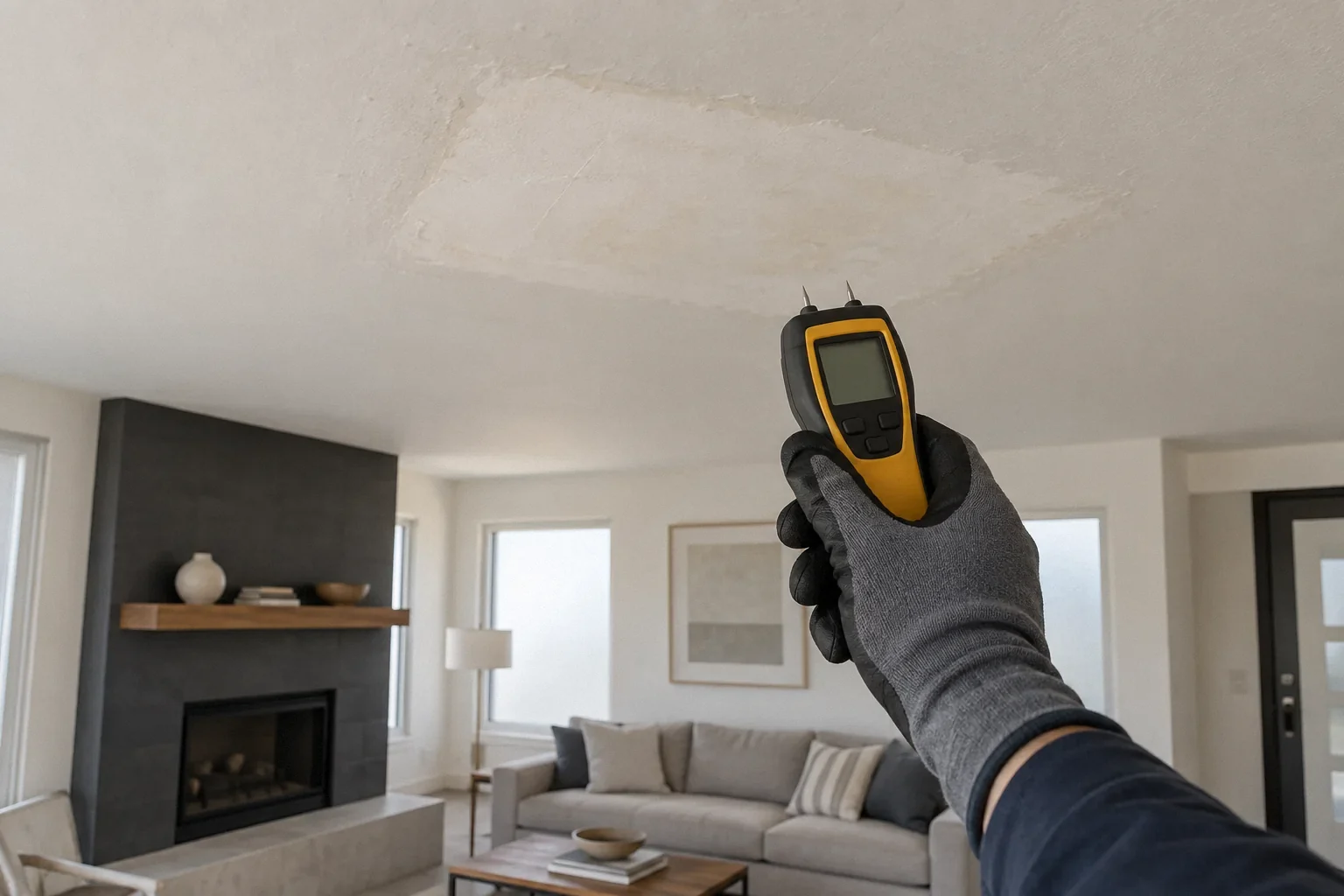
No. Business and Professions Code § 7195 defines a home inspection as a noninvasive physical examination of readily accessible areas. Inspectors may use tools such as moisture meters, but they do not open walls or remove flooring.
Can I hold an inspector responsible for missing a defect?
Inspectors must use the degree of care a reasonably prudent home inspector would exercise under § 7196. Whether a missed defect breached that standard depends on whether it was reasonably observable within the inspection's scope. Read your inspection agreement and get legal advice for significant losses.
Do I need a sewer lateral inspection when buying in the East Bay?
In communities covered by EBMUD's regional program, a private sewer lateral compliance certificate is required when buying or selling property, with a time extension option for sales. Check your address with EBMUD; other areas have different rules.
Should a home inspector also fix what they find?
California generally bars inspectors from offering to perform repairs for a fee on a structure they inspected in the past 12 months, under § 7197, subject to exceptions in the statute. Use separate contractors for repairs.
Sources and further reading
Community questions behind this guide
These discussions identify homeowner concerns. Forum comments are personal accounts, not code or legal authority.