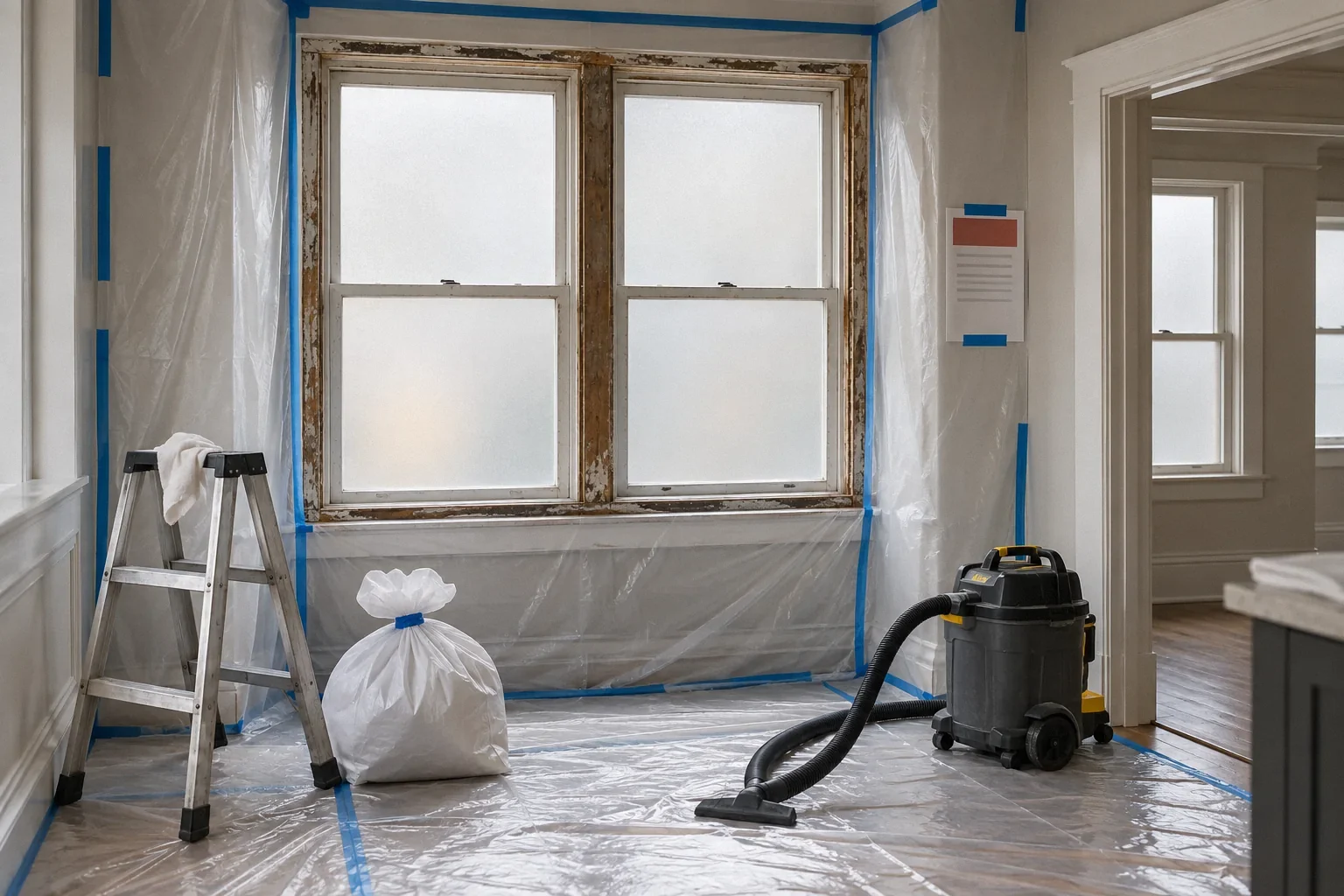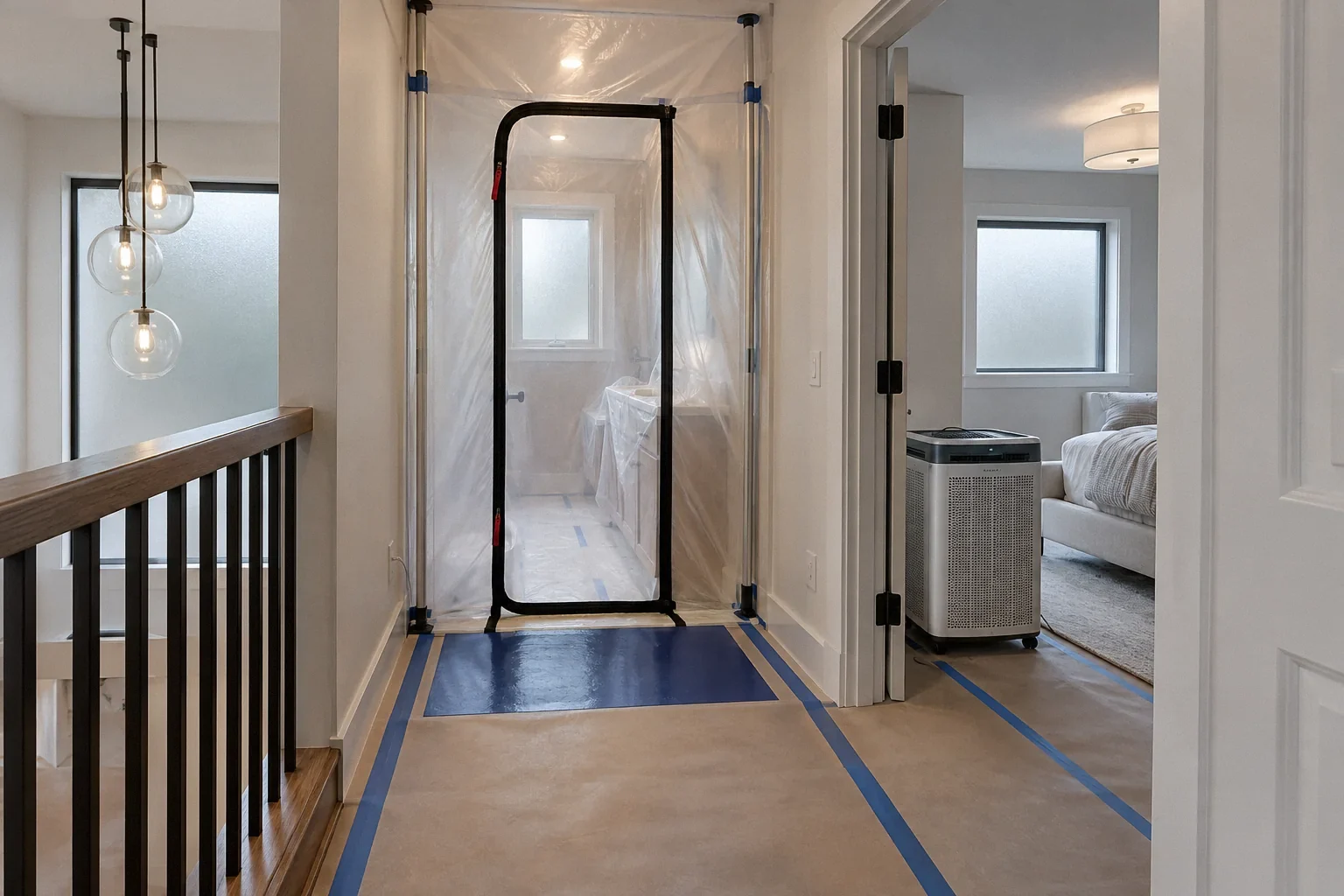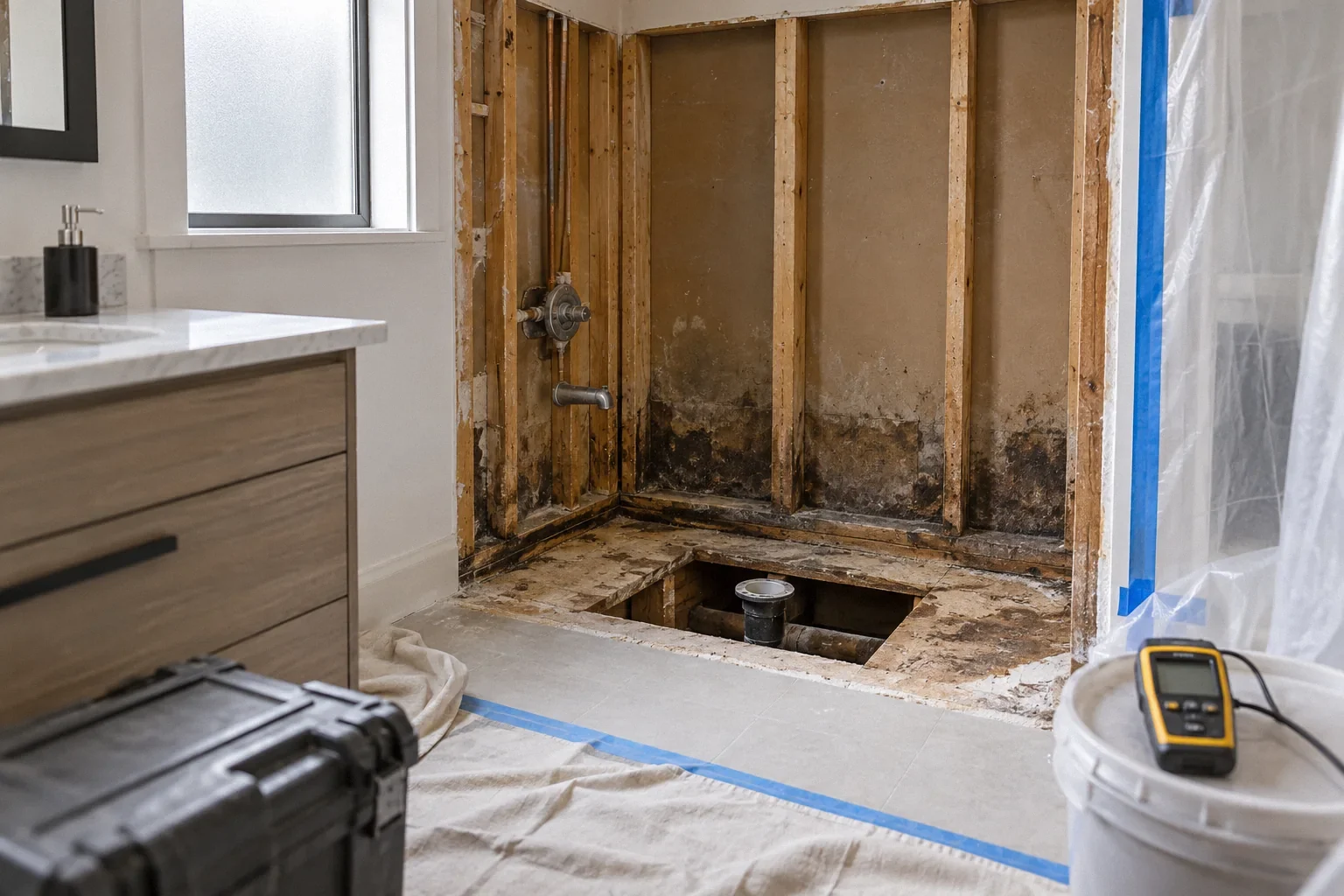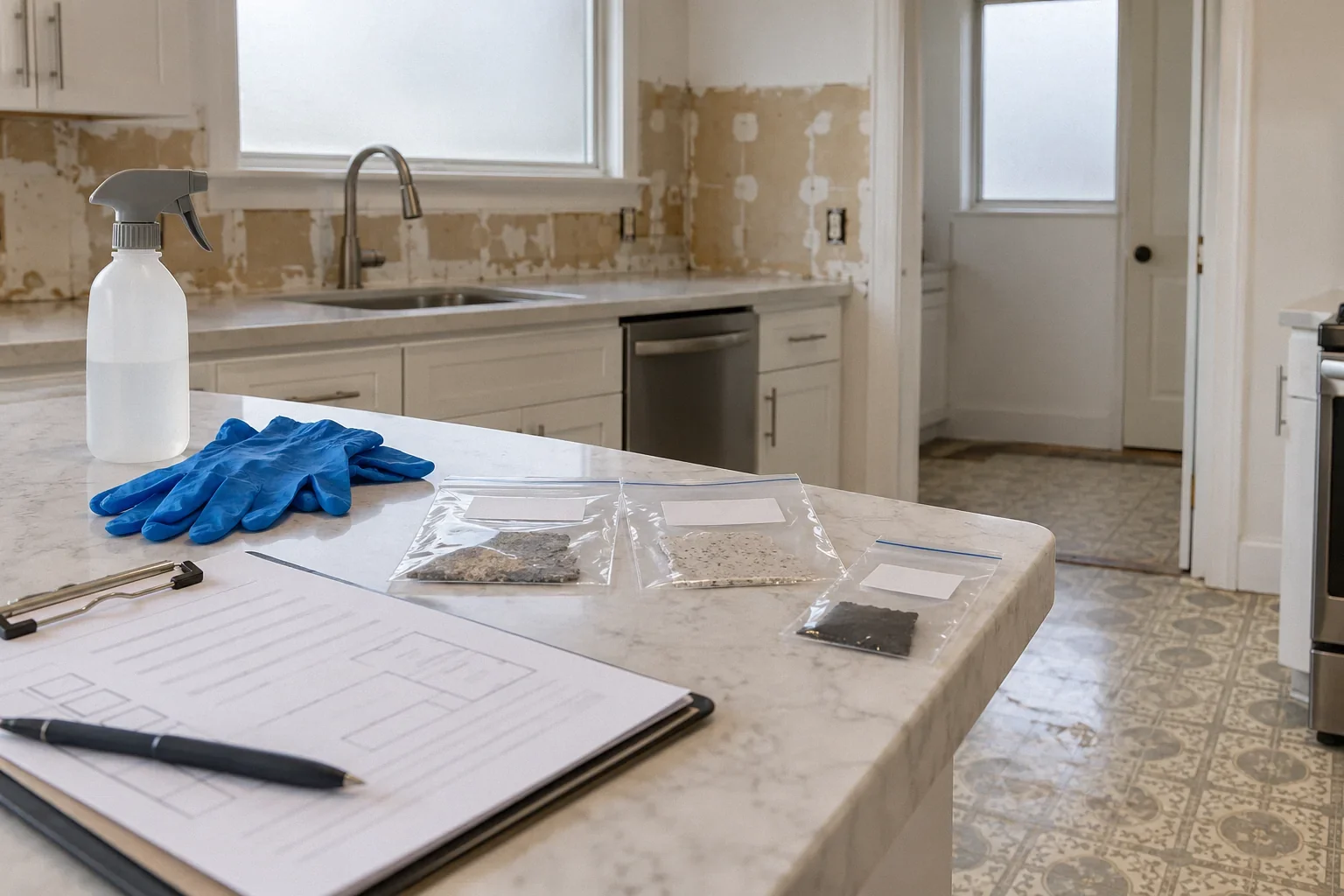
Short answer: often yes, and it belongs before demolition in your schedule. Even for a single-family house, the Bay Area Air District requires sampling before you disturb several materials common in remodels, including old flooring, textured walls, acoustic ceilings, ducts and stucco. If testing finds regulated asbestos in larger quantities, the Air District must be notified before removal, and any load-bearing demolition needs notification regardless. The practical answer for most owners is to hire a certified asbestos consultant to test the materials your project will touch, then let the results decide whether you need an abatement contractor and a notification number before the remodel crew starts.
This guide summarizes what the rule requires, then focuses on what owners actually have to manage: arranging testing, reading results, comparing bids, and fitting abatement into the remodel schedule. It is general information current as of 3 October 2026, not legal, medical or industrial hygiene advice.
What homeowners describe
Homeowner accounts often describe the same mistake from different angles: work starts before anyone thinks about asbestos. A family renovating a century-old house wrote that they did not test before demolition and dust was everywhere, with a baby due to move in later. An owner described relatives removing flooring and a wall without testing. Another bought a 1964 house where the inspector flagged vinyl tiles. A third recalled tearing out carpet, baseboards and walls in a 1973 house without testing. These are personal accounts. Some commenters offered blanket reassurance about brief exposure; we do not repeat it. The Air District states that there is no safe level of asbestos exposure.
The requirements, in one place
The governing rule is the Air District's Regulation 11, Rule 2, explained in its Asbestos FAQs (updated 4 June 2025), which you should read in full. In brief, for residential buildings with four or fewer units:
- A full survey is not required, but sampling and testing are required before removing or disturbing HVAC ducting and systems, acoustic ceiling material or plaster, textured or skim-coated wall surfaces, cement siding or stucco, or resilient flooring.
- Notification (a "J number") is required before any demolition of a load-bearing structure, and before renovation that removes regulated asbestos-containing material at or above the rule's thresholds. Whether a material is regulated depends on its category and condition and how it will be removed; a consultant should make that call.
- Below the notification thresholds, the rule's work practice requirements still apply.
- A city demolition permit is not the same as a J number; the city requires the J number first.
- Homeowners may remove asbestos themselves, but the Air District strongly discourages it; containment, negative air and licensed hazardous waste transport and disposal requirements still apply.
The rule's 1% asbestos content line is a definition in this regulation, not a statement that lower-content material is safe under every law; Cal/OSHA worker protection rules have their own triggers. The Air District's territory covers seven Bay Area counties in full and parts of Solano and Sonoma; check its jurisdiction map.
Which parts of your project to flag
Walk your scope room by room and list every material that will be cut, scraped, drilled or removed. Kitchens and baths often involve old sheet vinyl or tile and adhesive, wall texture and joint compound; ceilings may involve acoustic texture; HVAC work may involve old duct sections or wrap; exterior openings may involve stucco or cement siding. Flooring manufacturers flag this too: Mohawk's SolidTech installation instructions warn against mechanically chipping or pulverizing old resilient flooring or cutback adhesive. Give that list to the consultant.
Arranging testing: how to hire a consultant
The Air District FAQ notes that owners of one-to-four unit homes may take their own samples, but sampling itself disturbs material, and judging which samples are representative takes training. We recommend a Cal/OSHA-certified asbestos consultant (Cal/OSHA maintains a searchable list, linked from the FAQ). When you call, ask:
- Will you sample every material on my list, including hidden layers such as flooring under flooring?
- Which accredited laboratory do you use, and what turnaround options exist?
- Will the report state which materials are regulated under Regulation 11-2 and estimate quantities?
- Do you also offer clearance or air monitoring after abatement, and are you independent of the abatement contractor?
An independent consultant reduces the conflict between evaluating the material and selling the removal work. Ask about any financial relationship with the abatement firm.
Reading results and comparing abatement bids
| Result | What usually follows |
|---|---|
| All sampled materials negative | Proceed with ordinary dust control for those materials. Stop and test if demolition uncovers a material that was not sampled. Lead paint and silica remain separate questions. |
| Positive, small quantity of non-regulated material | Consultant identifies the handling, worker-protection and disposal rules that apply to that material and scope |
| Positive regulated material at or above thresholds | Licensed abatement contractor; J number filed before work; consultant clearance afterward if offered |
When comparing abatement bids, make sure each covers the same quantities from the consultant's report, containment and negative air setup, disposal, the J number filing and fees, restoration (or not) of the area afterward, and who arranges clearance. Confirm authorization: CSLB's ASB certification page says a contractor may not perform asbestos-related work involving 100 square feet or more of asbestos-containing material unless it holds the C-22 Asbestos Abatement classification or its qualifier has passed the asbestos certification exam. An ASB certification works within the scope of the contractor's license classification; it does not let a contractor do unrelated work. Check licenses on the CSLB lookup and ask for current Cal/OSHA registration.
Fitting abatement into the remodel schedule
- Test during design, before the building permit is issued, so results are back when the crew is booked.
- Sequence abatement before general demolition. The remodel crew should not touch flagged materials.
- Allow for notification lead time. The rule normally requires 10 working days' notice; one-to-four unit residential buildings may use 72 hours with an additional fee.
- Coordinate the demolition permit. If load-bearing walls are coming out, the city will want the J number; see removing a load-bearing wall.
- Keep the household out during abatement and until clearance; see living at home during a remodel.
- Keep the paperwork: lab reports, notifications, disposal records and clearance. The FAQ notes the Air District may ask for survey or lab reports on the start date, and future buyers may ask too.
Worked example: a 1960s kitchen
An owner plans to gut a 1962 kitchen: remove two layers of vinyl flooring, open a textured wall to move plumbing, and add recessed lights through a popcorn ceiling next door. Each of those materials is on the Air District's sampling list. During design, a consultant samples the flooring layers and adhesive, the wall texture and joint compound, and the ceiling texture. The report finds the lower flooring layer's adhesive positive and regulated, the wall and ceiling negative. The owner gets two abatement bids against the same quantity, chooses a C-22 contractor, and books abatement for the week before the remodel crew starts, with the J number filed by the abatement contractor. The remodel crew is told in writing not to disturb any flooring until abatement is cleared. The ceiling and wall work proceeds with ordinary dust control and a plan to test any unexpected material.
If material was already disturbed
Stop work, keep people out of the area, avoid sweeping or vacuuming (the US EPA's homeowner guidance says not to dust, sweep or vacuum debris that may contain asbestos), and call a consultant to assess and advise on cleanup. Talk with a medical professional about any health concern. For dust management generally, see dust control; for lead, see lead-safe renovation.
Checklist
- Materials to be disturbed listed room by room
- Independent certified consultant hired; representative samples, accredited lab
- Report identifies regulated materials and quantities
- Abatement bids compared on the same scope; C-22 or ASB authorization and registration confirmed
- J number and city permit sequence coordinated
- Abatement scheduled before general demolition; household kept out until clearance
- All reports and disposal records kept
Current as of 3 October 2026. Check the Air District's current Regulation 11-2 and FAQ before starting.
Questions that come up next
Is an asbestos test required before a kitchen remodel in the Bay Area?
Often. The Bay Area Air District requires sampling before removing or disturbing materials such as resilient flooring, textured or skim-coated walls, acoustic ceilings, HVAC ducting, or cement siding and stucco, even in single-family homes. Check your scope against that list.
Do I need a J number for my remodel?
Notification is required for any demolition of a load-bearing structure, and for renovation removing regulated asbestos-containing material at or above the rule's thresholds. Whether a material is regulated depends on its category and condition; ask a qualified consultant.
Can I take asbestos samples myself?
The Air District permits owners of one-to-four unit homes to sample, but sampling disturbs material. We recommend a Cal/OSHA-certified asbestos consultant, who can also judge which samples are representative.
Is a little asbestos dust harmless?
The Air District states there is no safe level of exposure to asbestos and all exposure should be avoided. If material was disturbed, stop work, avoid sweeping or vacuuming, and get professional advice; talk to a medical professional about health concerns.
Sources and further reading
Community questions behind this guide
These discussions identify homeowner concerns. Forum comments are personal accounts, not code or legal authority.