Short answer: for any Bay Area home built before 1978, assume painted surfaces may contain lead until testing shows otherwise. Two layers of rules apply. Federally, the EPA's Renovation, Repair and Painting (RRP) Rule applies, under 40 CFR § 745.82, to renovations performed for compensation in pre-1978 "target housing" and child-occupied facilities: covered firms must be certified, use certified renovators and follow specific work practices. An owner doing work on the home they live in is not performing work for compensation, so the certification requirement does not reach them. That is a narrow exclusion: work on rental or income-producing housing, or on a house being renovated for resale, should not be assumed exempt, and anyone paid for covered work needs certification. In California, the state's lead-safe work practice regulations in Title 17 reach further: Alameda County's lead laws page explains that work on any structure built before 1 January 1978 must use lead-safe practices, including containment and cleanup, and that the rule applies to everyone, including contractors, painters, homeowners, renters and maintenance staff. State law also treats "disturbing lead-based paint without containment" as a lead hazard under Health and Safety Code § 17920.10.
This guide explains how to apply those rules to a remodel, how to choose and supervise a contractor, and how to protect young children and pregnant household members. It is general information current as of 3 October 2026, not medical or legal advice.
What families describe
A homeowner in a 1950s house learned their general contractor was not qualified for work with lead-containing materials, with a baby due right after the project. A parent of a seven-month-old worried after drilling into old trim to hang blinds and cleaning up chips. A family with a toddler and baby found construction dust had escaped taped-off areas into bedrooms in a house built in the early 1900s that had never been tested; a commenter suggested testing the dust. Another parent asked whether they could cut drywall with a newborn at home. These are personal accounts. Some commenters dismissed the risk; we do not repeat that reassurance. Public health agencies treat lead dust as a hazard, especially for young children.
The two layers of rules
| Question | EPA RRP Rule (federal) | California lead-safe work practices |
|---|---|---|
| Which homes? | Built before 1978 | Structures built before 1 January 1978 |
| Who is covered? | Firms and renovators paid for work that disturbs lead paint | Everyone, including homeowners doing their own work, per Alameda County's summary |
| Certification? | Firm certification and certified renovator required for covered work done for compensation; an owner working on their own occupied home is outside that requirement | Certification for specified lead activities (such as inspections, assessments and abatement) is handled by the state; ask CDPH which applies to your job |
| Work practices? | Specific containment, cleaning and verification practices | Containment and cleanup; disturbing lead paint without containment is a lead hazard under H&S § 17920.10 |
The practical upshot: if you pay someone for work that disturbs painted surfaces covered by the rule, they need RRP certification; if you do it yourself in your own home, California still expects containment and cleanup.
What RRP does and doesn't cover
- Minor repair and maintenance. § 745.83 defines these as activities disturbing 6 square feet or less of painted surface per room inside, or 20 square feet or less outside. The definition excludes window replacement, demolition of painted surface areas and prohibited practices, so window replacement does not qualify as minor repair, whatever its size; it is covered unless a valid lead-free determination or another actual exemption applies.
- Lead-free determination. § 745.82 excludes components that have been properly determined to be free of regulated lead-based paint by the methods the rule recognizes, carried out by appropriately qualified people. Ask a certified inspector or certified renovator how that would be done for your components; do not assume that any casual test or lab result makes a job exempt.
- Pamphlet. Under § 745.84, the firm must give the owner the EPA Renovate Right pamphlet before work begins (and an adult occupant too in rental units) and keep proof of delivery.
- Prohibited practices. § 745.85 prohibits open-flame burning or torching of painted surfaces, and high-speed paint-removal machines unless shrouded with HEPA vacuum attachment, and allows heat guns only below 1,100°F. California rules and local requirements can add to these.
Before the project: test or presume
- Decide what will be disturbed: windows and trim, doors, cabinets, plaster walls, exterior siding, porch railings.
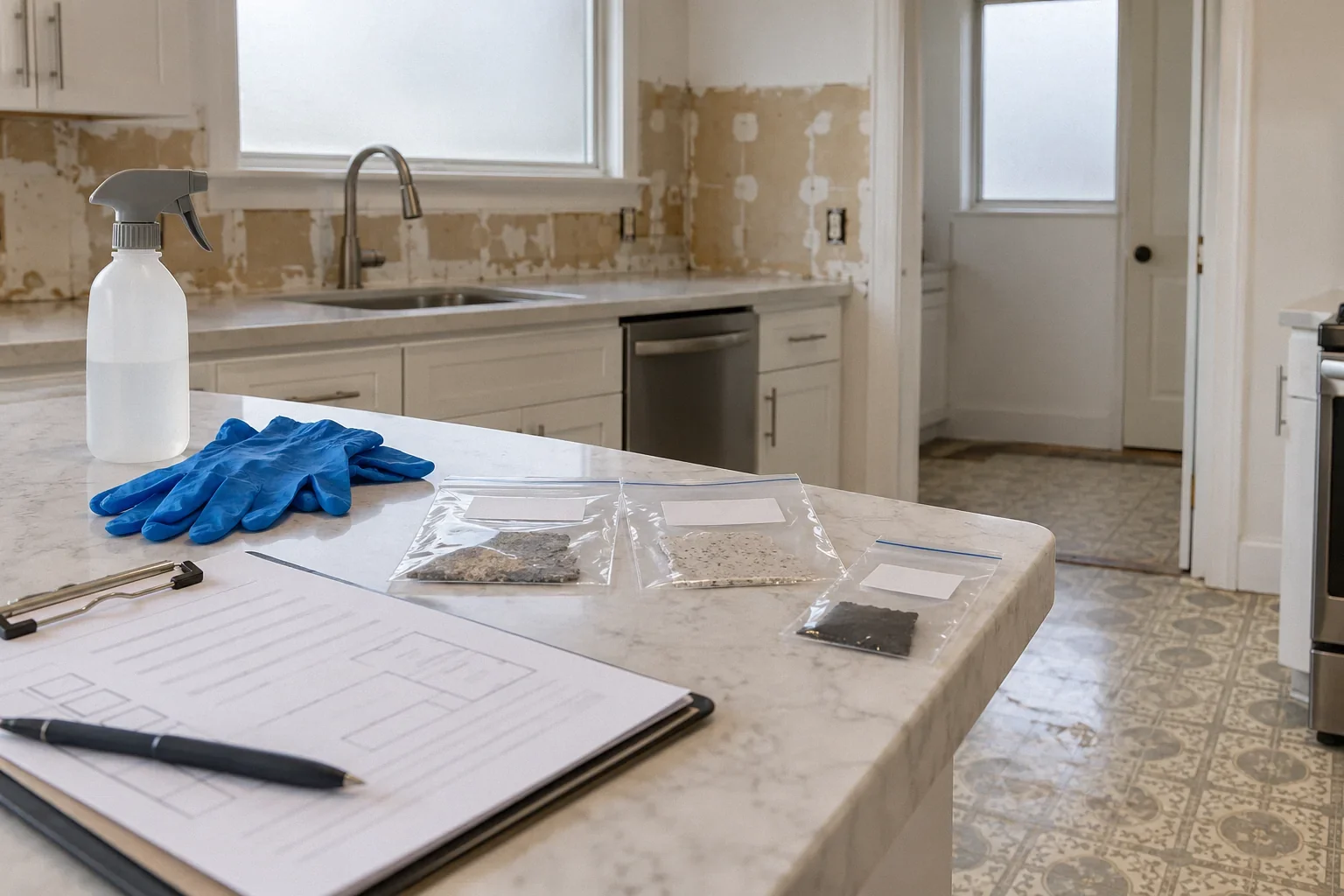
- Test those surfaces, or plan as though they contain lead. A certified lead inspector or risk assessor can test; ask how results apply to each component. Your contractor may test with EPA-recognized methods as part of RRP work.
- Ask for the contractor's RRP firm certification and the certified renovator's name before signing, and write lead-safe work practices into the contract scope.
- Plan where the household will be. For dusty phases, moving young children and pregnant household members out of the house, or at least far away from the work, is the most protective option.
During the project: what good practice looks like
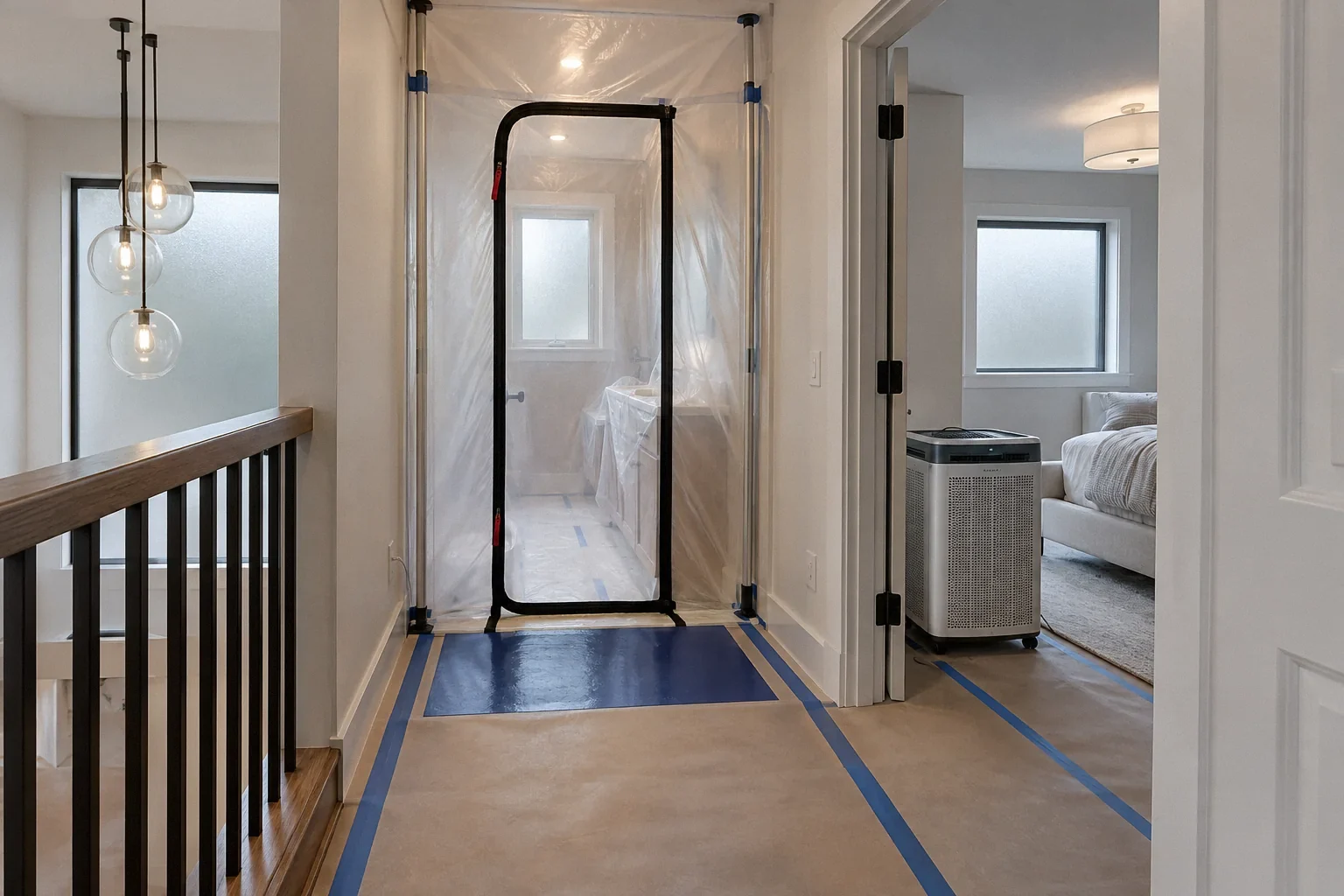
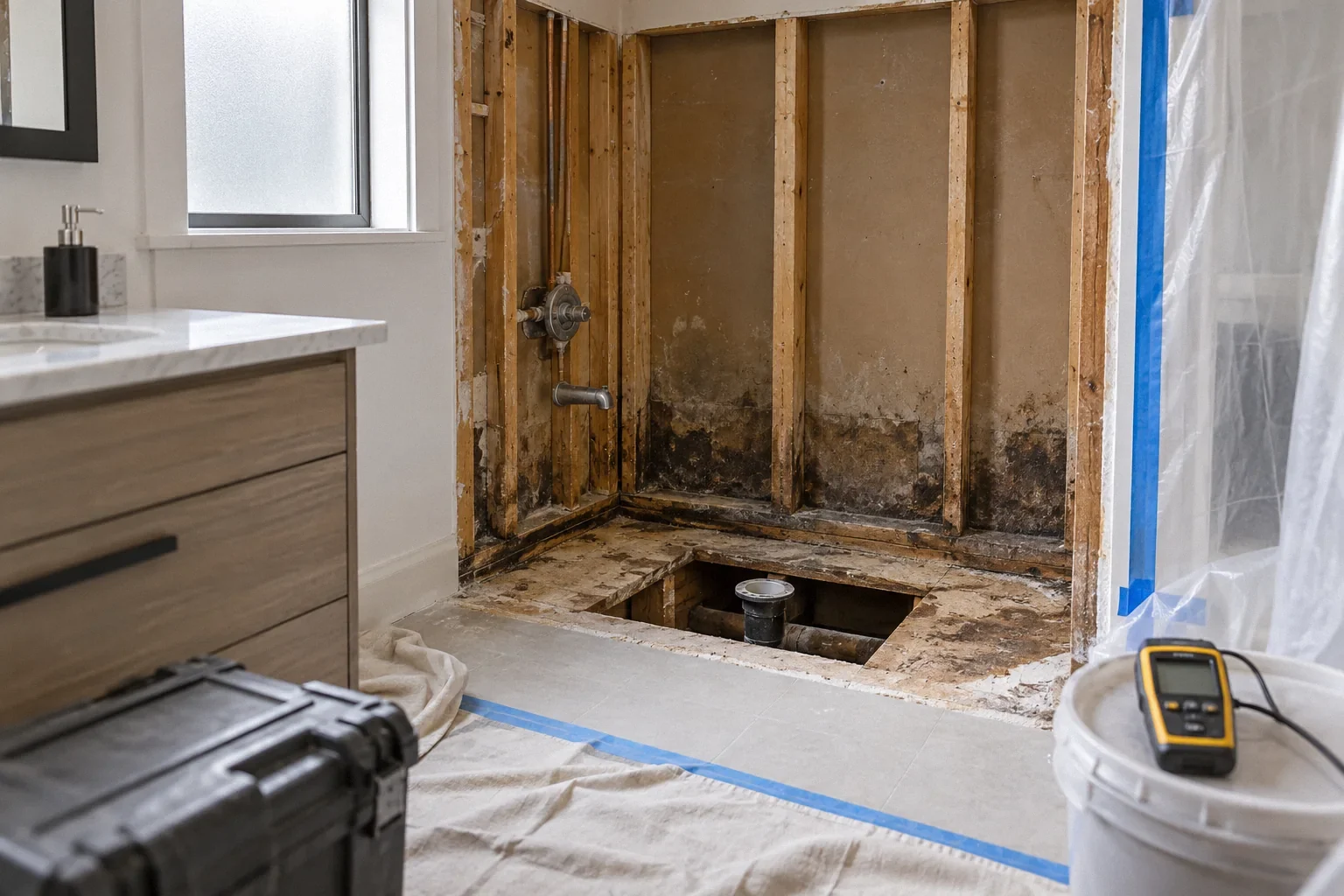
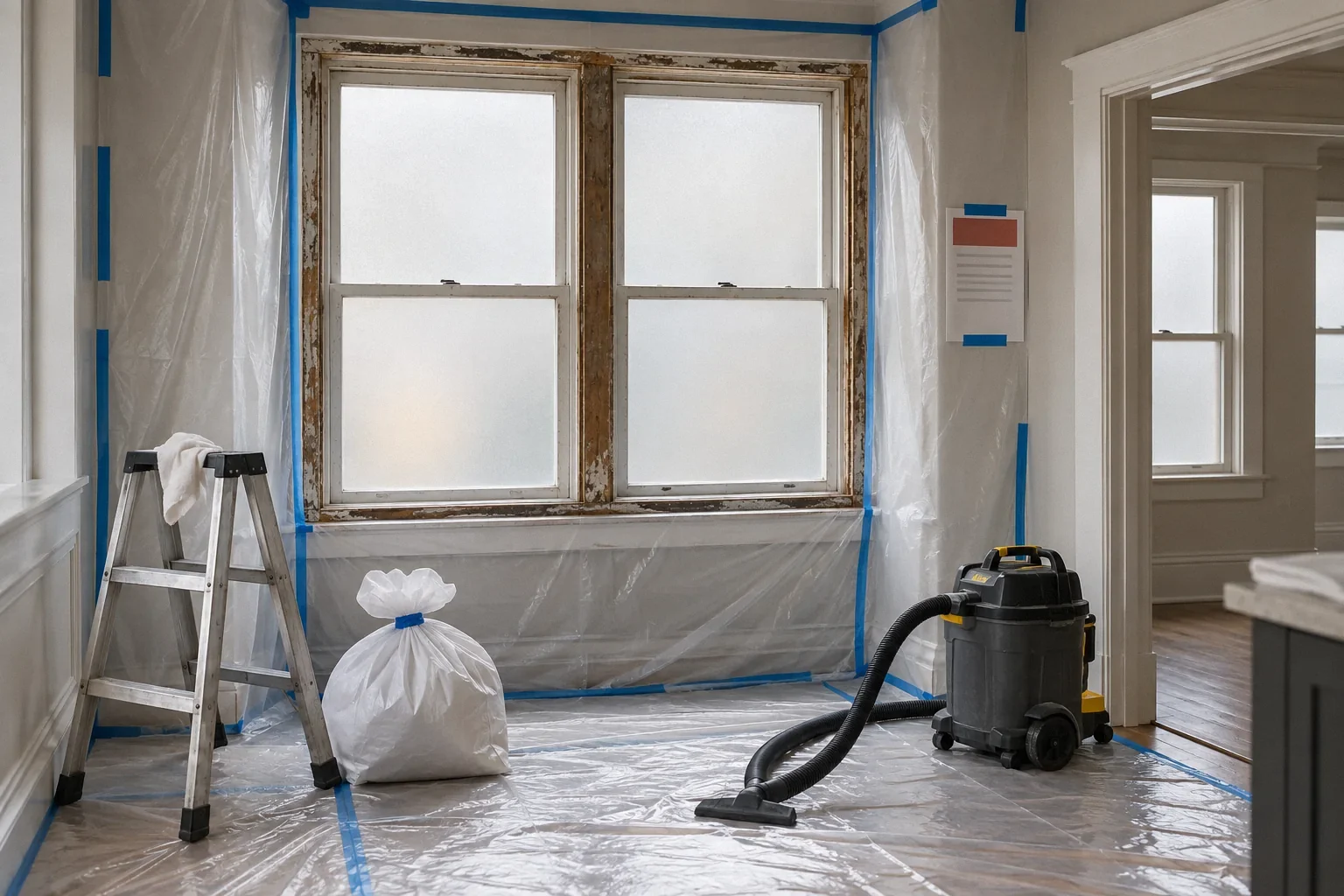
- Work areas sealed with plastic sheeting and taped seams, with a controlled entry, and warning signs.
- HVAC registers in the work area covered and the system managed so it does not spread dust.
- Dust-generating methods controlled, such as wet methods and tools with HEPA dust collection where allowed.
- Daily cleanup with HEPA vacuums and wet wiping, not dry sweeping.
- Workers changing or cleaning off before leaving the work area.
- Debris bagged and removed without tracking through the house.
For dust barriers between work areas and living space, see dust control in an occupied home.
After the project: cleaning verification and clearance
RRP requires cleaning verification by the certified renovator, a visual check and a cloth-wipe comparison against an EPA card. That is not the same as laboratory dust clearance testing. Under § 745.85(c), where a contract or applicable law requires dust clearance sampling, the firm instead re-cleans until results are below the applicable dust-lead levels. Clearance testing can be required by federal housing programs, state or local rules, or by your contract, depending on the project; where it is not required, you can still write it into the contract. Ask the lead inspector or risk assessor which current dust-lead standards they test against. If you have a young child, ask your pediatrician about blood lead testing; that is a medical decision, not a contractor one.
Worked example: replacing windows and trim in a 1940s house
An owner of a 1940s Oakland bungalow wants new windows and new interior casing, with a toddler at home. Planning steps:
- Presume the original sashes, casings and exterior trim contain lead unless tested.
- Hire an RRP-certified firm; window replacement is not "minor repair" under RRP and is covered unless a valid lead-free determination applies. Confirm who the certified renovator is, and ask how they will meet the rule's on-site and availability requirements, for example being present for containment setup and cleaning verification. The rule does not necessarily require them on site every minute, so get the plan in writing. Check the contractor's license on the CSLB lookup.
- Contract terms: interior containment around each window, exterior ground sheeting, daily HEPA cleanup, debris handling, and a clearance test at the end.
- Schedule the toddler to be away during removal days, and keep them out until cleanup and clearance are complete.
- Check permit requirements for window replacement with your building department; replacement windows can also trigger the whole-house smoke and CO alarm verification in some departments.
Mistakes to avoid
- Assuming fresh paint means no lead underneath.
- Dry sanding, dry scraping, or torching old paint. Federal rules ban open-flame removal and limit heat guns to below 1,100°F; as a homeowner, our recommendation is to avoid heat-based paint removal altogether.
- Letting a non-certified crew do paid work that disturbs lead paint.
- Relying on a visual "looks clean" check when children live in the home.
- Forgetting the exterior: soil around older homes can collect paint chips.
- Treating lead and asbestos as the same problem; they have different rules. See asbestos testing.
Checklist
- Home built before 1978? Presume or test painted surfaces to be disturbed
- RRP firm certification and certified renovator confirmed
- Lead-safe practices written into the contract
- Household plan for children and pregnancy during dusty phases
- Containment, HEPA cleanup, no dry sweeping
- Cleaning verification and, ideally, independent clearance testing
- Pediatrician consulted about blood lead testing if concerned
Current as of 3 October 2026. For state certification questions, contact the California Department of Public Health's lead program; local health departments in Alameda, Santa Clara and other counties also offer guidance.
Questions that come up next
Does my contractor need lead certification for a pre-1978 house?
If they are paid for renovation covered by the EPA RRP Rule in a home built before 1978, yes: firm certification and a certified renovator who follows specific work practices. Jobs disturbing 6 square feet or less per room inside, or 20 square feet or less outside, can be minor repair, but only if they do not involve window replacement, demolition of painted surfaces or prohibited practices.
Do lead rules apply if I do the work myself?
The EPA rule covers renovation performed for compensation, so an owner working on the home they live in is outside its certification requirement; rental, income-producing or resale renovation should not be assumed exempt. California's lead-safe work practice rules apply to everyone, including homeowners, according to Alameda County's summary of Title 17. You still need containment and proper cleanup.
Should my family stay in the house during lead paint work?
Moving young children and pregnant household members away during dust-producing phases, and keeping them out until cleanup and clearance are done, is the most protective approach. Ask your pediatrician about blood lead testing if you are concerned.
What is a lead clearance test?
Dust-wipe samples taken after cleanup and analyzed by a lab. RRP's cleaning verification is a different, card-based check. Clearance testing may be required by a program, law or your contract; otherwise you can require it in the contract.
Sources and further reading
- US EPA: Lead Renovation, Repair and Painting Program Rules
- 40 CFR § 745.82 (RRP applicability)
- 40 CFR § 745.83 (definitions incl. minor repair)
- 40 CFR § 745.84 (pamphlet distribution)
- 40 CFR § 745.85 (work practices, prohibited practices, cleaning verification)
- Alameda County Healthy Homes: Lead Laws and Regulations
- California Health and Safety Code § 17920.10 (lead hazards)
- CSLB: Check a License
Community questions behind this guide
These discussions identify homeowner concerns. Forum comments are personal accounts, not code or legal authority.