Short answer: treat dust control as a system, not a sheet of plastic. Seal the work area on all six sides, including the ceiling and any closets or chases that connect to other rooms; have the contractor or an HVAC technician plan how to isolate the heating and cooling system from the work zone without disrupting airflow, combustion air or required ventilation; give the crew a single entry with a sticky mat and a zipped or flapped door; capture dust at the tool; clean daily with HEPA vacuums and damp wiping instead of sweeping; and run portable air cleaners in the living areas as a supplement. Before demolition in an older house, find out whether the dust could contain lead or asbestos, because then dust control becomes a regulated safety requirement, not just a comfort issue. The general plan in this article applies to ordinary construction dust after that hazard assessment; it does not make lead or asbestos work safe to do around occupants. If dust escapes into living areas, stop the dusty work and reassess containment before continuing, and if the dust may be hazardous, have it cleaned up professionally rather than with routine household cleaning.
This guide gives a room-by-room plan, contract language to ask for, a worked example and a troubleshooting table. It is general information current as of 3 October 2026, not industrial hygiene or medical advice.
How containment fails in real homes
A family with a toddler and a baby had the work areas taped off, but a wall being removed turned out to extend into a closet, and dust blew out from under the closet door, up the stairs and into the bedrooms. Another family renovating a century-old house said the contractor was not taking precautions and dust was everywhere, before any lead or asbestos testing. A parent of four lived in the house for three months without a kitchen during a remodel that involved opening walls. These are personal accounts, not verified facts, but the failure points are recognizable: hidden openings, shared air paths and the path people walk.
First decision: is this dust a hazard?
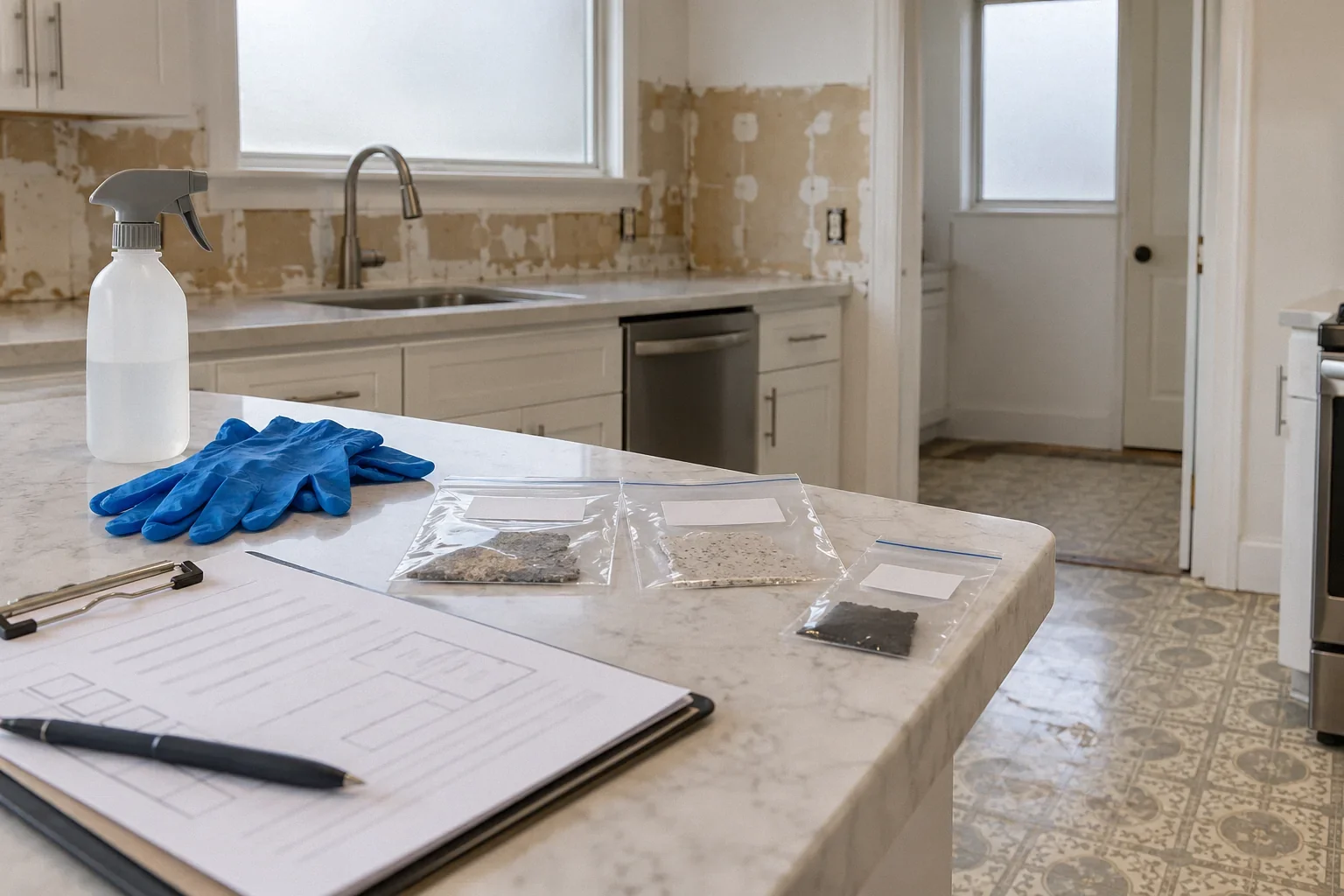
- Lead. In homes built before 1978, assume paint may contain lead until tested. California requires lead-safe work practices, including containment and cleanup, for work on pre-1978 structures, applying to everyone, according to Alameda County's summary; contractors paid for covered paint-disturbing work also need EPA RRP certification. See lead-safe renovation rules.
- Asbestos. In the Bay Area Air District's territory, sampling is required before disturbing materials such as resilient flooring, wall texture, acoustic ceilings, ducts and stucco. See asbestos testing. The US EPA advises not dusting, sweeping or vacuuming debris that may contain asbestos.
- Silica and ordinary construction dust. Cutting tile, stone, concrete and some drywall products creates fine dust. Ask the crew how they will control it at the tool.
The containment plan, area by area
| Area | What to do | Common failure |
|---|---|---|
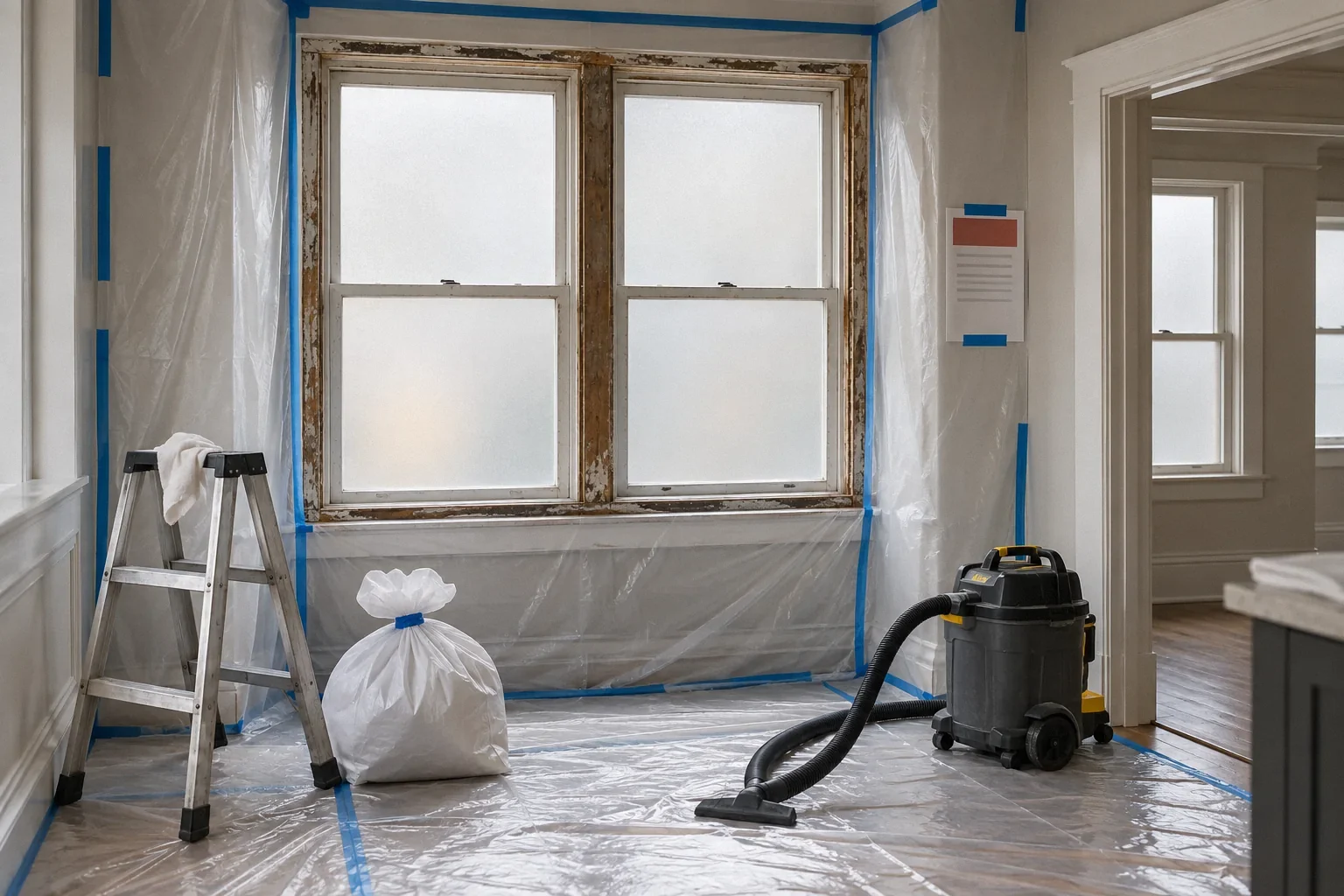
| Walls of the work zone | Floor-to-ceiling plastic barriers or the existing walls with doors sealed; tape all seams | Gaps at the ceiling line and corners |
| Ceiling and floor | Protect floors; check whether the ceiling is open to an attic or adjacent rooms | Dust traveling through open ceilings, chases or soffits |
| Closets, chases, pocket doors | Identify every cavity connected to the work, and seal from both sides | The closet blow-out described above |
| Heating and cooling | Follow an isolation plan from the contractor or HVAC technician that keeps the system's airflow, combustion air and required ventilation working, for example shutting a zone while the work is dusty; replace filters after | Return air pulling dust through the whole house, or improvised sealing that starves the system |
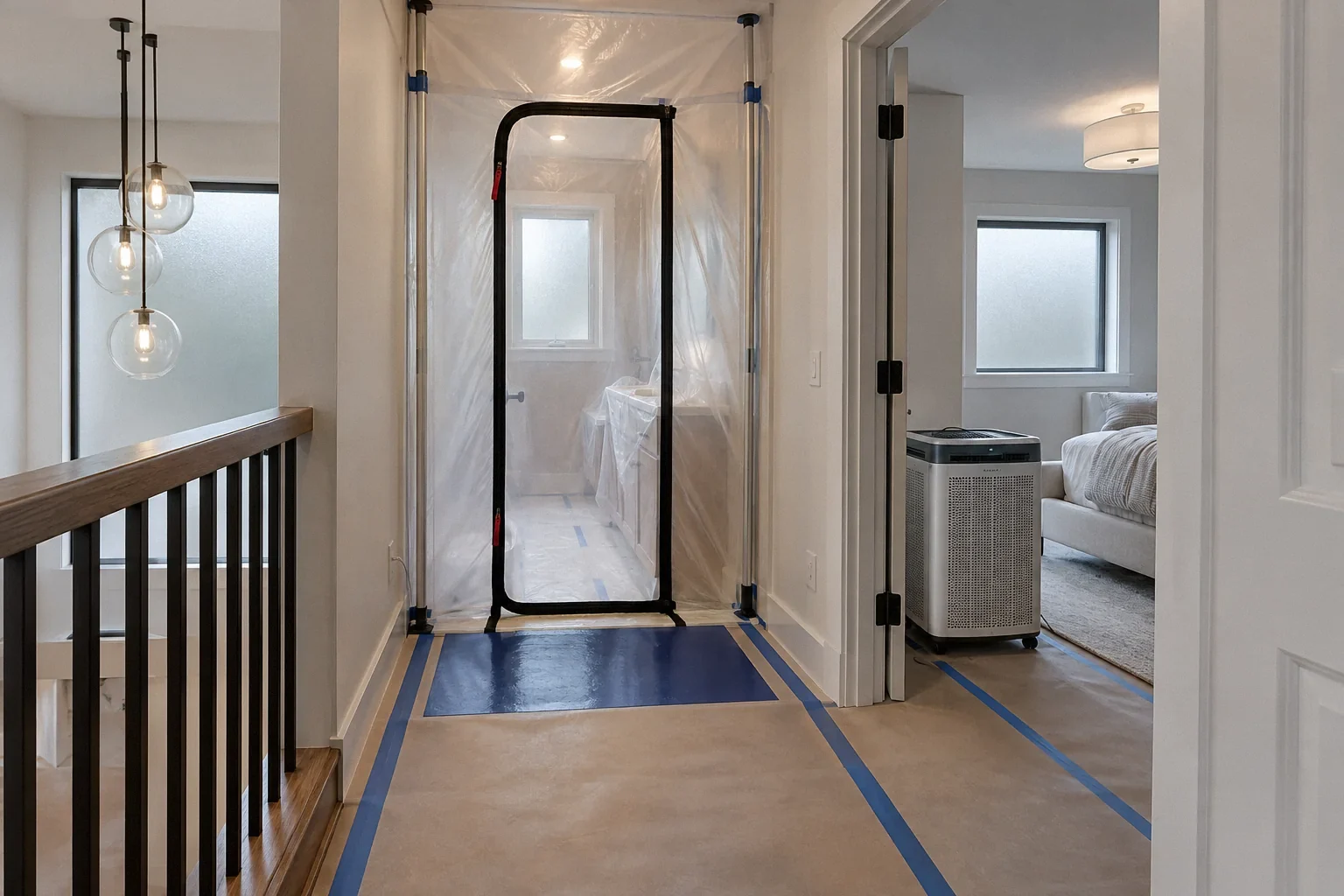
| Entry | One entry with a zipper or overlapping flaps, sticky mat, and a place for crews to remove dusty outer layers | Multiple entries and propped doors |
| Path to outside | Protect the route crews and debris take; bag debris inside the zone | Dust tracked through halls |
| Living areas | Close doors, run portable air cleaners sized for the room, keep children's rooms and toys away from the work side | Relying on air cleaners instead of containment |
A safety warning about exhaust fans and negative air
Contractors sometimes exhaust air from the work zone to keep dust from leaking out. Exhausting air from a house can depressurize it and pull combustion gases back down the flue of a gas water heater, furnace or fireplace (backdrafting), which is a carbon monoxide hazard. Any negative-air or exhaust setup should be planned by someone who assesses combustion appliances and make-up air first, and working CO alarms should be in place before it runs. Do not improvise this with a window fan. See the EPA remodeling guidance on combustion-appliance backdrafting.
Where air cleaners help and where they don't
The US EPA's Guide to Air Cleaners in the Home says no air cleaner or filter will eliminate all pollutants, and that filtration works best as a supplement to source control and ventilation. For particle removal, it advises choosing a portable unit with a Clean Air Delivery Rate suited to the room (it gives the example of at least 195 cfm for a 300-square-foot room), and, where the HVAC system can accommodate it, filters rated at least MERV 13, checked with an HVAC technician. It warns against ozone-generating devices. In other words, run air cleaners in bedrooms and living areas, but do not let them replace barriers, source capture and cleanup.
What to put in the contract
- A written dust-control plan: barrier locations, HVAC isolation, entry, daily cleanup method
- Tools with dust extraction for cutting and sanding where practicable
- HEPA vacuuming and damp wiping at the end of each day; no dry sweeping or compressed-air cleaning
- Who inspects barriers daily and who repairs them
- Testing for lead and asbestos before demolition where applicable, and the resulting work practices
- Protection for smoke and CO alarms during dusty work without leaving the home unprotected; see smoke and CO alarms
- Final cleaning standard and, for pre-1978 homes with children, clearance testing
For the broader experience of living through a project, see living at home during a kitchen remodel, and for documenting expectations, communicating with your contractor in writing.
Worked example: a bathroom gut in a two-story house
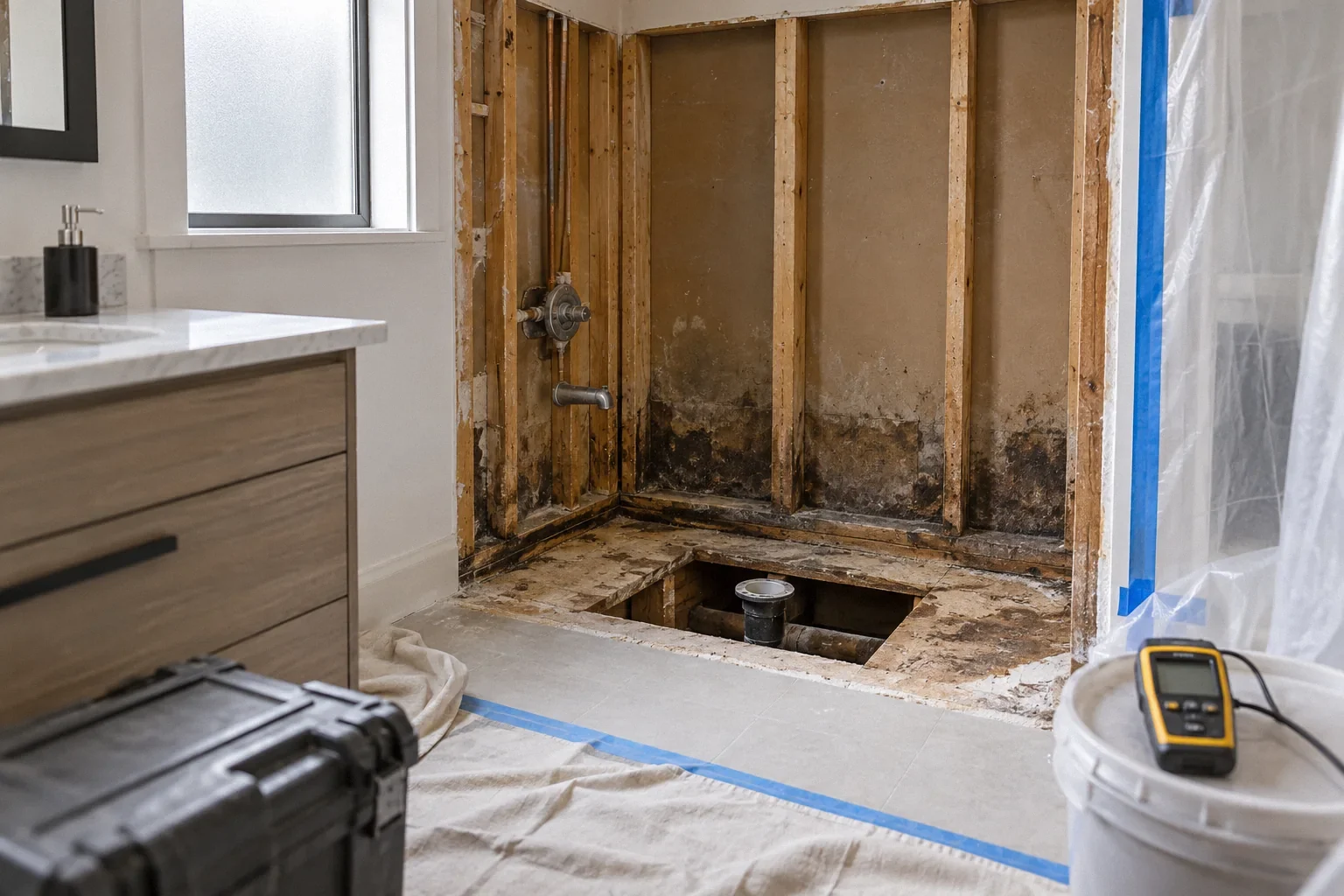
A family stays at home while the upstairs hall bathroom of a 1950s house is gutted. The bathroom shares a wall with a linen closet and sits over the living room. Planning:
- Test the bathroom's wall texture, flooring and old paint before demolition, given the house's age.
- Seal the bathroom door with a zip entry; seal the linen closet door and shelves on the hallway side, because the wall between them will be opened.
- Ask the contractor's HVAC technician for an isolation plan for the bathroom's supply and the nearby return that keeps the system operating safely; replace the furnace filter after demolition.
- Protect the stair and hall path with floor protection and a sticky mat at the bathroom entry.
- Run an appropriately sized portable air cleaner in each occupied bedroom, doors closed.
- Ask the crew to bag debris inside the bathroom and carry it out in sealed bags.
- Check the living room ceiling below daily. Dust coming through means stopping and resealing. New cracks or sagging mean stopping work in the bathroom and getting a structural assessment before continuing, not just monitoring.
- Clean daily with a HEPA vacuum and damp cloths; deep-clean the hall and stair at the end of each phase.
Troubleshooting
| Symptom | Likely path | Fix |
|---|---|---|
| Dust in a bedroom far from the work | Return air, open chase or closet | Stop dusty work; have the HVAC isolation plan reviewed; find and seal the cavity; professional cleanup if the dust may be hazardous |
| Dust on stairs and halls | Foot traffic, debris route | Sticky mats, floor protection, bag debris inside |
| Barrier billowing in and out | Pressure changes from HVAC or open windows | Have the HVAC isolation reviewed; any negative-air setup only after a combustion-appliance and make-up-air assessment, with CO alarms in place |
| Smoke alarms sounding | Dust reaching detectors | Follow alarm manufacturer guidance; keep protection active for occupied areas |
Checklist
- Lead and asbestos questions answered before demolition
- All connected cavities identified and sealed
- HVAC isolation plan from a qualified person; no improvised exhaust near gas appliances; filters replaced afterward
- Stop-work rule if dust escapes or new cracks appear
- Single entry with zipper or flaps and sticky mat
- Source capture on cutting and sanding
- Daily HEPA vacuum and damp wipe; no dry sweeping
- Air cleaners sized for occupied rooms as a supplement
- Children's spaces kept away from work and checked daily
Current as of 3 October 2026. If dust may contain lead or asbestos, follow the regulated work practices and get professional advice.
Questions that come up next
Does plastic sheeting stop construction dust?
Only if it is part of a sealed system. Dust escapes through ceilings, closets and wall cavities connected to the work, through the HVAC return, and on people's shoes. Seal all connected openings, isolate the HVAC, and control the entry.
Will an air purifier protect my family during a remodel?
It helps but is not enough on its own. EPA says air cleaners work best as a supplement to source control and ventilation and cannot remove all pollutants. Choose units sized by Clean Air Delivery Rate for each room and avoid ozone generators.
Should I turn off the HVAC during demolition?
Ask the contractor or an HVAC technician for an isolation plan. Shutting or isolating the zone that serves the work area can keep return air from spreading dust, but blocking registers while the system runs, or adding exhaust fans, can starve the system or backdraft gas appliances. Replace filters afterward.
Is construction dust dangerous for kids?
It depends on what is in it. In older homes, dust can contain lead or asbestos, which are regulated hazards. Test before demolition, keep children away from work areas, and talk to a pediatrician if you are concerned about exposure.
Sources and further reading
Community questions behind this guide
These discussions identify homeowner concerns. Forum comments are personal accounts, not code or legal authority.