Short answer: stop disturbing the area, keep the household and the HVAC system away from it, and find the water source before anyone cleans or closes the wall. The US EPA's mold cleanup guidance says to fix leaks and water problems first, dry materials within 24 to 48 hours, scrub mold off hard surfaces with detergent and water, replace porous materials that are moldy, and never paint or caulk over mold. EPA's guidance uses about 10 square feet as a rule of thumb for when to bring in professionals; it is a decision guide, not a regulatory threshold, and it does not make smaller jobs automatically safe to do yourself. EPA also points to professional help when the HVAC system may be contaminated, when the water was sewage or otherwise contaminated, or when anyone has health concerns, whatever the size. In a remodel, the mold is usually a symptom; the leak, condensation or venting problem that caused it is the real repair.
This guide explains how to respond, how to decide who does the cleanup, how to handle the contract and permit, and how to prevent recurrence. It is general information current as of 3 October 2026, not medical or remediation advice.
What owners describe
An owner with a shower leaking into the kitchen ceiling spent weeks applying silicone without finding the source, after structural work had altered framing under the bathroom. Another owner who opened a curb found no liner or waterproofing and wet material inside. In a thread about mold after new windows, a commenter described mold caused by a bathroom vent that had come disconnected in the attic, sending humid air into the attic space. A renter in San Diego County found mold by windows after sealing them with plastic kits. These are personal accounts, not verified diagnoses; they show the range of sources, from plumbing and waterproofing failures to venting and condensation.
Step 1: Pause and protect
- Stop demolition in the affected area until the extent is understood.
- Keep children, anyone with respiratory conditions and pets away.
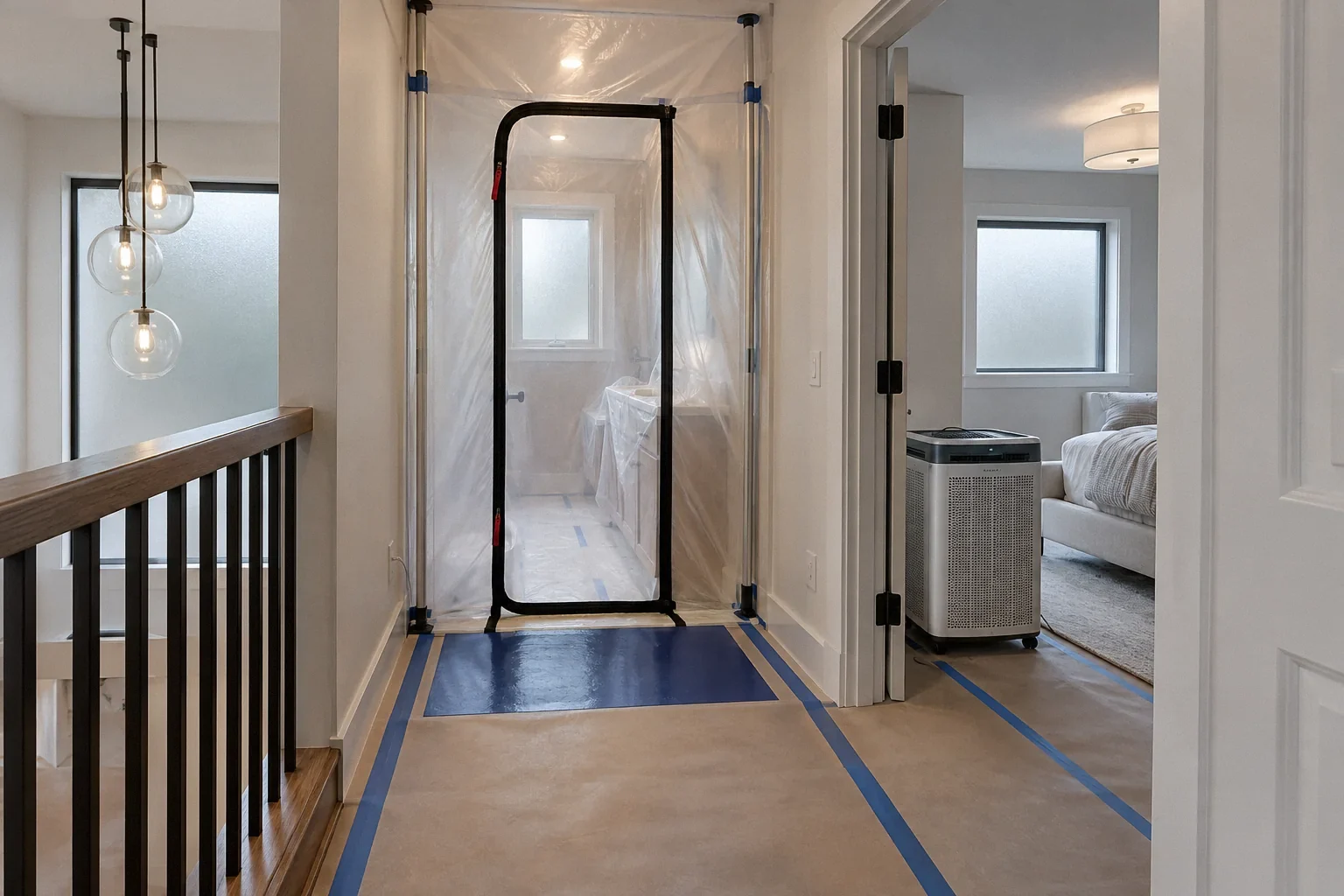
- EPA advises not running the HVAC system if you suspect it is contaminated. If the system may be affected, stop it and get a professional plan for isolation and cleaning; do not simply tape over registers while it keeps running.
- If water is still flowing, stop it now (shut the fixture or main valve) and start drying; urgent mitigation should not wait for paperwork.
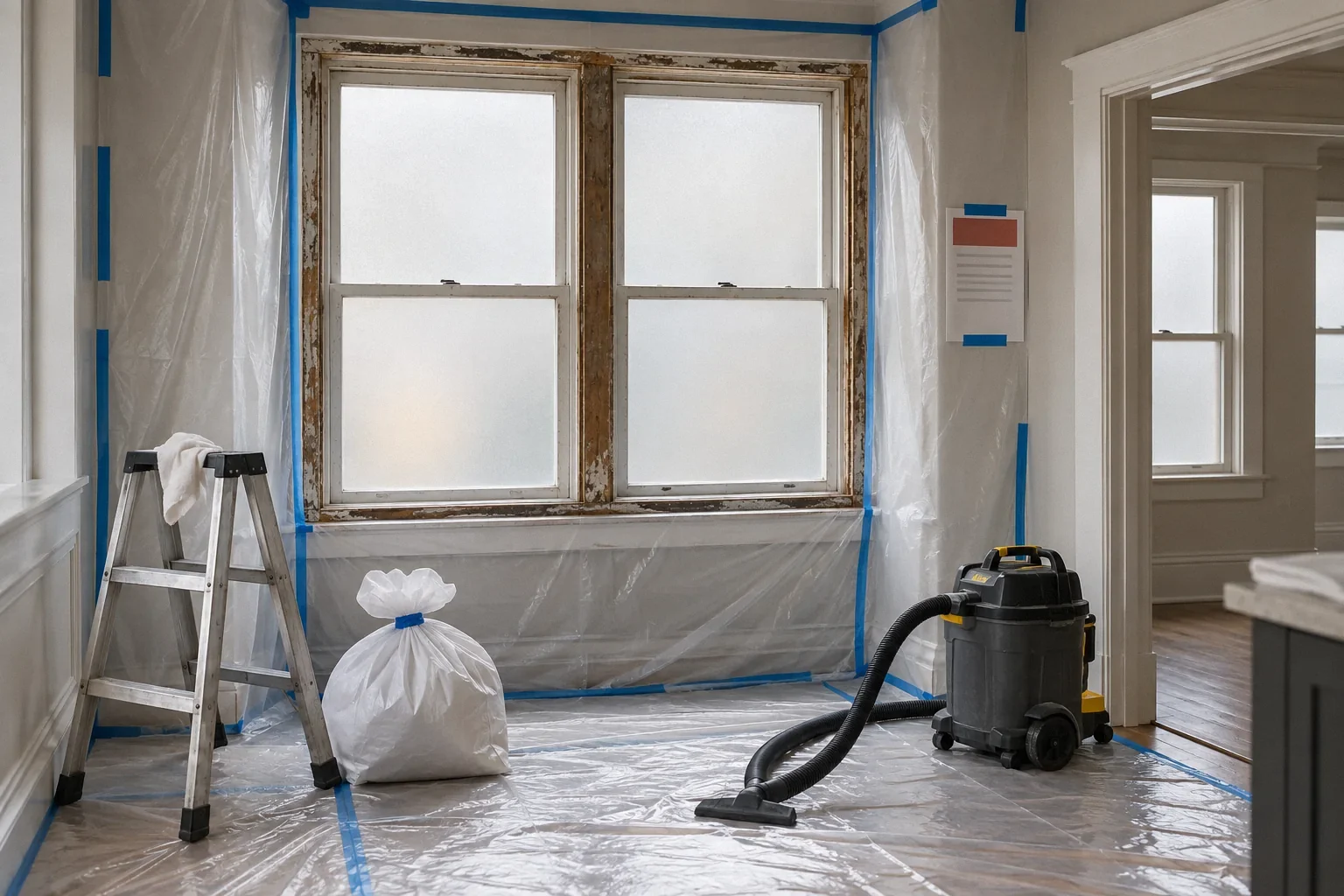
- Contain the area as you would for dusty work; see dust control.
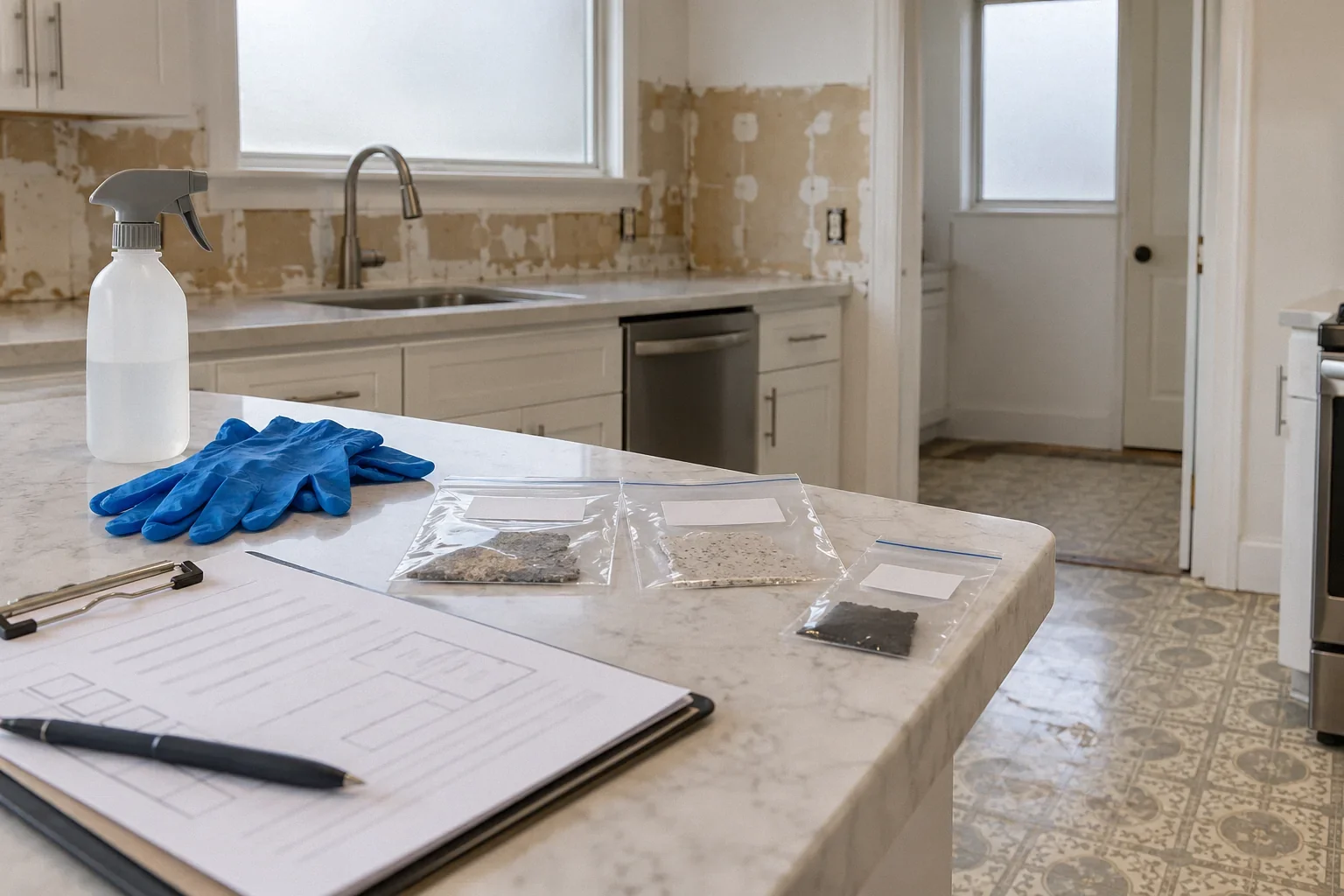
- In older homes, remember that the same wall may contain lead paint or asbestos-containing materials; test before further demolition. See asbestos testing.
Step 2: Find the moisture source
| Where you find it | Possible sources to investigate | Who investigates |
|---|---|---|
| Behind a shower or tub | Failed pan or membrane, curb, valve, drain connection | Plumber and shower/waterproofing specialist; see which trade to call |
| Under a sink or dishwasher | Supply line, drain, dishwasher connection | Plumber |
| Exterior wall, below a window | Window flashing, siding or stucco leak; condensation | Window or envelope specialist |
| Ceiling or attic near a bath | Bath fan duct disconnected or ending in the attic; roof leak | HVAC/ventilation contractor; roofer |
| Bottom of walls, crawl space | Drainage, grading, plumbing below floor | Plumber; drainage contractor |
Condensation and leaks are not always separate categories: a missing vent, a poorly insulated wall or an incorrectly installed window is a building defect that can create condensation. Treat the cause as something to diagnose, not to label quickly.
Step 3: Decide who cleans up
- Small, surface-level growth on framing that is structurally sound, after the source is fixed and materials are dry: EPA's rule of thumb suggests small areas are often manageable without a remediation firm. Wood framing is porous, so whether it can be cleaned and kept, or should be replaced, needs a hands-on assessment. Your remodeler may handle small, clearly bounded areas if they follow EPA's approach and you have no health concerns, hidden-growth questions or contaminated water.
- Larger areas, contaminated water, HVAC involvement or health concerns: hire a remediation contractor. EPA suggests checking that contractors follow guidelines from professional organizations such as ACGIH or IICRC.
- Damaged framing or subfloor: rot and structural damage need repair or replacement, not just cleaning; a structural question may need an engineer, and the repair may need a permit revision.
On testing: EPA's Brief Guide to Mold, Moisture and Your Home says that when mold growth is visible, sampling is usually unnecessary, and there are no federal limits for mold in indoor air. Identifying the species of visible mold generally does not change the response: find the water, fix it, dry, clean or replace. Testing or professional assessment can still be useful for specific questions, such as suspected hidden growth, a complex or unclear cause, or verifying conditions after remediation.
Before closing the wall: handoff criteria
Agree in writing that the wall is not closed until:
- The water source has been corrected, and where possible tested (for example, the repaired drain run or supply pressure-tested).
- Framing and subfloor have been dried and moisture-checked against an appropriate dry baseline, such as similar unaffected framing in the same house, by the contractor or remediator.
- Damaged or moldy materials that should be replaced have been removed and replaced.
- Dated photos show the open cavity after cleanup and repair.
- Any required inspection has been passed before cover.
Step 4: Handle the contract and the permit
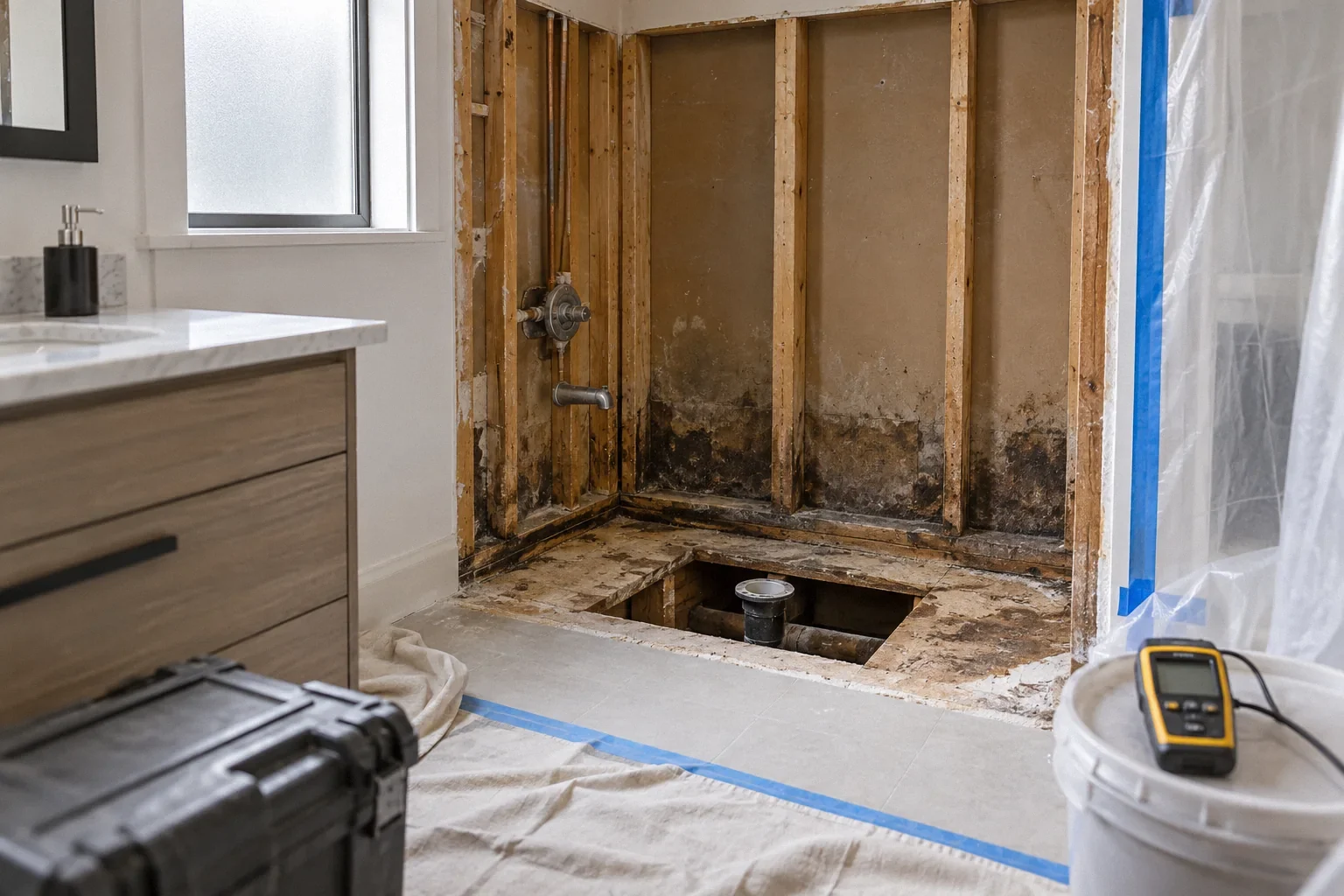
- Document: photos of the open wall with a tape measure for scale, notes of what you see and where.
- Get a written change order before non-urgent extra work starts, describing scope (investigation, source repair, cleanup, material replacement), price and schedule effect. California requires change orders for home improvement contracts to be in writing and signed before the changed work begins under BPC § 7159; stopping active water should not wait for it. Who pays is not automatic: a pre-existing hidden condition is often treated as extra work, but if the contractor's own work caused the leak, or the condition was already within the contract scope, the cost may belong to the contractor. See change orders.
- Check permit implications: replacing framing or rerouting plumbing may need inspection before the wall is closed. Ask your inspector.
- Insurance: a policy may treat sudden water damage and long-term leakage differently; read yours and ask your insurer. See insurance considerations.
Worked example: mold behind a tub surround
During a bathroom remodel in a 1960s house, the crew removes the tub surround and finds dark staining on the bottom of two studs and the drywall behind the vanity, with a soft spot in the subfloor at the tub drain. The contractor stops and calls the owner.
- Because the house is from the 1960s, the drywall, joint compound and old flooring near the tub are tested for asbestos, and paint for lead, before any further cutting or removal.
- The plumber pressure-tests the supply and finds no leak; a test at the old drain connection shows seepage. Source identified.
- With test results back, the contractor and owner agree a written remediation plan for the affected area before cleanup starts. The moldy drywall is bagged and removed under containment. The studs are assessed and found structurally sound; after drying to a baseline matching unaffected framing, surface growth is cleaned with detergent and water.
- The soft subfloor section is cut out and replaced; the inspector checks the new framing and drain before cover.
- A written change order covers the plumbing repair, subfloor, cleanup and two extra days.
- The new shower uses a manufacturer-specified waterproofing system; see waterproofing methods.
Had the affected area been larger, or had the water been from a sewer line, a remediation contractor would have been called before any cleanup.
Prevent it from coming back
- Bath fans ducted to the outdoors, not into attics or wall cavities, with controls the household will actually use.
- Waterproofing installed per manufacturer instructions and tested before tile.
- Window and door openings properly flashed.
- Wet materials dried promptly after any future leak; EPA's 24-to-48-hour window matters.
Checklist
- Work paused; area contained; household kept away
- Lead and asbestos questions addressed before further demolition
- Water source found and fixed
- Size, hidden extent and water type assessed using EPA's guidance as a rule of thumb
- Handoff criteria met before the wall is closed
- Remediation contractor hired where warranted
- Damaged framing or subfloor repaired; inspection before cover
- Signed change order for extra work
- Insurance consulted where applicable
Current as of 3 October 2026. If anyone in the home has health symptoms, talk to a medical professional.
Questions that come up next
What should I do if my contractor finds mold inside a wall?
Pause work in that area, contain it, keep the household away, and find and fix the moisture source. EPA advises drying materials quickly, scrubbing hard surfaces with detergent and water, replacing moldy porous materials, and not painting or caulking over mold.
Do I need a mold remediation company?
EPA's rule of thumb points to professionals for areas larger than about 10 square feet, and for any job involving possible HVAC contamination, sewage or other contaminated water, or health concerns. The 10 square foot figure is a guide, not a regulatory threshold or a guarantee that smaller jobs are safe to do yourself.
Should I test the mold before cleaning it?
EPA says that when mold is visible, sampling is usually unnecessary, and there are no federal indoor air limits for mold. Focus on the water source and proper cleanup.
Who pays for mold found during a remodel?
It depends on your contract and the cause. A pre-existing concealed condition is often handled as extra work through a written change order signed before the work starts, as California requires for home improvement contracts. If the contractor's work caused the leak, or the work was already in scope, the cost may be the contractor's. Your insurance may cover some sudden water damage; ask your insurer.
Sources and further reading
Community questions behind this guide
These discussions identify homeowner concerns. Forum comments are personal accounts, not code or legal authority.