Short answer: call a licensed plumber first if the leak could be in the valve, supply lines or drain connection, and a tile or shower specialist first if the evidence points to the shower floor, curb, walls or enclosure. If you cannot tell, start with someone who will run controlled tests to isolate the source rather than someone who proposes a fix on sight. CSLB's classifications explain the split: a C-36 plumbing contractor provides safe water supply and proper disposal of waste, including fixtures, piping and related work; a C-54 ceramic and mosaic tile contractor prepares surfaces as necessary and installs tile and stone, including for bathtubs and showers. Repairs that cross trades may call for a general building contractor who coordinates both. Verify any license on the CSLB lookup.
This guide gives a symptom-to-trade roadmap, the controlled tests that separate causes, questions to ask, and how to avoid the "two contractors, two opinions" trap. It is general information current as of 3 October 2026.
Why owners get bounced between trades
An owner who could not tell whether a leak came from plumbing or waterproofing asked who to contact; a reply suggested a contractor or tile professional who specializes in bathrooms. A buyer facing a shower pan moisture finding during escrow got conflicting advice, including a commenter saying waterproofing is the tile setter's job and plumbers would have little involvement, and another warning that a general contractor might hire a plumber and mark up the cost. An owner hired a leak detector who pointed to the shower pan, then two contractors who each insisted it was the grout; after regrouting, the leak returned. Another owner found a handyman reluctant to do tile repair after opening a curb with no liner, and decided to hire a tile installation company. These are personal accounts and opinions.
Before anyone diagnoses: make it safe
- Stop using the shower. If water is actively leaking from a supply line, shut it off at the fixture valves or the main.
- If a light fixture, switch or outlet below is wet, do not touch it or stand in water near it. Turn off its circuit only at a breaker panel you can reach from a dry place; otherwise leave it and call an electrician.
- Keep everyone out from under a ceiling that is sagging or bulging with water, and tell the professional about it when you call.
- Move belongings and catch drips only where you can do so safely. Do not crawl into attics or crawl spaces to look for the source.
Symptom-to-first-call roadmap
These are observations from normal use, not tests to run yourself:
| What you observe | Possible sources | First call |
|---|---|---|
| Leak or drip whenever the valve is on, even with the shower head pointed away from the walls | Valve body, supply lines, shower arm connection | Plumber (C-36) |
| Leak seems to appear when water drains, for example after a bath empties or when the sink or tub drains | Drain connection or trap; drain-to-waterproofing integration | Plumber, then tile/shower specialist if the drain-to-pan connection is involved |
| Moisture at the base, damp floor outside the curb, soft subfloor, stains below after showers | Pan or membrane, curb, drain integration | Tile/shower specialist (C-54) or a general contractor who handles both |
| Leak only when spray hits one wall or the door | Wall waterproofing at that wall, niche or seam; door or glass seal | Tile/shower specialist; glass installer for enclosure |
| Ceiling stain below, source unknown | Any of the above, or a different fixture | Someone who will test systematically; a plumber can rule out supply and drain first |
Treat this as a starting point. A leak can have more than one source, and symptoms overlap.
Controlled tests: how a good diagnosis proceeds
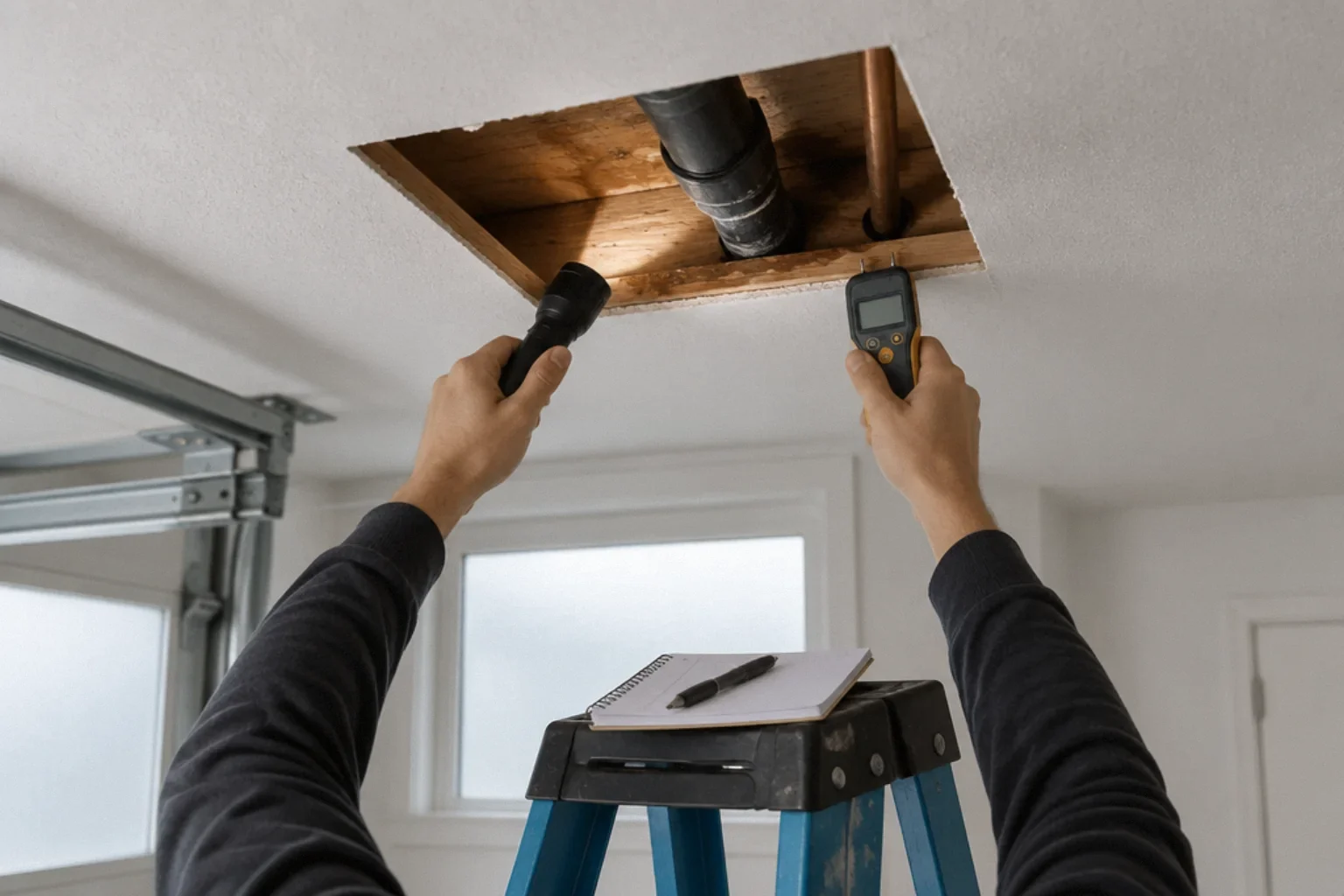
A competent diagnostician sets up damage controls first (protection and a way to see below, such as a small opening in the ceiling, with any nearby electrical circuit off), then changes one variable at a time and stops at the first sign of water. Typical steps include:
- Test the supply and valve, for example with a pressure test or the shower head capped. A short dry run does not by itself prove the supply side is sound, because some leaks show only under longer use or pressure.
- Run water down the drain only.
- Check the door and glass joints with directed spray.
- Wet each wall separately, then the floor near the curb and corners, at controlled rates.
- If needed, open a small area of tile or ceiling for a direct look, after the professional checks hidden utilities and any suspect lead or asbestos materials.
These tests should be done by the professional you hire, who controls how much water goes where and for how long. Do not plug the drain and fill a finished shower you suspect leaks; see flood tests.
Questions to ask before hiring
- How will you isolate the source before proposing a fix?
- What will you do if the cause is outside your trade?
- Will you open anything, and who restores it?
- If waterproofing is involved, which system will you use for the repair, following which manufacturer's instructions?
- Do you need a permit for this repair in my city?
- What warranty do you give on the repair?
Who can do what: practical license notes
- Plumber (C-36): valve, supply, drain and fixture work. CSLB's classification description centers on water supply and waste disposal.
- Tile contractor (C-54): surface preparation and tile and stone installation, including showers. Ask how they handle waterproofing and drains, and whether plumbing changes would need a plumber.
- General building contractor (B): can coordinate multi-trade repairs; CSLB has specific rules on what a B contractor can take on, so see CSLB's classification list or our guide to license classifications.
- Leak detection services: some focus on locating leaks rather than repairing them. Ask what credentials they hold and what their report will include.
- Handyman: California's minor work exemption requires a total under $1,000, no required permit and no employees; it cannot be used by splitting a larger project, and unlicensed advertising must not imply licensure; see handyman limits.
Avoid paying twice
A costly pattern in the accounts above is paying for a fix before the cause is known. Ask for the diagnosis and the evidence (photos, readings, which test produced water) in writing before authorizing repair. If two professionals disagree, ask each to explain the test results that support their view, or bring in an independent third opinion. If the shower is new, involve the original contractor first; see new shower leaking after a remodel. If you are buying a house, see shower leak found during inspection.
Worked example (hypothetical): the garage ceiling stain
A wet spot appears on a garage ceiling under an upstairs shower. The owner stops using the shower, keeps the area below clear and calls a plumber. The plumber puts a tarp and bucket below, turns off the garage light circuit at the panel, opens a small access hole at the stain, and pressure-tests the supply and valve: it holds. Water run down the drain only: dry. The plumber reports in writing that supply and drain tested sound and recommends a tile/shower specialist. The specialist checks the door and glass joints (dry), wets each wall (dry), then runs water slowly on the floor near the curb, sees water at the access hole within minutes, and stops. Removing a few curb tiles shows the waterproofing does not continue over the curb. A partial curb-and-floor repair is appropriate only if the manufacturer permits a watertight tie-in to the remaining membrane. Otherwise a larger tear-out may be necessary. The agreed scope names the system, documents this connection, requires testing before retiling, and includes restoring the garage ceiling. Who pays depends on the cause and contract: if the shower was recently built, the original contractor would be the first call, and an expired written warranty does not by itself end other rights.
Checklist
- Shower out of use; wet electrical left alone except at a dry, accessible breaker; nobody under a sagging ceiling
- Symptoms recorded from normal use: when it leaks and when it doesn't
- First call matched to the likely source
- Controlled tests done by the professional, with damage controls, one variable at a time, stopped at the first water
- Written diagnosis with evidence before repair
- Repair scope tied to the cause; waterproofing system named
- Licenses verified; permit question asked
- Warranty in writing
Current as of 3 October 2026. License scope questions for a specific job can be directed to CSLB.
Questions that come up next
Should I call a plumber or a tile contractor for a shower leak?
If the leak happens whenever the valve runs or when water goes down the drain, start with a licensed plumber. If moisture appears at the shower base, curb or below the floor after showers, or only when spray hits a wall, start with a tile or shower specialist. If unsure, hire someone who will test systematically first.
What is the difference between a C-36 and C-54 license?
CSLB describes a C-36 plumbing contractor as providing safe water supply and proper disposal of fluid waste, including fixtures and piping, and a C-54 ceramic and mosaic tile contractor as preparing surfaces and installing tile and stone, including for bathtubs and showers.
Can regrouting fix a shower leak?
Not if the waterproofing behind the tile has failed. Grout is not waterproofing. Ask for controlled tests that identify the source before paying for regrouting.
Can a handyman fix a leaking shower?
The narrow minor-work exemption requires a total below $1,000 for labor and materials, no required permit and no employees. It cannot be used to split a larger project or imply licensure in advertising. Many shower repairs fall outside it; check the scope before hiring.
Sources and further reading
Community questions behind this guide
These discussions identify homeowner concerns. Forum comments are personal accounts, not code or legal authority.