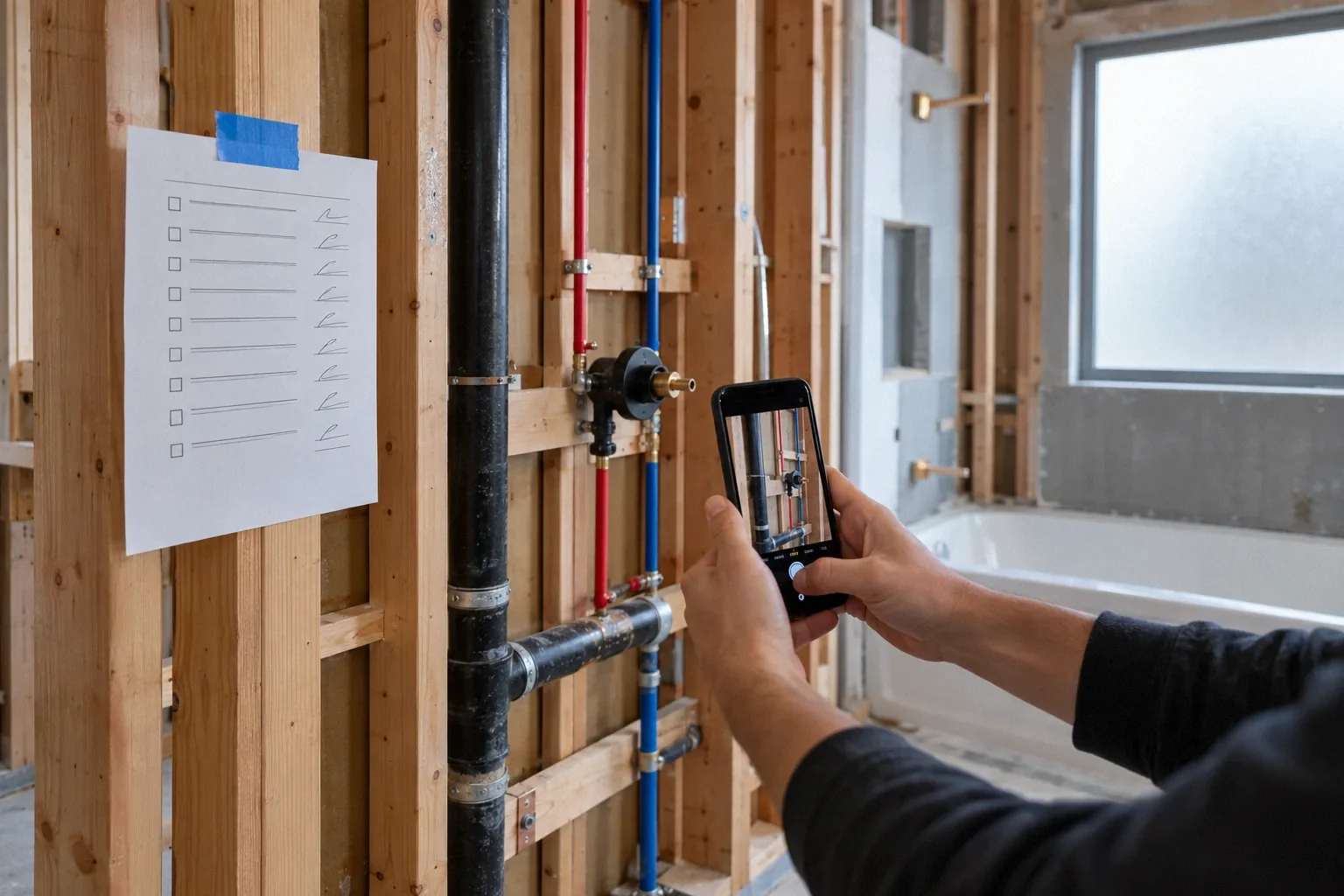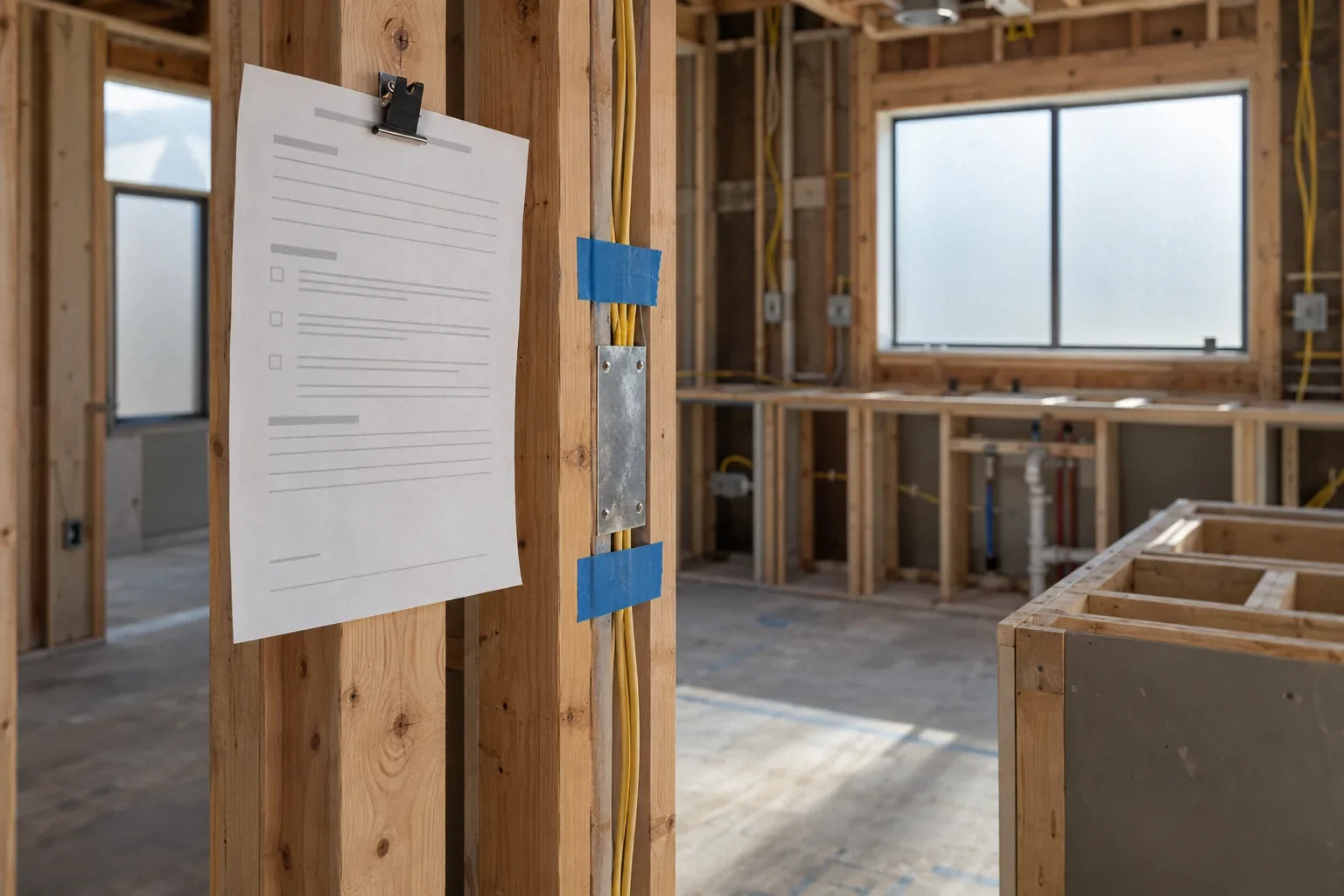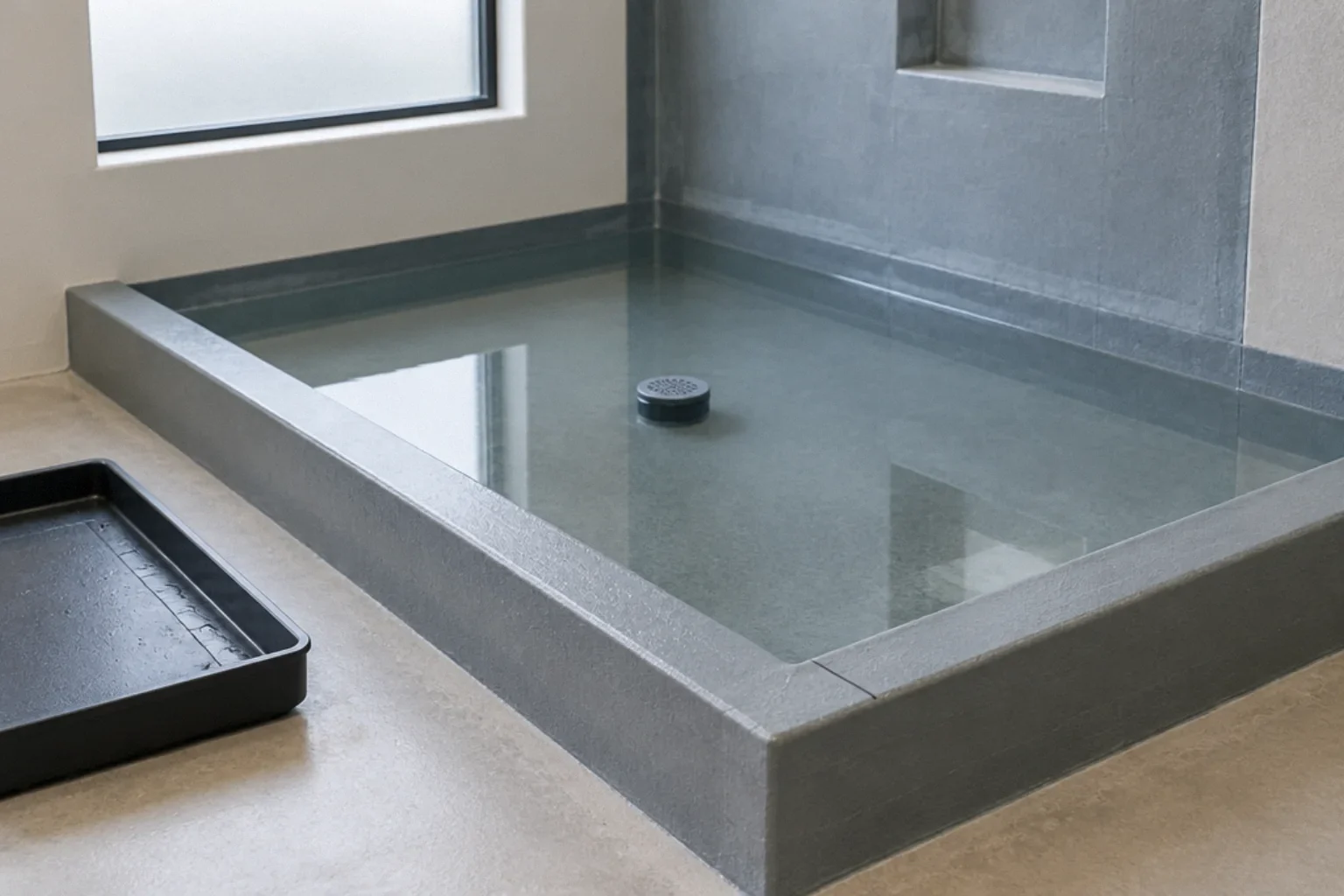
Short answer: a flood test plugs the shower drain, fills the waterproofed floor with water to a set depth, and leaves it long enough to show whether water escapes, before any tile covers the waterproofing. It is the point in a shower build where a leak is generally easiest to correct, because nothing has to be torn out to reach the waterproofing. The specifics are not universal. The test must meet both the waterproofing manufacturer's instructions (when and how the product may be tested) and any requirement of your building department, which may inspect the pan and decides what it accepts. LATICRETE's flood testing guide TDS 169, for example, notes that flood testing is recommended and "may be required by applicable plumbing codes," and that cure time before testing depends on the specific membrane and conditions. Ask your contractor which instructions they are following, and ask to see the test.
This guide explains what a test involves, how to agree on it in your contract, how to read results, and the limits of the test. It is general information current as of 3 October 2026, not plumbing or code advice.
What homeowners describe
An owner whose newly remodeled shower leaked was told by a commenter that a flood test is a standard part of a tile shower pan installation, with an expansion plug in the drain, and was advised to ask the contractor about it. In another thread about standing water in a new shower before inspection, a commenter said that in their city an inspector came to inspect the shower pan with a flood test before tiling could proceed. Contra Costa County's bathroom remodel requirements (based on the 2022 codes) list an underlayment and "shower pan test, if applicable" among inspections. These accounts and handouts show that practice varies; ask your own department.
Who sets the rules for your test
| Question | Who answers it |
|---|---|
| When can the membrane be flooded after application? | The membrane manufacturer's instructions; cure times vary by product, temperature and humidity |
| How deep, how long, and how to plug the drain? | The manufacturer's flood test procedure and, if required, the building inspector |
| Does the city inspect the pan before tile? | Your building department; ask at permit issuance |
| What counts as a pass? | The inspector, if inspecting; otherwise the procedure you agreed in the contract |
As one example of how product-specific this is, LATICRETE's HYDRO BAN installation instructions allow flood testing after full cure, typically 2 hours at 70°F and 50% relative humidity, but 24 hours between 50°F and 69°F, with longer times for cold or wet conditions, and say the time starts when the membrane has dried to a specified color. A different membrane, or a traditional liner system, will have different requirements. TDS 169 describes one procedure for horizontal installations, including plugging all drains, limiting depth, using a control pan to account for evaporation, and monitoring below the test area during the test; follow the current version of the document for your product rather than a number you read elsewhere.
Put the test in the contract
- Name the waterproofing system and say the flood test will follow that manufacturer's procedure and any inspector requirement.
- State that the owner will be notified of the test time and may observe the start and end.
- Require photos of the full waterproofing, including corners, curb, niche and drain, before flooding, and of the water level at start and end.
- State that no tile goes on until the test passes and, if required, the inspector signs off.
- State what happens if the test fails: the contractor repairs per the manufacturer's instructions and retests at its cost, unless the failure was caused by something outside its scope.
See shower waterproofing methods for how to specify the system itself.
Safety controls the contractor should run
A flood test on a new pan is the contractor's test, run under its control. Ask how it will handle these points:
- Plug and water load. The test plug or device goes where the manufacturer's procedure and the drain design call for, and the depth stays within the procedure's limits. TDS 169 also notes that the structure must be able to carry the weight of the water, which matters for larger or curbless floors.
- Monitoring below. Checks for leaks below are made only from areas that are safely accessible, such as an open ceiling or a garage. A homeowner should not crawl into a crawl space or attic to watch for leaks; leave that to the contractor if it is part of the plan and can be done safely.
- Stop at the first sign of a leak. If water appears below, the contractor drains the test immediately rather than letting it run to the end, then repairs and retests.
- Nearby electrical. Light fixtures and wiring below the shower should be considered before flooding.
Reading the result
- Water level. Compare start and end levels, accounting for evaporation as the procedure describes. A noticeable drop is a reason to investigate.
- Below the shower. Damp spots or drips seen from safely accessible areas below during the test mean the test should be stopped and drained.
- Drain and curb. These are areas to look at closely in the pre-test photos.
- Weep holes in liner systems: for a traditional liner, the inspector may also want to see that water reaches the drain's weep holes; ask what your department checks.
What a flood test does not prove
- It tests the floor waterproofing at the time of the test. It does not test the walls, valve, showerhead connection or glass enclosure.
- It does not prove the slope is correct or that grout and sealant joints will be maintained.
- A pass followed by later damage (for example, a nail through the membrane during tiling) can still leak. Ask the tile setter to protect the membrane after the test.
Do not flood-test an existing leaking shower yourself
Plugging the drain of a finished shower that you already suspect leaks, and filling it, can push a lot of water into framing, ceilings and electrical fixtures below. Diagnosing an existing leak is a job for a plumber or leak-detection specialist who controls the water, the time and the risk, with the owner's permission. See which trade to call and new shower leaking after a remodel.
Worked example (hypothetical): a test that fails
During a bathroom remodel, the contractor applies a liquid membrane, waits the cure time in the product's instructions for the day's cool temperatures, places the test plug per the procedure, and floods the floor to the procedure's depth while the owner watches the start. The contractor checks the open garage ceiling below at intervals. Two hours later, the contractor sees a damp spot below the shower's curb corner, stops the test and drains the water at once, lets the area dry, finds a thin spot at the inside corner of the curb in the photos and on site, repairs it per the instructions, waits the cure time again and retests. The second test passes, the inspector signs off the pan, and tile proceeds. Because the failure was found before tile, the repair did not require removing finished work; how much time and money a repair takes still depends on the product, cure times, inspection scheduling and any damage below.
Checklist
- Waterproofing system and its flood test procedure named in the contract
- Department asked whether a pan inspection or test is required
- Cure time per manufacturer before flooding
- Photos before flooding and at start and end
- Owner notified and able to observe
- Contractor-controlled test: plug placement and depth per procedure, structure able to carry the water
- Below-shower areas checked only where safely accessible; test drained at the first leak
- Both manufacturer and building department requirements met
- Failures repaired and retested per instructions; tile only after pass
- No owner flood tests of a suspected leaking finished shower
Current as of 3 October 2026. Use the current instructions for your exact product and your department's requirements.
Questions that come up next
How long should a shower pan flood test last?
It depends on the waterproofing system and your building department. Use the duration in the manufacturer's flood test procedure and any inspector requirement rather than a generic number. LATICRETE's TDS 169, for example, describes its own procedure for horizontal installations.
How soon after waterproofing can you flood test?
After the membrane has cured according to its instructions. LATICRETE's HYDRO BAN instructions, for example, allow testing after full cure, typically 2 hours at 70°F and 50% humidity but 24 hours at 50 to 69°F, with longer times in cold or wet conditions. Other products differ.
Does the city inspect the shower pan?
Some departments do. Contra Costa County's bathroom remodel handout lists a shower pan test among inspections where applicable. Ask your department when the permit is issued.
Should I flood test my old shower to find a leak?
No. Flooding a finished shower that may already leak can send water into framing, ceilings and electrical fixtures. Have a plumber or leak-detection specialist diagnose it with controlled testing.
Sources and further reading
Community questions behind this guide
These discussions identify homeowner concerns. Forum comments are personal accounts, not code or legal authority.