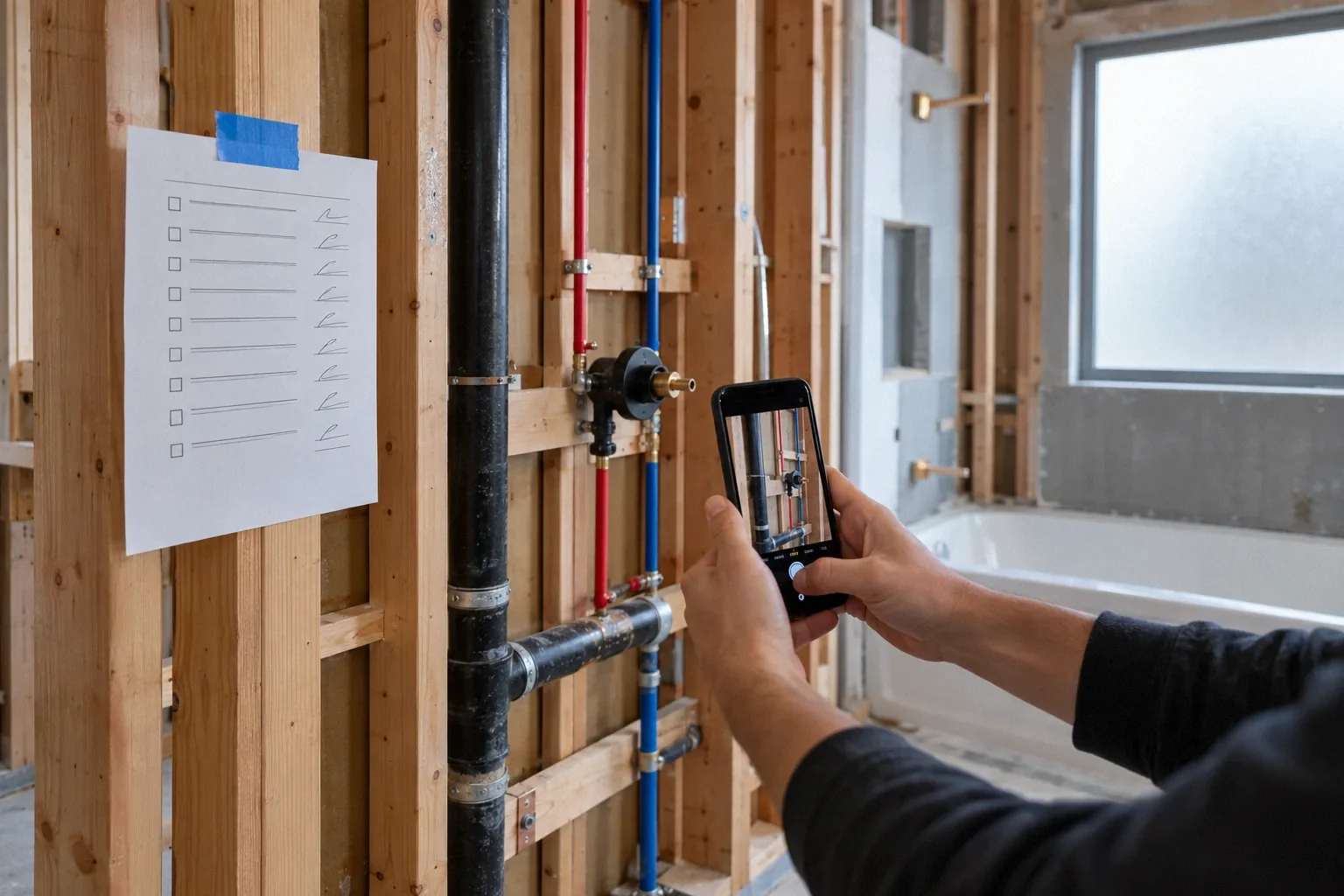
Short answer: a failed inspection usually means the inspector found items that need correction before that stage can be approved. You get a correction notice (sometimes called a correction list or a 'not approved' result) listing them. The contractor corrects the items, documents them, and schedules a reinspection. Do not cover the work, whether with insulation, drywall or tile, until the stage is approved. Reinspection fees can apply in some situations, under your department's own fee rules. As one older local example, a 2003 Sonoma County policy quotes the building code's reinspection provision: a fee may be charged when work isn't complete or corrections haven't been made, and it is not meant to penalize the first rejection for a code issue (Permit Sonoma policy 9-3-4). Check your own department's current rules. Who pays for the corrections depends on the cause and your contract. Corrections caused by the contractor's nonconforming work are normally the contractor's responsibility.
This is general information current to 3 October 2026, not legal advice. Inspection procedures vary by building department.
What owners report
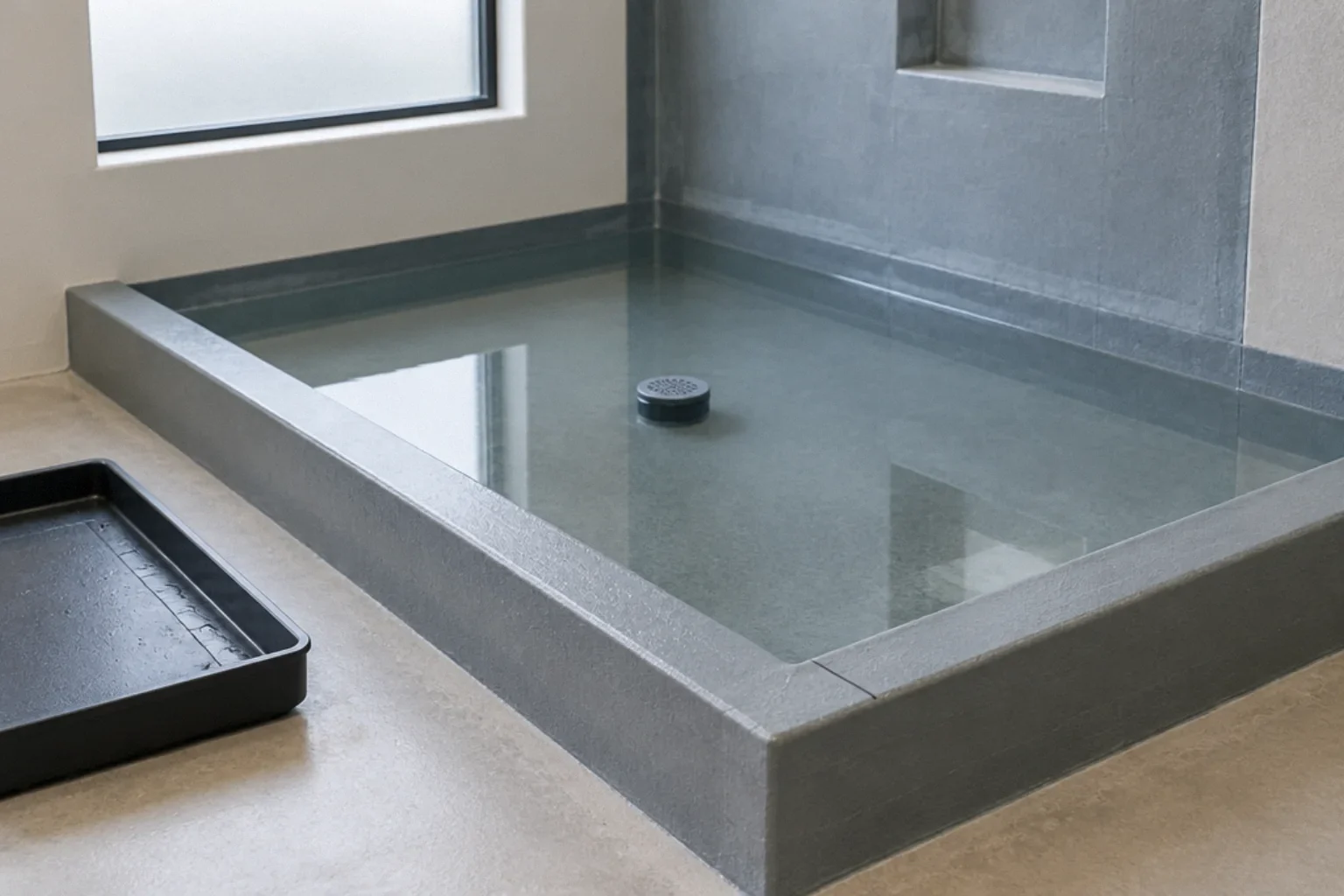
A San Jose homeowner wrote that their assigned inspector had failed every inspection so far, albeit for minor corrections, and asked whether San Jose was unusual. A commenter suggested contacting the building division to review what was being flagged and what to expect at upcoming inspections. In another thread, an owner whose new shower held standing water was told by commenters that an inspector should not pass it, and was encouraged to raise concerns with the inspector. These are anecdotal accounts. They show the two sides of inspections: frustration when corrections pile up, and reassurance that someone independent is checking.
Reading a correction notice
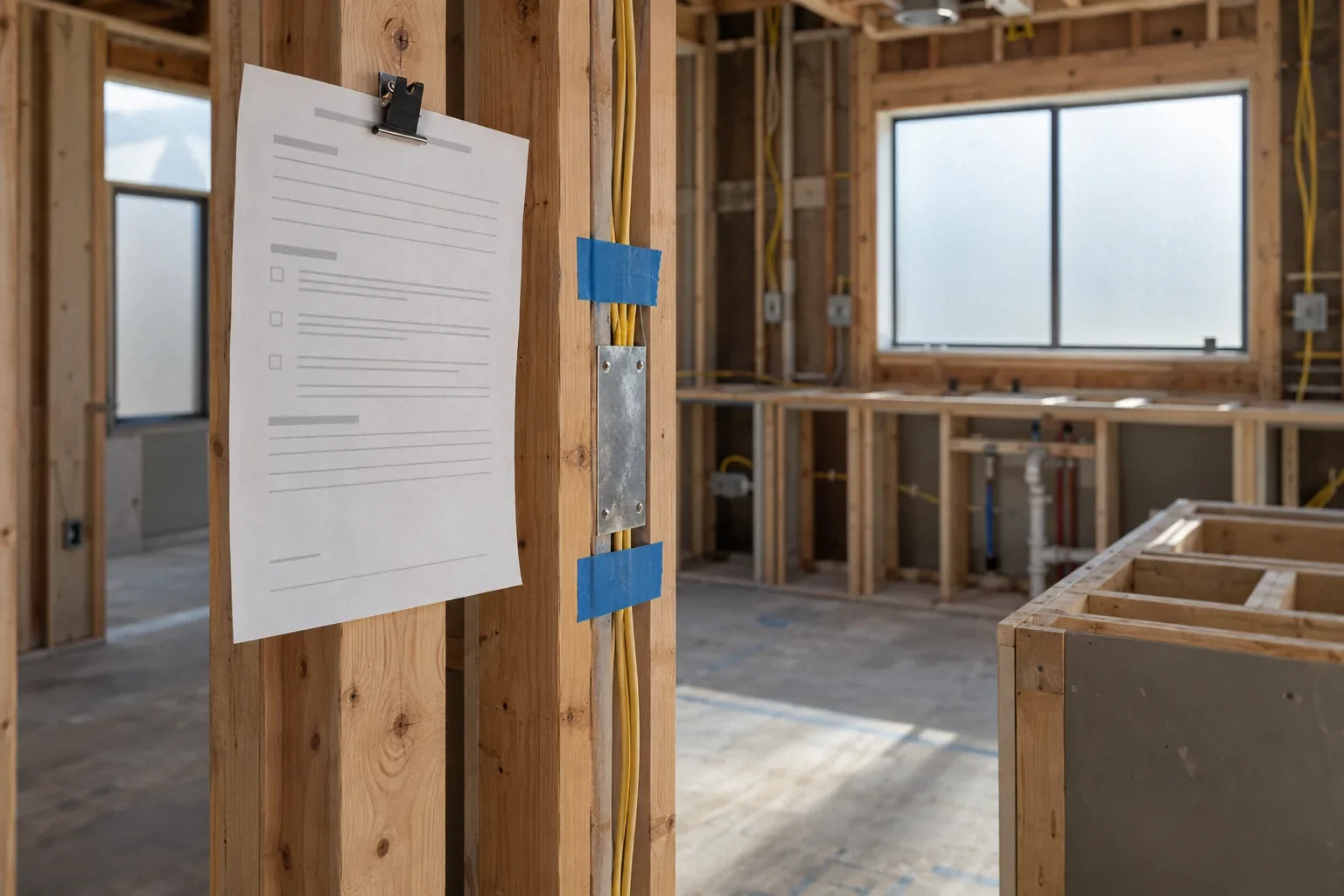
- Each item should say what and where: 'nail plate missing at stud, north wall' or 'GFCI protection required, island receptacle'. If an item is unclear, ask the inspector, politely, which code section or approved-plan detail it refers to.
- Note what was approved. Some departments approve parts of an inspection and hold others. Make sure you know which areas may move forward.
- Check deadlines. Correction timeframes and permit expiration rules vary. Ask the department if none is stated.
- Keep the notice with your permit records and in your decision log. See communication in writing.
Common reasons for a failed or cancelled inspection
| Category | Examples | Usually whose responsibility |
|---|---|---|
| Work not ready | Inspection requested before rough-in finished; test not set up | Whoever called for the inspection, usually the contractor |
| Workmanship or code item | Missing nail plates, improper venting, wrong fan ducting, missing blocking | Contractor, if the work didn't conform to the contract and code |
| Deviation from approved plans | Wall moved, window size changed, fixture relocated without a plan revision | Depends on cause and contract. An owner's request for a design change does not by itself make the owner responsible when the contractor proceeds without a required plan revision: a licensed contractor keeps its code and permit duties. The owner may pay for genuinely added work the owner approved; correcting unapproved execution is a separate question |
| Access problems | Locked gate, approved plans or job card not on site, dog in the yard | Whoever controls site access |
| A requirement the contractor didn't price | An item the department requires | First check the existing contract scope. A known, mandatory code requirement that a competent contractor should have anticipated is not automatically an owner-paid change just because it wasn't priced. A genuinely unforeseeable requirement may be handled under the contract's change provisions |
As an older local example, Sonoma County's 2003 policy lists when reinspection fees may be charged: the job isn't ready, plans or the job card aren't on site, prior corrections haven't been made where the area would be covered at the next stage, substantial deviation from approved plans, or blocked access. It also says inspectors should not charge when the situation is clearly outside the permit holder's control. That policy dates from 2003 and applies to Sonoma County. Your department's fee rules may differ.
Step-by-step after a failed inspection
- Get the notice in writing, on paper, in the portal or by photo of the job card.
- Walk the items with the contractor the same day if possible. Agree who fixes each item and by when.
- Sort by cause, starting from the contract scope. Contractor workmanship and code items within the contracted work are corrected at the contractor's cost under a typical fixed-price contract. Genuinely added work the owner approved, and truly unforeseeable requirements, go through a written change order. Known code requirements that should have been included are not automatically extras. See change orders.
- Photograph corrections before the reinspection.
- Schedule the reinspection only when everything is ready, to avoid fees.
- Hold the matching payment. If your payment schedule ties a payment to passing the inspection, it isn't due until it passes. See progress payments.
- Don't cover anything until the stage is approved.
If you disagree with an item
- Ask the inspector which code section or plan detail the item is based on.
- If your designer or engineer disagrees, they can contact the department with a technical explanation or propose an alternative.
- Departments have supervisor and appeal processes. Sonoma County's policy, for example, routes fee appeals to the inspection supervisor and then the building official. Ask your department how its process works.
- Stay professional. A cooperative tone helps the rest of your project's inspections.
A worked example
Hypothetical. A kitchen rough inspection fails with three items: (1) missing nail plates where a new circuit passes through studs near the wall face; (2) a range hood duct transition using a non-metal connector; (3) the island receptacle provision not shown as on the approved plan.
- Items 1 and 2 are workmanship issues, so the contractor corrects them at no charge.
- Item 3: the owner had asked on site to move the island receptacle, and the contractor did so without checking whether a plan revision was needed. Two questions are separate. Any genuinely added work from the owner's approved design change, such as extra wiring, can go on a short signed change order. Correcting the installation so it complies, and getting any required plan revision, is part of the contractor's code and permit responsibility. The designer checks whether the department needs a revised sheet.
- Before reinspection: the contractor photographs all three corrections and sends them to the owner.
- Result: the reinspection passes, and the payment tied to 'rough inspection approved' is released, with a conditional lien release.
Owner-builders
If you hold an owner-builder permit, you are the one responsible for meeting the inspector, understanding the corrections and arranging the fixes. Consider having your trade contractors present at inspections for their work. See owner-builder risks.
Bay Area applicability
Inspection scheduling, result reporting, reinspection fees and appeal routes are local. Many Bay Area departments use online portals for scheduling and results. Inspectors apply the code edition in effect for your permit, generally the 2025 California codes for applications made on or after 1 January 2026. When in doubt, call the inspection desk for your jurisdiction.
Current to 3 October 2026.
Questions that come up next
What happens if my remodel fails a building inspection?
You receive a correction notice listing items to fix. After corrections, you schedule a reinspection. Work at that stage should not be covered until it is approved.
Who pays to fix items from a failed inspection?
It depends on the cause and your contract scope. Corrections of the contractor's nonconforming work, and known code requirements within the contracted work, are normally the contractor's responsibility. Genuinely added work you approved, or truly unforeseeable requirements, may go through a written change order.
Will I be charged a reinspection fee?
Possibly, depending on your department's rules. Sonoma County's policy, for example, allows fees when work isn't ready, plans aren't on site, or prior corrections weren't made, and says inspectors should not charge when the situation is clearly outside the permit holder's control.
Can I challenge an inspector's correction?
Ask which code section or plan detail applies, involve your designer or engineer if needed, and use the department's supervisor or appeal process if you still disagree.
Sources and further reading
- Permit Sonoma: Policy 9-3-4, Building Permit Reinspection Fee Requirements (effective 2003)
- City of Pleasanton: Residential Kitchen Alteration Requirements (inspection sequence)
- Contra Costa County: Residential Bathroom Remodel inspections (2022-code brochure)
- California Building Standards Commission: Codes
Community questions behind this guide
These discussions identify homeowner concerns. Forum comments are personal accounts, not code or legal authority.