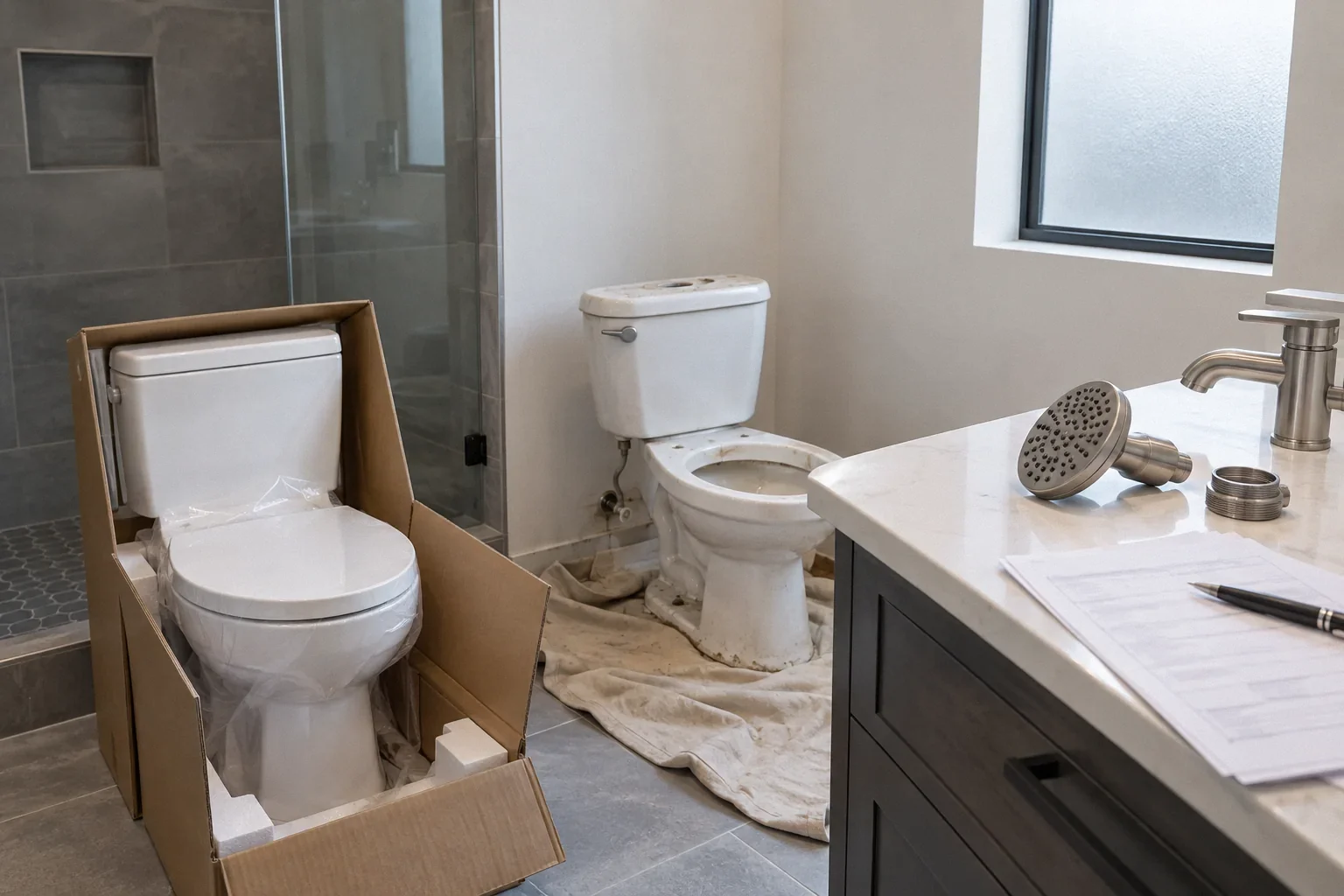
Short answer: an owner-builder permit can make sense if you will genuinely do the work yourself, or manage separately licensed trade contractors yourself, and you understand the responsibilities. It is a poor choice if a contractor suggests it so they can avoid pulling the permit. Before issuing an owner-builder permit, California building departments must have you sign a notice under Health and Safety Code § 19825. In it you acknowledge, among other things, that you are the party legally and financially responsible for the construction; that you may be held liable for injuries to unlicensed workers on your property; that if you use workers who are not licensed contractors on a project of at least $500, you may be considered their employer, with duties such as payroll taxes and workers' compensation; and that you may be liable to later owners for latent defects. CSLB specifically warns about 'consultants' or unlicensed individuals who urge owners to become owner-builders to save money.
This is general information current to 3 October 2026, not legal advice.
Two very different owner-builder stories
An Oakland owner described completing an ADU as an owner-builder, from planning and permits through final inspection. In another thread, an owner using an app to owner-build a junior ADU asked how to find licensed subcontractors, and was told that, as project manager, that was now their job, with a suggestion to check CSLB for licensed subcontractors. A San Francisco owner asked whether family members could do the labor on a garage-to-ADU conversion. These are anecdotal accounts. They show the real question is not whether owner-builder permits exist, but who will actually do the work and on what terms.
What California's owner-builder exemption covers
The contractor licensing law exempts certain owners who build or improve their own property (BPC § 7044). In summary:
| Route | Core conditions (summary) |
|---|---|
| Owner does the work | Improvements not intended or offered for sale; the owner personally performs the work, or it is done by the owner's own lawfully hired employees paid wages as their sole compensation. That means real employees with payroll obligations, not unlicensed 'independent' friends or handypersons paid by the job |
| Owner contracts with licensed contractors | The owner contracts directly with licensed contractors for the respective trades. There are limits on building structures for sale under this route |
| Principal residence | Work on the owner's principal residence, which the owner has actually lived in for the 12 months before completion, subject to the statute's limit on how often this route may be used within a three-year period. Read the current text of § 7044 for the exact frequency rule; it is not unlimited |
There is also a presumption about sales. Under § 7044, selling or offering a structure within one year after its completion creates a rebuttable presumption that it was built for sale, and selling five or more structures within one year after completion creates a conclusive presumption. That matters to anyone planning to remodel and then list.
What you acknowledge on the permit notice
Section 19825 requires the owner to initial and sign statements including:
- That you are the party legally and financially responsible for the proposed construction.
- That you may be held liable for injuries to an unlicensed person and their employees working on your property.
- That if you use workers who are not licensed contractors on a project of at least $500, you may be considered their employer, and may then have to register with state and federal agencies, withhold payroll taxes, provide workers' compensation disability insurance and contribute to unemployment insurance for each 'employee'. The $500 figure in this notice is not the same as the $1,000 minor-work threshold in contractor licensing law, and a smaller project is not a safe harbor: employer obligations depend on the facts, not just the project's size.
- That you may be held liable to subsequent owners for latent construction defects.
- Limits on building single-family structures for sale as an owner-builder.
These are not formalities. They describe how much more risk sits with you when you act as owner-builder. Hiring a licensed contractor does not remove every legal and financial risk from an owner either, but it puts the contractor's license, bond, insurance disclosures and permit responsibility between you and many of these problems.
When a contractor asks you to pull the permit
| What you hear | What it can mean | Better response |
|---|---|---|
| 'It's faster if you pull it as owner-builder.' | The contractor may be unlicensed, lack the right classification, or want to avoid permit accountability | Ask for their license number; ask why they won't pull it; a licensed contractor normally can |
| 'You'll save on our fees.' | Fees and insurance costs shift to you, along with the employer exposure described in § 19825 | Get the full picture from your insurer and an advisor first |
| 'Just list yourself, we'll do everything.' | You become responsible on paper for work you are not doing or supervising | Decline; hire a licensed contractor who pulls the permit |
If owner-builder is the right path for you
- Decide your role honestly: doing the work yourself, or acting as general coordinator of licensed trade contractors.
- Hire licensed trades directly for each specialty, and check each license and workers' compensation status on the CSLB lookup. Each should have a compliant written contract.
- Avoid informal labor. If you pay unlicensed helpers, the § 19825 notice warns you may be considered their employer, with the obligations that brings, and Labor Code § 2750.5 presumes a person doing licensed work without a license is an employee. Get professional advice before relying on anyone's informal help for paid work.
- Talk to your insurer about coverage during construction.
- Manage inspections yourself, including scheduling, being present and handling corrections.
- Keep records of plans, inspections, contracts and lien releases. You may need them when you sell.
A worked example
Hypothetical. An owner plans a garage-to-junior-ADU conversion. A friend who 'builds houses' offers to do framing, drywall and finish work for cash and suggests the owner pull an owner-builder permit; an electrician and a plumber would be hired separately.
- The friend's role: unless the friend is licensed for the work and contracts properly, paying them may make the owner their employer, as the § 19825 notice warns. Ask whether they hold a contractor's license. If yes, get a contract and check the license. If no, the owner should either hire them lawfully as an employee, with payroll and workers' compensation, or hire licensed help instead.
- Electrician and plumber: hire them as licensed specialty contractors with written contracts, and check their workers' comp status.
- Sale plans: if the owner intends to sell within a year, the § 7044 presumption needs discussion with an advisor before choosing this route.
- Outcome: owner-builder may still be workable, but only as a deliberately managed project, not as a way for someone else to avoid a license.
What owner-builder status does not do
- It does not exempt the work from permits, plans or inspections.
- It does not make unlicensed workers licensed.
- It does not lower code requirements.
- It does not remove disclosure duties when you later sell. See seller disclosure.
Bay Area applicability
The owner-builder rules are statewide, but each building department administers the notice and its own submittal requirements under the 2025 California codes, effective 1 January 2026. Some Bay Area departments offer owner-builder guidance or require additional forms. Ask your department for its owner-builder packet before you apply. One more caution: commenters in a Bay Area ADU thread openly suggested unpermitted, 'secret' conversions. That is not a lawful option, and the risks in our guides to unpermitted work apply in full.
Current to 3 October 2026.
Questions that come up next
What does it mean to be an owner-builder in California?
You obtain the permit as the owner and become the party legally and financially responsible for the construction. The permit notice under Health and Safety Code § 19825 lists responsibilities you acknowledge, including possible liability for injuries to unlicensed workers and employer duties if you hire non-licensed workers.
My contractor wants me to pull the permit. Is that a red flag?
Often, yes. A licensed contractor can normally pull the permit for work they perform. CSLB warns about people who urge owners to become owner-builders to save money. Ask why, and check their license.
Can I sell a house after doing owner-builder work?
Yes, but under BPC § 7044, selling or offering a structure within one year after completion creates a rebuttable presumption that it was built for sale, which affects the exemption, and five or more sales within one year after completion create a conclusive presumption. Get advice if you plan a quick sale.
Can my friends help on an owner-builder project?
If you pay people who are not licensed contractors, the owner-builder notice warns you may be considered their employer, with obligations such as payroll taxes and workers' compensation, and Labor Code § 2750.5 creates a rebuttable presumption that such workers are employees. Get advice first.
Sources and further reading
Community questions behind this guide
These discussions identify homeowner concerns. Forum comments are personal accounts, not code or legal authority.