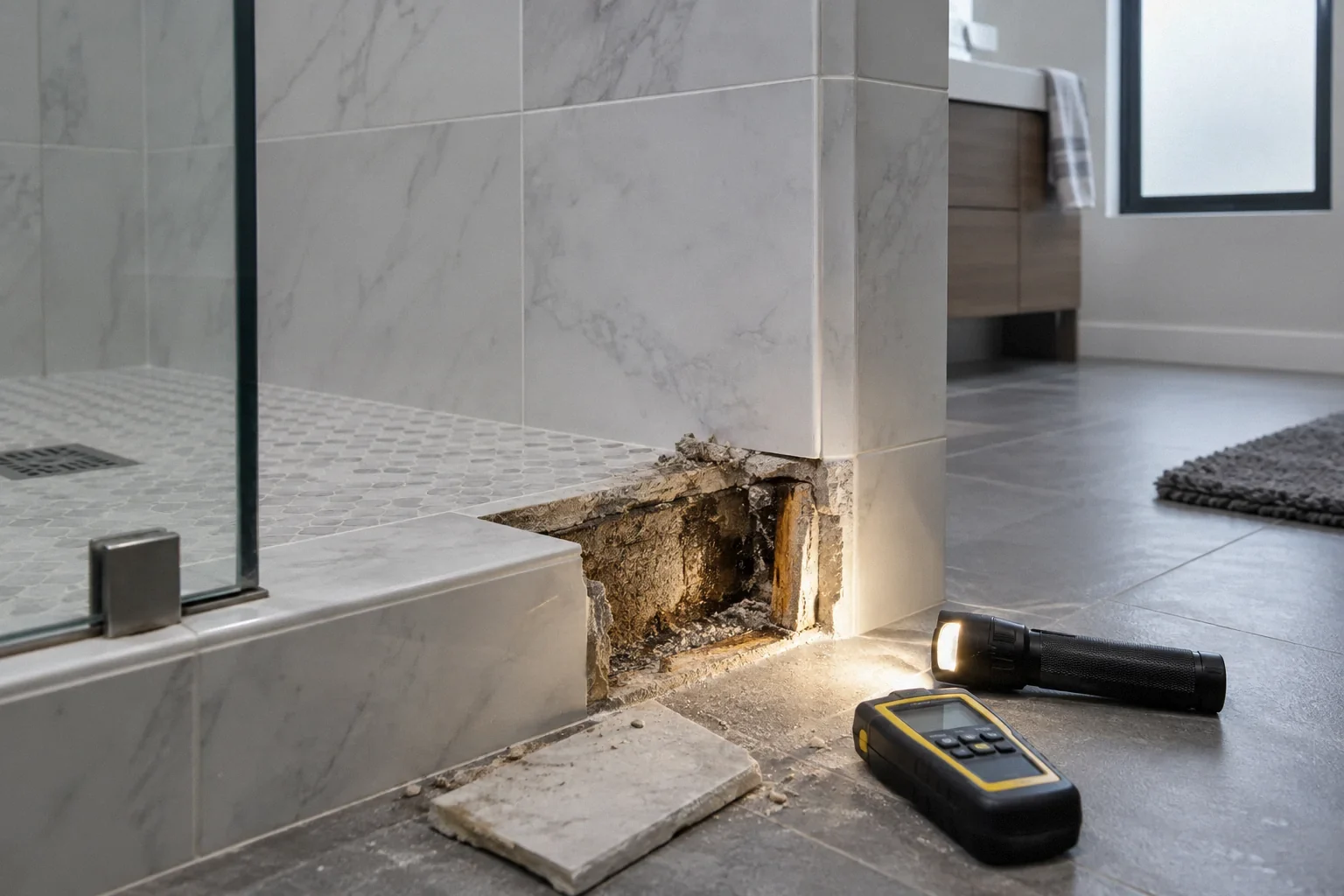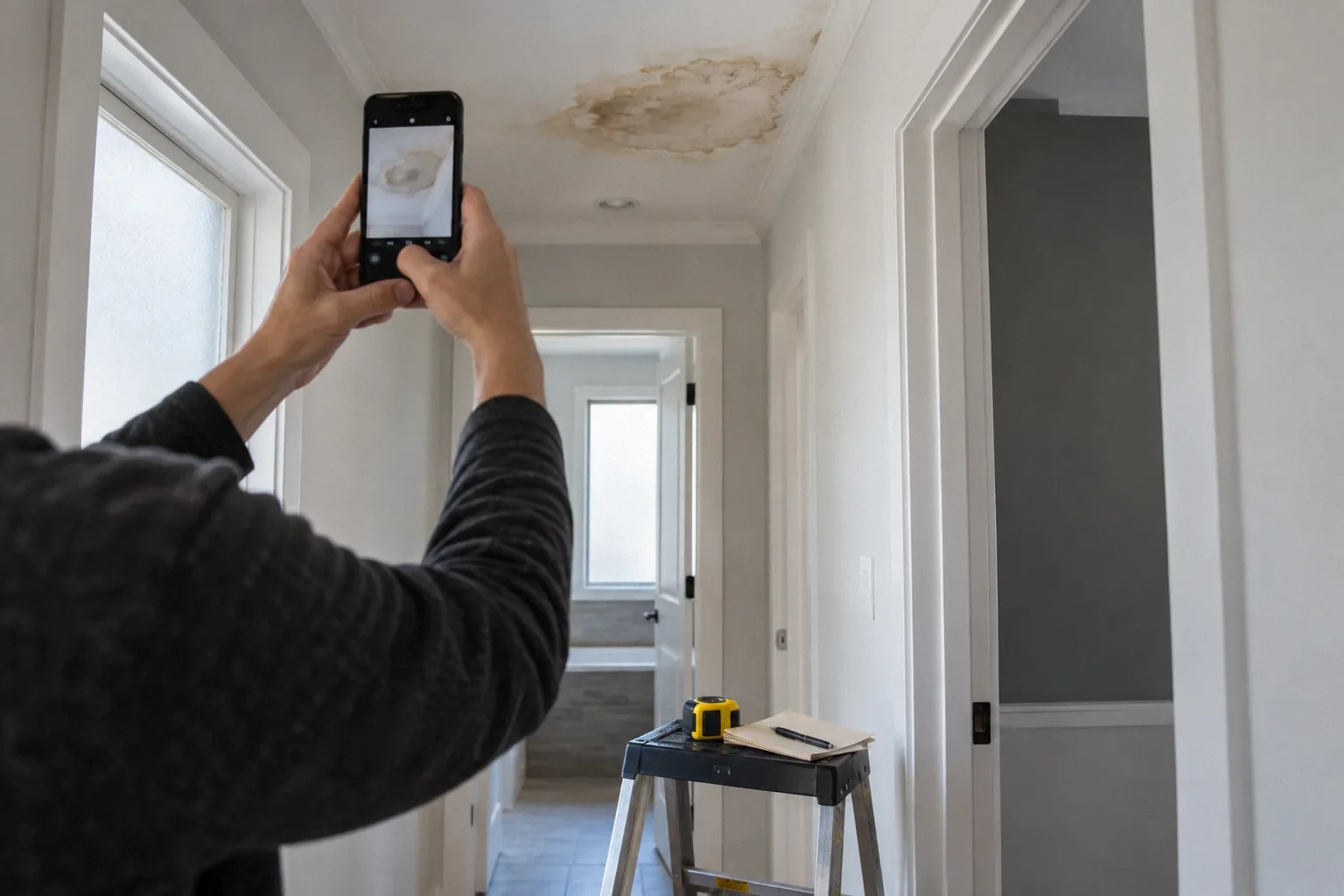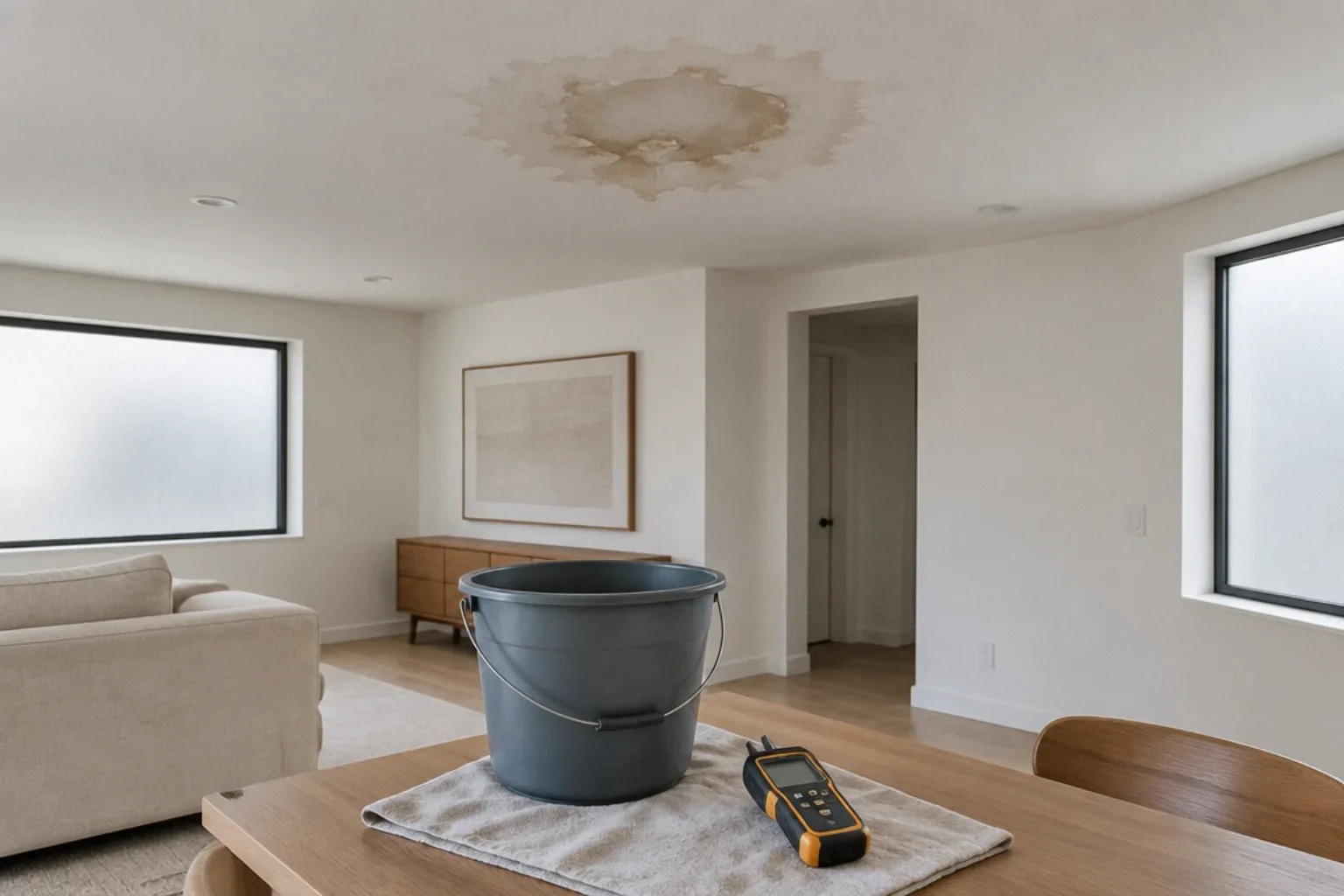
Short answer: stop using the shower, protect the area below, and document the leak before anyone patches it. Then notify the contractor in writing and ask for a diagnosis that identifies the cause, not just a fix. A new shower can leak through failed or incomplete waterproofing, a poorly integrated drain, a valve or supply connection, or water escaping past the glass or curb. Grout and caulk are not the waterproofing layer: LATICRETE's TDS 169 says tile, grout and sealants "are not substitutes for waterproofing materials." A repair plan should explain what failed and how the fix addresses it, and it should be documented with photos if the shower is opened. If the contractor refuses or cannot fix it, you have options, including a complaint to the Contractors State License Board, but time limits apply.
This guide gives a step-by-step response, questions for the contractor, a way to evaluate repair proposals, and your options. It is general information current as of 3 October 2026, not legal advice.
What owners describe
An owner whose contractor-built shower leaked worried the contractor would just caulk without investigating; a commenter recommended a flood test of the pan when the contractor came back. In another thread about a new contractor-built shower leaking, commenters stressed that tile is the surface decoration, not the waterproofing, and one urged getting the contractor's insurance details. An owner with a shower leaking into a kitchen ceiling after structural changes spent weeks applying silicone without solving it. Before a remodel, another owner asked what leak guarantees to put in the contract. These are personal accounts and opinions, not verified diagnoses.
Step 1: Stop the damage and document
- Stop using the shower. If water is actively leaking from a supply line, shut it off at the fixture valves or the main.
- Protect the area below: move belongings and catch drips where you can do so safely. If a light fixture, switch or outlet is wet, do not touch it or stand in water near it. Turn off its circuit only at a breaker panel you can reach from a dry place without touching water; otherwise leave it and call an electrician. Keep everyone out from under a ceiling that is sagging or bulging with water.
- Photograph and video the leak location, the shower, and any ceiling or floor damage, with dates.
- Write down when it started, how it behaves (only with the shower running, only when spray hits a certain wall, always), and what you have tried.
- Gather your contract, change orders, invoices, permit and inspection records, product information and any warranty.
Step 2: Notify the contractor in writing
Send a short, factual message: what you observed, when, the photos, and a request for an inspection by a specific date. Ask them to explain the cause they find before doing any repair. Keep it calm and specific. Our guide to communicating in writing has examples. Check the license and bond on the CSLB lookup at the same time.
Step 3: Questions to ask during diagnosis
- Which waterproofing system did you install, on the floor, walls, curb and niche? Do you have photos of it before tile?
- Was the pan flood tested before tile, and was it inspected?
- Which drain was used, and is it the one the waterproofing system specifies?
- How will you isolate the source: valve and supply, drain, floor, walls, curb, enclosure?
- Will you need to open tile or the ceiling below? Who repairs those finishes?
Controlled tests by the contractor or a diagnostic professional, changing one variable at a time with damage controls in place, help separate causes. A single dry test is not proof: for example, running the valve briefly without a leak below does not by itself show the supply side is sound, because some leaks appear only under longer use or pressure. Avoid having anyone flood a finished shower that is already leaking without a plan to control water damage; see flood tests.
Step 4: Evaluate the repair proposal
| Proposal | When it may be reasonable | Red flags |
|---|---|---|
| Recaulk joints or adjust the door | Testing shows water escaping only at the enclosure or a sealant joint, and the waterproofing behind is sound | Offered without any testing, or as the fix for water appearing below the shower floor |
| Repair valve, supply or drain connection | Testing isolates the plumbing; access exists without destroying the shower | No explanation of how the drain integrates with the waterproofing |
| Partial tear-out and repair of waterproofing | Failure is localized (for example, a curb corner) and the system allows repair per manufacturer | Patch over an unknown system with a different product without manufacturer guidance |
| Full rebuild | Waterproofing is missing, wrong or failed broadly | Rebuild with the same unspecified method |
Ask that any repair follow the waterproofing manufacturer's instructions, be photographed while open, be tested before tile goes back on, and that the contractor repair resulting damage to ceilings and finishes. Put the agreed scope in writing. Who pays depends on the cause and the contract scope: a defect in the contractor's own work is generally the contractor's to correct, while genuinely new work outside the original scope belongs in a signed change order. An expired written warranty does not by itself erase rights you may have under your contract or California law; see defect time limits. Our waterproofing guide explains what a complete system looks like.
Step 5: If the contractor won't fix it
- Get an independent assessment from a qualified tile/waterproofing specialist or plumber, in writing.
- Review your contract for warranty terms, dispute resolution and any notice requirements.
- CSLB complaint. CSLB's page on what happens after you file says it has jurisdiction for up to four years from a violation (up to 10 for some hidden structural defects), can issue citations including orders to correct, and does not guarantee restitution. A complaint does not pause court deadlines. See CSLB complaints and bonds.
- Small claims or civil action for repair costs and damage; see small claims and defect time limits.
- Insurance. Ask your insurer whether resulting water damage may be covered under your policy, and whether the contractor's liability insurance is relevant.
If the person who built the shower was unlicensed for work that required a license, BPC § 7031(b) may allow recovery of amounts paid; talk to an attorney.
Worked example (hypothetical): water below the curb
Three weeks after a shower remodel, the owner sees a damp spot on the garage ceiling under the curb, only after showers. The owner stops using the shower, photographs the ceiling and shower, and emails the contractor. On site, the contractor sets up damage controls first: a tarp and bucket below, the garage ceiling opened at the stain so the area can be seen directly, and the light circuit below turned off at the panel. The contractor then tests one path at a time: a pressure check of the supply and valve with the shower head capped, water run down the drain only, directed spray at the glass and door joints, each wall wetted separately, and finally slow water on the floor near the curb, stopping each test at the first sign of water below. Supply, drain, enclosure and walls stay dry; the curb test shows dampness below within minutes. The contractor's photos from construction show the membrane at the curb but not the inside corner clearly. The contractor proposes removing the curb tile and the first rows of floor tile, inspecting and repairing the membrane per its manufacturer, flood testing before retiling, and repairing the garage ceiling. The owner agrees in writing, asks for photos while it is open, and confirms the warranty will cover the repaired work.
Prevention for your next project
- Specify the waterproofing system and matching drain in the contract.
- Require a flood test before tile, with photos and the owner present.
- Ask for a written leak warranty and how claims are handled.
See contract checklist for other required terms.
Checklist
- Shower out of use; damage contained where safe; wet electrical left alone except at a dry, accessible breaker; electrician called; nobody under a sagging ceiling
- Photos, video and a timeline
- Written notice to contractor; license and bond checked
- Diagnosis that identifies the cause
- Repair plan tied to the cause, per manufacturer, photographed and tested
- Resulting damage repair agreed in writing
- Independent assessment and formal options if the contractor refuses
Current as of 3 October 2026. Remedies and deadlines depend on facts and contracts; get individual advice for significant losses.
Questions that come up next
Why is my new tile shower leaking?
Common sources to test include incomplete or failed waterproofing behind the tile, a drain not properly integrated with the waterproofing, a valve or supply connection, or water escaping past the glass, door or curb. Grout and caulk are not the waterproofing layer, so testing should isolate the source.
Should I let the original contractor fix the leak?
Often that is the first step and your contract may expect it. Ask them to diagnose the cause first and explain how the repair addresses it, to follow the waterproofing manufacturer's instructions, to photograph the work while open, and to test before retiling. Get the plan in writing.
Is recaulking enough to fix a leaking shower?
Only if testing shows water escaping at a sealant joint or the enclosure and the waterproofing behind is sound. If water appears below the shower floor, caulk alone is unlikely to address the cause.
What can I do if the contractor won't fix my shower?
Get an independent assessment, review your contract's warranty and dispute terms, and consider a CSLB complaint, small claims or civil action, keeping time limits in mind. An expired written warranty does not by itself end other rights, and a CSLB complaint does not pause court deadlines.
Sources and further reading
Community questions behind this guide
These discussions identify homeowner concerns. Forum comments are personal accounts, not code or legal authority.