Short answer: it depends on which clock you are looking at. Your contract may include a written workmanship warranty with its own term. The Contractors State License Board says it has jurisdiction over contractors for up to four years from the date of a violation, and up to 10 years for some hidden structural defects. Court deadlines are separate: California's Code of Civil Procedure sets an outer limit of 10 years after substantial completion for latent (hidden) construction deficiencies under § 337.15, but shorter deadlines, such as four years for claims on a written contract under § 337 or three years for injury to real property under § 338, may also apply and can run first. A window of time is not a warranty: these periods limit when you can act; they do not promise the work will last that long.
This guide explains each clock, shows how they interact in remodel scenarios, and lists what to do as soon as you notice a problem. It is general information current as of 3 October 2026, not legal advice. Limitation rules are technical and fact-specific; for a real dispute, talk to a California construction attorney promptly.
Why owners get confused
An owner whose vinyl plank floor developed gaps about two years after a licensed contractor's installation reported that the contractor blamed the material, offered a fix without guaranteeing it would last, and did not explain the process. In a Sacramento thread, a buyer of a house renovated just before sale said CSLB told them it might not be able to help because they did not hold the contract, and suggested a bond claim. These are personal accounts, not verified facts. They show the questions owners face: is it a defect or wear, who is responsible, and is it too late.
The clocks, side by side
| Clock | What it covers | When it starts and how long | Source |
|---|---|---|---|
| Written warranty | Whatever the contract or product warranty says | Per its terms | Your contract; manufacturer warranty |
| CSLB complaint jurisdiction | License-law violations, including poor workmanship by licensees | Up to 4 years from the violation; up to 10 years for some hidden structural defects | CSLB |
| Breach of written contract | Failure to perform contract terms | 4 years from accrual (not necessarily from completion) | CCP § 337 |
| Injury to real property | Damage to your property | 3 years from accrual; discovery rules can affect when it starts | CCP § 338 |
| Patent deficiency (outer limit) | Deficiency apparent by reasonable inspection | 4 years after substantial completion, with a limited extension when injury occurs in the fourth year; the section states it does not apply to owner-occupied single-unit residences | CCP § 337.1 |
| Latent deficiency (outer limit) | Deficiency not apparent by reasonable inspection | 10 years after substantial completion; the section states it does not apply to willful misconduct or fraudulent concealment, and contains other limits on who may raise it | CCP § 337.15 |
Two different kinds of clock are mixed here. The patent and latent rules are outer limits counted from substantial completion. The contract and property-damage periods run from when a claim accrues, which turns on facts and discovery rules. A claim can be barred by whichever applicable period runs first, so the earliest deadline is the one to identify with a lawyer. Filing a CSLB complaint does not pause any of these court deadlines.
"Substantial completion" under § 337.15 is the earliest of the final inspection by the public agency, recording of a notice of completion, use or occupation of the improvement, or one year after work stops. For a permitted remodel, the final inspection date is often the practical start, which is one more reason to keep the signed permit card.
The newer Civil Code construction defect rules for homes (§§ 895 and following, sometimes called the Right to Repair Act) are written for original construction intended to be sold as an individual dwelling, as § 896 states. Whether any part applies to a particular remodel is a legal question; do not assume it does.
How the clocks interact: worked examples
Example 1: Floor gaps at two years
A floating vinyl plank floor installed under a written contract opens at the joints two years after completion. The contract's one-year workmanship warranty has expired, but a contract claim (four years), a property damage claim (three years, if there is damage), and a CSLB complaint (four years from the violation) may still be available, depending on cause. The first task is a cause assessment: did the installation follow the manufacturer's instructions on subfloor flatness, expansion space and acclimation, or is it a product issue? See why vinyl plank separates.
Example 2: Shower leak first noticed at year three
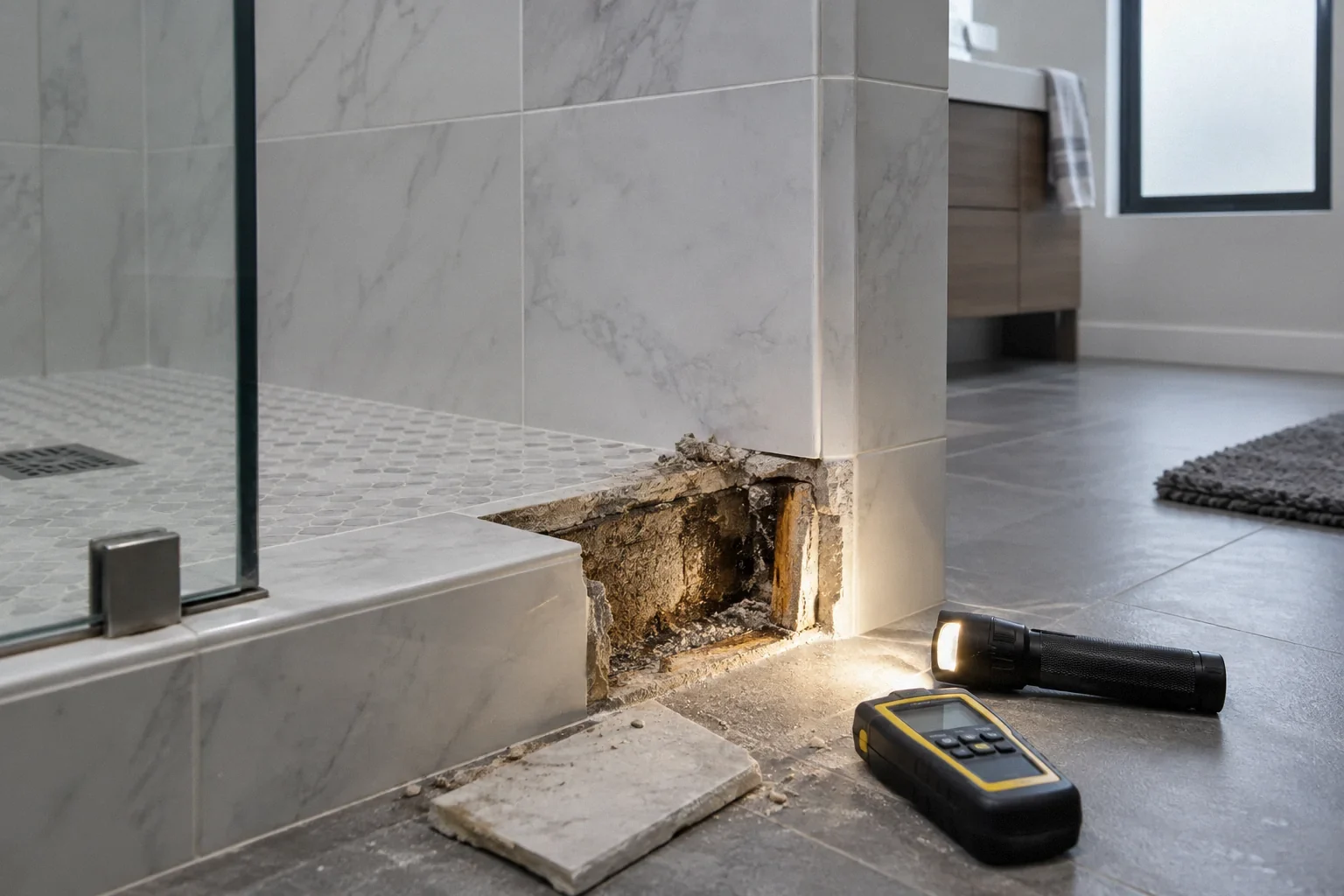
A remodeled shower is first noticed leaking into the ceiling below three years after the final inspection. That does not mean a three-year deadline is about to expire. Periods such as the three years for injury to real property under § 338 generally run from when a claim accrues, and accrual and discovery rules can differ from the completion date that starts the outer limits in §§ 337.1 and 337.15. When the claim accrued here depends on facts such as when damage began and when you discovered, or reasonably should have discovered, it. Those questions decide the earliest deadline, so get legal advice promptly rather than counting from the final inspection. Meanwhile, document the leak and notify the contractor in writing. See new shower leaking after a remodel.
Example 3: Hidden structural problem at year seven
During a later project, an engineer finds that a beam installed seven years earlier was undersized and has sagged, causing cracking. The deficiency was not apparent by reasonable inspection, so the 10-year latent outer limit may matter, and CSLB's 10-year window for some hidden structural defects may be relevant. Shorter periods tied to discovery may still apply. A lawyer should review promptly.
Example 4: Concealed work
If a contractor knowingly covered defective work and misrepresented it, § 337.15's 10-year limit does not apply to willful misconduct or fraudulent concealment, and fraud claims have their own deadline under § 338(d), three years from discovery. Proving concealment is a factual and legal matter.
What to do as soon as you notice a problem
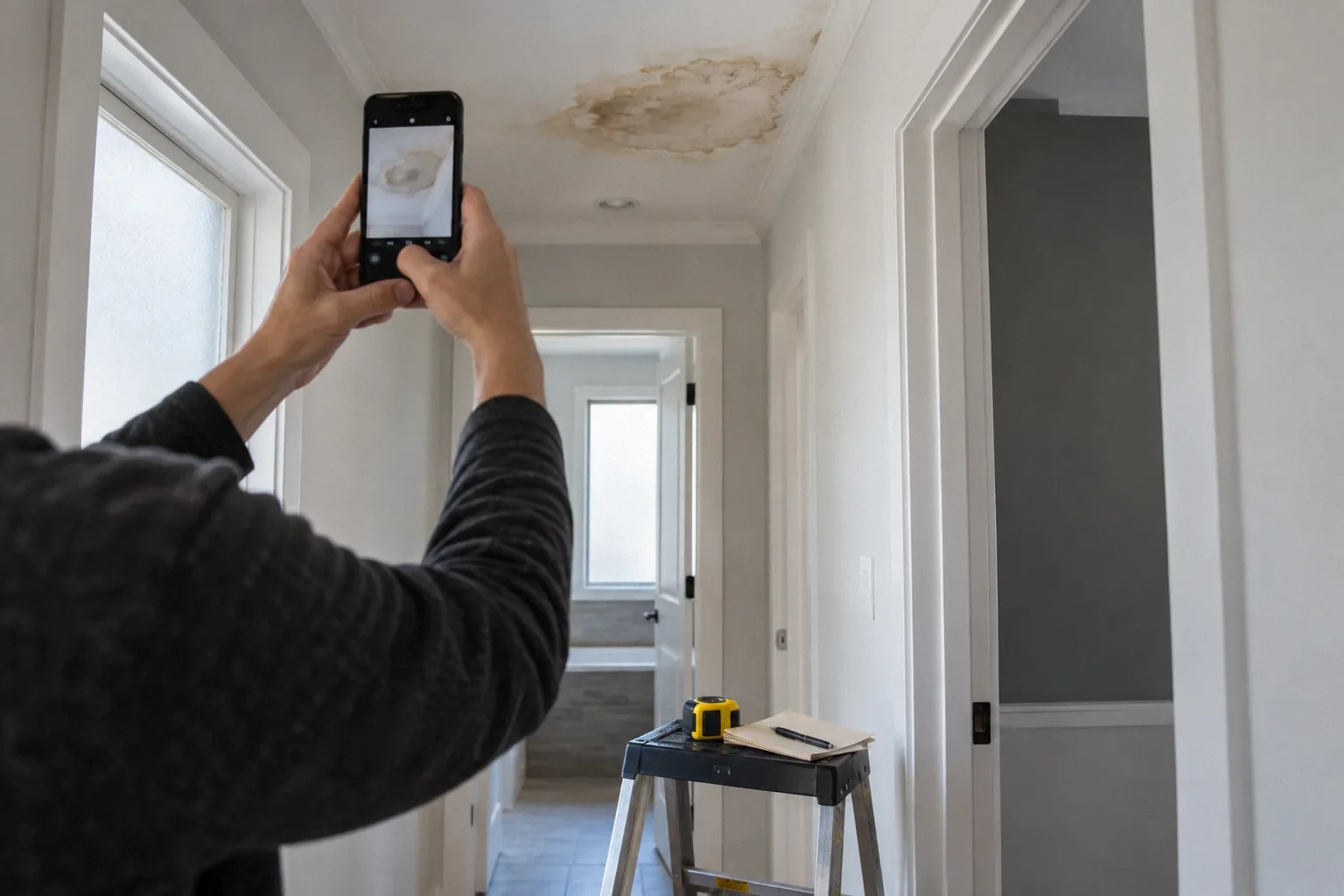
- Stop further damage and document it with dated photos and notes.
- Find your file: contract, change orders, permits and final inspection date, invoices, warranties, and product instructions.
- Get a cause assessment from an independent specialist.
- Notify the contractor in writing, describe the problem, and ask for a response by a set date. Keep proof of delivery. See communicating in writing.
- Check the license record and bond on the CSLB lookup.
- Consider a CSLB complaint within its time limits. CSLB notes that an investigation does not guarantee restitution and encourages civil action where money is the main goal; a complaint does not pause court or bond deadlines. See CSLB complaints and bonds.
- Talk to an attorney early, before the shortest possible deadline runs. Small amounts may fit small claims.
Contract terms that help later
- A written workmanship warranty with a clear term and what it covers
- Named products and the instruction that they be installed per manufacturer requirements
- A requirement to provide product warranty registrations and documents at completion
- Clear completion and final inspection milestones
CSLB's contract guidance and our contract checklist cover other required terms.
Checklist
- Problem documented with dates
- Final inspection or completion date found
- Warranty terms read
- Cause assessed by a specialist
- Written notice sent to contractor
- License and bond checked
- CSLB complaint considered within time limits
- Attorney consulted about the earliest applicable deadline
Current as of 3 October 2026. Statutes of limitation have accrual and tolling rules not covered here; get individual advice.
Questions that come up next
Is there a 10-year warranty on construction in California?
No. The 10-year period in CCP § 337.15 is an outer time limit for suing over latent deficiencies after substantial completion, not a warranty that work will last 10 years. Shorter deadlines may apply first, and any warranty depends on your contract.
How long do I have to file a CSLB complaint?
CSLB says it has jurisdiction for up to four years from the date of the violation, and up to 10 years for some hidden structural defects. A complaint does not preserve separate court or bond deadlines.
What is the difference between a patent and latent defect?
A patent deficiency is apparent by reasonable inspection; a latent deficiency is not. California's outer limits are four years for patent deficiencies (CCP § 337.1, which states it does not apply to owner-occupied single-unit residences) and 10 years for latent ones (CCP § 337.15), both counted from substantial completion.
When does the clock start on a remodel?
For § 337.15, substantial completion is the earliest of the public agency's final inspection, recording of a notice of completion, use or occupation of the work, or one year after work stops. Other claims have their own accrual rules.
Sources and further reading
- California Code of Civil Procedure § 337.15 (latent deficiencies, 10 years)
- California Code of Civil Procedure § 337.1 (patent deficiencies, 4 years)
- California Code of Civil Procedure § 337 (written contracts)
- California Code of Civil Procedure § 338
- California Civil Code § 896
- CSLB: After You File Your Complaint
- CSLB: Check a License
- CSLB: Contracts and Binding Agreements
Community questions behind this guide
These discussions identify homeowner concerns. Forum comments are personal accounts, not code or legal authority.