Short answer: for a multi-trade remodel, you usually want a B (general building) contractor, who may take a prime contract involving at least two unrelated trades other than framing or carpentry. The other option is a B-2 (residential remodeling) contractor, who may take nonstructural remodels of existing wood-frame homes involving at least three unrelated trades, with important limits on structural, electrical, plumbing and mechanical system work. For a single-trade job, hire the matching C (specialty) contractor, such as electrical (C-10), plumbing (C-36), tile (C-54), flooring (C-15) or cabinets and finish carpentry (C-6). These definitions come from CSLB's Description of Classifications, which quotes BPC § 7057 and § 7057.5. Always check on the CSLB lookup that the license is active and lists the classification your work needs.
This guide covers professional remodels by licensed contractors. It is general information current to 3 October 2026, not legal advice.
Why the classification matters
Homeowners' questions often start with 'who do I call?' One owner with a misaligned vinyl plank floor asked whether to call a flooring installer, a handyman or someone else. Another, with a leaking shower, asked who to contact and was told a bathroom or tile specialist would be a good start. Commenters in a third thread argued over whether it was a plumbing or a waterproofing problem. These are anecdotal accounts. The license system gives a structured answer: match the trade to the classification, and use a general contractor when several trades must be coordinated.
The three families
| Class | What it covers (summary of CSLB's description) | Key limits |
|---|---|---|
| B, General Building | Structures requiring at least two unrelated building trades or crafts, or superintending them | May take a prime contract for non-carpentry trades only if it involves at least two unrelated trades other than framing or carpentry, or if the contractor holds the specialty classification or subcontracts to a licensed specialty contractor. Fire protection (C-16) and well drilling (C-57) need the right license or sub |
| B-2, Residential Remodeling | Improvements to an existing residential wood-frame structure requiring at least three unrelated trades in a single contract, such as drywall, finish carpentry, flooring, insulation, painting, plastering, roof repair, siding, tiling, and installing or replacing electrical, plumbing and mechanical fixtures | May not contract for structural changes to load-bearing portions (footings, foundations, load-bearing walls, roof structures), even by subcontracting them. No installing, replacing, substantially altering or extending electrical, mechanical or plumbing systems unless licensed for them or subcontracted, though minor alterations needed to install fixtures are allowed. C-16, C-22 (asbestos) and C-57 work needs the right license or sub |
| C, Specialty | One specialized trade, with many separate C classifications listed by CSLB | Limited to the work of that classification, plus work that legitimately qualifies as incidental under CSLB's rules. Naming subcontractors does not by itself let a specialty contractor take a whole remodel outside its classification |
Common remodel scenarios
| Project | Likely suitable license(s) | Why |
|---|---|---|
| Full kitchen remodel with a wall removal, new circuits and a relocated sink | B | Structural change plus multiple trades; B-2 cannot do load-bearing changes or extend systems itself |
| Cosmetic bathroom refresh: new tile, vanity, toilet, light fixture, paint; nothing moved | B-2 or B | Three or more unrelated trades; fixture replacement in place falls within B-2's described scope |
| Add three new kitchen circuits only | C-10 Electrical | Single trade; electrical system work |
| Re-pipe a house | C-36 Plumbing | Single trade; plumbing system work |
| Retile a shower only, nothing relocated | C-54 Ceramic and Mosaic Tile | Single trade; CSLB describes C-54 as preparing surfaces and installing tile. It does not authorize relocating plumbing, such as moving a valve or drain, which needs the plumbing classification |
| New LVP or hardwood throughout | C-15 Flooring | Single trade |
| New cabinets and trim only | C-6 Cabinet, Millwork and Finish Carpentry | Single trade |
| Replace furnace with heat pump and add a circuit | Usually C-20 HVAC, with a C-10 for electrical work, or a B coordinating both | Two specialties; check who will pull which permits |
| Remove asbestos-containing material before a remodel | A contractor properly authorized for asbestos work | Asbestos work has its own licensing and registration rules. These can involve the C-22 classification, asbestos certification held with another classification, and registration with the state Division of Occupational Safety and Health. Check CSLB's current asbestos requirements for the specific work |
These are typical matches, not rulings on any particular contract. Classification questions can turn on exact scope, and on whether any work is genuinely incidental. When unsure, describe your exact scope to CSLB and ask.
How to check a license for your job
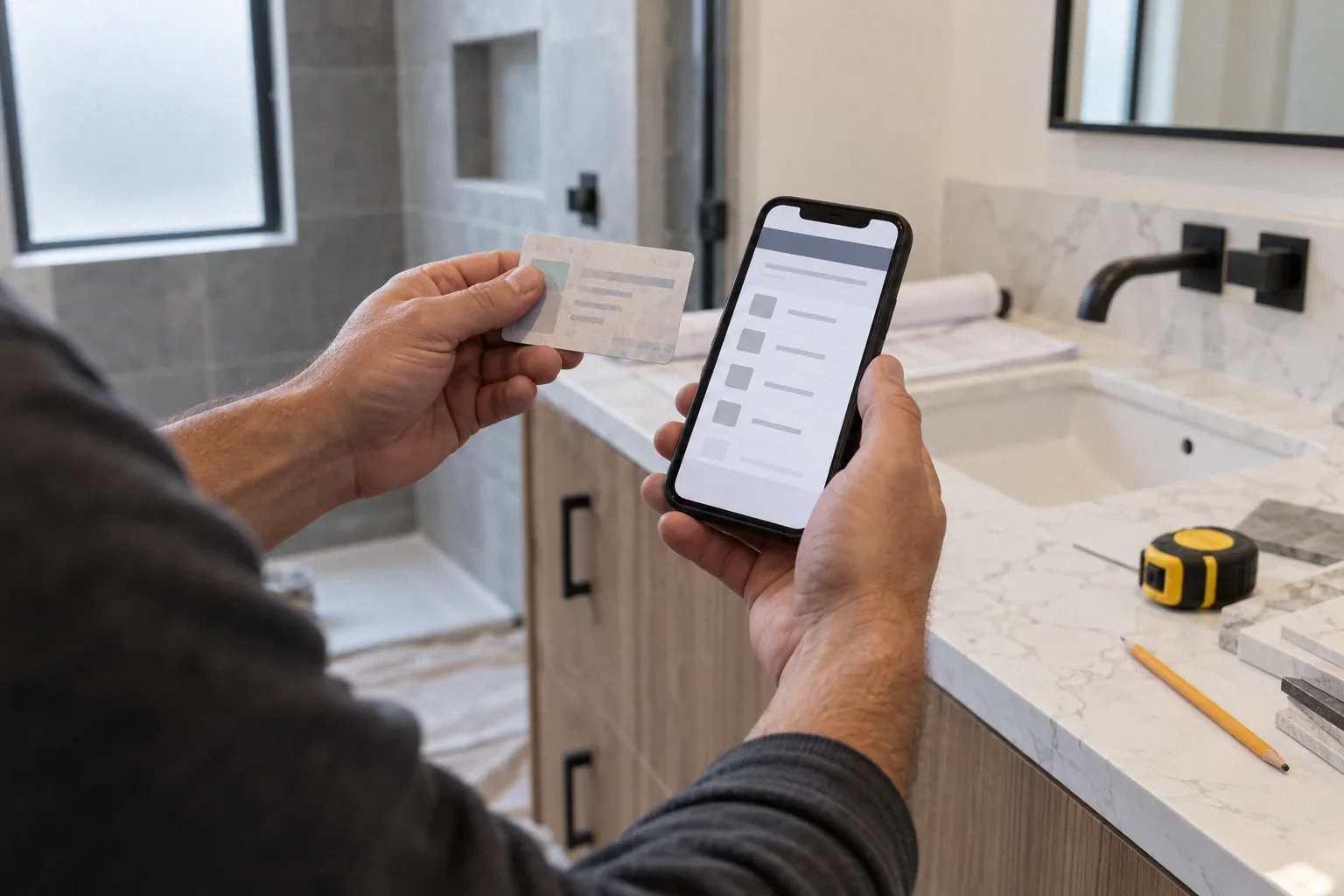
- Search by license number, not just business name, on the CSLB lookup.
- Confirm the status is active and note any disciplinary history.
- Read the classifications listed. Does at least one fit your scope?
- Check workers' compensation and bond information on the same page. See contractor insurance.
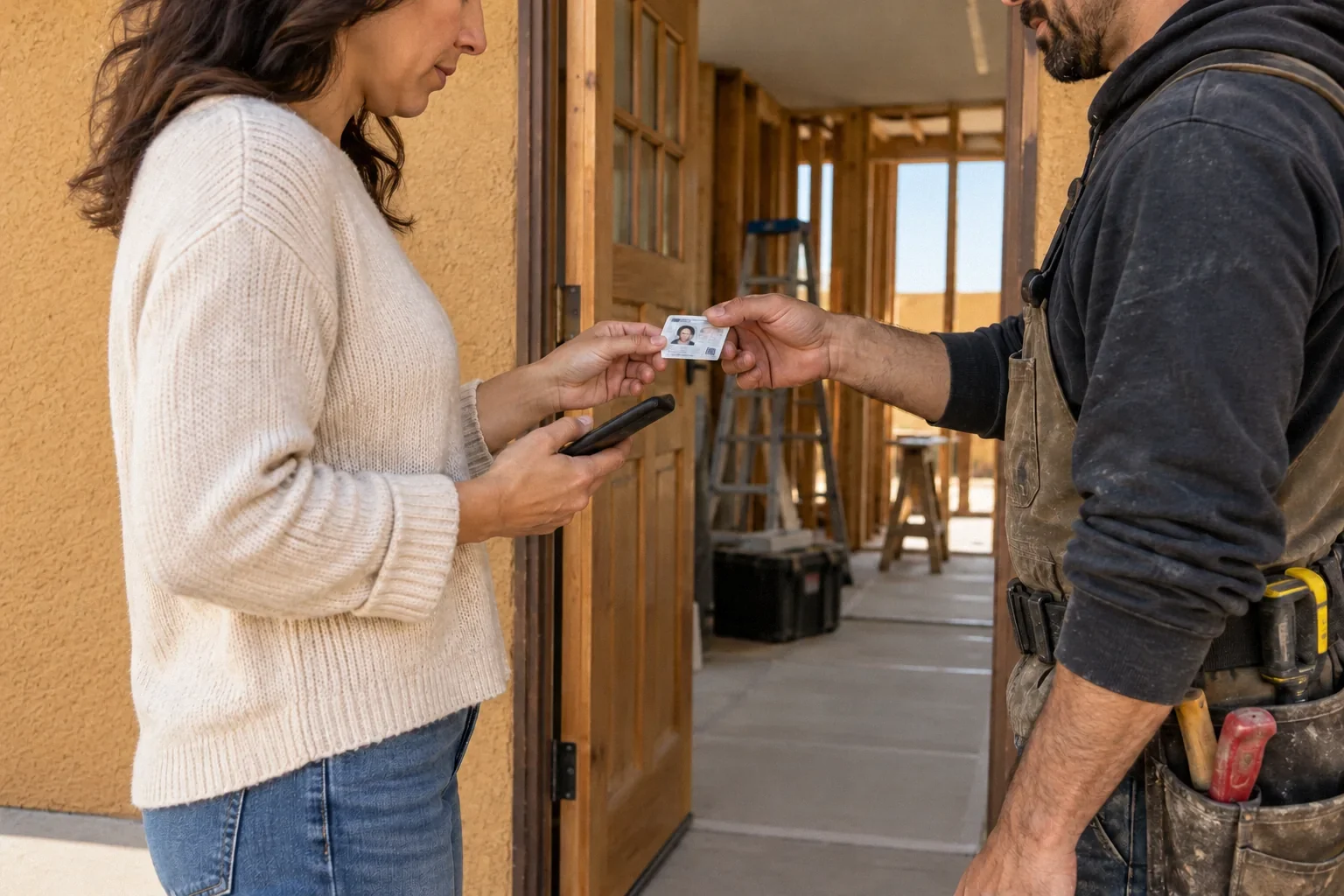
- Match the contract. The contract must show the contractor's name, business address and license number (§ 7159), and they should match the CSLB record.
- Ask about subcontractors. If the contract says subcontractors will be used, you can request their names, license numbers and classifications, and then check them too.
A worked example
Hypothetical. An owner gets two bids for a bathroom remodel: one from a B-2 contractor and one from a B contractor. The scope includes moving the toilet 18 inches, replacing a tub with a walk-in shower, and adding a new bath fan circuit.
- Moving the toilet means changing the drain and vent: plumbing system work, not just fixture replacement.
- A new fan circuit extends the electrical system.
- Under § 7057.5 as summarized by CSLB, a B-2 may do that system work only if it holds the C-36 and C-10 classifications or subcontracts to licensed plumbing and electrical contractors.
- Check for structural work. Moving a toilet drain on a wood-framed floor can require cutting, notching or reframing joists. If it does, that is a structural change to a load-bearing portion, which a B-2 may not contract for, even by subcontracting it. The B-2 bid would then not be viable for this scope as designed.
- The owner's questions to the B-2 bidder: 'Will the drain relocation affect any joists? Which licensed subcontractors will do the drain relocation and the new circuit? Please list their license numbers.' Clear answers, with no structural work and valid licenses, keep the B-2 bid viable. A vague 'we do it all ourselves' without the classifications is a warning sign.
- The B bidder can take the prime contract because more than two unrelated trades are involved, and will typically subcontract plumbing and electrical too. Ask the same question.
Red flags
- A license number that belongs to a different business name
- A specialty contractor bidding a whole remodel outside its classification. Naming subcontractors does not cure this
- 'I'm licensed', with no number given, or a number that shows an inactive or suspended status
- Structural work, such as removing a load-bearing wall, offered by a B-2 contractor
- Asbestos removal offered by anyone who cannot show the required asbestos licensing and registration
Bay Area applicability
Licensing is statewide, but permits are local, and permit applications ask for the contractor's license information. Your building department may also check that the contractor pulling a permit holds a classification appropriate to that permit, for example an electrical permit pulled by a C-10 or by a B as part of a qualifying multi-trade project. If a contractor asks you to pull the permit yourself, read our owner-builder guide first.
Current to 3 October 2026.
Questions that come up next
What is the difference between a B and a B-2 license?
A B general building contractor can take projects requiring at least two unrelated trades other than framing or carpentry, including structural work. A B-2 residential remodeling contractor handles nonstructural remodels of existing wood-frame homes requiring at least three unrelated trades, and cannot do load-bearing structural changes or extend electrical, plumbing or mechanical systems unless licensed for them or subcontracting.
Can a general contractor do electrical or plumbing work?
A B contractor may include those trades within a qualifying multi-trade prime contract, but for a single-trade job they need the specialty classification or must subcontract to a licensed specialty contractor.
Who do I hire just to retile a shower?
A C-54 ceramic and mosaic tile contractor is the matching specialty for tile work where nothing is relocated. Moving a valve or drain is plumbing work needing the appropriate classification. Check whether your jurisdiction requires a permit.
How do I know a license covers my project?
Look up the license number on CSLB's website, confirm it is active, and check that at least one listed classification fits your scope.
Sources and further reading
Community questions behind this guide
These discussions identify homeowner concerns. Forum comments are personal accounts, not code or legal authority.