Short answer: you usually cannot see water damage behind finished walls, but you can see the clues around it: isolated patches of new paint or drywall texture, flooring that is new in only one room, warped baseboards, rust at fixture bases, a musty smell with no visible source, stains in closets and cabinets that were not repainted, and damp or stained framing in attics and crawl spaces. When you see those clues, ask the seller in writing what happened and what was repaired, and ask your inspector or a specialist to test those areas. A fresh repair is not proof of concealment; ordinary maintenance also leaves these clues. It is a reason to ask, and California sellers must answer disclosure questions in good faith.
This guide gives a room-by-room checklist, explains what moisture meters and thermal cameras can and cannot show, and walks through a worked example. It is general information current as of 3 October 2026, not inspection or legal advice.
What buyers and owners describe
A buyer of a flipped house believed issues had been hidden, and a commenter suggested locating the disclosures the flipper had received when they bought the property. In a California thread, a buyer found floor problems after closing that had not come up during the transaction. On the moisture side, a West Coast owner of an uninsulated 1950s house described wet walls and mold below windows every morning, and another owner in a damp, foggy area near the ocean asked whether windows or insulation explained mold on drywall. People shopping for tools noted that thermal cameras can spot things moisture meters cannot but can be hard to interpret. These are personal accounts, not verified facts. They show two different problems to keep apart: a leak that was patched over, and ongoing condensation the house will keep producing.
Room-by-room clues
| Where | What to look for | Question to ask |
|---|---|---|
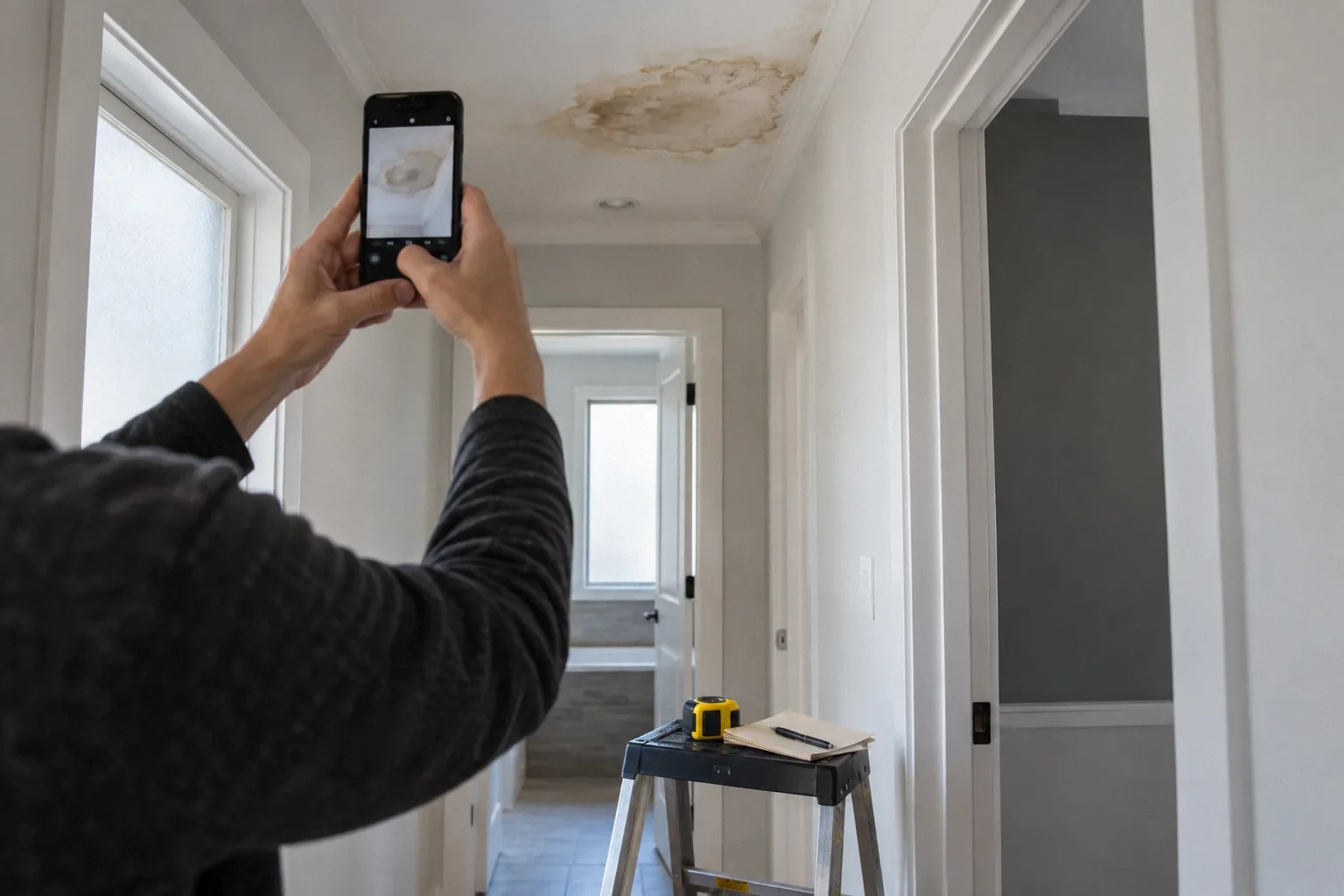
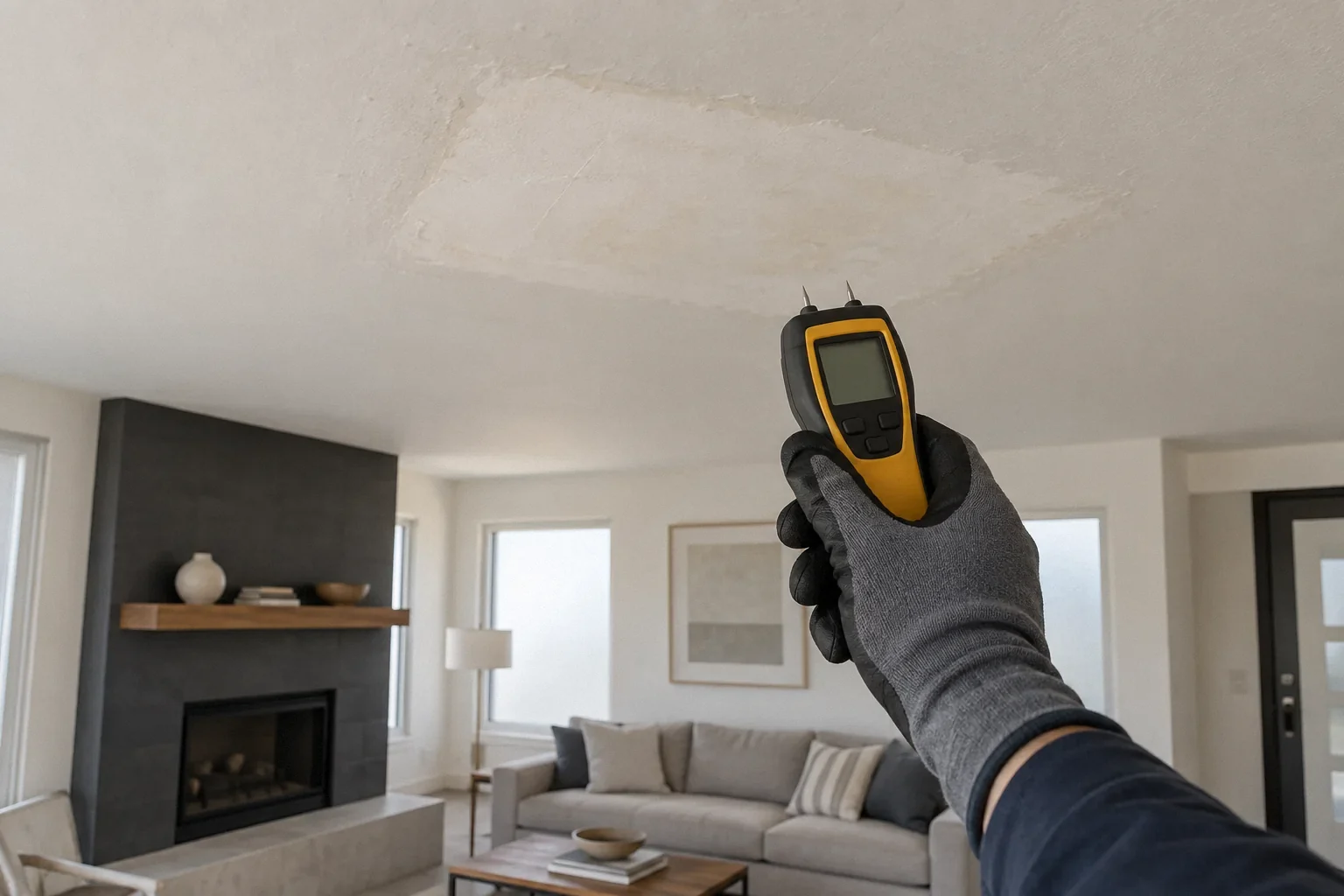
| Ceilings below bathrooms and kitchens | A rectangle of paint brighter than the rest, different texture, a patch outline, sag | Was there a leak above? Which fixture, when, and who repaired it? |
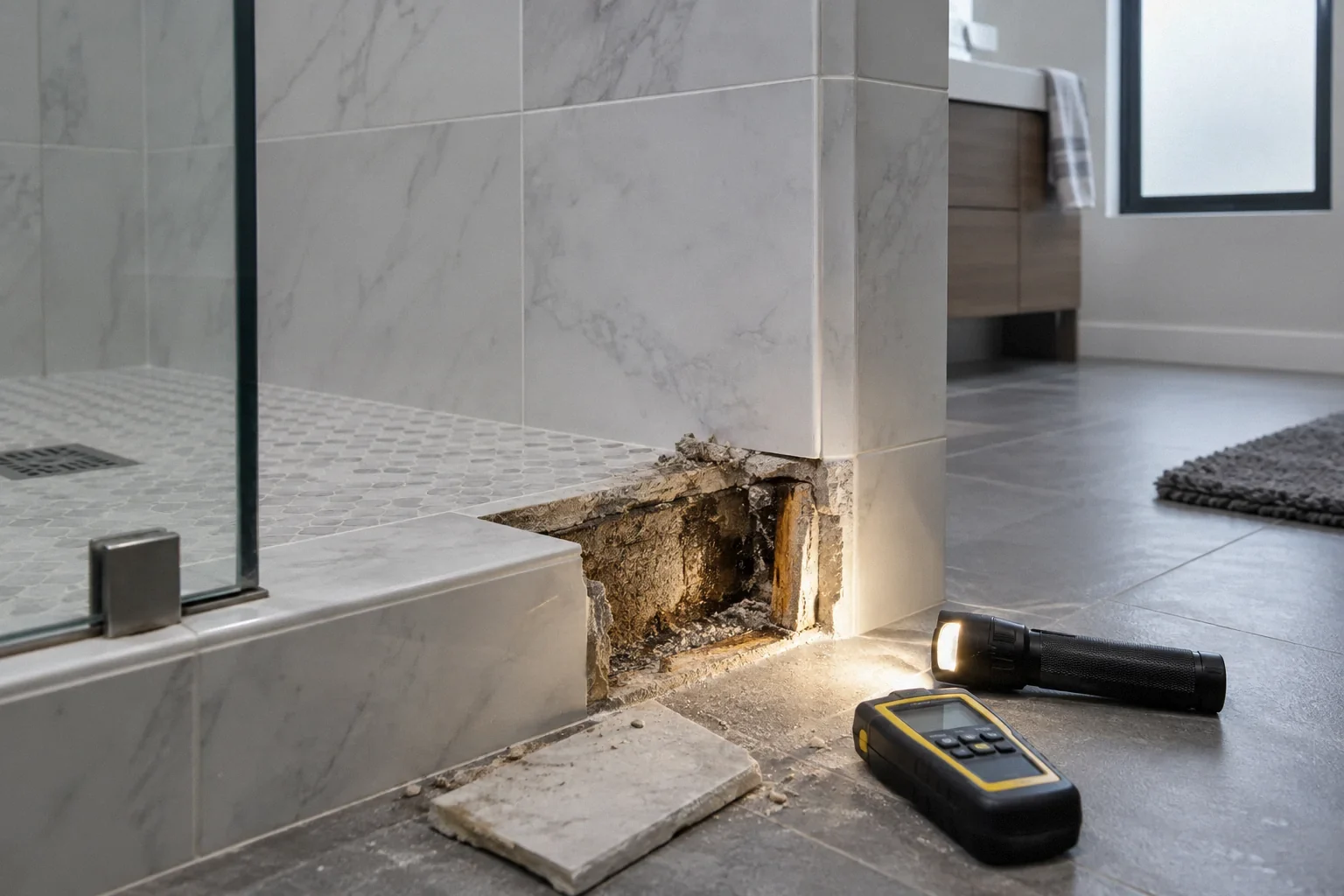
| Bathrooms | Loose or cracked tile at the tub or shower base, fresh caulk over old caulk, soft floor near the toilet, rust on the toilet bolts | Has the shower or tub ever leaked? Was the pan or waterproofing replaced? |
| Kitchen sink and dishwasher cabinets | Swollen cabinet floor, stains, new cabinet base panel, corroded supply valves | Any dishwasher, disposal or supply line leaks? |
| Floors | New flooring in only one room or part of a room, cupping, gaps, a hollow or spongy feel | Why was this floor replaced? What was underneath? |
| Windows and exterior walls | Peeling paint or dark spots on sills and below windows, swollen trim, mold on the interior side | Do windows sweat in winter? Any water entry during storms? |
| Closets and behind furniture | Unpainted stains or mold in spots the seller did not refresh | Any history of condensation or leaks here? |
| Attic | Stained sheathing around vents and chimneys, damp insulation, a bath fan duct ending in the attic | Roof leaks or roof repairs? Where do bath fans exhaust? |
| Crawl space or basement | Standing water, efflorescence, staining or softness under bathrooms, rusted pipes | Any drainage or plumbing repairs below the house? |
| Whole house | Musty smell, especially when the house has been closed up; many air fresheners or a running dehumidifier | Has there been mold testing or remediation? |
Keep observations to safe, authorized access. Have qualified inspectors assess roofs, attics and crawl spaces; do not enter confined, unstable or electrically hazardous areas yourself.
What EPA says that matters for buyers
The US EPA's Brief Guide to Mold, Moisture and Your Home makes a few points that help you judge what you see:
- "The key to mold control is moisture control." A mold spot points to a moisture source that has to be found and fixed.
- If wet materials are dried within 24 to 48 hours after a leak, in most cases mold will not grow. A long-running hidden leak is different from a quick spill that was dried.
- Hidden mold may be present if there is a musty smell with no visible source; mold can grow on the back of drywall, under carpets and pads, and on the top side of ceiling tiles.
- Where visible mold growth is present, sampling is usually unnecessary, and there are no federal limits for mold in indoor air. Do not let a lab test substitute for finding the water source.
- Porous materials such as ceiling tiles and carpet may have to be thrown away if they become moldy, and for areas larger than about 10 square feet EPA suggests consulting its larger-building guidance and professional help.
Moisture meters and thermal cameras: useful, not proof
- Pin and pinless meters help compare moisture conditions within their measurement depth. Some calibrated pin meters report wood moisture content; many other readings are comparative scales, and metal or unsuitable material settings can distort them. Readings vary with the material, so compare suspect areas with similar dry areas in the same house rather than with a number from the internet.
- Thermal cameras show temperature differences. Evaporating moisture can look cool, but so can a cold exterior wall, missing insulation or an air leak. Interpretation takes skill, as the commenters above noted.
- Timing matters. A leak that only happens when the shower is used, or when rain blows from one direction, may read dry on inspection day. Running fixtures during the inspection, with the seller's permission, can help.
- Neither tool finds the cause. They tell you where to look next and which specialist to call. See what home inspections can miss.
Worked example: one bright ceiling patch
At a showing, you notice a rectangle of fresh, slightly smoother paint on the living room ceiling directly below an upstairs bathroom, while the rest of the ceiling is older and duller. The bathroom above has new tile; the disclosure statement mentions a "bathroom update" but no leak.
- Write a specific question to the seller through your agent: Was there water through the living room ceiling? When? What was the source, who repaired it, and was the shower or supply line fixed or only the ceiling?
- Ask your inspector to take appropriate moisture readings and decide whether a controlled fixture test is safe. Obtain seller permission, protect affected areas and stop if leakage appears; do not deliberately worsen known damage.
- If readings or answers raise concern, have a shower or plumbing specialist test the shower before your contingency ends; see shower leak found during inspection.
- Check the permit history for the bathroom remodel and, if the seller accepted your offer within 18 months of acquiring title, the contractor and permit disclosure; see flip disclosures.
- Decide based on facts: a documented, repaired supply-line leak with a dry test is different from an unexplained patch below a shower that wets the ceiling when used.
Bay Area context: condensation versus leaks
An older house with original single-pane windows and little wall insulation, in a damp coastal or foggy neighborhood, can produce condensation and mold around windows without any plumbing or roof leak, as owners in the threads above describe. Condensation involves surface temperatures and indoor humidity; leaks involve water entry or plumbing. Either can involve building defects, and they can coexist. Both matter to a buyer, but the remedies and costs are different. Ask whether bath and kitchen fans vent outdoors and whether windows sweat in winter.
Seller disclosure and good faith
California sellers of most one-to-four unit homes must complete disclosures in good faith, defined in Civil Code § 1102.7 as honesty in fact, and the DRE's guide Disclosures in Real Property Transactions explains that sellers and agents must make the disclosures necessary to avoid fraud, misrepresentation or deceit. Painting over a stain is ordinary maintenance; not disclosing a known leak is a different matter. See California seller disclosures and, for sellers, disclosing past repairs.
Checklist for showings and inspection
- Look up at ceilings below bathrooms and kitchens
- Open sink cabinets and closets; look behind furniture where allowed
- Note any floor that is newer than the rest
- Smell the house on arrival
- Ask written questions about every patch, new floor and remodeled wet room
- Ask the inspector to test suspect areas and run fixtures
- Order specialists before the contingency deadline
- Separate condensation questions from leak questions
Current as of 3 October 2026. Visual clues suggest where to investigate; only testing and, sometimes, opening finishes can confirm a condition.
Questions that come up next
Does fresh paint on a ceiling mean the seller is hiding a leak?
Not by itself. Sellers often repaint before listing. A patch below a bathroom or kitchen is a reason to ask what happened and to have the area tested. California sellers must answer disclosure questions in good faith.
Can a moisture meter find hidden water damage?
It can show elevated moisture near the surface of a material, which helps decide where to investigate. Readings vary by material, and a leak that only occurs during use may read dry. A meter does not identify the cause.
Should I get a mold test before buying?
EPA says that when mold growth is visible, sampling is usually unnecessary, and there are no federal indoor air limits for mold. Focus on finding and fixing the moisture source; testing may still help in specific situations, such as hidden-odor investigations, when interpreted by a qualified professional.
Is mold around windows a sign of a leak?
Not always. In homes with single-pane windows, little insulation and damp outdoor air, condensation can cause mold without a plumbing or roof leak. A specialist can tell condensation from water entry.
Sources and further reading
Community questions behind this guide
These discussions identify homeowner concerns. Forum comments are personal accounts, not code or legal authority.