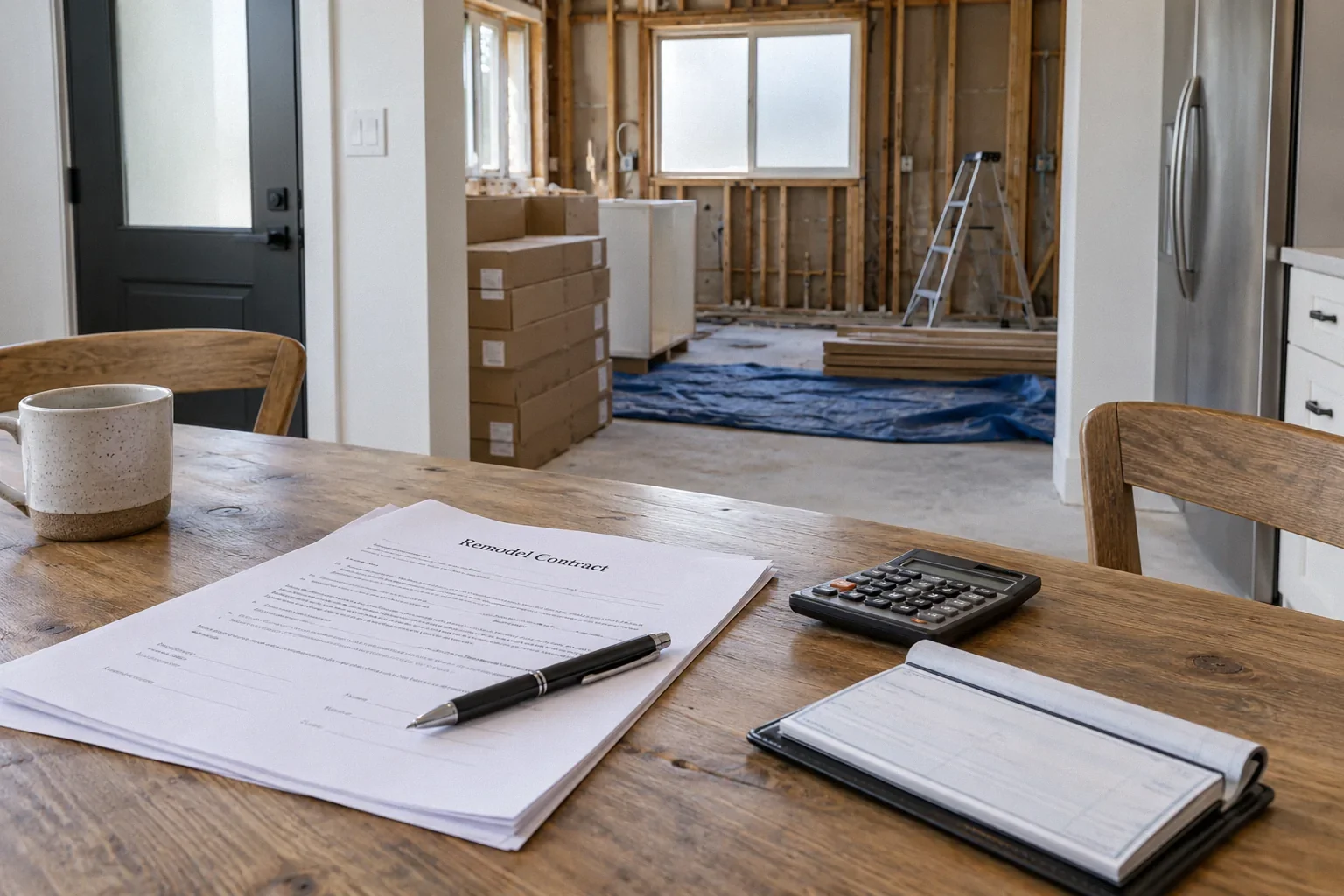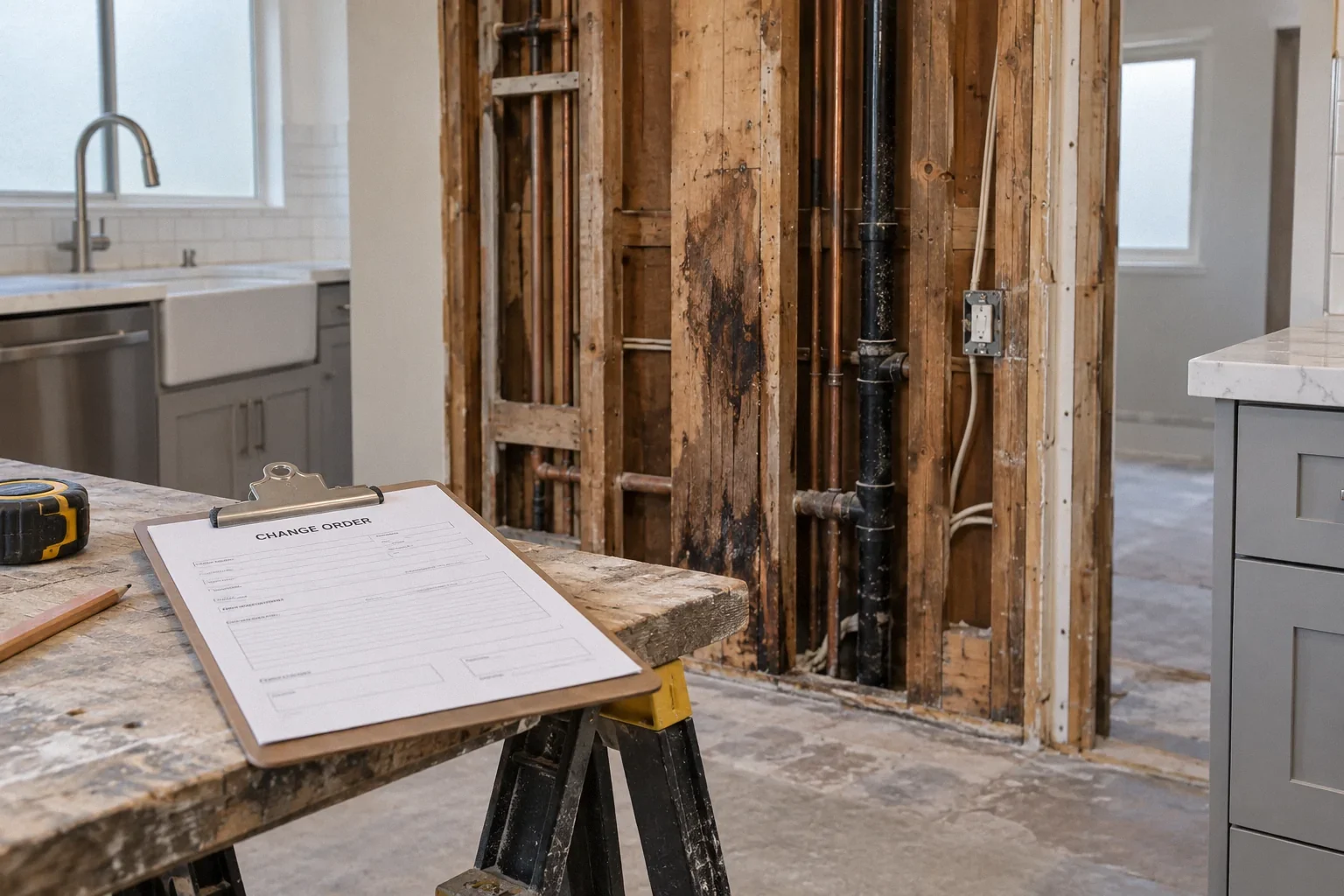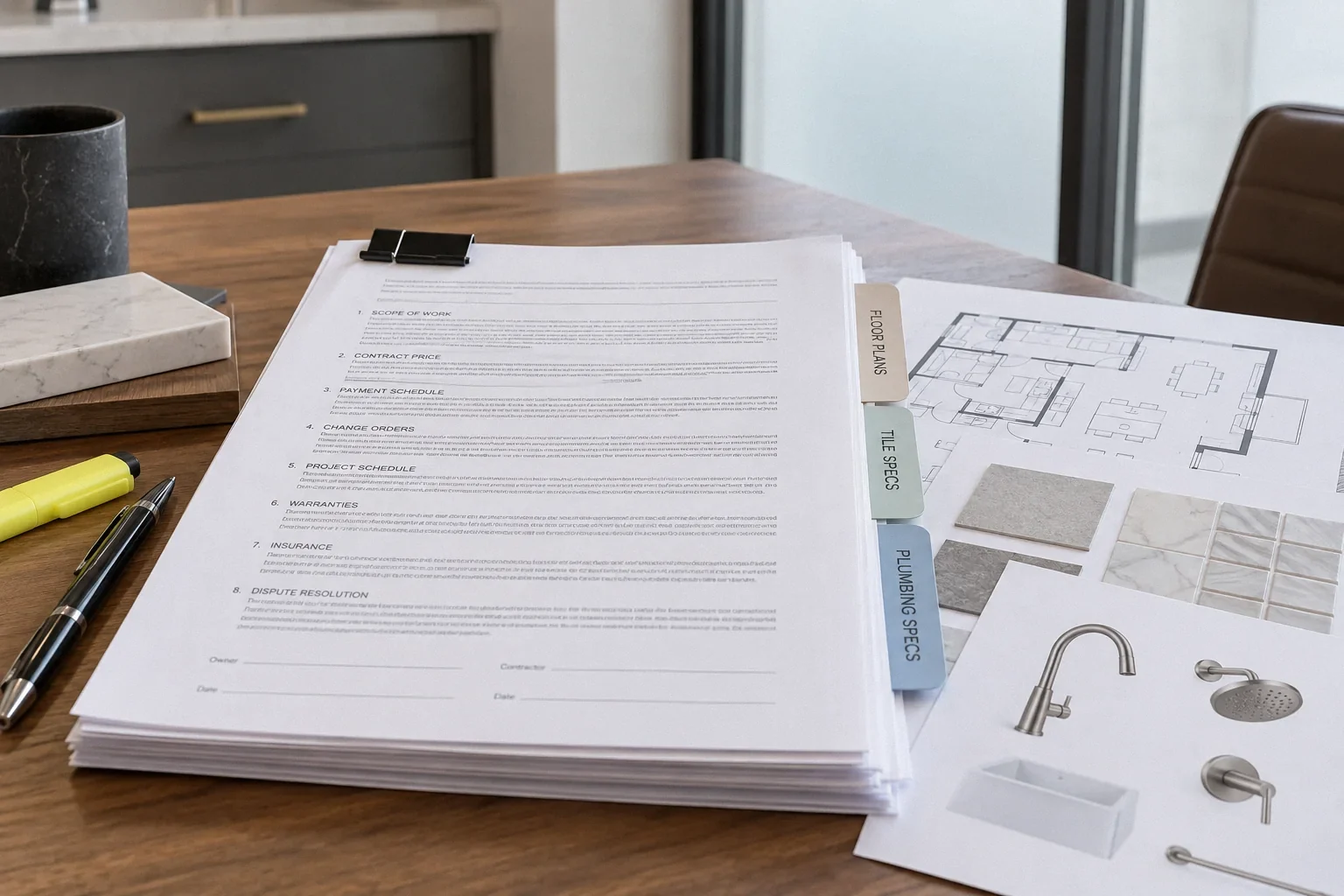
Short answer: start with the contract. Under a fixed-price California home improvement contract, the job is to be completed for the agreed price, and any price change must be made through a written change order signed by both parties before the affected work (CSLB, Terms of Agreement; BPC § 7159). If the contract has no escalation clause and the item was not an allowance, a supplier's price increase is not automatically your cost. If the item was an allowance, the contract's allowance terms decide how overages are charged. Either way, ask for documentation, respond in writing, and agree any change before it is built.
This is general information current to 3 October 2026, not legal advice.
What homeowners report
An owner on a fixed-price project received about $2,000 in lumber price increases that the contractor told them about after the fact, bundled with other extras in a draw request. Commenters asked whether the contract said material costs could vary. It did not. In another thread, a commenter suggested an owner's contractor was trying to recover his own estimating and ordering mistakes, such as wrong quantities and a wrong door color, through the client. These are anecdotal accounts. They point to three separate questions: Was there an escalation clause? Was the item an allowance? Whose mistake caused the extra cost?
Three different situations
| Situation | What usually governs | Reasonable response |
|---|---|---|
| Supplier price increase on a fixed-price item, no escalation clause | The fixed price; any increase needs your agreement through a change order | Ask for documentation; decline, or negotiate a share if you choose; put the outcome in a signed change order |
| Price increase where the contract has an escalation clause | The clause's trigger, documentation requirements and cap | Check that the trigger is met and the documents match the clause |
| Allowance item exceeds the allowance | The allowance terms: overage amount, plus any stated markup | Check the math against invoices; confirm whether markup applies to overages |
| Contractor's own estimating or ordering error | Usually the contractor's risk under a fixed price | Ask what changed in scope; if nothing did, the original price stands |
| You changed the selection | Change order for the difference | Approve a priced change order before ordering |
How allowances work, and how they go wrong
An allowance is a placeholder budget for something not yet chosen: tile, plumbing fixtures, lighting, cabinet hardware. A clear allowance clause states:
- the dollar amount per item or category;
- whether it covers material only, or material and installation;
- how overages and credits are calculated, and whether the contractor's markup applies to the overage;
- the deadline for your selection, so late choices do not delay the schedule.
Allowances go wrong when they are set below what your likely selections cost, which makes overages almost certain. When you compare bids, a lower total with thin allowances may not be cheaper. Ask each bidder to price the same allowance amounts so the bids are comparable. See comparing remodel bids.
Escalation clauses: what a fair one contains
If a contractor wants protection from material price swings during a long project, the clause should be specific:
- which materials it covers;
- the baseline price and date;
- the trigger, such as an increase above a stated percentage;
- the documentation required, such as supplier quotes at bid and invoices at purchase;
- a cap on total adjustment;
- whether decreases are passed on too.
Any adjustment under the clause should still be documented in writing before the affected work proceeds, consistent with the change order requirement in § 7159.
Step-by-step response to a price-increase request
- Find the clause. Is the item fixed-price, an allowance, or covered by an escalation clause?
- Ask for documentation: the original quote or price basis, and the current invoice or quote.
- Check timing. Was the increase raised before purchase, or after the fact? Raising it before purchase allows choices, such as an alternative product.
- Respond in writing, accepting, declining or proposing a compromise, with reasons.
- Document any agreed change in a signed change order showing the amount and any schedule effect. See our change order guide.
- Keep payments tied to work. An increase does not justify paying for materials before they are delivered (BPC § 7159.5).
Should you buy materials yourself?
Some owners buy fixtures or tile directly to control price and selection. It can work, but write down who is responsible for:
- verifying quantities, specifications and compatibility, such as valve and trim combinations;
- delivery timing, storage and damage inspection;
- defects in owner-supplied items, and the cost of reinstallation;
- warranty coverage. Some contractors exclude defects in owner-supplied products from their warranty. That is different from the quality of their installation. An exclusion for the product does not, by itself, excuse faulty installation work, so read the clause carefully.
Be clear about what kind of purchase you are making. A goods-only retail purchase, where you buy the vanity from a store and take delivery, is a separate sale and is not one of your contractor's progress payments. A purchase that includes installation by the seller, such as a cabinet or window company that measures, supplies and installs, can itself be a home improvement contract with its own California rules, including the down payment limit. Ask which you are signing. Delays from owner-supplied items can also become schedule change orders.
A worked example
Hypothetical figures, for arithmetic only. A bathroom contract carries a $1,200 tile allowance (material only) and states that overages are billed at cost plus 10% markup. You choose tile costing $1,650. The overage is $450, plus $45 markup if the clause applies to overages, for $495. That belongs on a signed change order before the tile is ordered. Separately, the contractor says the price of the shower valve, a fixed-price item specified by model, rose $80. With no escalation clause, the valve stays at the contract price unless you agree to share the increase in writing. If the contractor instead ordered the wrong valve and needs a replacement, that is their cost, not a change in scope.
Setting allowances that hold up
The time to prevent overage fights is before signing. A practical sequence:
- Shop before you sign. Visit a showroom or browse a supplier's site for the main allowance categories (tile, plumbing fixtures, lighting, hardware) and note realistic price ranges for products you would actually choose.
- Tell bidders your target items. Ask each to set allowances at a level that covers them, and to say whether each allowance is material-only or installed.
- Check installation sensitivity. Some selections change labor, not just material. Large-format or mosaic tile, wall-mount faucets and specialty valves can need different preparation or more time. Ask how the contract handles labor changes caused by a selection.
- Set selection deadlines tied to the schedule, such as tile chosen two weeks before the waterproofing milestone.
- Track allowances in your decision log, with allowance, actual, difference and change order number.
Decision table: who pays when
| Cause of the extra cost | Usually borne by | Unless |
|---|---|---|
| Owner upgrades a selection | Owner (change order) | The allowance covers it |
| Supplier price rise on a specified, fixed-price item | Contractor | A valid escalation clause applies, or you agree to share in writing |
| Contractor's wrong order, measurement or quantity | Contractor | Your instruction caused the error and you agreed in writing to cover it |
| Product discontinued before order | Discussed: substitution by change order, at equal price where possible | The contract states a substitution rule |
| Owner-supplied item arrives late or wrong | Owner, for resulting delay or extra labor | The contract allocates it differently |
Mistakes to avoid
- Accepting a total price without reading the allowance schedule
- Approving 'upgrade' selections on site without a priced change order
- Paying a surcharge before seeing documentation
- Treating the contractor's estimating error as a scope change
- Letting selection deadlines slip, then disputing delay charges
Bay Area applicability
The rules are statewide. Remodels that need plan review can have a longer gap between bid and purchase, which gives prices more time to move. If your project faces a long permit timeline, ask bidders how long their prices hold, and agree in writing what happens if materials are bought later.
Current to 3 October 2026.
Questions that come up next
Can my contractor charge more because lumber or tile prices increased?
Under a fixed-price contract without an escalation clause, a price increase needs your agreement through a written change order. If the item is an allowance or covered by an escalation clause, those terms govern.
What is a reasonable allowance?
One that reflects what your likely selections actually cost. Low allowances make overages almost certain, so compare bids using the same allowance amounts.
Does the contractor's markup apply to allowance overages?
Only if the contract says so. Check the allowance clause before you choose upgrades.
Sources and further reading
Community questions behind this guide
These discussions identify homeowner concerns. Forum comments are personal accounts, not code or legal authority.