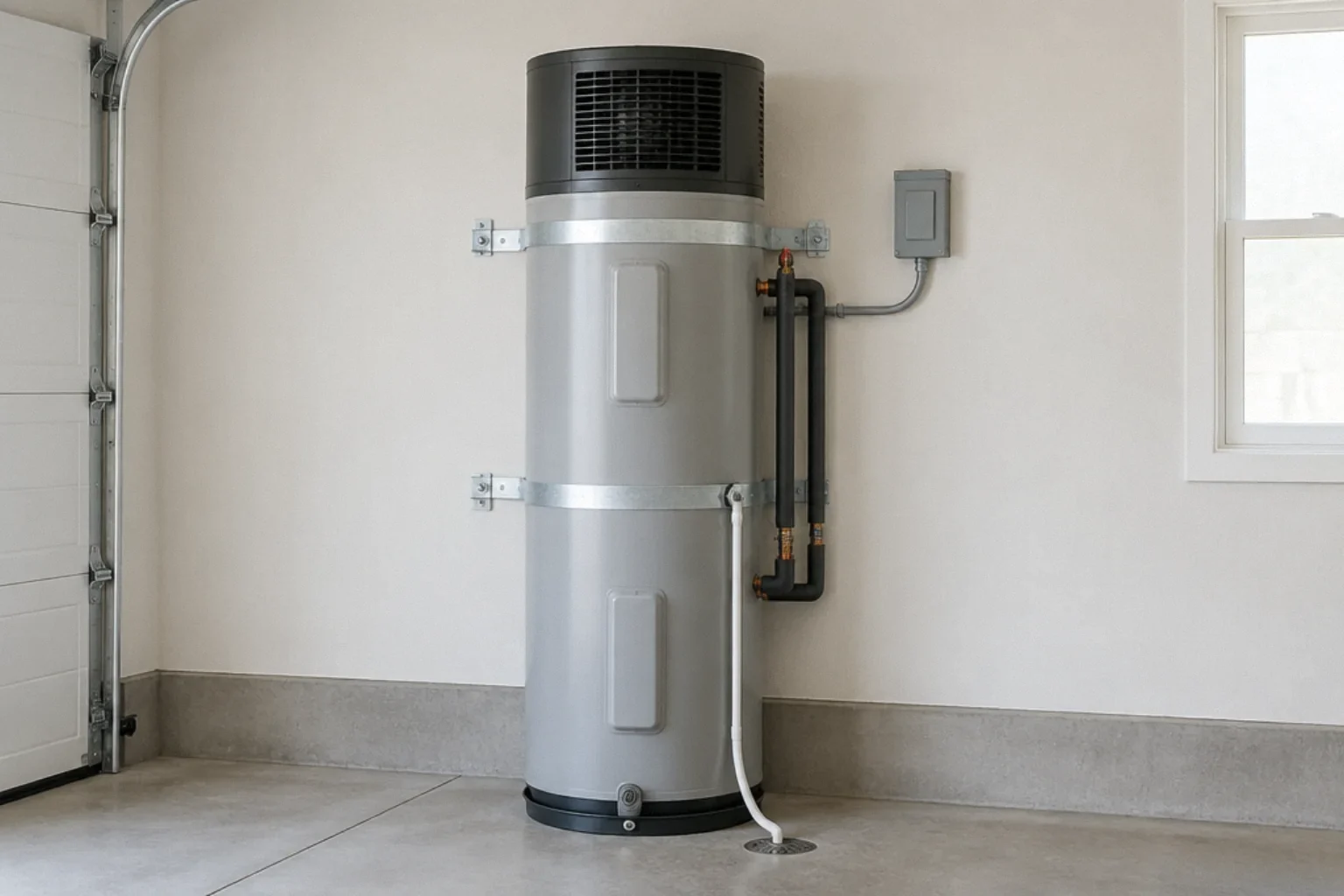
Short answer: compare heat pump water heaters (HPWHs) on how much hot water they deliver in your household's busiest hour, the electrical connection they need, and whether your chosen space can feed them enough air and drain their condensate. Models differ: many are 240-volt units with resistance backup elements; some 240-volt units use a 15-amp circuit and deliver less in a rush; and 120-volt models differ in whether they allow an existing shared circuit or require a dedicated one. A remodel is a good moment to switch, because walls are open and the electrician and plumber are already on site.
This is general information verified on 3 October 2026. Replacing a water heater normally needs a permit; check with your building department.
What owners report
A San Mateo owner who switched in 2023 posted a personal account arguing that a full electrical overhaul is not always necessary and describing the noise as somewhat more than a refrigerator in a garage. That thread raises a fair question to put to your installer: for your model and household, when does a 240-volt circuit matter, and when is a 120-volt model enough? Forum statements about how much power a unit draws are not a substitute for the manufacturer's electrical requirements. Another owner described running the condensate hose to a laundry drain and getting an instant rebate at purchase. A poster about San Francisco's renovation rule worried about older homes with 100-amp service. Forum accounts are anecdotal; they map onto the decisions below.
Step 1: compare delivery, not just tank size
The useful spec is the first-hour rating (FHR): roughly, how many gallons of hot water a full tank can deliver in an hour. It reflects tank size and how fast the unit reheats. For an HPWH, delivered hot water also depends on the operating mode and conditions. A unit set to heat-pump-only mode recovers more slowly than one allowed to use resistance backup, and a cold garage slows a heat pump down. Spec-sheet FHR values come from standardized test conditions, so ask the installer how a model performs in the mode you plan to use and in your space. The U.S. EPA's ENERGY STAR Heat Pump Water Heater Guide advises following the local plumbing code's minimum FHR and the manufacturer's sizing advice, and suggests upsizing the tank compared with conventional practice so the heat pump does more of the work.
Scenario (hypothetical). A family of four replacing a 40-gallon gas tank has back-to-back morning showers. Two candidate models fit the garage: a 50-gallon 240-volt unit and a 65-gallon 120-volt shared-circuit unit. Rather than assuming the bigger tank wins, their plumber compares each model's FHR and recovery in the mode they intend to run, checks the garage's air volume against both manuals, and asks how each behaves on cold winter mornings. The family then weighs that against the electrical work each needs.
Step 2: electrical options
| Type | What to check | Trade-offs |
|---|---|---|
| 240-volt with resistance backup | Breaker size and wire per the model's instructions | Needs a 240-volt circuit; handles high-demand periods with backup elements, at higher energy use when they run |
| 240-volt, low-amperage | FHR and recovery on the spec sheet | Smaller electrical load; less delivery in a rush |
| 120-volt shared circuit (plug-in) | Which existing outlet and circuit it may share, per the manual | May avoid panel work; relies on the heat pump, so sizing and space matter more |
| 120-volt dedicated circuit | Whether an existing compliant dedicated circuit is available, or a new one is needed | Avoids 240-volt wiring; still needs its own circuit |
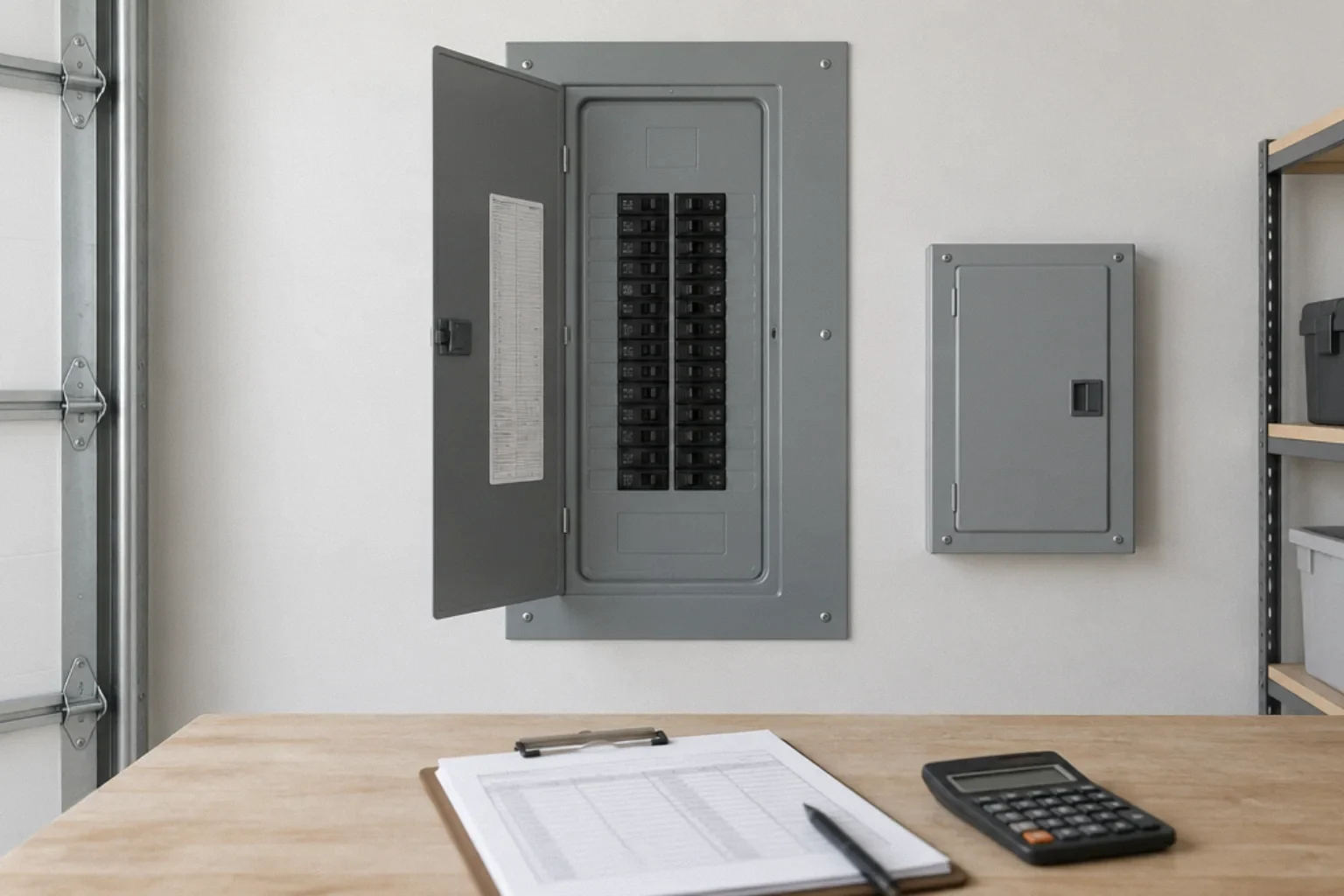
Examples of manufacturer documentation: Rheem's spec sheet for a 120-volt shared-circuit model lists a plug-in cord and a 15-amp minimum breaker (Rheem 120V shared-circuit spec sheet), and its dedicated-circuit product page says the unit requires a dedicated 120-volt circuit (Rheem 120V dedicated-circuit page). Other brands and models differ. A licensed electrician should confirm the circuit and panel; see panel upgrades before a remodel.
Step 3: weigh lifetime cost with real inputs
We do not publish price or savings figures, because they depend on your home. You can still compare options honestly by gathering these inputs for each candidate:
- Installed cost: equipment, electrical work, plumbing changes, condensate route, any louvers or ducting, permit.
- Rebates and incentives: confirmed in writing for the specific model and installer, including any pre-approval requirement.
- Your electricity tariff: the actual rate plan, including time-of-use periods, and whether the unit can schedule heating for cheaper hours.
- Expected energy use: use the EnergyGuide label as a standardized comparison, then ask the installer how your demand, ambient conditions and heat-pump-only or hybrid mode change the estimate.
- The fuel it replaces: your current gas use for water heating, if you can estimate it from bills.
- Service and maintenance: filter cleaning, condensate line care, anode checks, and the warranty's installation conditions.
- Household schedule: when hot water is used, which affects recovery and time-of-use costs.
Put these side by side for each model. The cheapest to install is not always the cheapest to run, and the reverse is also true.
Step 4: location, air, sound and condensate
Manufacturers set minimum air volume or venting for each model, and the ENERGY STAR guide notes typical requirements of 450 or 700 cubic feet of free air, with louvered doors, grilles or ducting as options for closets. It also advises keeping units away from bedrooms and living areas because of fan noise and cool exhaust air. California's Energy Code adds requirements: the CEC 2025 mandatory measures summary says air-source HPWHs need backup heat if inlet air is unconditioned (unless the compressor cut-off temperature is low enough) and that the space must meet minimum volume, ducting or grille requirements by compressor capacity (§ 110.3(c)7) (CEC 2025 mandatory measures summary). National guidance may use different climate-zone maps from California's Energy Code climate zones, so rely on the model's manual and your building department for location suitability.
Condensate must go to an approved drain by gravity or pump; the guide warns against draining into the heater's safety pan. Plan the route before walls close, and protect it from freezing where needed.
Questions to ask your installer
- What FHR and recovery should I expect in the mode I plan to use, in this space?
- Does this location meet the model's air-volume or venting requirement and the Energy Code's?
- What circuit does this model need, and can an existing circuit serve it?
- Where will condensate drain, and how will it be protected?
- Which rebates apply, and do they need pre-approval?
- What maintenance does the warranty require?
- Will this be permitted and inspected?
Bay Area rules as of October 2026
Air District. The Bay Area Air Quality Management District's Rule 9-6 sets point-of-sale zero-NOx standards for new small water heaters with an original 2027 date. The District's rule page says the rules apply to new appliances, not existing ones until replacement, and lists a Board hearing on 4 November 2026 on flexibility amendments for small water heaters (BAAQMD: Rules 9-4 and 9-6). See Bay Area zero-NOx rules explained.
San Francisco. SF Environment announced that the Board of Supervisors passed an all-electric requirement for major renovations taking effect in July 2026, targeting gas systems when a project also includes major construction (SF Environment press release). A press release does not define the legal thresholds; ask the Department of Building Inspection whether your scope qualifies. Other cities may have their own rules; check locally.
Mistakes to avoid
- Comparing tank gallons instead of delivered hot water in your planned mode.
- Assuming one breaker size fits all HPWHs.
- Installing in a small closet without the venting the manual requires.
- Draining condensate into the safety pan.
- Placing the unit beside a bedroom without considering noise.
- Choosing on installed price alone without the operating-cost inputs above.
- Treating 2027 as fixed without checking the Air District's page.
Checklist
- Peak-hour demand estimated; FHR and recovery compared in the intended mode
- Physical dimensions and clearances checked
- Electrical type chosen; circuit and panel confirmed
- Air volume or venting per the manual and Energy Code
- Condensate route to an approved drain
- Lifetime cost inputs gathered for each candidate
- Rebates confirmed before purchase
- Permit pulled; model and circuit in the contract (BPC § 7159)
Questions that come up next
Do I need a 240-volt circuit for a heat pump water heater?
Not always. Many models are 240-volt, but some are low-amperage 240-volt units and others run on 120 volts using a shared or dedicated circuit. Choose based on delivered hot water for your household and your panel, then follow the model's installation instructions.
What size heat pump water heater do I need?
Compare first-hour ratings and recovery to your busiest hour of use, following local plumbing code minimums and the manufacturer's sizing advice. Ask how the model performs in the mode you plan to use and in your space, since heat-pump-only operation and cool locations reduce delivery.
How much space does a heat pump water heater need?
It depends on the model; manuals specify air volume or venting options. California's Energy Code also sets volume, ducting or grille requirements. Check both before choosing a location.
Is the Bay Area banning gas water heaters in 2027?
BAAQMD Rule 9-6 sets point-of-sale zero-NOx standards for new small water heaters with an original 2027 date; existing units are not affected until replacement. A Board hearing on flexibility amendments was scheduled for 4 November 2026, so check the District's page.
How do I compare running costs without guessing?
Gather installed cost, confirmed rebates, your actual electricity tariff, the model's rated energy use in your planned mode, your current gas use for water heating, and maintenance requirements, then compare candidates side by side.
Sources and further reading
- U.S. EPA ENERGY STAR: Heat Pump Water Heater Guide, Best Practices & Technical Considerations (June 2024)
- Rheem ProTerra Plug-in Heat Pump Water Heater with HydroBoost (120V Shared Circuit) spec sheet (RH-PIHP-SC Rev. 7, 03/25)
- Rheem ProTerra Plug-In Heat Pump Water Heater (120V Dedicated Circuit) product page
- California Energy Commission: 2025 Single-Family Residential Mandatory Requirements Summary
- Bay Area Air Quality Management District: Rules 9-4 and 9-6 Building Appliances
- SF Environment: Board of Supervisors Passes Major Renovations Ordinance (press release)
- California Business and Professions Code § 7159
Community questions behind this guide
These discussions identify homeowner concerns. Forum comments are personal accounts, not code or legal authority.