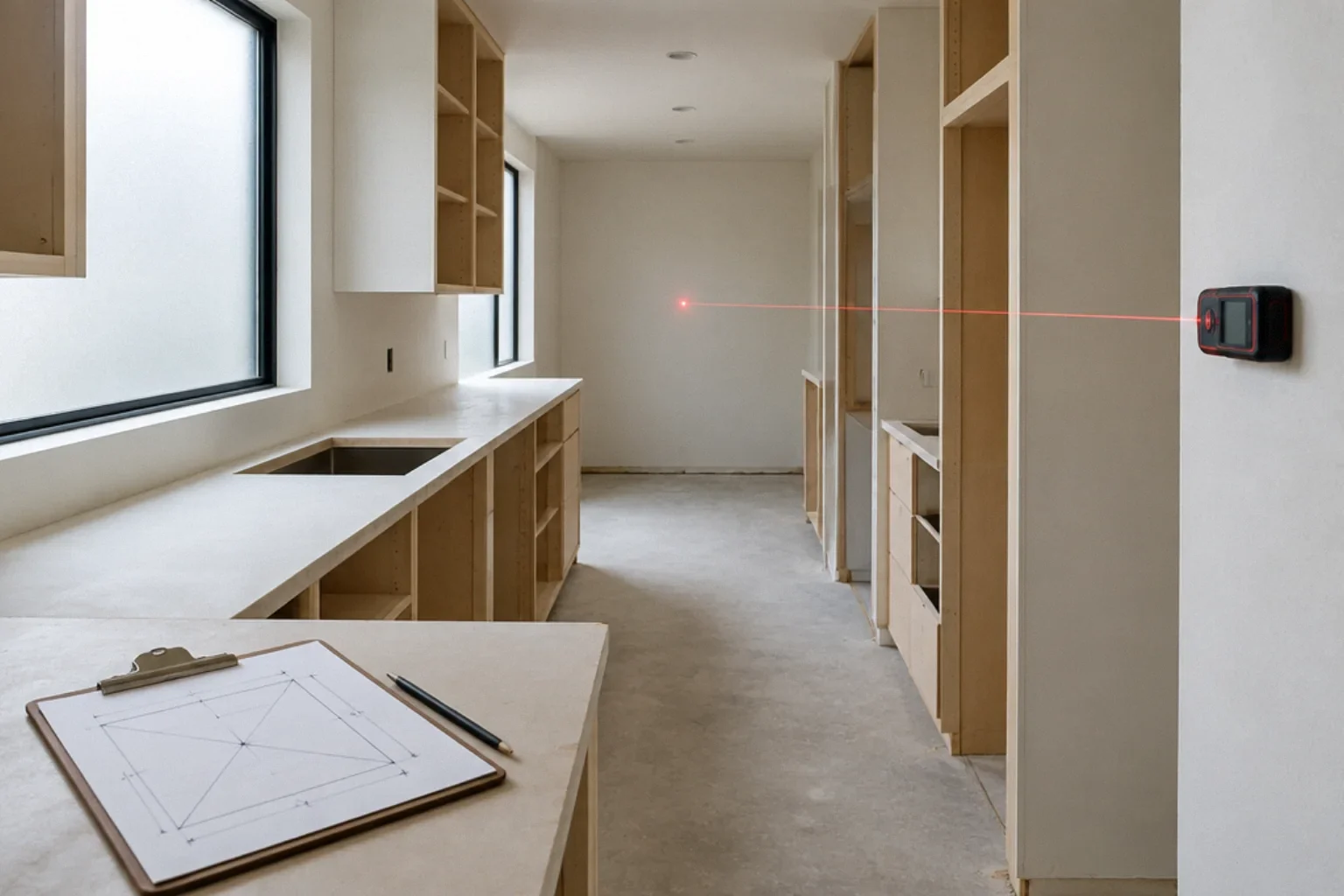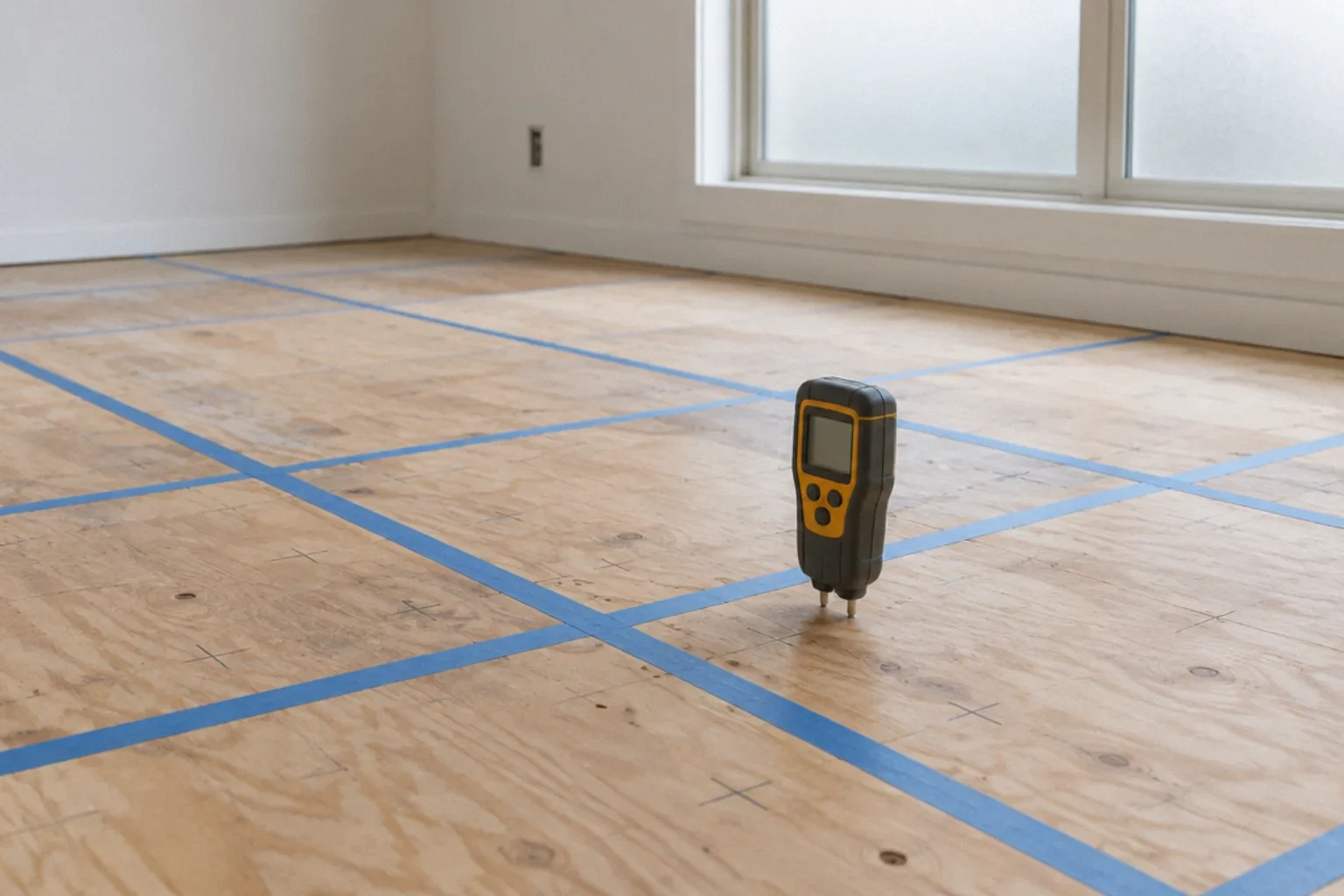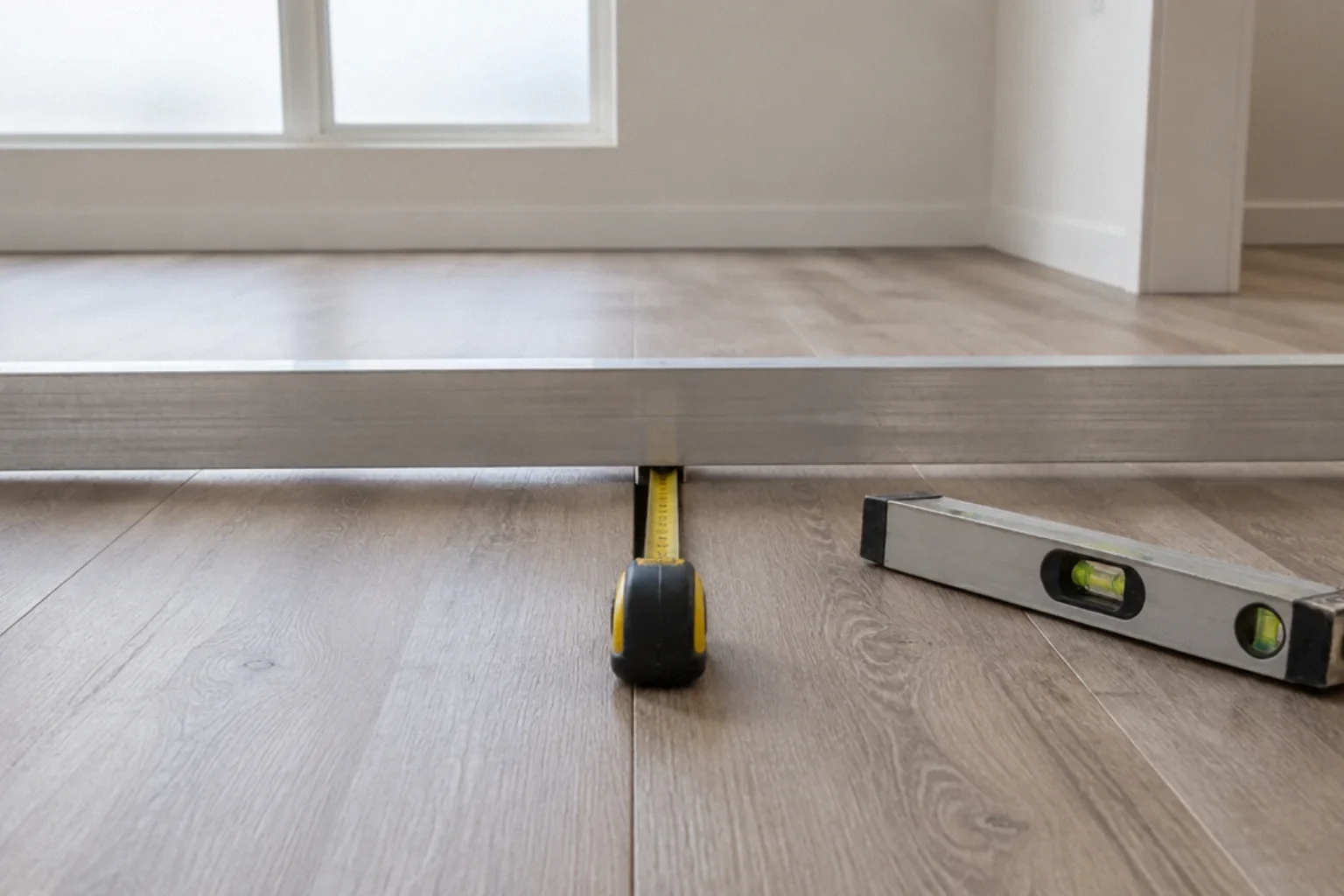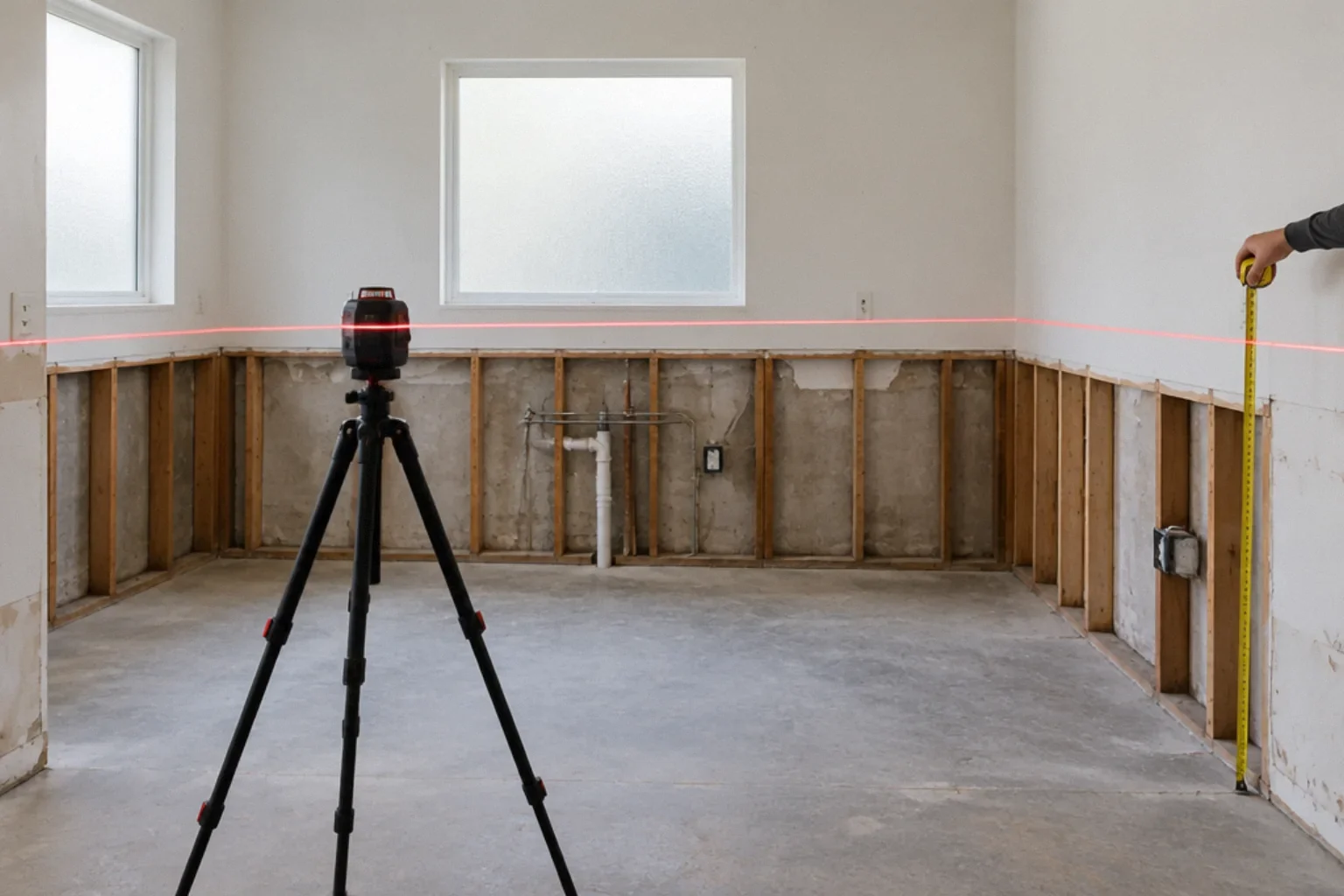
Short answer: you do not need one, but a self-leveling cross-line laser is one of the more useful tools for a remodel if you are doing layout yourself or want to check work. It projects a level horizontal line and a plumb vertical line across a room, which speeds up setting cabinets, tile, trim and framing, and makes it easy to see whether a floor, ceiling or wall is out. Its limits matter as much as its strengths: every laser has a stated accuracy that grows with distance, it must be within its self-leveling range, and it can be knocked out of calibration. Check it against a reference before relying on it for anything you will argue about.
This is general information verified on 3 October 2026.
Why owners talk about lasers
Laser levels came up in several forum threads we reviewed, including some outside the U.S. A UK DIYer posted a photo of a laser lining up electrical boxes with the caption "Got to love laser level". An Australian homeowner used a self-leveling laser to show that a newly built brick wall was about 70 mm higher at one end across 7 meters, and said the bricklayer refused to accept the reading; commenters noted the error was visible without a laser, and others debated how to verify a laser. A U.S. owner two years into a DIY gut renovation listed uses including plumbing walls, squaring window openings and wishing they had checked door openings. Another person asked how to convince a partner a laser was worth it; replies ranged from "helped tremendously" to "rent one, it will sit in a closet." A UK owner planning bathroom tile heard that a spirit level may be enough in a small room, and also that lasers are "not essential but extremely useful" for tiling. A buyer asking for a DIY laser under a budget got brand opinions. Forum accounts are anecdotal; they map to the practical questions below.
What a cross-line laser is good for
- Cabinets: marking a level reference line around a kitchen to set base and wall cabinets, and seeing where the floor dips.
- Tile: establishing level and plumb starting lines on walls and checking that a shower niche or window return is square to them.
- Framing and openings: checking walls for plumb and the head and sill of openings for level. A laser's level and plumb lines do not by themselves prove an opening's corners are 90 degrees; check squareness with diagonal measurements on a rectangular opening or a framing square.
- Floors and ceilings: projecting a level line around the room and measuring down to the floor at intervals shows high and low areas. Flooring manufacturers set flatness limits; Mohawk's SolidTech instructions, for example, say unevenness over 3/16 inch in 10 feet or 1/8 inch in 6 feet must be corrected (Mohawk SolidTech installation instructions). A laser shows the overall slope; a straightedge is better for local flatness. See subfloor flatness for vinyl plank.
- Checking work: owners can use a laser to raise a question with a contractor, with the caveat that the tool must be verified and used correctly.
Accuracy, verification and safety: what the manual tells you
Accuracy is given as a deviation per distance, so error grows across a long room. As one example, Bosch's GLL 30 manual lists ±5/16 inch at 30 feet, a self-leveling range of about ±4° with flashing lines outside it, advice to mark from the center of the line, a recommendation to check accuracy after heavy impact and to let the tool adjust to room temperature, and Class 2 laser warnings including never aiming at people or staring into the beam (Bosch GLL 30 operating instructions). Other models differ.
To verify a laser, use the accuracy check in your own model's manual, which specifies the setup distances and the allowed result for that procedure; that allowed result is not necessarily the same number as the headline accuracy spec. If your manual has no procedure, or the tool fails it, have it checked by the manufacturer's service. Do not rely on an improvised test.
A layout workflow that uses the laser well
- Set a datum. For base cabinets, project a level line around the room and measure down to the floor at many points. The highest floor point usually sets the cabinet height reference; low areas get shims.
- Shim to the line, not the floor. Cabinets are leveled to the laser datum and shimmed where the floor drops; countertops then sit flat.
- Check squareness separately. Use diagonals or a framing square for corners and openings.
- Respect intentional slope. Shower floors, exterior thresholds and some drainage surfaces are meant to slope. A level line is a reference for measuring that slope, not a target to level it away.
- Separate flat from level. A floor can be level but wavy, or flat but sloped. Use a straightedge for flatness against your flooring manufacturer's tolerance.
- Re-check after any bump against marks you made earlier.
Safety
Follow your laser's label and manual warnings. The FDA explains that laser products are grouped into hazard classes and that higher classes carry greater potential for injury (FDA: laser products and instruments). Read your tool's label and manual.
Laser, spirit level or straightedge?
| Task | Better tool | Why |
|---|---|---|
| Level line around a whole room | Laser | Continuous reference without moving a level |
| Checking a short surface for flatness | Straightedge | Shows gaps the laser line cannot |
| Setting one shelf or a single tile row in a small room | Spirit level | Simple and reliable |
| Plumb lines up a wall | Laser or long level | Laser is faster; level is easy to verify |
| Outdoor work in bright sun | Laser with receiver, or level or water level | Lines can be hard to see outdoors |
Buying, renting or borrowing
If you have one project, renting or borrowing may make sense. If you plan several projects, a basic self-leveling cross-line model with a tripod or mount covers most interior work. Consider line color (visibility), battery type, a lockable pendulum for transport, and whether the manual includes an accuracy check. Prices change, so we do not quote them.
Using a laser to raise a concern with a contractor
- Verify the laser using its manual's accuracy check, or have it service-checked, first.
- Measure from the center of the line, at several points, and photograph the tape against the line.
- Compare the result with the relevant tolerance: the manufacturer's instructions for the product installed, or the contract.
- Raise it in writing, factually, and ask the contractor to verify with their own tools. See checking workmanship with simple tools.
Checklist
- Accuracy spec known and compared with the task tolerance
- Tool acclimated to room temperature; pendulum unlocked for use, locked for transport
- Manual's accuracy check done, especially after any drop
- Squareness checked with diagonals or a framing square, not the laser alone
- Intentional slopes measured, not leveled away
- Marks taken from the center of the line
- Re-checked against reference marks after any bump
- Safety rules followed; never aimed at eyes; kept away from children
Questions that come up next
Do I need a laser level for a kitchen or bath remodel?
Not strictly. A spirit level and straightedge can do most tasks. A self-leveling cross-line laser speeds up layout for cabinets, tile and framing and makes it easy to see out-of-level floors and ceilings, which many DIYers find worthwhile.
How accurate are laser levels?
It depends on the model; accuracy is stated as a deviation per distance in the manual, so error grows across longer rooms. Compare the spec with the tolerance you are checking.
How do I check if my laser level is accurate?
Use the accuracy check in your model's manual, which gives the setup and allowed result for that test. If the manual has none, or the tool fails, have it checked by the manufacturer's service. Check after any drop.
Can I use a laser to check my contractor's work?
Yes, carefully. Verify the laser first, measure from the center of the line at several points, compare with the product's installation tolerance or the contract, and raise concerns in writing.
Can a laser level tell me if a window opening is square?
Not by itself. Level and plumb lines show whether the head, sill and sides are level and plumb, but corner angles need diagonal measurements on a rectangular opening or a framing square.
Sources and further reading
Community questions behind this guide
These discussions identify homeowner concerns. Forum comments are personal accounts, not code or legal authority.
- Got to love laser level
- Dodgy bricklayer thinks this is level and that laser levels lie
- [Removed] (laser level DIY gut renovation thread)
- Laser level - help me convince my SO that this isn't a waste of money for our remodel
- Laser level recommendations for bathroom tiling
- Looking for suggestions for a laser level for DIY projects.