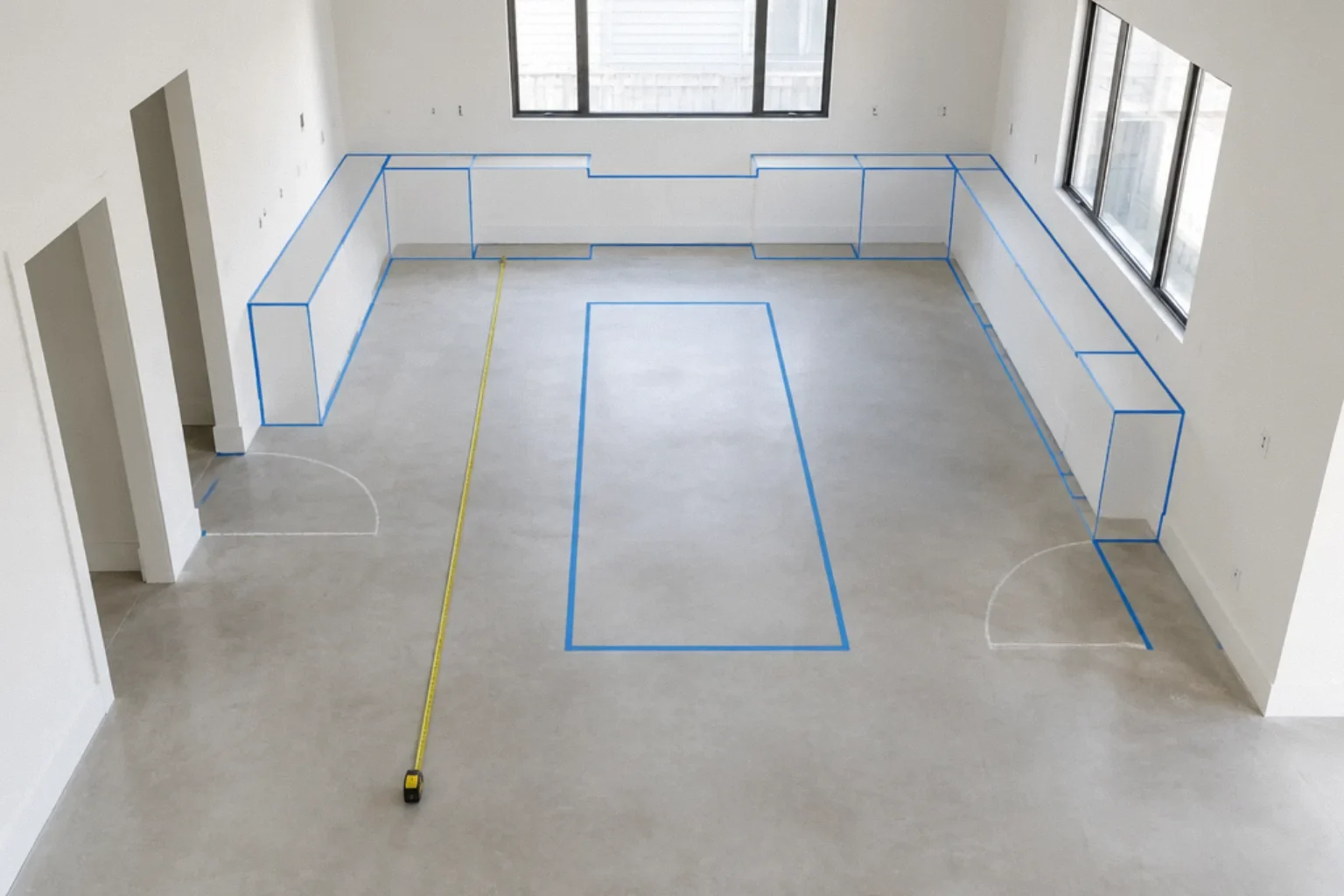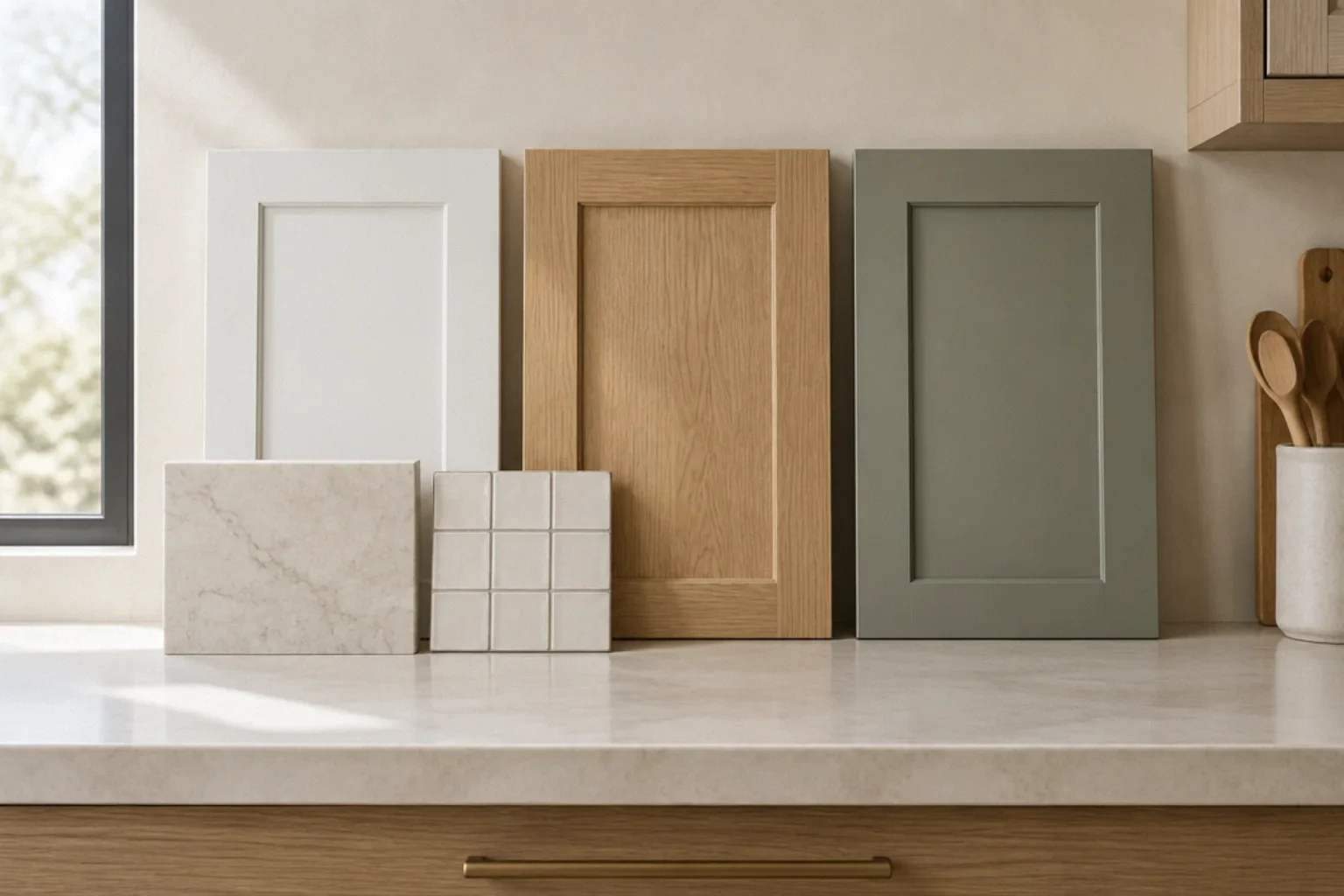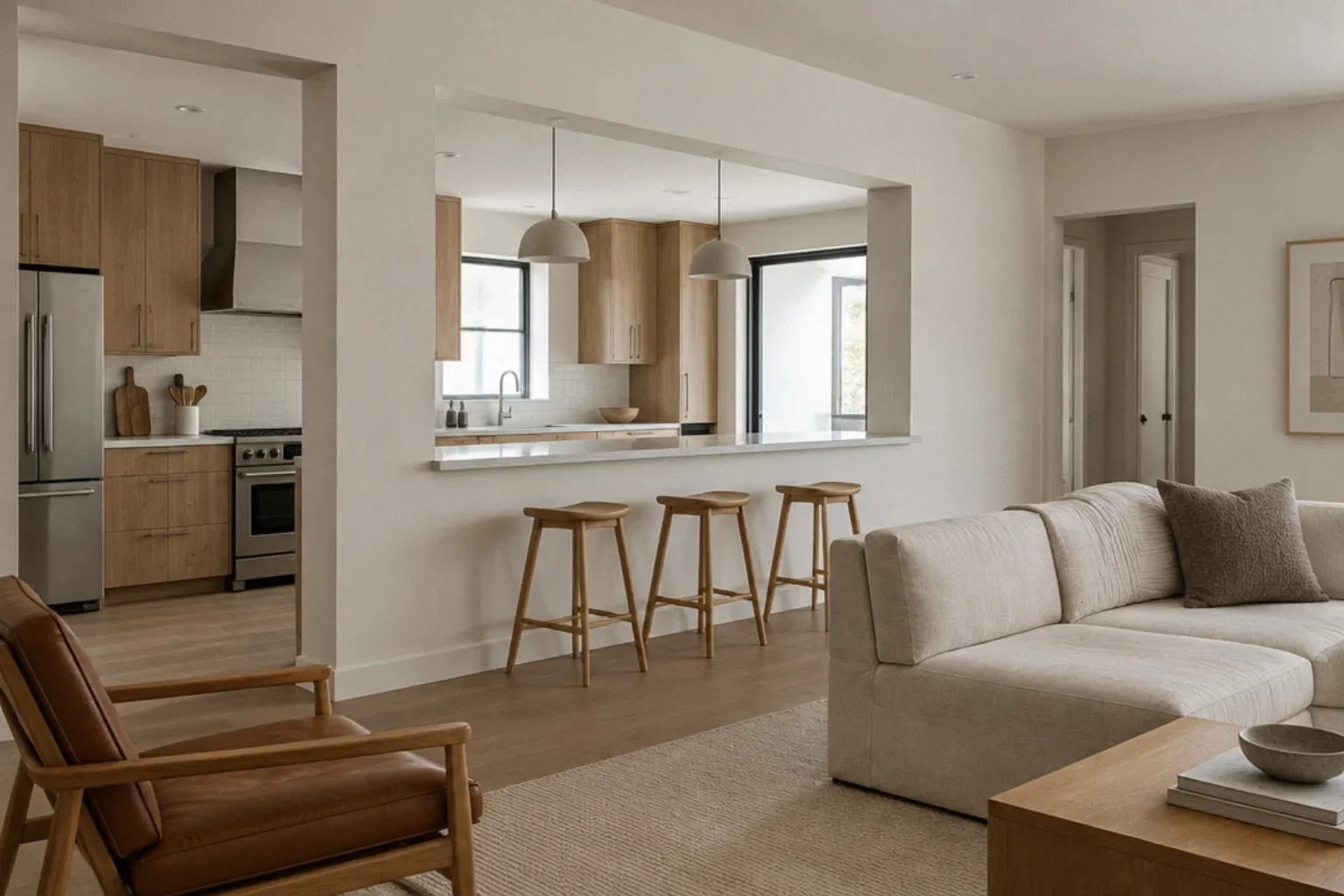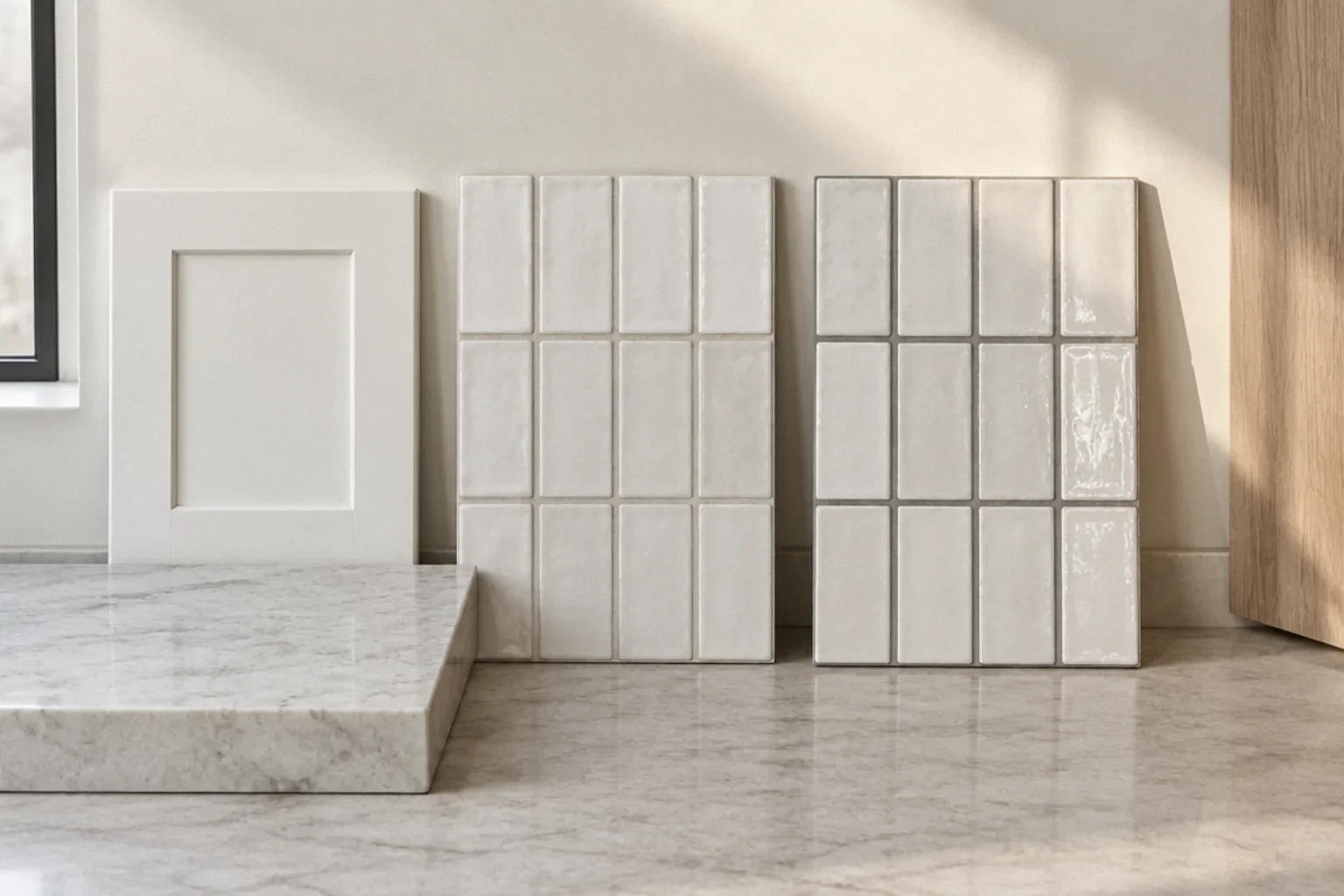
Short answer: judge finishes the way you will live with them: large pieces, in your own room, together, under your own light, at different times of day, with the grout and hardware you will actually use. Then check what is delivered against what you approved, and ask for a dry layout of tile before it is set. Once tile is installed, changing it is expensive, so the decision has to happen before the thinset comes out. Ask suppliers and your installer to price sample boards and dry-layout review before scheduling them.
This guide is general design and purchasing advice.
The moment people realize
One homeowner wrote in Has anyone remodeled their kitchen and hated it? that they only realized they hated the backsplash once grout was on, that the kitchen now looked like a bathroom or an office kitchen, and that nothing seemed to go with the sparkling quartz. They added that they had shopped at two big-box stores, found nothing they loved, and were not fully sure even when they bought it. In a kitchen regrets thread, an owner said they would have preferred kitchen flooring that matched the rest of the house better. A bathroom owner said they hated a textured floor tile that collects dust and is hard to clean. Forum accounts are anecdotal, but each describes a gap between how a material looked at selection and how it looked or behaved installed.
Why showroom samples mislead
- Light. Benjamin Moore's guide to warm and cool colors explains that both natural and artificial light shift how undertones read, and that bulbs above about 3500K tend to cast cooler. A showroom's lighting is not your kitchen's.
- Scale. A single tile or a small chip hides pattern, variation and how busy a surface feels over a whole wall.
- Context. You see the sample against a showroom backdrop, not next to your floor, cabinets and countertop.
- Variation. Tile and stone vary piece to piece. A consultant's explainer from Ceramic Tile and Stone Consultants notes that the ANSI A137.1 standard classes tile appearance from V0 (very uniform) to V4 (substantial variation), that the seller should represent how a series varies, and that once tile is installed it cannot be replaced without substantial cost (CTASC: acceptable color variation).
- Grout. Grout color can change a tile field more than people expect, as the owner above discovered.
A sampling method that works
1. Collect large, real samples
Ask for a full cabinet door rather than a chip, the largest countertop sample or remnant available (for natural stone, ask to see the actual slab), and several tiles, ideally from more than one box. For flooring, get several planks. Pay a deposit for samples if needed; it can help you assess a choice before placing a larger order.
2. Build a sample board in the room
Lean the cabinet door against the wall where cabinets will go, set the countertop sample on top of it at counter height, and place tiles above as the backsplash would sit. Put the flooring sample underneath. Add the hardware and faucet finish if you have them. Seeing the five or six main materials together is the point.
3. Look at it across a day and under your bulbs
Check morning, midday, evening and night. If new lighting is not installed, use temporary bulbs of the color temperature you plan to buy. See kitchen lighting requirements, since your fixtures will also need to meet California's Energy Code.
4. Mock up the tile with grout
Lay at least a few square feet of tile on a board with spacers in the pattern you plan, whether stacked, offset or herringbone. If you can, grout a small sample board or ask the supplier for a grout color sample stick or a grouted display. Compare two grout colors side by side: matching, contrasting and in between.
5. Live with it for a few days
First impressions are unreliable either way. Leave the board up while you cook and walk past it.
6. Record the exact selection
Write down product names, colors, sizes, finish, lot or shade numbers if provided, grout color and pattern. Put them in the contract or a signed specification. A California home improvement contract must describe the work and significant materials (BPC § 7159), and later substitutions should go through a written change order.
When the material arrives: check before it goes in
Sampling only protects you if the delivered product matches. When tile, stone, flooring or cabinets arrive:
- Compare the delivered material with your approved sample, in daylight.
- Open several boxes of tile and flooring and check that shade or lot information is consistent where the product lists it.
- For natural stone, view the slab and agree on where seams and veining will fall before cutting.
- Report mismatches and damage promptly, in writing, before installation. The CTASC explainer emphasizes that buyers should verify acceptability before installation because removal after installation is costly.
Ask for a dry layout
A dry layout means laying the tile out, without adhesive, in its final pattern so you and the installer can see color distribution, pattern direction, where cuts fall and how the field meets edges and outlets. CTASC suggests requesting one, and notes some installers schedule sample approvals with buyers. For variable tile (higher V ratings), a dry layout lets the installer blend pieces from several boxes and set aside any you find unacceptable. Ask that it be scheduled before any tile is set, and be available to look.
Comparison: low-risk and high-risk ways to choose
| Lower-risk habit | Higher-risk habit |
|---|---|
| Large samples viewed together in the room | Small chips viewed one at a time in a store |
| Samples checked at several times of day under planned bulbs | One look under showroom light |
| Tile mocked up with chosen grout and pattern | Grout color picked on installation day |
| Delivered material checked against sample before installation | Boxes opened by the installer as they go |
| Dry layout reviewed before setting | First look after the wall is finished |
| Exact selections written into the contract | "White subway tile" as the only description |
Common mistakes
- Choosing a backsplash last, in a hurry, from whatever is in stock.
- Picking materials one at a time instead of as a set.
- Approving a sample but not checking the delivered lot.
- Leaving grout color to the installer without seeing it.
- Choosing a texture without thinking about cleaning.
- Assuming a rendering's colors are accurate; screens and render lighting are not your room.
If you already dislike something mid-project
Speak up as soon as you notice, preferably before installation continues. Stopping after the first few rows of tile costs far less than removing a finished wall. If material is installed and you simply dislike it, separate a defect (not what you approved, wrong lot, poor workmanship) from a change of mind. Compare a suspected defect or substitution with the approved specification, documented variation and warranty. A change of preference usually requires a separately priced change. For broader advice, see choosing finishes you won't tire of.
Bay Area notes
Light conditions vary across the region's microclimates and with window orientation, so a sample that looked right in a showroom may read differently in your house. Small kitchens common in older Bay Area homes show a backsplash at close range, which makes pattern and grout choices more noticeable. Neither changes the method: test in your own room.
Checklist
- Full cabinet door, large countertop sample or slab view, multiple tiles and planks
- All main materials viewed together in the room
- Viewed morning, midday, evening, under planned bulbs
- Tile mocked up with pattern and grout color
- Exact selections recorded in contract or specification
- Delivered material checked against sample before installation
- Dry layout reviewed before tile is set
Questions that come up next
How big should a tile or countertop sample be?
As large as you can get: several tiles from more than one box, a full cabinet door, and the largest countertop sample or the actual slab for natural stone. Small chips hide variation, pattern and how busy a surface feels at scale.
What is a dry layout?
Tile laid out without adhesive in the final pattern so you can review color distribution, pattern direction and cuts before anything is set. Ask your installer to schedule one and to let you review it.
Is color variation between my sample and the delivered tile normal?
Some variation is normal and depends on the tile's appearance class, which ANSI A137.1 describes from V0 (very uniform) to V4 (substantial variation). The seller should represent how the series varies. Check delivered material against your sample before installation and report mismatches in writing.
How do I choose grout color?
Mock up a board with the tile and compare grout samples side by side, matching and contrasting, in your room's light. Grout color can change the look of a tile field significantly.
Why does my countertop look different at home than in the showroom?
Lighting and context. Paint and finish makers note that natural and artificial light shift how undertones read. Test samples in your own kitchen at different times of day and under the bulbs you plan to use.
Sources and further reading
Community questions behind this guide
These discussions identify homeowner concerns. Forum comments are personal accounts, not code or legal authority.