Short answer: you might, and so might someone who chose wood, green, navy or two-tone. Online threads include people who regret white, people who regret replacing white with something warmer, and people who love the exact combination someone else hates. The decision process can matter as much as the color. Finishes chosen to match a trend, a showroom or a rendering, without testing them in your own light, next to your own floors and with your own cleaning habits, are the ones people tend to describe regretting. The fix is a process: spend most of your caution on things that are expensive to change, keep trend experiments on things that are cheap to change, and test every major finish in the actual room.
This guide focuses on design decisions. It can help you make a decision you understand.
What the regret threads actually show
A thread titled Anyone else regret remodeling their kitchen with white cabinets? drew both kinds of answer. One owner had refaced brown doors to off-white shaker and regretted it because it "sucked out all the warmth." Another reported having espresso cabinets repainted a creamy tan within three years and loving it more than a decade later. Several said they had no regrets with white, and one reply urged people to ignore what is "in or out" because they are the ones who live with it. In a pre-remodel thread called Worried about regrets, one person described custom cabinets in a beige they chose instead of what they liked, and said they regret it every time they look at them; another commenter declared two-tone already out and white classic. A homeowner planning a galley conversion received a confident comment that yellow undertones and stark white were out and pinkish undertones were in.
Regret also shows up after installation. An owner in Has anyone remodeled their kitchen and hated it? said they realized they hated the backsplash only once it was grouted, that the kitchen looked like an office kitchen, and that they had not been fully sure about the tile when they bought it. In a bathroom thread, one owner said their layout was fine but they now disliked the matte black fixtures because their style had changed; a reply pointed out that trims can often be swapped without replacing the valve behind the wall. A home decorating thread included someone who regretted black fixtures because of lime scale and water marks they had been warned about.
Forum accounts are anecdotal and self-selected. But they point to three distinct causes of regret: the finish did not suit the light or the house, it was chosen to satisfy someone else's idea of current taste, or it created maintenance the owner did not want.
Sort decisions by how hard they are to undo
| Cost to change later | Examples | How much caution |
|---|---|---|
| High: tied to construction | Layout, cabinet boxes and door style, countertop slab, flooring, tile set in mortar, window placement | Choose for your house and habits; test in place; avoid trend-only choices |
| Medium: replaceable with some disruption | Cabinet paint color (repaint or reface), backsplash, light fixtures, sink and faucet | Moderate; a bolder choice is reasonable if you accept the redo cost |
| Often simpler to replace; confirm fit and installation cost | Cabinet hardware, faucet and valve trims (if compatible), paint on walls, textiles, open-shelf styling | Experiment freely; this is where trends belong |
Applied to the white-cabinet question: the color of cabinet doors sits in the middle row. Painted doors can be repainted, and the second thread above shows owners doing it. Door style, box quality and layout are much harder to change. If you are unsure about color, spend your caution on the door profile and hardware compatibility, and treat color as something you could revisit.
Test finishes where they will live
Paint companies are blunt that light changes color. Benjamin Moore's guide to warm and cool colors explains that whites and grays lean warm or cool depending on undertone, that natural and artificial light both shift how undertones read, and that bulbs above about 3500K tend to cast cooler. Its advice is to brush a sample on and look at it in every lighting condition. The same logic applies to every big finish:
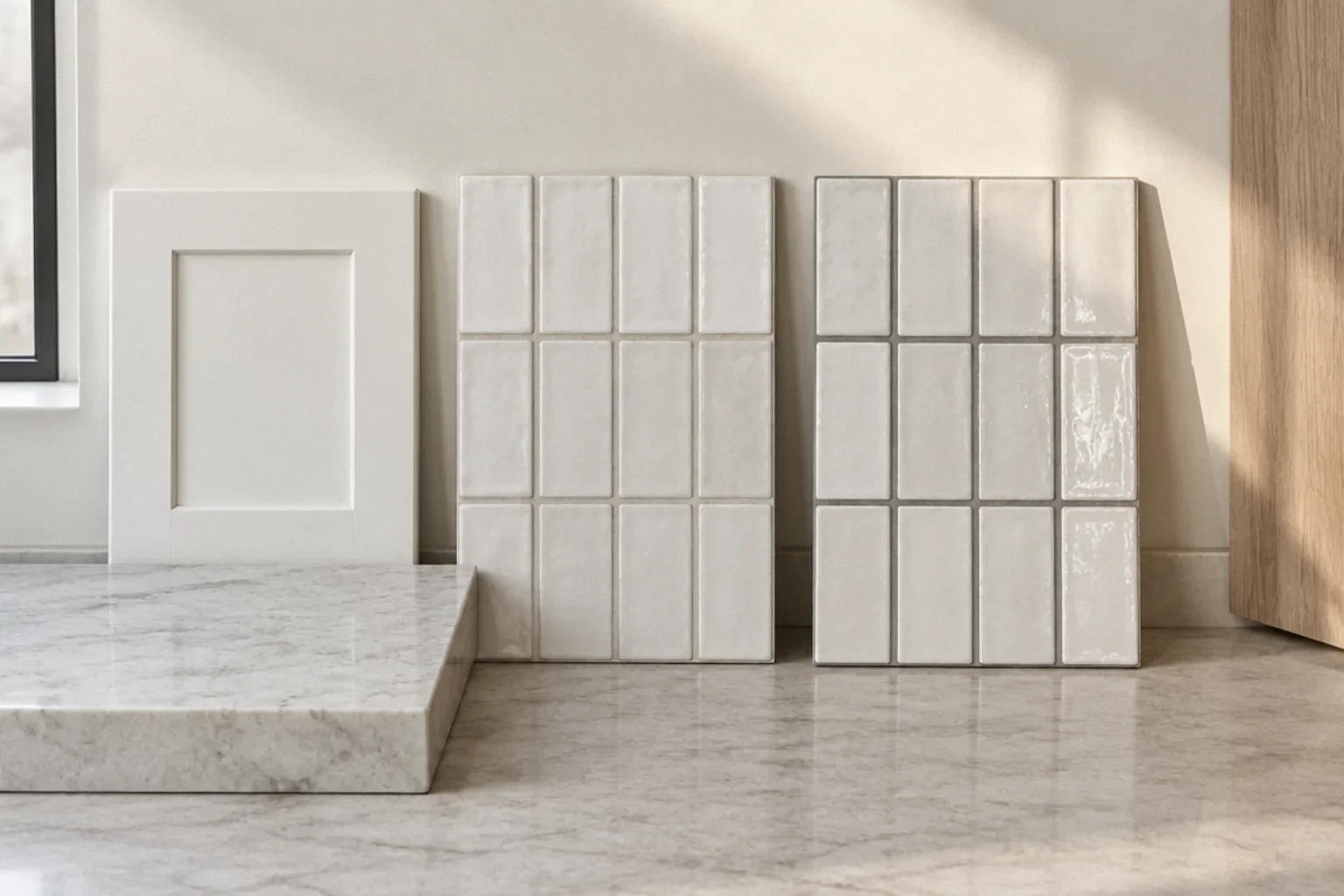
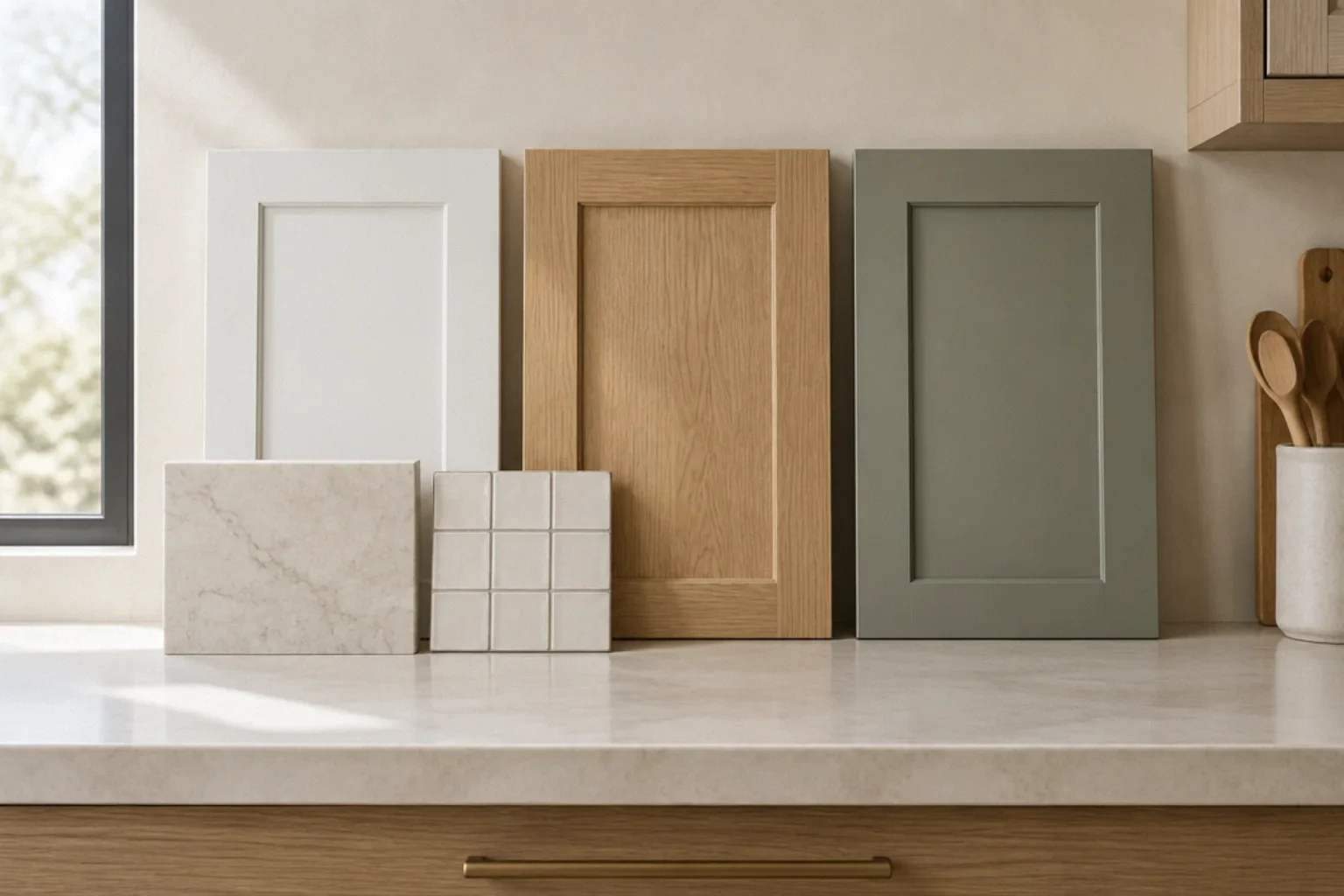
- Get samples large enough to judge. A two-inch chip under showroom lights tells you little. Ask for a full cabinet door, a large countertop sample or remnant, and several tiles.
- Look at them together, in the kitchen, next to the flooring you are keeping or installing, at morning, midday and evening, with the light fixtures you plan to use. If the lights are not installed yet, use bulbs of the color temperature you intend to buy.
- Mock up the backsplash. Lay tiles on a board with spacers and, if possible, a smear of the chosen grout color. The owner who disliked their backsplash after grouting is a reminder that grout color changes the look of a tile field.
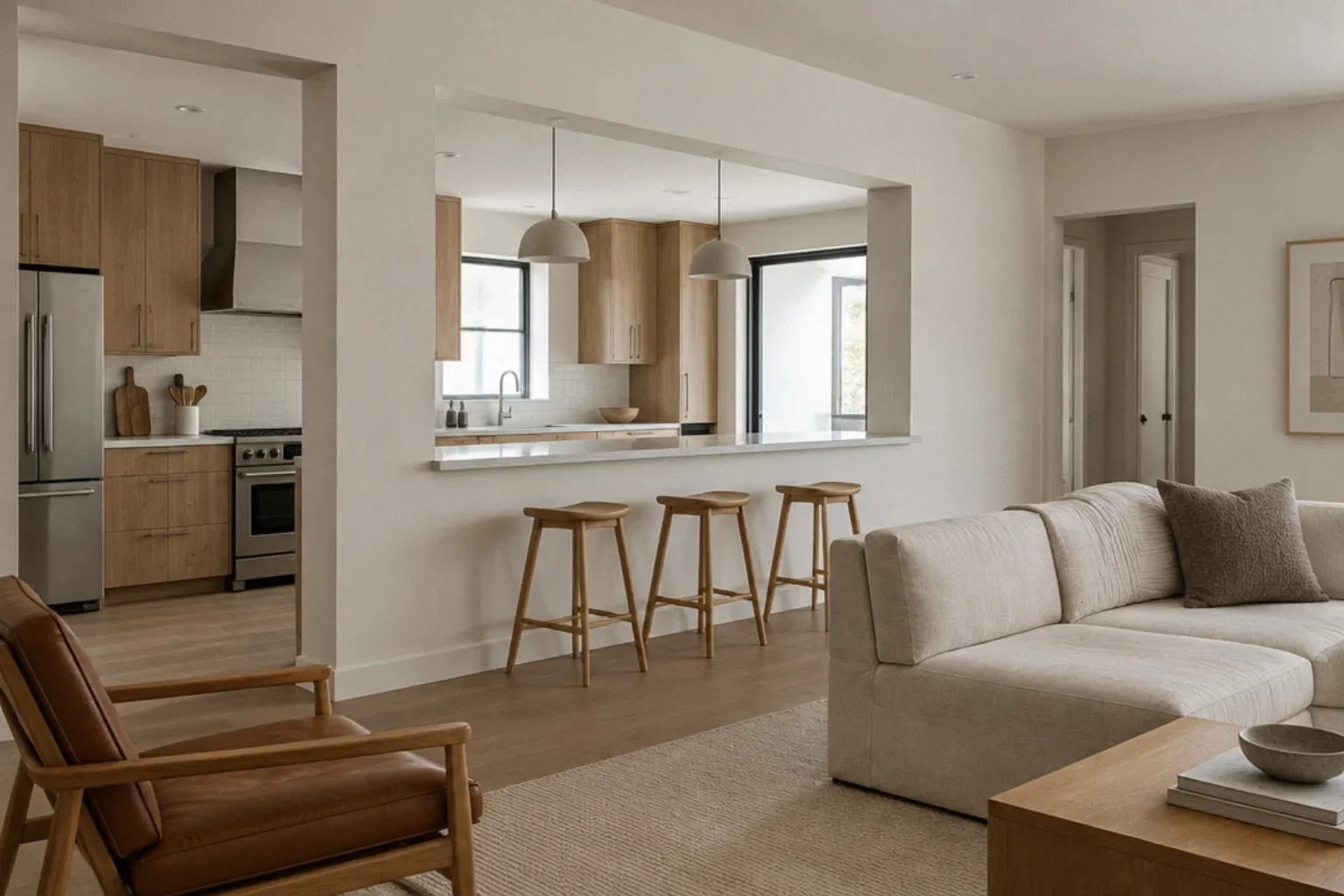
- Check the whole house view. In open plans, the kitchen is visible from the living room. A commenter in the regrets thread noted that a new cabinet color may push you to repaint the rest of the house.
For a full method, see how to sample finishes before you commit.
Match finishes to how you clean
Several regrets are really maintenance mismatches. Matte black and dark finishes show water spots in hard-water areas; very white surfaces show stains and scuffs; high-gloss shows fingerprints; textured tile holds grime. Ask yourself honestly how often you wipe down surfaces, then read the care instructions for the actual products. For engineered quartz, for example, Caesarstone's care guidance recommends protecting the surface from hot objects, to avoid harsh chemicals such as oven cleaners and certain paint strippers, and to use a cutting board, while noting it does not need regular sealing (Caesarstone care tips). One owner who chose white quartz said they would not choose it again because they felt it scratched easily. Experiences differ by product and use, so judge against your own habits. See quartz heat and stain care.
A decision framework that reduces second-guessing
- Start from the house. A 1950s ranch, an Eichler, a Victorian flat and a 1990s tract home each have materials and proportions that some finishes suit better than others. Keep, repeat or respond to what is already there, especially flooring and trim you are not replacing.
- Decide your anchor. Pick one element you love most (a countertop, a tile, a cabinet color) and choose the rest to support it, rather than trying to make every element a statement.
- Limit trend elements to the low-cost row. If a color or finish excites you because it is new, put it on hardware, paint or lighting first.
- Write down why you chose each major finish. When doubt arrives mid-project, a note that says "chose oak because it matches the hallway floor and hides wear" is more persuasive than a scrolling feed.
- Ignore confident trend pronouncements. The threads above contain opposite declarations about what is in and out. Neither is evidence about your kitchen.
- Put selections in writing. A California home improvement contract must describe the work and significant materials (BPC § 7159). Record the exact colors, model numbers and grout color so what arrives is what you tested. See when the build does not match the rendering.
If you already regret a finish
If the issue is taste alone, pause before tearing anything out. Document wrong products, damage or defects promptly and follow any notice or return deadlines. For a purely visual preference, live with it for a few weeks after the construction mess is gone, since an unfinished room colors judgment. Then work from the cheap end: change wall paint, hardware or lighting color temperature first, and see whether the problem is the finish itself or how it is lit. If you still dislike cabinet color, repainting or refacing doors is a contained project. Countertops and set tile are the expensive end; replacing them is a real budget decision, not a failure. For layout-level regrets, see kitchen layout mistakes.
Bay Area notes
Light in the Bay Area varies a lot by microclimate and orientation. A kitchen under coastal fog and a kitchen in a sunny inland valley can make the same white read very differently, which is one more reason to test samples in your own room rather than relying on a showroom or a photo taken elsewhere. Mid-century homes, including many Eichlers, often have wood ceilings, post-and-beam details or large glass walls that strongly influence how cabinet and counter colors look; see remodeling an Eichler.
Checklist before you order
- Every major finish seen in large samples, together, in the actual kitchen
- Samples viewed morning, midday and evening, under your planned bulb color temperature
- Backsplash mocked up with grout color
- Care instructions read for countertop, cabinet finish, fixtures and tile
- Trend-driven choices limited to easy-to-change items
- A short written reason for each major choice
- Exact selections recorded in the contract or specification
Questions that come up next
Are white kitchen cabinets timeless or will they date?
No finish is guaranteed to stay in style. Owners report both loving and regretting white. Painted door color is easier to change than door style, box quality or layout, so put most of your caution on those and test the color in your own light.
How do I know if a color will look right in my kitchen?
Test large samples in the actual room at different times of day, next to your floors and under the bulb color temperature you plan to use. Benjamin Moore notes that natural and artificial light both shift how undertones read, and that bulbs above about 3500K tend to cast cooler.
Should I follow current kitchen trends?
Use trends on things that are cheap to change, like hardware, wall paint and lighting. For expensive, construction-tied choices such as countertops, set tile and cabinet style, choose for your house, light and cleaning habits.
I hate my new backsplash. What should I do?
For a taste-only concern, evaluate the finished room and try lighting or wall-paint changes before committing to replacement. If the tile is damaged, defective or different from what you ordered, document it and notify the responsible party promptly; do not wait past return or contract notice deadlines.
Do matte black fixtures show water spots?
Some owners report that dark fixtures show lime scale and water marks, especially with hard water. Check the manufacturer's care instructions, and remember that some fixture trims can be changed without replacing the valve behind the wall.
Sources and further reading
Community questions behind this guide
These discussions identify homeowner concerns. Forum comments are personal accounts, not code or legal authority.