Short answer: no. Put a heat-resistant trivet or hot pad under all hot cookware, and under countertop appliances that get hot, rather than relying on any temperature figure as a safe limit. Manufacturers are explicit that their products are not heat-proof: Cambria's product care page says its product is "not heat-proof, chemical-proof, or fracture-proof in any form," and Caesarstone's care tips also call for a hot pad or trivet and warn against sudden temperature changes. For everyday cleaning, both point to warm water, a soft cloth and mild soap. Beyond that, their advice on stubborn marks and chemicals differs, so keep the care sheet for your exact brand and product line.
This guide focuses on practical setup: protecting the counter where heat and spills happen, a documentation workflow if damage appears, and a care handoff at the end of a remodel. It is general information current as of 3 October 2026.
What owners notice
An owner two years after a DIY kitchen remodel said white quartz scratched easily and was the one choice they would not repeat. A planner considering quartz was told by a commenter they would regret it. Another owner in a regrets thread loved a honed quartz countertop after two and a half years. These are personal opinions; they suggest that experience depends on color, finish and household habits. Cambria notes that surfaces can show markings from normal use, particularly matte finishes.
What the two manufacturers say, briefly
| Topic | Caesarstone care tips | Cambria product care |
|---|---|---|
| Heat | Hot pad or trivet; avoid sudden temperature changes | Hot pad or solid trivet under cookware and hot countertop appliances; not heat-proof |
| Stubborn marks | Non-abrasive cleaners; oxalic-acid or alcohol products for stubborn stains | Avoid abrasive, strong alkaline, acid and oxidizing cleaners |
| Sealing | Not needed regularly | Do not apply sealers or topical treatments |
The lesson is not which brand is right but that a product one brand suggests may be one another says to avoid. Follow your own manufacturer's sheet and test any cleaner on an inconspicuous spot first.
Set up the kitchen so protection is automatic
Give hot cookware and spill-prone items a planned place to land. Plan zones as you finish the remodel:
| Zone | Setup |
|---|---|
| Next to the cooktop and oven | A permanent landing spot with a heat-resistant trivet large enough for your biggest pan |
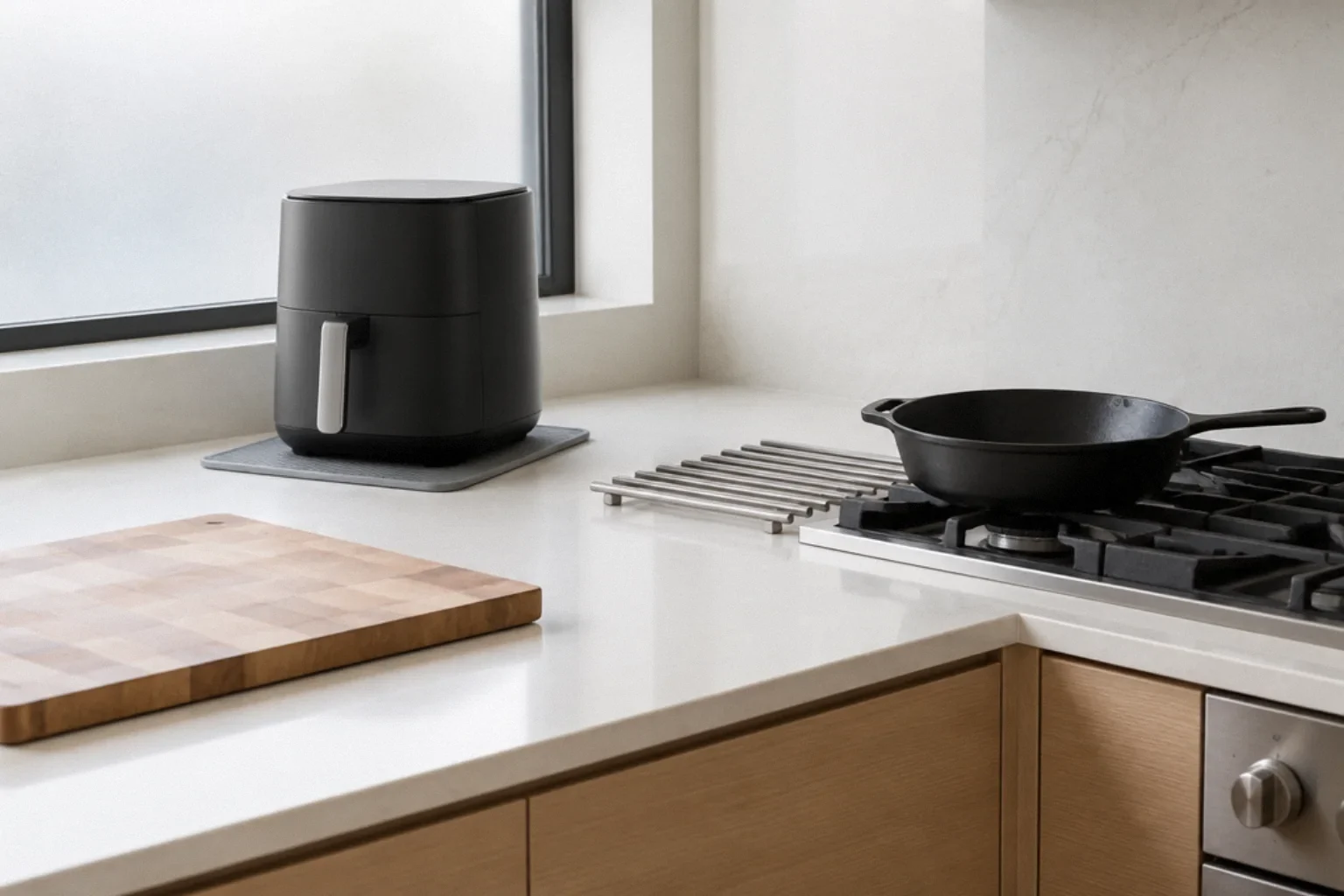
| Appliance station (slow cooker, air fryer, electric skillet, toaster oven) | A heat-resistant trivet or pad that meets both the appliance's instructions (including ventilation and clearances) and the countertop manufacturer's guidance; not an ordinary wooden cutting board, which can trap heat or be damaged |
| Prep area | Cutting boards always; no stone surface is scratch-proof, Cambria notes |
| Sink area | Wipe-down cloth and the manufacturer-approved cleaner within reach; harsh household chemicals stored elsewhere |
| Coffee and wine area | A tray or mat for colored liquids |
If a mark appears: documentation workflow
- Stop the cause (move the appliance, remove the chemical) and let the surface cool if heat was involved.
- Try only manufacturer-approved cleaning, gently. Do not sand, polish or use abrasive pads.
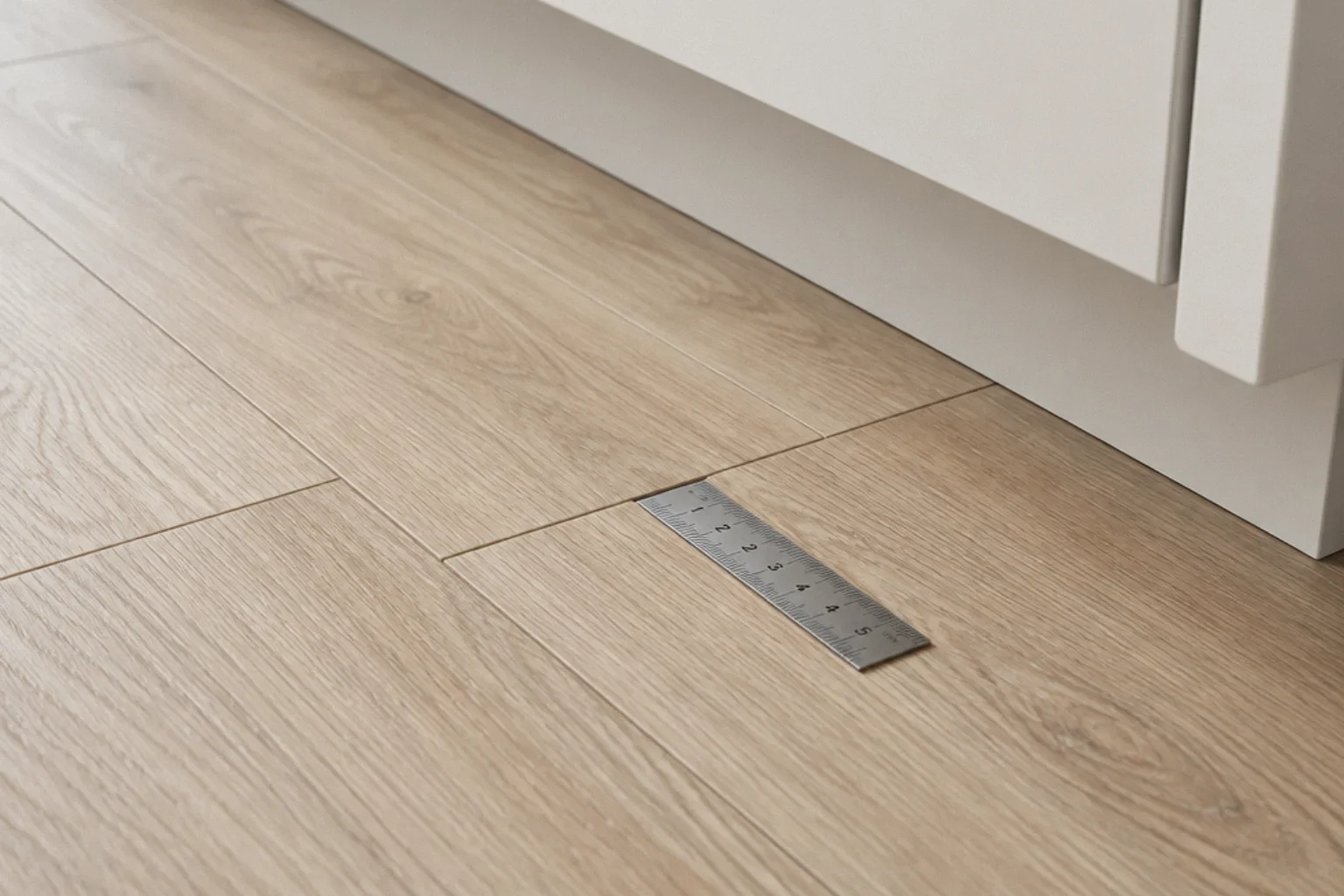
- Photograph it with a coin or ruler for scale, from straight above and at a low angle with a light source, and note the date.
- Write down what happened: what was placed or spilled, for how long, and what you tried.
- Gather your records: brand and color, fabricator invoice, installation date, care sheet and warranty registration.
- Contact the fabricator or manufacturer with the photos and notes. Ask what caused it in their assessment, whether repair is possible, and how they evaluate warranty coverage.
- Keep copies of all correspondence.
A care guide sets the manufacturer's expectations and warranty conditions. It does not by itself determine every right you have; whether a mark is a product defect, an installation issue or use damage depends on its cause and the warranty terms, so ask for an evaluation rather than assuming the answer.
Troubleshooting
| Problem | First steps | When to call someone |
|---|---|---|
| Dried food or paint | Soften with warm water; clean per manufacturer; avoid scraping with metal | If residue remains after approved methods |
| Water marks, fingerprints | Mild soap and water, then dry | Rarely needed |
| Oil or food stain | Manufacturer-approved cleaner | Persistent stain |
| Fine scratches | Document; don't sand or polish yourself | Fabricator evaluation |
| Discoloration near heat | Stop placing hot items there; document | Fabricator or manufacturer |
| Chip or crack | Keep chips; avoid loading a cracked area | Fabricator; check support, seams and cutouts |
Worked example (hypothetical): a slow cooker ring
An owner notices a faint, lighter ring where a slow cooker sat for several hours directly on a light quartz counter. Gentle approved cleaning does not change it. The owner follows the workflow above: photographs, notes, gathers the invoice and care sheet, and contacts the fabricator. The fabricator inspects and explains its view of the cause and the repair options; the manufacturer later responds on warranty based on its terms and the evidence. The owner then sets up a dedicated appliance station with a heat-resistant pad rated for the purpose. The point is the process: document first, get an evaluation, then fix the setup.
Care handoff at the end of a remodel
Before the final payment, ask the contractor or fabricator for:
- The exact brand, product name and color, and the fabricator's contact information
- The current care and maintenance sheet and the warranty terms, with any registration steps
- A sample or offcut for future color matching, if available
- Notes on any seams, cutouts or known repairs
- Any sealing or treatment instructions (often none for engineered quartz) in writing
File these with your remodel records; see final payment and punch lists.
Buying tips if you haven't chosen yet
- Look at the color you are considering under your own lighting, including how it shows smudges on a sample.
- Ask how the finish (polished, honed, matte) affects visible marks for that product.
- Ask the fabricator about wet cutting and California's engineered stone rules; see engineered stone and silica.
- Compare with other materials before committing; see quartz vs natural stone.
Checklist
- Brand and product line recorded; care sheet and warranty saved
- Heat-resistant trivets at the cooktop and an appliance station
- Cutting boards always
- Only manufacturer-approved cleaners, tested first
- Documentation workflow followed for any damage
- Care handoff collected before final payment
Current as of 3 October 2026. Manufacturers update care guidance; check the current version for your product.
Questions that come up next
Can I put a hot pan directly on quartz?
No. Use a heat-resistant trivet or hot pad under all hot cookware. Manufacturers such as Cambria state their products are not heat-proof, and Caesarstone also calls for a trivet and warns against sudden temperature changes. Do not treat any temperature figure as a safe limit for direct contact.
Can I use a slow cooker or air fryer on quartz?
Use a heat-resistant trivet or pad that meets both the appliance's instructions, including ventilation and clearances, and the countertop manufacturer's guidance. Cambria specifically lists slow cookers, air fryers, electric skillets, griddles and roaster ovens among items needing protection.
What cleaners are safe for quartz?
Warm water, a soft cloth and mild soap are the common starting point. Beyond that, brands differ: Caesarstone mentions oxalic-acid products for stubborn stains, while Cambria warns against acid and strongly alkaline cleaners. Follow your brand's care sheet.
What should I do if my quartz gets a heat mark or stain?
Stop the cause, try only manufacturer-approved cleaning, photograph and note what happened, gather your invoice and care sheet, and contact the fabricator or manufacturer for an evaluation. Don't sand or polish it yourself.
Sources and further reading
Community questions behind this guide
These discussions identify homeowner concerns. Forum comments are personal accounts, not code or legal authority.