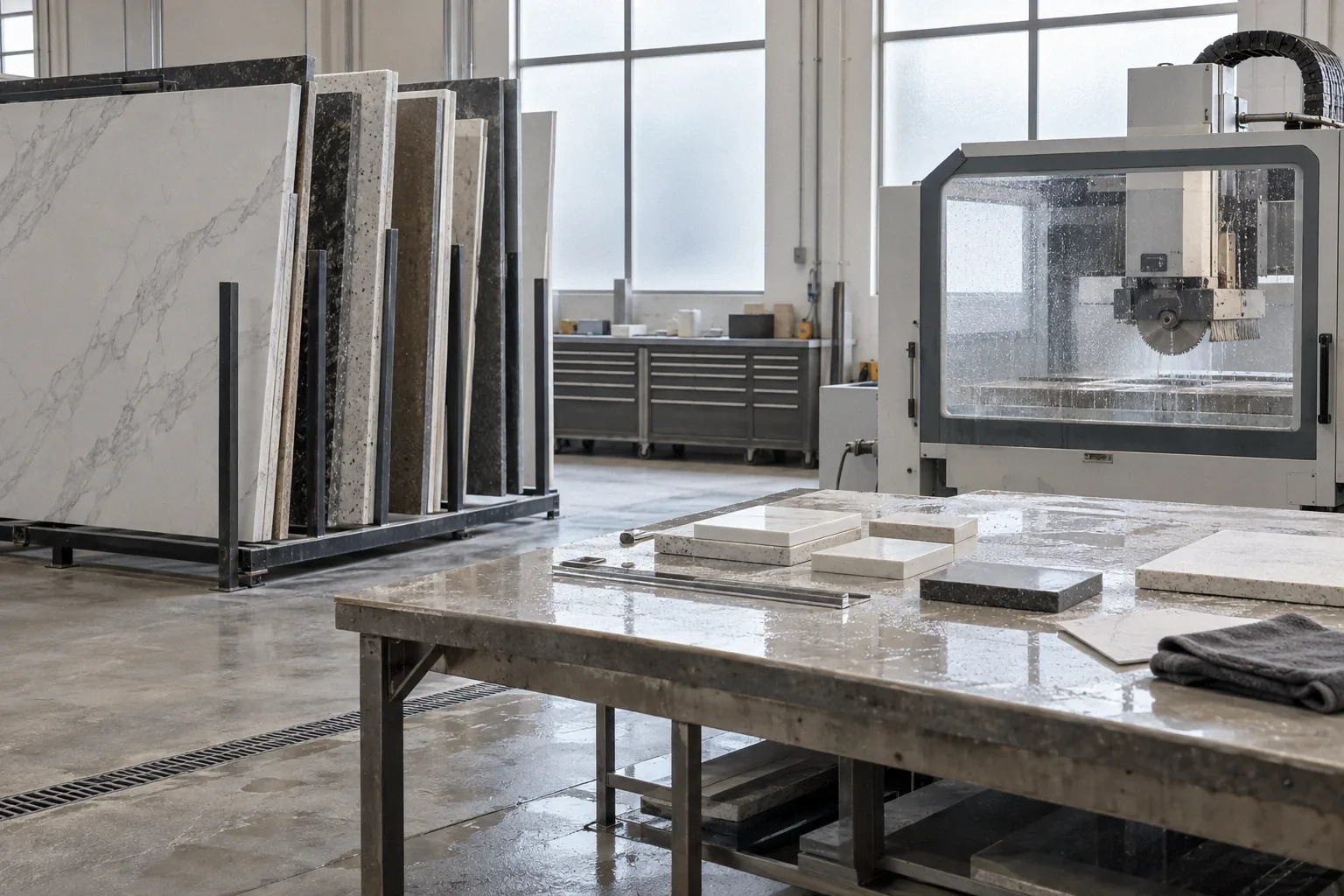
Short answer: not as of our check on 3 October 2026. California regulates engineered ("artificial") stone fabrication heavily, and a prohibition is in the rulemaking pipeline, but none is in effect. Cal/OSHA's silica standard, Title 8 § 5204, already requires effective wet methods for high-exposure tasks such as cutting, grinding and polishing artificial stone containing more than 0.1% crystalline silica and prohibits dry sweeping and compressed-air cleanup. SB 20 (2025) bars dry methods for those tasks in statute, requires fabrication shop owners to ensure trigger-task employees receive the training § 5204 requires, and, beginning 1 July 2026, requires shop owners to submit an annual written attestation to Cal/OSHA that those employees have been trained. In May 2026 the Standards Board voted unanimously to begin rulemaking to prohibit fabrication and installation of artificial stone with more than 1% crystalline silica, and on 16 September 2026 Cal/OSHA posted a discussion draft of an emergency regulation, with comments due 30 September. A discussion draft is not law; check the Standards Board's current actions before relying on this summary.
None of this requires homeowners to remove countertops they already have. The rules govern how workers cut and finish the material. This guide covers the regulatory status, what it means for existing and new countertops, how to choose a material, and what to ask a fabricator. It is general information, not legal or health advice.
What homeowners are weighing
A Bay Area owner planning a galley-to-open kitchen asked for feedback on a quartz choice, and one commenter replied, "You'll regret quartz," recommending laminate. Another owner said the only thing they would not repeat was white quartz, which they felt scratched easily. A South Bay owner bought cabinets and quartz slabs from a local supplier for a budget update. None of these threads discussed fabricator safety, which happens in the shop and on site, out of the homeowner's view. These are personal opinions and accounts.
Where the rules stand
| Instrument | Status on 3 Oct 2026 | What it does |
|---|---|---|
| Title 8 § 5204 (artificial stone provisions) | In effect | Wet methods for high-exposure trigger tasks on artificial stone above 0.1% silica; no dry sweeping or compressed air; fired ceramic and porcelain tile excluded from the "artificial stone" definition |
| SB 20 (2025) | Enacted; annual attestations from 1 July 2026 | Statutory ban on dry methods for trigger tasks; employer training duty; annual written attestation of training to Cal/OSHA |
| Petition 609 rulemaking | Granted May 2026; emergency rule discussion draft posted 16 Sept 2026 | Would prohibit fabrication of artificial stone above 1% crystalline silica; the petition also sought to cover installation; final scope and dates not adopted |
Two thresholds appear here and are easy to confuse: the existing § 5204 artificial stone provisions apply above 0.1% crystalline silica; the proposed prohibition is aimed at products above 1%. Wet methods are one part of compliance, not all of it: employers also have exposure assessment, respiratory protection, medical surveillance and other duties under § 5204. A homeowner's questions to a fabricator are a reasonable check, not a certification that a shop is safe.
If you already have engineered stone countertops
- Intact countertops in normal use are not what these rules address. The regulated hazard is respirable dust created by cutting, grinding and polishing.
- Do not cut, grind or sand an existing countertop yourself. If you need a modification (a new cooktop cutout, a repair), hire a fabricator who works wet and can tell you how they control dust.
- Removing old countertops for a remodel can often be done by lifting slabs rather than grinding them, but ask the contractor how any necessary cutting will be controlled, and keep the household away.
Choosing a material for a new kitchen
| Question | Why it matters |
|---|---|
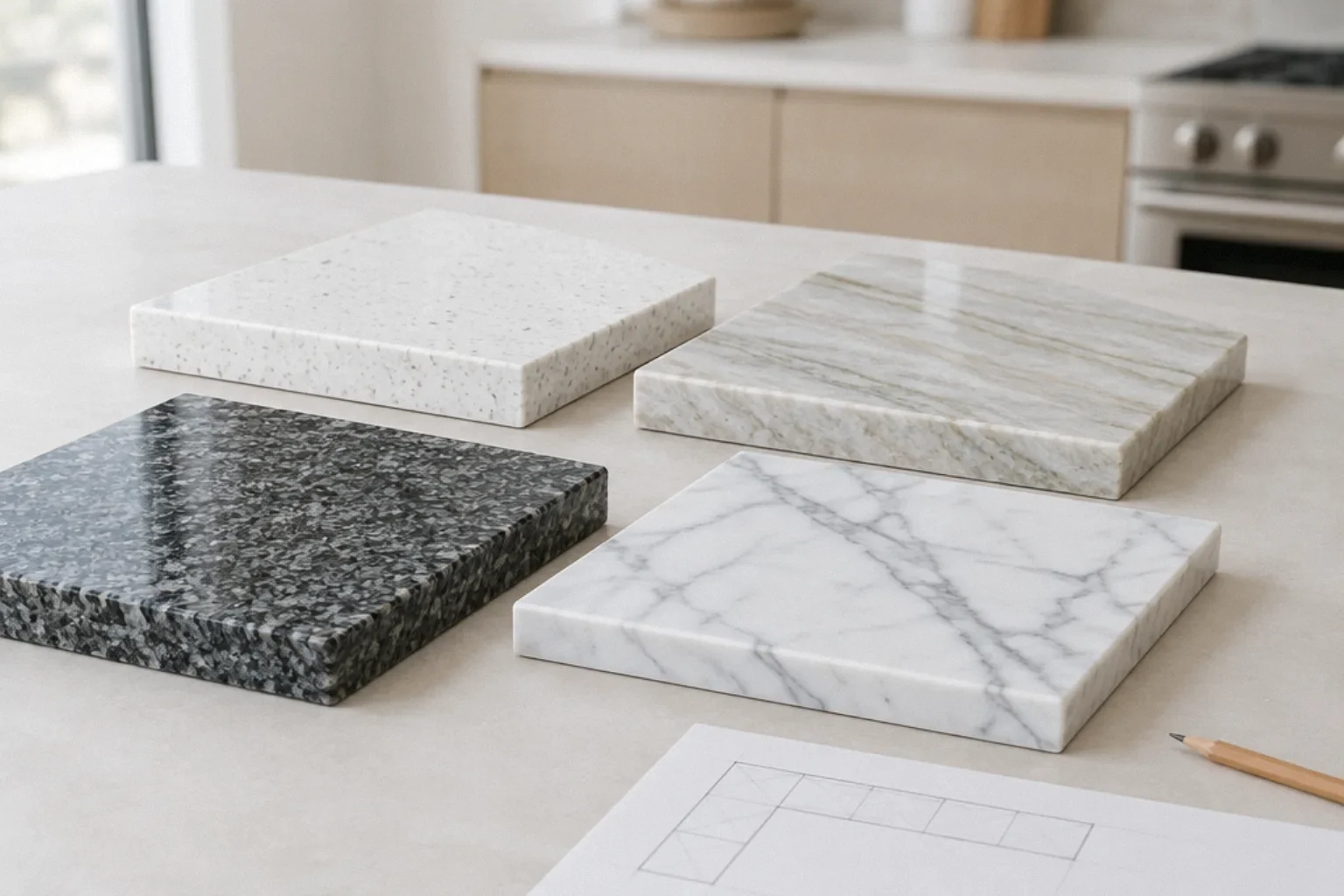
| How will you use the counter: heavy cooking, baking, kids, rentals? | Heat, scratch and stain resistance differ by material; see quartz care and quartz vs natural stone |
| How much maintenance will you actually do? | Some natural stones need sealing and show etching; laminate and solid surface have different repair options |
| When will the slab be fabricated? | A regulatory change between ordering and fabrication could affect engineered stone orders |
| How does the fabricator work? | Shop practices determine worker exposure for any stone or masonry product |
| What is the backup choice? | Having a second material already approved avoids schedule stalls |
Fired ceramic and porcelain are excluded from § 5204's artificial stone definition, but cutting any stone, porcelain or masonry can create silica dust, so worker controls still matter whatever you choose. If a product is marketed as low-silica, ask for the manufacturer's documentation rather than relying on a name.
Buying responsibly: questions to ask a fabricator
- Do you use wet methods for all cutting, grinding and polishing of this material, in the shop and on site?
- Have your workers received the training § 5204 requires, and has your shop submitted its annual attestation?
- Will all cutouts (sink, cooktop, outlets) be made in the shop? If on-site cutting is needed, how will it be controlled?
- How do you clean up at my house, given that dry sweeping and compressed air are prohibited for artificial stone dust?
- If a rule change prevents you from fabricating this material before my job, what happens to my order and any deposit?
Your role is to choose responsibly and not push for shortcuts, such as asking a crew to dry-cut on site to save a trip.
Worked example: writing a contingency into the contract
Suppose an owner signs a kitchen contract with an engineered stone allowance and fabrication scheduled several months out. This is a hypothetical planning scenario, not a forecast of when any rule will take effect. Because the rulemaking could change what fabricators can buy or cut before that date, the owner asks the general contractor to add a clause: if the selected material cannot lawfully be fabricated when scheduled, the owner may choose an alternative from a pre-agreed shortlist, with a written price adjustment through a change order, and any amount paid toward the slab is credited. The owner checks that the sink, cooktop and backsplash choices work with the backup material, and asks the fabricator to confirm in writing its wet-method and on-site cleanup practices. See allowances and price changes and change orders.
On-site safety at your house
- Keep household members, especially children, away from any on-site cutting.
- Expect wet methods and controlled cleanup; ask questions if you see a dust cloud.
- Do not sweep or shop-vacuum stone dust yourself; ask the crew to clean it properly. For broader dust control, see dust control in an occupied home.
Checklist
- Current rulemaking status checked on Cal/OSHA's page before ordering
- Existing countertops left alone unless a fabricator modifies them wet
- Material chosen for use and maintenance, with a backup
- Low-silica claims backed by manufacturer documentation
- Fabricator asked about wet methods, training, attestation, cutouts and cleanup
- Contract contingency for a regulatory change before fabrication
- Household kept away from on-site cutting
Current as of 3 October 2026. This area is changing quickly; recheck Cal/OSHA's rulemaking page and the Standards Board agenda before you sign.
Questions that come up next
Are quartz countertops banned in California?
Not as of 3 October 2026. California regulates fabrication through Cal/OSHA's silica standard and SB 20, and the Standards Board began rulemaking in May 2026 to prohibit fabrication and installation of artificial stone above 1% crystalline silica. Cal/OSHA posted a discussion draft in September 2026; check whether anything has since been adopted.
Do I need to remove the quartz countertops I already have?
No. The rules address worker exposure from cutting, grinding and polishing. Intact countertops in normal use are not the target. Don't cut or grind them yourself; hire a fabricator who works wet for any modification.
Is porcelain safer for fabricators than quartz?
Fired ceramic and porcelain tile are excluded from the artificial stone definition in Title 8 § 5204, but cutting any stone or masonry can create silica dust, so fabricators still need dust controls. Choose based on performance and ask about the fabricator's methods.
What should I ask my countertop fabricator about silica?
Ask whether they use wet methods for all cutting, whether workers have the required training and the shop has made its annual attestation, whether cutouts are done in the shop, and how they clean up on site without dry sweeping or compressed air. Their answers are a check, not a safety certification.
Sources and further reading
- Cal. Code of Regs. Title 8 § 5204 (respirable crystalline silica; artificial stone)
- SB 20 (2025), Ch. 734: artificial stone worker safety
- DIR News 2026-45: Standards Board Advances Efforts to Protect Workers from Silicosis (22 May 2026)
- Cal/OSHA: Emergency Silica Advisory Committee (discussion draft 16 Sept 2026)
- OSHSB Petition File No. 609
Community questions behind this guide
These discussions identify homeowner concerns. Forum comments are personal accounts, not code or legal authority.