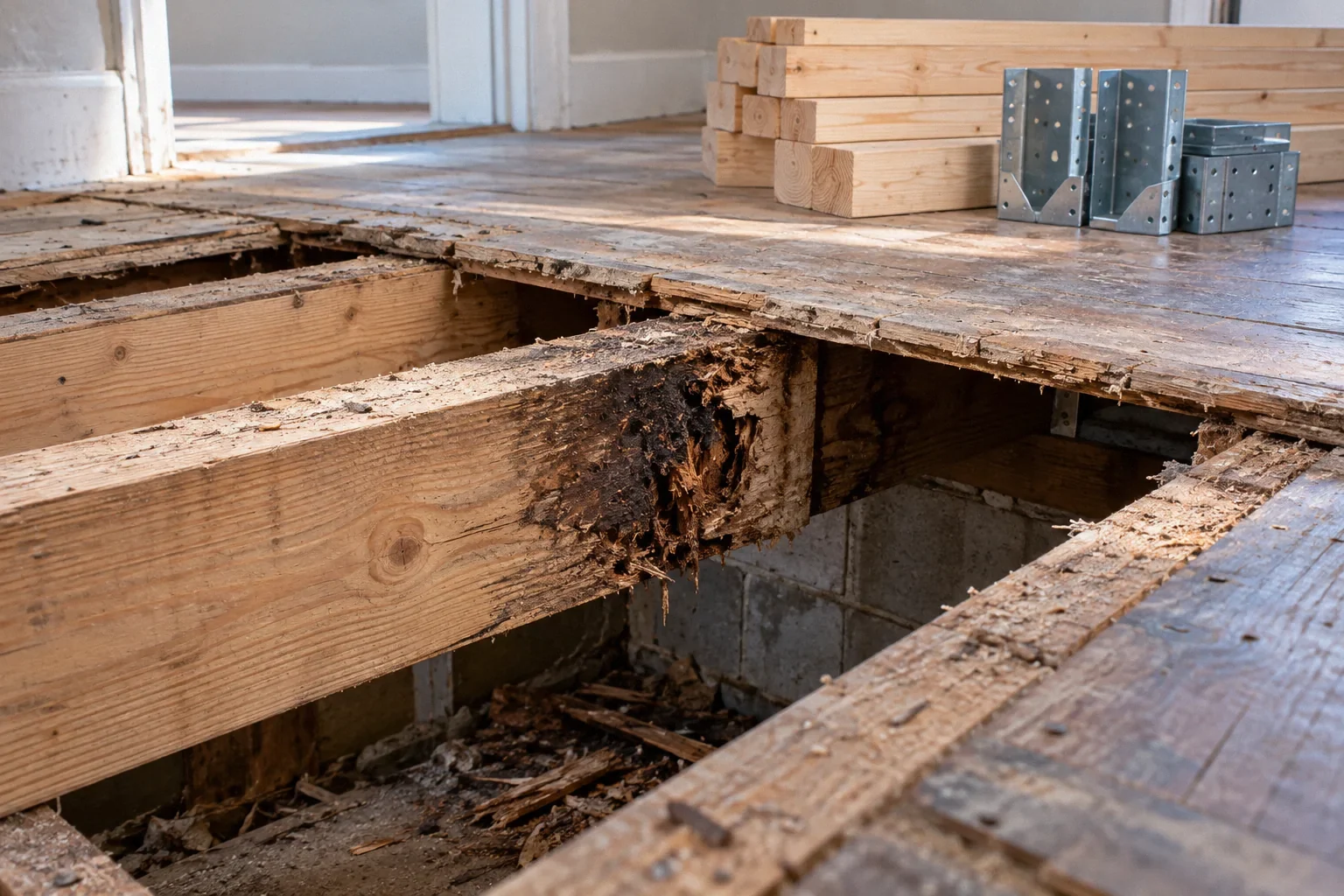
Short answer: size your contingency from your project's actual risks rather than a rule-of-thumb percentage. List the unknowns (what is behind walls and floors, how old the systems are, which selections are still open, which items are on allowances, what permits or utilities might require), estimate a range for each with your contractor, and set aside a reserve that covers the likely ones. Then manage it: we suggest an owner-held reserve kept separate from the contract price, released for construction changes only through signed written change orders, and tracked weekly. California requires changes to a home improvement contract to be made by written change order, so a contingency is money held for approved changes, not a blank check. (Some contracts include a contractor-managed contingency instead; if yours does, make sure the contract says how it is drawn down and reported.)
This is general information verified on 3 October 2026, not legal or financial advice.
What owners describe
An owner of a year-long, very large remodel wrote that overall it went well but costs and timeline ballooned, with change orders arriving months after work without approval or discussion. Another owner with a fixed-price contract was billed about $9,000 in change orders they had not signed, including lumber price increases raised after the fact. By contrast, a kitchen owner who finished on budget said quotes varied widely, they avoided major construction, and they declined extras that every contractor wanted to add. A contractor reflecting on a job wrote that the lesson was to discuss change orders and their costs early. And a homeowner asked whether missed scope should be handled by amending the contract or a change order. Forum accounts are anecdotal; they show the three main sources of overruns: hidden conditions, scope changes and unclear contracts.
What California law and CSLB say about price changes
CSLB's consumer guide to home improvement contracts states that the job must be completed for the agreed contract price and that any change to the price must be made with a written change order that becomes part of the contract; it also urges describing everything specifically, with examples contrasting a vague line like "install some cabinets" with a description naming quantity, maker, model and finish (CSLB: Terms of Agreement). The statute requires change orders to be in writing and signed before the changed work begins, stating scope, price change and schedule effect (BPC § 7159). A missing change order does not automatically mean added work is free; the statute and general law can still leave remedies in disputes, which is one more reason to keep the paperwork clean. CSLB's construction checklist suggests asking contractors before hiring, "Are there potential issues with this project that could arise?" (CSLB Construction Project Checklist). That question is the start of contingency planning.
Step 1: list your risk drivers
| Risk driver | Questions | Raises the reserve when |
|---|---|---|
| Hidden conditions | How old is the house? What is behind walls, under floors? Any signs of leaks or past amateur work? | Older house, walls and floors coming open, prior water damage |
| Systems | Age of wiring, plumbing, panel, HVAC? Will the remodel trigger upgrades? | Old systems in the work area; electrification plans |
| Hazardous materials | Has anything been tested? | Untested suspect materials in demolition areas |
| Structure | Walls removed, openings enlarged, foundation questions? | Any structural change or suspect foundation |
| Selections | Are finishes, fixtures and appliances chosen and priced? | Open selections or allowances |
| Permits and code | What will the permit require beyond your plans (alarms, fixtures, energy items)? | Scope that triggers code updates |
| Utilities | Will a service upgrade or meter change be needed? | New large electric loads |
| Schedule | Long-lead items? Living elsewhere during work? | Rental or storage costs if the job runs long |
Step 2: estimate ranges with your contractor
For each driver, ask the contractor for a plausible range if the problem appears: for example, the cost to replace a section of rotted subfloor per area, or to replace a drain run. Record these as unit prices or ranges in an attachment to the contract. That gives you a basis for both the reserve and future change orders. Unit prices cover cost only; they do not replace any engineering design, permit revision or inspection a discovery may require.
Step 3: understand allowances
An allowance is a placeholder amount in the contract for an item not yet selected. If your final choice costs more, the difference is a change. Check that each allowance is realistic for what you actually want, and whether it covers material only or material and installation. Unrealistically low allowances make a bid look cheaper and shift risk to your contingency. See allowances and material price changes.
Step 4: set the reserve and hold it separately
- Sum the ranges for the drivers you consider likely, add a cushion for genuinely unknown items, and add your own costs outside the contract (temporary housing, storage, appliances you buy directly).
- Keep the reserve in a separate line or account, not in the contract price.
- Decide in advance what the reserve is for: hidden conditions and required changes first, optional upgrades only if money remains.
Step 5: release it with a paper trail
Your own costs outside the contract, such as temporary lodging, storage or appliances you buy directly, come out of the reserve without a contractor change order; just log them. Construction changes go through this process:
- Contractor reports the condition with photos.
- You get a written description, price and schedule effect.
- You sign before work starts.
- You update a simple running log: original price, approved changes, current total, remaining reserve.
Whether a cost belongs to you or the contractor depends on the contract and cause. A pre-existing hidden condition is often an owner-approved change; damage the contractor causes, or work already in scope, is different. See change orders in California.
Ways to reduce what you need
- Finish selections before signing.
- Have qualified professionals test suspect materials and assess utilities before making any necessary exploratory openings. See hidden problems when opening walls.
- Get unit prices for likely surprises in the contract.
- Keep scope stable; mid-project changes cost more than planned ones.
- Avoid structural changes you do not need.
Walkthrough (hypothetical)
Owners of a 1950s house plan a kitchen remodel with one wall opened and new flooring. Their list: subfloor condition unknown, original galvanized plumbing in the wall, panel near capacity, an allowance for countertops, and untested vinyl flooring. They have the flooring tested first (the sampled materials come back negative, which applies only to what was tested; anything new found later would need its own assessment), ask the contractor for unit prices for subfloor replacement and drain replacement, get an electrician's load calculation (panel adequate), and raise the countertop allowance to match the slab they want. Their reserve now covers subfloor and plumbing ranges plus a cushion, held separately. When rot appears under the sink, the contractor documents it and issues a change order at the agreed unit price, and the owners log it against the reserve.
Mistakes to avoid
- Choosing a percentage without looking at the house.
- Including a contractor-managed contingency without clear drawdown, reporting and unused-fund terms.
- Accepting low allowances that do not match your taste.
- Approving extras verbally.
- Spending the reserve on upgrades early, then facing a hidden condition.
- Forgetting costs outside the contract.
Checklist
- Risk drivers listed with the contractor
- Ranges or unit prices recorded in the contract
- Allowances checked against real selections
- Reserve sized, held separately, purpose defined
- Change order process: written, priced, signed before work
- Running budget log updated weekly
Questions that come up next
How much contingency should I budget for a remodel?
There is no universal percentage. Size it from your project's risks: house age and condition, how much is hidden, open selections and allowances, structural changes, permit and utility requirements, and schedule costs. Ask your contractor for ranges or unit prices for likely surprises.
Can a contractor raise the price without a change order in California?
CSLB states the job must be completed for the agreed price and any change must be made with a written change order, and BPC § 7159 requires change orders to be signed before the changed work begins. Disputes over undocumented extra work can still raise legal questions, so insist on signed change orders before any added work.
What is an allowance in a remodel contract?
A placeholder amount for an item not yet selected. If your choice costs more, the difference is a change. Check allowances against what you actually want and whether they include installation.
Who pays for surprises behind the walls?
It depends on the contract and cause. Pre-existing hidden conditions are often owner-approved changes; damage caused by the contractor or work already in scope is different. Put a concealed-conditions process in the contract.
How do I keep a contingency from disappearing?
Hold it separately from the contract price, define what it is for, release construction changes only through signed change orders, log your own outside costs, and track everything against it weekly.
Sources and further reading
Community questions behind this guide
These discussions identify homeowner concerns. Forum comments are personal accounts, not code or legal authority.