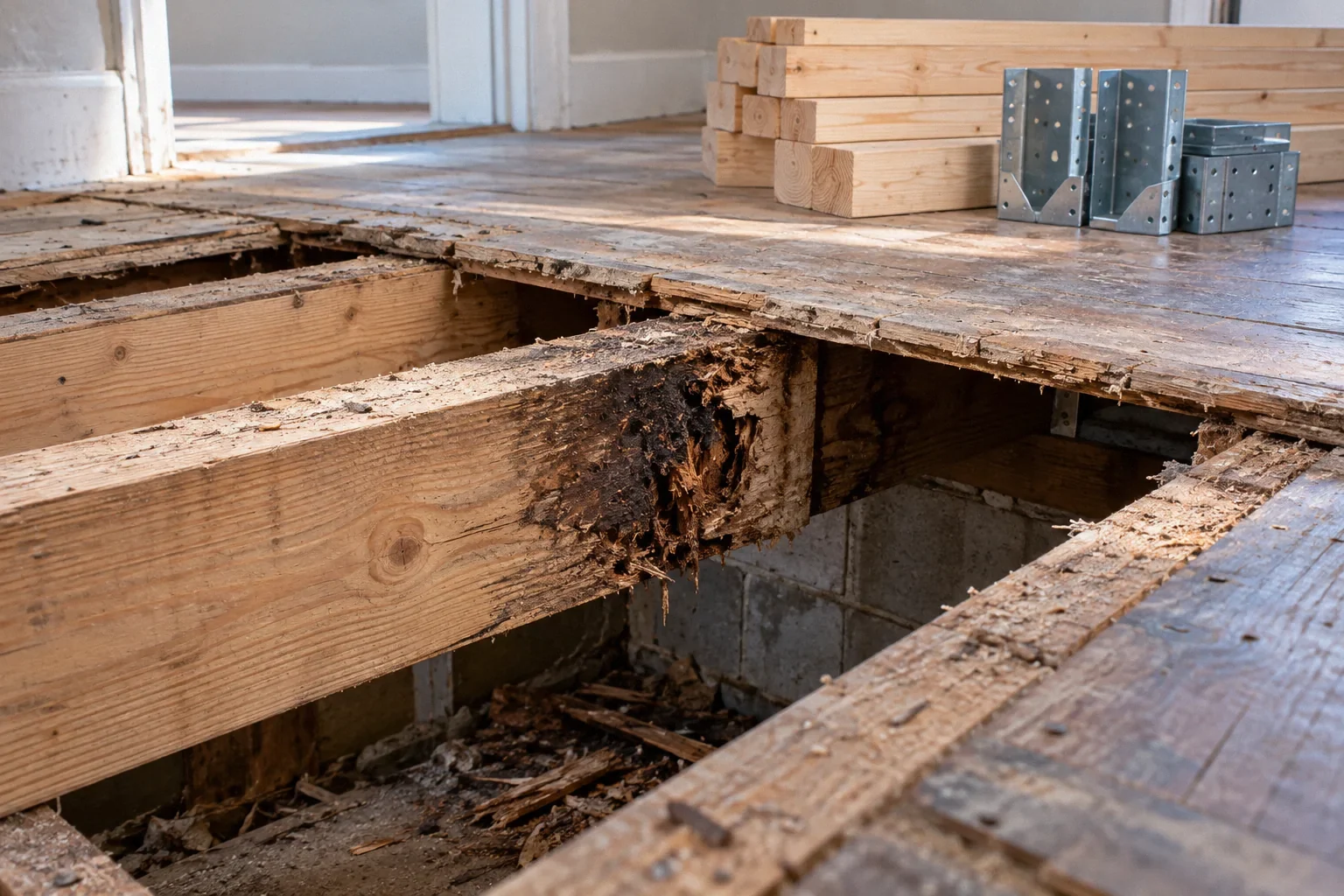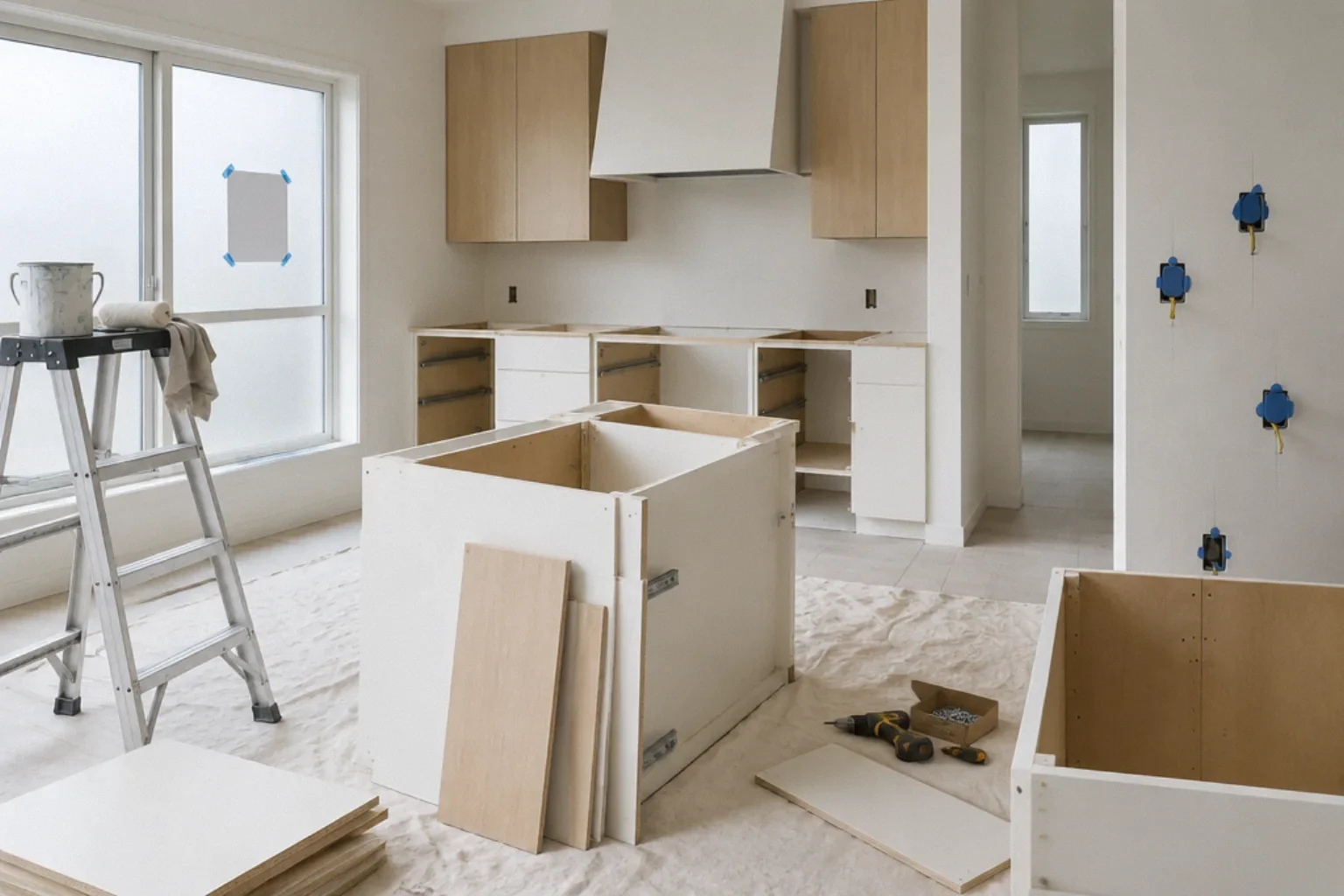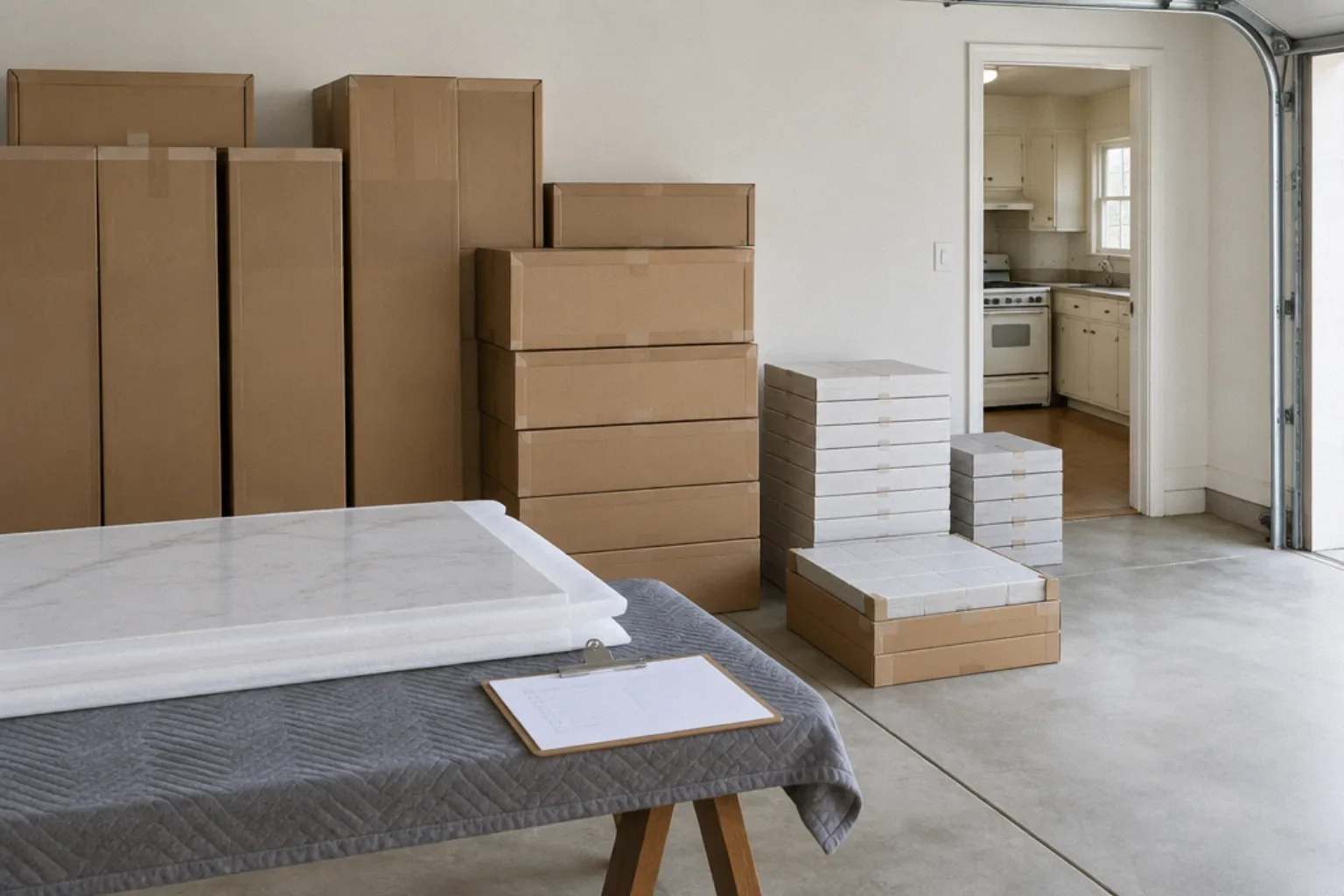
Short answer: as a planning recommendation, try not to start the main demolition until every item that would stop the job is either on site or has a confirmed delivery date that falls well before it is needed. Exceptions exist: a small exploratory opening is sometimes needed first to measure or to see hidden conditions, and that opening may itself need a permit. In practice that means the long-lead, hard-to-substitute items: cabinets, special-order tile, windows and exterior doors, specific plumbing valves and fixtures, and any appliance that dictates rough-in dimensions. Commodity items such as drywall, framing lumber and standard electrical boxes can arrive later. Demolition is fast; the gap between demo and the next possible step is where homeowners lose weeks living without a kitchen or bathroom.
In California, early ordering through a contractor has a payment rule attached: under a home improvement contract, the contractor may not collect payment for materials that have not been delivered, and the down payment is capped. That rule governs your contractor. It does not govern a store or supplier you buy from directly, whose terms (deposits, payment at order, return and cancellation policies) are set by the sales agreement. This guide is general information verified on 3 October 2026. Ask your suppliers for written dates.
The regret that keeps showing up
In a 2021 thread asking people for their biggest kitchen remodel regrets, demolition before materials arrived appears alongside finish choices. In a much more recent before-and-after with "lots of lessons learned", the owner of an older house wrote that the family of six lived in the house for three months, mostly without a kitchen, and that the tile they had built the design around took four months to arrive. They started the renovation without it. A Bay Area owner asking how to pay contractors on a renovation got the reply that, if the contractor is buying materials, pay when the materials are delivered to the house, with the receipt.
Forum accounts are anecdotal, not data about how often delays happen. They describe a pattern you can prevent by sequencing decisions and deliveries before anyone swings a hammer.
Why the gap after demolition hurts so much
- You lose the room immediately. A kitchen or bathroom is unusable from day one of demolition. Every week of waiting is a week of temporary arrangements. See living at home during a kitchen remodel.
- Rough-in depends on the actual product. Plumbing valves, sink and faucet locations, range and hood dimensions, and cabinet layouts set where pipes, wires and blocking go. Installing rough-in to a spec sheet and then substituting a different product can mean reopening walls.
- Crews move on. If the next trade cannot work, subcontractors are scheduled onto other jobs, and getting them back can take longer than the material delay itself.
- Hidden conditions compound it. Opening walls in older homes often reveals rot, outdated wiring or framing problems that need decisions. Doing that while also waiting on materials stretches the timeline twice. See hidden problems found when opening walls.
- Some materials must sit on site before installation. Mohawk's SolidTech installation instructions, for example, call for 48 hours of acclimation at 55–85°F before installing. Other flooring and wood products have their own rules. A floor that arrives the morning it is due to go down is already late.
California's payment rules and early ordering
Two statutes shape how material purchases should be paid for on a home improvement contract:
- Business and Professions Code § 7159.5 limits the down payment to $1,000 or 10% of the contract price, whichever is less, and bars a contractor from requesting or accepting payment that exceeds the value of work performed or material delivered.
- § 7159 requires the contract to state that it is against the law for a contractor to collect payment for work not yet completed or materials not yet delivered, and requires the payment schedule to say what work or materials each payment covers.
CSLB's consumer guide to home improvement contracts, discussed in our down payment guide, states there are no exceptions for special-order materials. CSLB also notes an exception for contractors holding a blanket performance and payment bond. In practical terms:
- The contractor (or you) can place orders early. Who carries the cost until delivery is a business arrangement, but the contract payment should be tied to delivery.
- Write delivery into the payment schedule: for example, "Payment 3: cabinets delivered to site, inspected for damage and matched to the order, with itemized supplier invoice."
- If you would rather buy long-lead items yourself to control timing, say so in the contract, and spell out who receives, inspects, stores and insures them. The contract must still describe the work and significant materials.
Contractor progress payments versus your own retail purchases
Keep the two situations separate. When the contractor supplies materials under the home improvement contract, §§ 7159 and 7159.5 apply: payments to the contractor should follow delivery. For a goods-only purchase directly from a retailer or showroom, contractor progress-payment rules do not by themselves set the seller’s deposit terms. If the seller also contracts to install or improve the home, do not assume the retail label removes home-improvement contract requirements; check the actual agreement. Many goods-only sellers require a deposit or payment at order for special orders. Before you pay a supplier directly, read its written terms for deposit refunds, cancellation, restocking fees, damage claims and what happens if the order is delayed, and pay by a method that leaves a record. Paying a supplier in full months ahead is a business risk you are choosing to take, not a contractor-law violation.
CSLB's Construction Project Checklist also suggests asking when the contractor can start and what the timeline is, getting the names of material suppliers, and keeping project documents, payments and pictures in a job file. Delivery receipts and photos of materials on site belong in that file.
What must be on site before demo, and what can wait
| Category | Before demo? | Reason |
|---|---|---|
| Cabinets (especially semi-custom or custom) | Ordered with a confirmed date; ideally delivered before plumbing and electrical rough-in finish | Layout drives rough-in; long and variable lead times |
| Special-order tile and stone | Delivered, counted and inspected for shade/lot | Lead times can be long; a short shipment or wrong lot stops the job |
| Windows and exterior doors | Ordered after field measurement, with date confirmed before opening walls | An open wall waiting on a window is exposed to weather and security risk |
| Shower valve, drain and waterproofing system | On site before rough plumbing | The valve body and drain set wall and floor build-up |
| Plumbing fixtures (toilet, tub, sinks, faucets) | Model chosen and spec sheet in hand; physical delivery before rough-in if dimensions are unusual | Rough-in heights and outlet positions vary by model |
| Appliances (range, hood, refrigerator, dishwasher) | Models chosen; spec sheets for cutouts, electrical and venting | Electrical circuits, gas or venting and cabinet openings depend on them |
| Countertops | Material selected; templating happens after cabinets are installed | Fabricators template from installed cabinets |
| Drywall, framing lumber, insulation, standard boxes | Can be delivered as needed | Commodity items with short lead times in most areas |
| Paint, trim, hardware | Selections made; delivery later | Installed at the end |
This table reflects typical sequencing logic, not a guarantee for your project. Your contractor's schedule and your building department's inspection sequence should drive the final version.
A sequencing plan you can actually use
- Finish design and selections first. A remodel with open decisions is a remodel waiting to stall. Make the major choices (layout, cabinets, tile, fixtures, appliances) before setting a demo date.
- Ask each supplier for a written lead time. Put the quoted date and the supplier name in a simple spreadsheet. Phone estimates change.
- Get the permit issued before regulated work starts. Demolition that is part of permitted work, such as removing walls, plumbing or wiring, generally should not begin until the permit is issued; check with your building department. Plan review time varies by city. The City of Pleasanton's kitchen alteration handout says first-round review is typically completed within three weeks for projects that need plans; other departments differ. Ordering long-lead items while the permit is in review uses that time well, but only if the design will not change in review.
- Measure in the field before ordering fit-critical items. Windows and custom cabinets should be ordered from verified field dimensions. Sometimes that requires a small exploratory opening before the main demolition.
- Set a "demo gate". Agree with your contractor that demolition starts only when a defined list of items is delivered or confirmed. Write it down.
- Inspect on delivery. Open boxes and check counts, damage, shade lots and model numbers immediately. Damage claims are easier when reported at delivery.
- Plan storage. Cabinets and flooring need dry, secure, temperature-controlled space. A damp garage or an open driveway is not storage.
- Keep a contingency for surprises. See remodel contingency planning.
Mistakes to avoid
- Demolishing to "get started" while selections are still open. The house becomes a construction site with nothing to install.
- Paying your contractor for materials before delivery. Under a home improvement contract, the statute ties contractor payments to delivered materials. For direct purchases from a supplier, understand the deposit and cancellation terms before paying far in advance.
- Ordering everything to the drawings without a field check. Walls, floors and openings may not match the drawings, especially after past remodels, so verify dimensions on site.
- Forgetting the small items that stop a trade. A specific valve trim, a tile edge profile or a drain grate can hold up a bathroom as effectively as the tile itself.
- Accepting a substitution without writing it down. Under § 7159, changes go in a written change order signed before the changed work begins. A substitute product that changes price, schedule or appearance is a change. See change orders in California.
Bay Area considerations
The payment rules above are state law and apply in every Bay Area county. What varies locally is review time, inspection sequencing and site logistics. Dense neighborhoods in San Francisco, Oakland and Berkeley can make deliveries and storage hard: street parking restrictions, steep driveways and no garage space all argue for timing deliveries close to need while still keeping long-lead items ahead of the schedule. In suburban areas with garages, storage is easier but temperature swings in uninsulated garages can matter for flooring acclimation. Electrification upgrades can add a separate timeline: a panel or service upgrade that needs utility work runs on the utility's schedule, not your contractor's. Owners in one Bay Area thread about a 200-amp upgrade reported being quoted very different time frames by different companies for PG&E-dependent work. Treat such accounts as reasons to ask early, not as a forecast, and see panel upgrades before a remodel.
Pre-demolition checklist
- All major selections finalized and written into the contract or a specification
- Written lead times for cabinets, tile, windows, doors, valves, fixtures and appliances
- All required permits issued before any regulated demolition or construction begins
- Field measurements taken for fit-critical items
- Long-lead items delivered, or confirmed with dates well ahead of need
- Delivery inspection done: counts, damage, shade lots, model numbers
- Contractor payment schedule ties material payments to delivery, with invoices; direct supplier terms read and understood
- Dry, secure storage arranged
- Temporary kitchen or bathroom plan in place
- Supplier names recorded in the job file
Questions that come up next
Should I wait for all materials before starting demolition?
Not necessarily all of them, but the long-lead items that would stop the job should be on site or confirmed with delivery dates well before they are needed: cabinets, special-order tile, windows, shower valves and drains, and fixtures or appliances that set rough-in dimensions. Commodity items can arrive later.
Can a California contractor make me pay upfront for special-order materials?
Under BPC § 7159.5 the down payment is capped at $1,000 or 10% of the price, whichever is less, and payments may not exceed the value of work done or materials delivered. CSLB states there is no special-order exception. The exception CSLB describes is for contractors with a blanket performance and payment bond. This rule applies to your contractor, not to a retailer you buy from directly.
How do I write material delivery into the payment schedule?
Name the delivery event and the evidence, for example: 'cabinets delivered to site, inspected and matched to the order, with itemized supplier invoice.' Section 7159 requires each payment to identify the work or materials it covers.
What if a material is delayed after demolition has started?
Ask the supplier and contractor for a revised written date, decide whether to wait or substitute, and record any substitution that changes price, schedule or appearance in a signed change order before the changed work begins.
Do flooring materials need to be delivered early?
Often yes. Many manufacturers require acclimation on site before installation. Mohawk's SolidTech instructions, for example, call for 48 hours at 55–85°F. Check your product's instructions.
Sources and further reading
Community questions behind this guide
These discussions identify homeowner concerns. Forum comments are personal accounts, not code or legal authority.