Short answer: treat damage to parts of your home outside the project, such as a fence, a patio, another room's drywall or a ceiling below a leak, as a separate issue from the remodel itself. Photograph it immediately, stop further damage, and notify the contractor in writing with a request to repair or to report it to their insurer. Notify your own insurer promptly. A contractor's commercial general liability (CGL) insurance, if they have it, is designed for third-party bodily injury and accidental property damage, which is different from fixing the contractor's own work (CSLB CGL information). Your contract's CGL notice tells you whether there is a policy and who wrote it (BPC § 7159(e)). If the contractor won't respond, the options are a CSLB complaint, a bond claim, small claims or civil court, depending on amount and circumstances.
This is general information current to 3 October 2026, not legal or insurance advice.
What collateral damage looks like
An owner finishing a year-long remodel listed damage outside the project scope: part of a fence damaged during a lumber delivery, a patio damaged during installation of a new roof footing, and drywall damaged in a room where new windows were installed but which was not part of the painting scope. An owner wrapping up a bathroom reported water damage in the basement after a plumbing mistake. In a Sacramento thread, a neighbor whose wall was struck by another homeowner's contractor's equipment weighed a bond claim against claiming on their own homeowner's insurance. These are anecdotal accounts, but they cover the main categories: delivery and equipment damage, water damage from trade work, and damage to neighbors.
First 48 hours
- Stop the damage. Shut off water at the fixture or main if needed, keep clear of wet electrical equipment, and arrange safe temporary protection. Do not climb or enter unstable areas to cover openings yourself. Mitigation is expected of you, and it limits the loss.
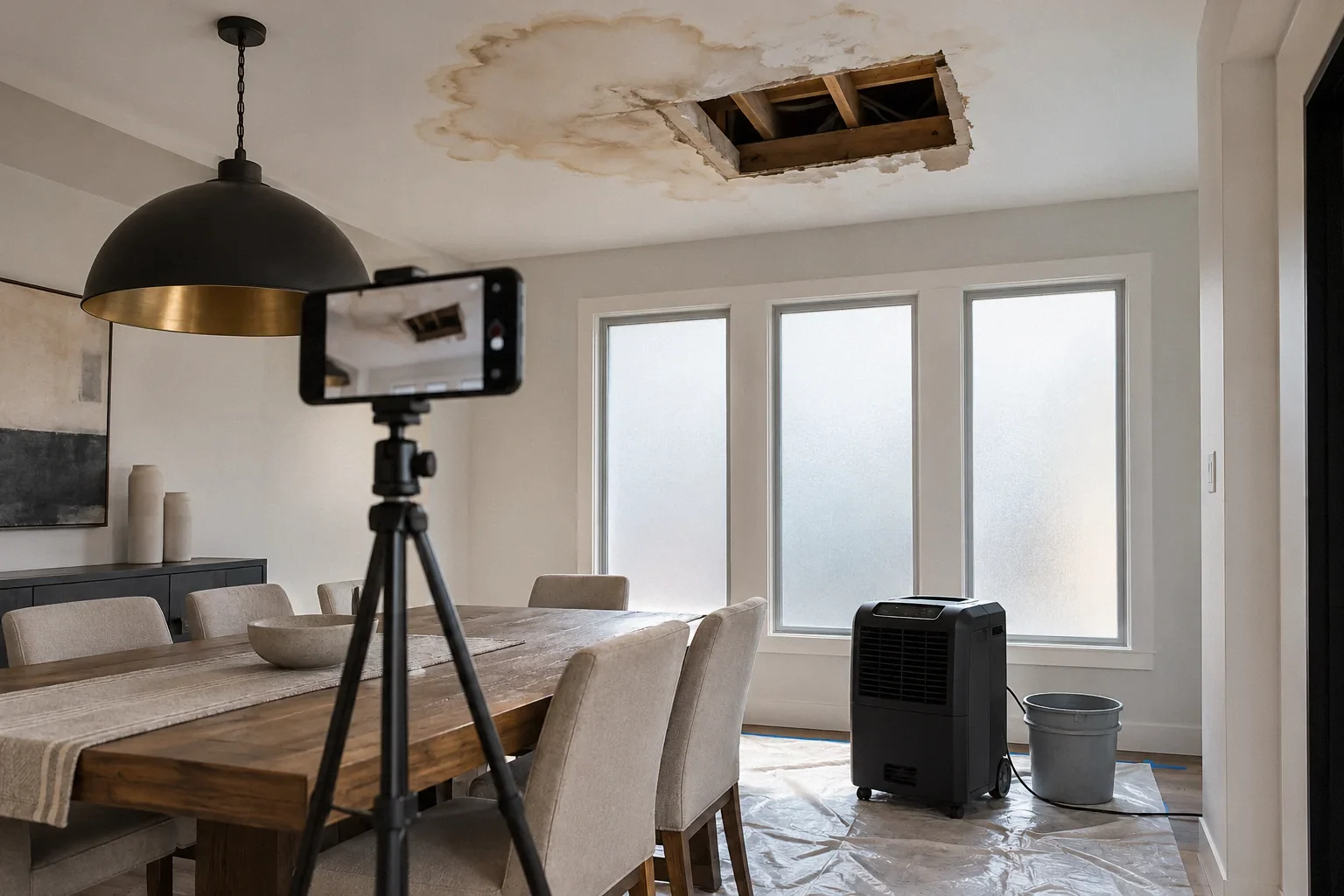
- Document before cleanup, if it doesn't delay safety: wide shots and close-ups, video with narration, date and time, and moisture or water extent if visible.
- Notify the contractor in writing the same day: what happened, when, where, photos, and a request that they (a) arrange repair or (b) report to their insurer and give you the claim contact.
- Notify your insurer promptly, as most policies require. Your insurer can advise on coverage and on any recovery from the contractor.
- Keep damaged materials until the parties have seen them, where practical and safe. Wet materials may need prompt removal to limit mold, so photograph them thoroughly before they go.
Separate three kinds of problems
| Category | Example | Who usually handles it |
|---|---|---|
| Collateral damage to other property | Ceiling below a new shower stained by a supply-line leak; scratched hardwood in a hallway; damaged fence | Contractor, or the contractor's CGL insurer where coverage applies; possibly your own insurer, which may then pursue the contractor |
| Defective work itself | The new shower pan leaks; tile is uneven | The contractor's obligation to correct under the contract and warranty. CSLB describes CGL as not intended as a workmanship warranty; actual exclusions and exceptions, including some subcontractor-work provisions, vary by policy. See punch lists |
| Pre-existing condition revealed by work | Rot found behind old tile | Allocate under the contract and evidence of the condition; genuine unforeseen extra work may need a priced change order. See change orders |
The same incident can involve more than one category. A leaking new shower is a defect, and the ruined ceiling below it is collateral damage. Treat them as separate items in your letters and claims.
The written notice: what to include
- Date and time discovered; how it happened, if known
- Exact locations, with photo references
- What you did to mitigate
- What you are asking for: repair by a date, or the insurer's claim contact
- A statement that you are preserving your rights while the issue is resolved
A worked example
Hypothetical. During a second-floor bathroom remodel, a plumber's temporary cap on a supply line fails overnight. Water stains the dining room ceiling and soaks part of a rug.
- Morning: the owner shuts the main, photographs everything, moves the rug, and texts and emails the contractor with photos.
- Same day: the owner notifies their insurer. The contractor confirms they will report it to their CGL carrier and sends a water mitigation company.
- Week one: the dining room ceiling is opened to dry. The owner asks in writing who is paying the mitigation company, and the contractor confirms it in an email.
- Week three: the ceiling repair is quoted. The owner keeps it separate from the bathroom contract. It should not automatically become an owner-paid upgrade or extra; record the repair scope and who accepts payment responsibility, even if the parties use a written change document.
- If the contractor's insurer denies or the contractor stops responding: the owner's insurer may handle it under the owner's policy, subject to its terms, and pursue the contractor. Or the owner considers small claims for the repair cost, using a written estimate.
If the contractor won't respond
| Option | When it fits |
|---|---|
| Your homeowner's insurance | Damage likely covered by your policy; your insurer may pursue the contractor |
| Contractor's CGL insurer | You know the insurer from the contract notice; ask the contractor to report, or ask the insurer how third parties report |
| License bond claim | Where the damage arises from a license-law violation; the surety decides eligibility. See bond claims |
| CSLB complaint | Alongside other routes; CSLB may mediate or order correction for licensees |
| Small claims | Repair cost within the limit ($12,500 for individuals); see small claims |
Damage to a neighbor's property
If your contractor damages a neighbor's property, the neighbor's claim is primarily against whoever caused the damage, and possibly against you depending on the circumstances. Give the neighbor the contractor's details and the insurer named in your contract, and tell your own insurer. In the Sacramento thread, the neighbor's own agent reportedly suggested pursuing the contractor's bond rather than their homeowner's policy because of rate concerns. Insurance practices vary, so the neighbor should ask their own insurer.
Prevention
- Agree site protection in the contract: floor protection along work paths, dust barriers, and protecting landscaping and hardscape near delivery routes.
- Walk the site with the contractor before work starts and photograph existing conditions, including nearby rooms, fences and driveways.
- Confirm the contractor's CGL status and insurer before signing. See contractor insurance.
- Ask about plans for overnight water shut-off or capping during plumbing work.
- Ask CSLB's suggested question of your own insurer: whether a temporary rider makes sense during the project (Terms of Agreement).
Bay Area applicability
The rules here are statewide. A local factor is that tight lots and shared fences are common in many Bay Area neighborhoods, so delivery routes and staging areas can affect neighbors. Agree those routes in advance, and include neighbor-facing protection in the contract.
Current to 3 October 2026.
Questions that come up next
Is my contractor responsible for damage to my house during a remodel?
Damage the contractor causes to other parts of your property is generally their responsibility to address, and their commercial general liability insurance, if they carry it, is designed for accidental property damage. Notify them in writing with photos and ask for repair or their insurer's claim contact.
Will the contractor's insurance pay to fix their bad work?
Generally not directly. CSLB describes CGL as not intended to cover the contractor's own work. Defects in the work itself are handled under the contract and warranty, while resulting damage to other property may be a separate insurance matter.
Should I claim on my own homeowner's insurance?
Notify your insurer promptly as your policy requires. Your insurer can explain coverage and may pursue the contractor for amounts it pays.
What if the contractor damaged my neighbor's property?
Give the neighbor the contractor's and insurer's details from your contract, notify your insurer, and let the neighbor ask their own insurer about their options.
Sources and further reading
Community questions behind this guide
These discussions identify homeowner concerns. Forum comments are personal accounts, not code or legal authority.