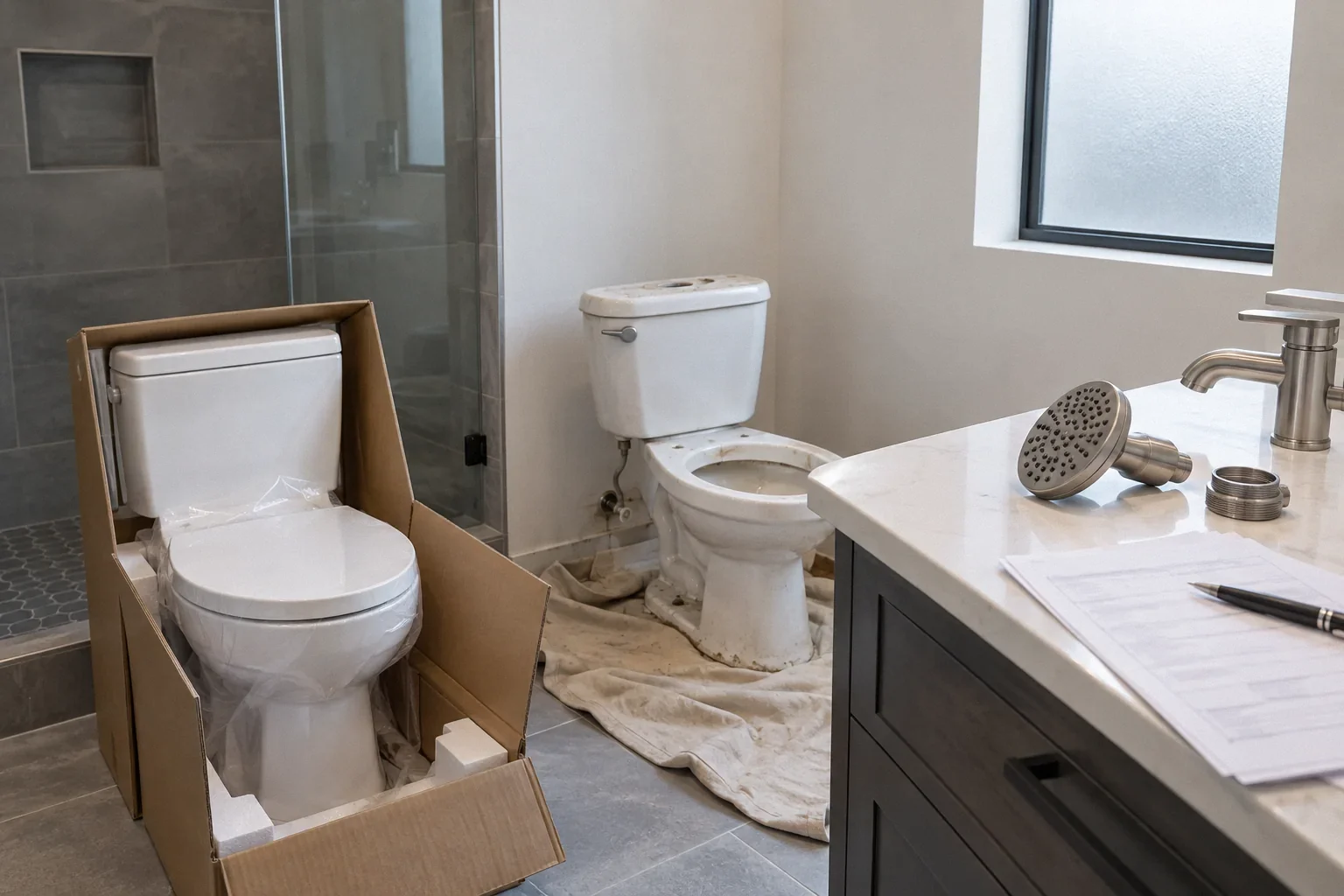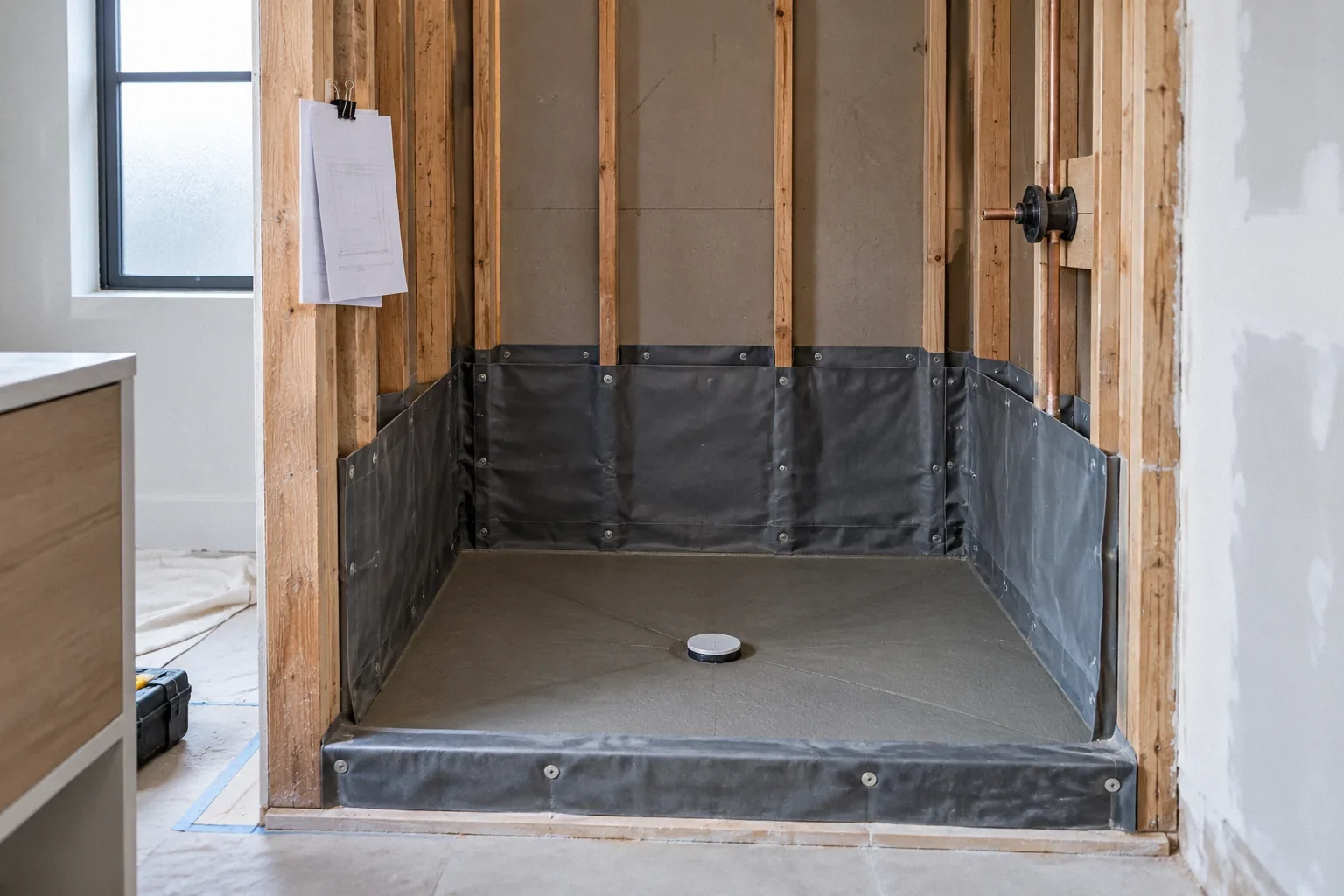
Short answer: it depends on how much of the shower you replace. Surface finish work, such as regrouting, recaulking or replacing a few damaged tiles, is generally treated as maintenance or finish work. Removing the tile, backer and shower floor down to the framing and rebuilding the pan, waterproofing and valve is a different matter. Contra Costa County's bathroom handout, for example, states that a permit is required for bathroom remodels that include replacement of the tub or shower enclosure, and lists a rough plumbing and electrical inspection, then an underlayment inspection and shower pan test where applicable, then a final (Contra Costa County). That handout cites the 2022 codes. Permit applications submitted on or after 1 January 2026 generally fall under the 2025 California codes. Other departments, such as Oakland, require a permit for any bathroom remodel (City of Oakland). Check your own department before demolition.
This is general information current to 3 October 2026, not legal advice.
Why 'it's just tile' is a common misunderstanding
A San Mateo County owner described two contractors who said shower retiling was cosmetic and did not need a permit, and later learned that permits had been required. In the replies, one commenter explained that retiling an entire shower involves waterproofing, which inspectors want to see before it is covered. In another thread, an owner whose new shower held standing water was told by a commenter that in their city the inspector had checked the shower pan with a flood test before tile could proceed. These are anecdotal accounts, and practices vary by department. They show why the waterproofing layer, which is hidden once tile goes on, is the focus.
What changes when you go below the tile
Bay Area bathroom handouts, such as Los Altos's, which is based on the 2025 codes (City of Los Altos), list plumbing code requirements that apply when a shower is rebuilt. They cover several categories:
- The floor's water barrier: an approved shower pan or a site-built watertight lining, with requirements for how it turns up at the walls and curb and how it slopes to the drain's weep holes.
- Curb, threshold and floor slope: dimensional rules for curbs where a curb is used. Curbless designs are possible, but they have to meet the applicable code provisions and approvals, and on wood floors they often require recessed framing.
- Valve safety: anti-scald protection meeting the code, for example the pressure-balancing type and maximum temperature setting the handout describes. Other compliant valve types exist; your plumber and the department confirm what applies.
- Size and door clearance for new or reconfigured showers.
- Wall finish and backer materials suitable for wet areas, installed per manufacturer instructions.
- Safety glazing near tubs and showers.
We have kept this to categories rather than repeating exact measurements, because the precise wording and numbers belong to the code and your department's current handout. Some items, such as glass and fixtures, stay visible. The water barrier, backer and framing do not. They are hidden once tile is set, which is why departments that permit shower rebuilds schedule inspections before tile covers them.
Scope ladder: from maintenance to rebuild
| Scope | Typical permit treatment | Why |
|---|---|---|
| Regrout or recaulk; replace a few tiles | Usually maintenance or finish work | No change to the waterproofing, pan or plumbing |
| Replace wall tile over sound existing backer, nothing else | Varies by department; some treat it as finish work, some as a remodel | Ask your department |
| Remove tile and backer to studs; new waterproofing on walls | Often permit work | Replacing the enclosure's water-management layer |
| New shower pan or floor liner | Often permit work, with a pan test where the department requires it | The liner is the main water barrier and can't be inspected later |
| New or moved valve, drain or shower head location | Permit work (plumbing) | Plumbing changes |
| Tub-to-shower conversion | Permit work in many jurisdictions | Enclosure replacement, drain and valve changes |
| Any new circuit, light or fan | Permit work (electrical, and ventilation requirements) | Electrical and Energy Code requirements |
What a permitted shower rebuild usually involves
- Application, with a floor plan if fixtures move or walls change, as Contra Costa's handout requests.
- Rough inspection of plumbing (valve, drain, venting) and any electrical before walls are closed.
- Underlayment and pan inspection, where the department requires one, including a water test of the pan if specified. Ask the department for its exact test procedure. Required water levels and durations vary, and liquid-applied membranes also have manufacturer cure times. Do not assume a generic recipe. See shower pan flood tests.
- Final inspection of fixtures, glazing, GFCI protection, ventilation and other items. Smoke and CO alarm checks and water-efficient fixture requirements may also apply when a permit is issued.
A worked example: two showers, two answers
Hypothetical. Shower A: the owner wants to replace dated wall tile. The contractor plans to remove the tile and the old backer to the studs, replace the backer and waterproof it, and keep the existing tub and valve. Shower B: the owner wants to convert a tub to a walk-in shower with a new pan, linear drain and a relocated valve.
- Shower A: this goes below the tile, replacing the water-management layer. Ask the department. Many will treat it as permit work. If a permit and inspection are required, photos are a useful supplement but never a substitute for the inspection. If the department says no permit is needed, ask the contractor for photos of the waterproofing before tile for your records.
- Shower B: new pan, drain and valve location. This is plumbing work that requires a permit in essentially every jurisdiction, with rough and pan inspections.
- The owner's questions to the contractor: 'Who pulls the permit? What waterproofing system, by product name, and per whose instructions? Will there be a pan or flood test before tile, and will I get photos?' Our contract checklist shows how to write these into the scope.
Questions to ask your building department
- 'If we remove wall tile and backer to the studs but keep the tub and valve, is that a permit?'
- 'If we replace the shower floor and liner, which inspections are required, and what is your pan test procedure?'
- 'Do you inspect surface-applied waterproofing membranes, or only liners?'
- 'If we add a fan or change the lighting, does that go on the same permit?'
- 'Does issuing this permit trigger water-efficient fixture upgrades elsewhere in the house, or smoke and CO alarm verification?'
Write down the answers, with the date and the name of the person you spoke with, and share them with your contractor.
Risks of skipping a required permit
- No independent check of hidden waterproofing. A failure there can be expensive to fix, because it often means removing finished tile and repairing damage behind and below.
- Later permitted work can expose earlier unpermitted work and require legalization. See legalizing unpermitted work.
- Disclosure questions when you sell. See unpermitted work and disclosure.
- A contractor who calls a full rebuild 'cosmetic' without checking with the department deserves a second look. See verifying a contractor.
Bay Area applicability
Departments differ in how they classify wall-only retiling and which inspections they require for shower rebuilds. Some publish bathroom handouts based on the 2025 codes, as Los Altos does; others still have older handouts, such as Contra Costa County's 2022-based brochure, which describe local practice but should be confirmed against current requirements. Unincorporated addresses fall under the county, not a nearby city. Call or email your department with your exact scope before demolition, and keep the answer in writing.
Current to 3 October 2026.
Questions that come up next
Do I need a permit to regrout my shower?
Regrouting or recaulking is generally treated as maintenance or finish work. Check with your department if you're unsure, especially if any tile or backer will come off.
Do I need a permit to replace a shower pan?
Often yes. Departments such as Contra Costa County treat replacement of the tub or shower enclosure as permit work and list a shower pan test where applicable, because the liner is the main water barrier and is hidden once tile is installed.
What does the inspector check on a shower rebuild?
Typically rough plumbing and electrical before walls are closed, then the underlayment and pan, including a water test where required, and a final covering fixtures, glazing, GFCI and ventilation. Ask your department for its exact sequence and test procedure.
Is a tub-to-shower conversion a permit job?
In many jurisdictions, yes, because it replaces the enclosure and usually changes the drain and valve. Confirm with your building department.
Sources and further reading
Community questions behind this guide
These discussions identify homeowner concerns. Forum comments are personal accounts, not code or legal authority.