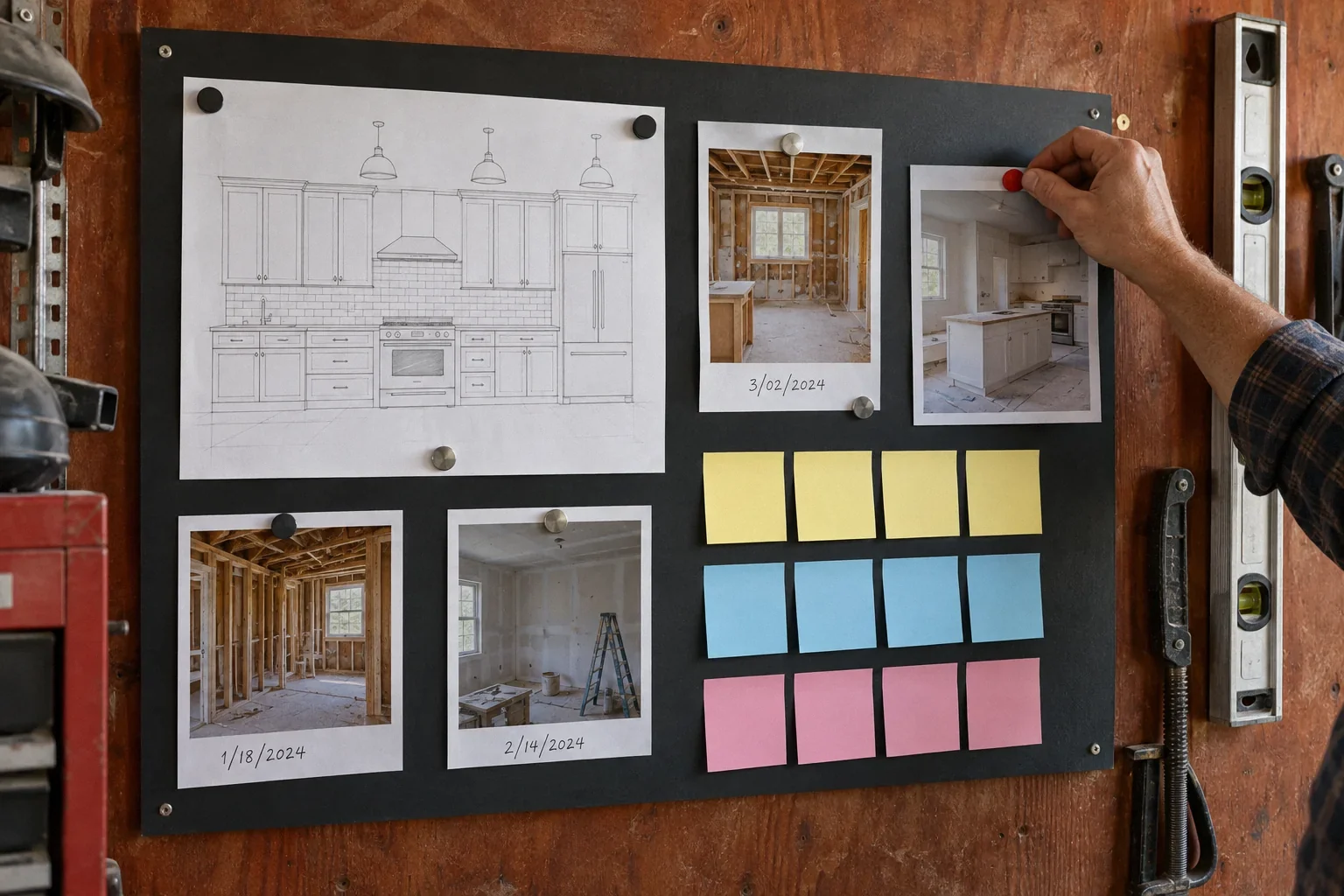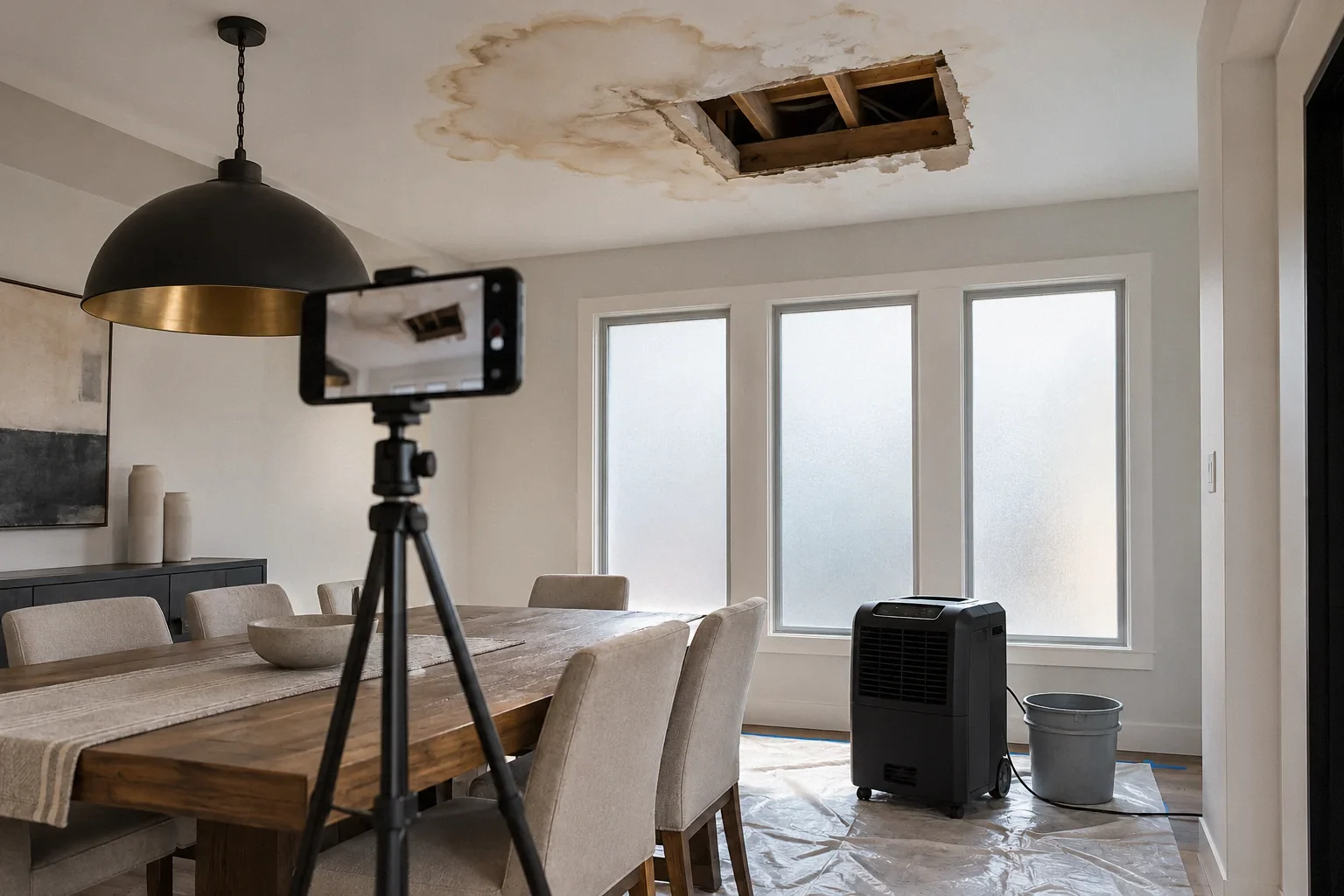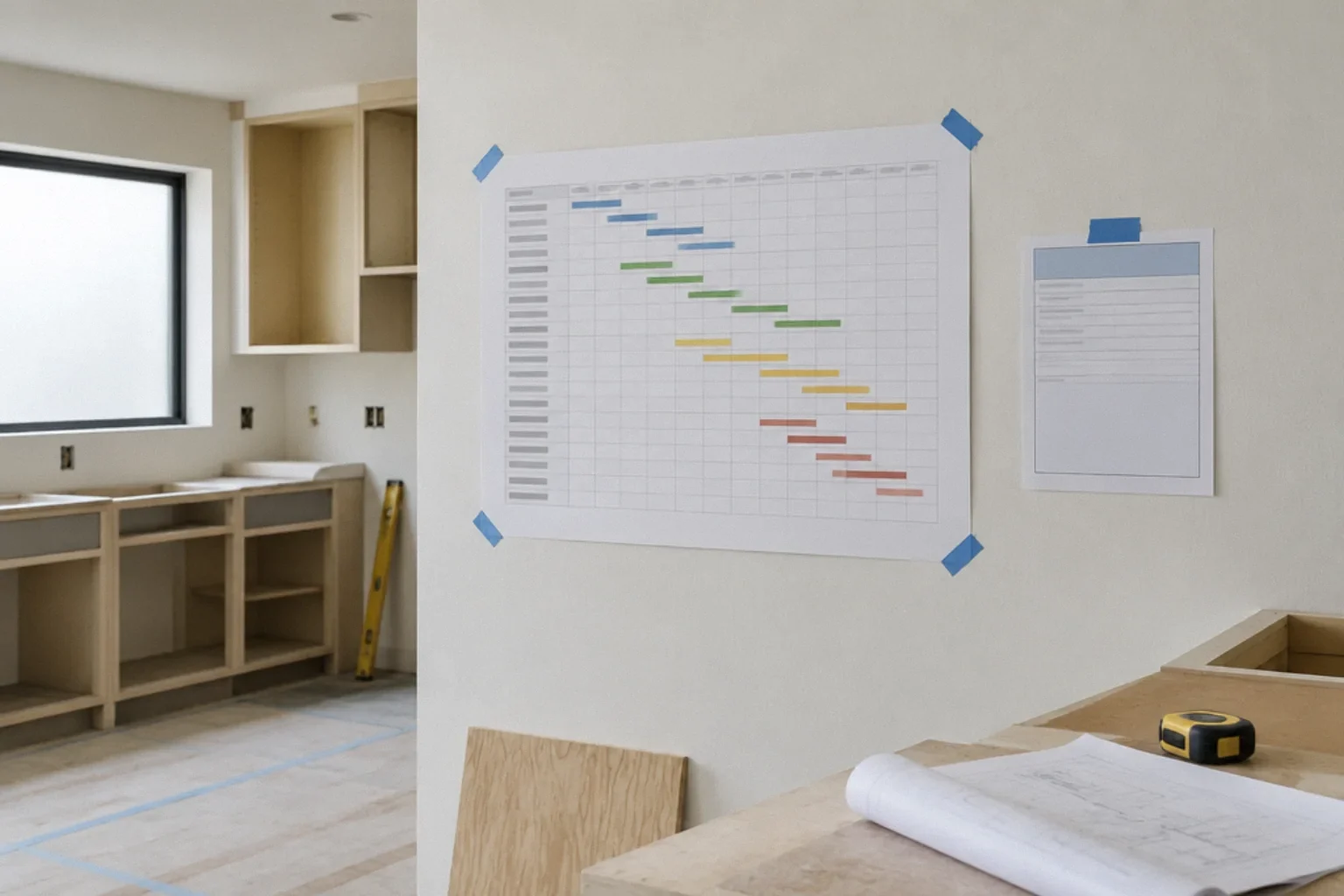
Short answer: there is no single number; the honest answer is a sum of phases that you can estimate for your project. Before construction: design and selections, permit review (if plans are needed), and ordering long-lead items. During construction: demolition, any surprises, rough plumbing, electrical and framing with inspections, insulation and drywall, cabinets, countertop templating and fabrication, tile and finishes, and final inspection. Owners describe living without a working kitchen for months on some projects; a like-for-like refresh with materials in hand can be much shorter. Your contract must state approximate start and completion dates, so ask your contractor to build a phase-by-phase schedule and update it as the job moves.
This is general information verified on 3 October 2026.
What owners report
A family of six who remodeled an older kitchen wrote that they lived in the house for three months, mostly without a kitchen, and that their chosen tile took four months to arrive. A DIY couple said their kitchen took about 90 days from demolition to completion. An owner whose small kitchen was taking a month said seeing it unfinished was depressing. A San Jose owner said their inspector had failed every inspection so far for minor corrections, and a reply suggested contacting the building division to understand what was being flagged. Forum accounts are anecdotal and timelines vary widely; they show where time goes.
The phases, and what drives each
| Phase | What drives the duration | How to shorten it |
|---|---|---|
| Design and selections | How many decisions remain; designer and owner availability | Finalize layout, cabinets, tile, fixtures and appliances before permit and ordering |
| Permit review | Whether plans are needed; completeness of the submittal; number of review rounds | Complete, clear submittal; respond quickly to comments |
| Ordering | Lead times for cabinets, tile, windows, appliances | Order early with written dates; see lead times |
| Demolition | Scope; hazardous-material testing and abatement if needed | Test before demo |
| Surprises | House age and condition | Qualified exploratory work after hazard and utility checks; contingency |
| Rough-in and inspections | Trade scheduling; inspection availability; corrections | Ready-for-inspection checklist; contractor present |
| Insulation, drywall | Inspection sequence; drying time | Schedule inspections promptly |
| Cabinets and countertops | Cabinet install; templating after cabinets; fabrication time | Confirm fabricator lead time early |
| Tile and finishes | Material on site; cure times | Materials delivered before this phase |
| Final inspection and punch list | Completeness; required forms | Gather forms in advance |
Permit review: what one city says
Review times vary by city and project. The City of Pleasanton's current kitchen handout says like-for-like kitchen remodels can be processed with a permit application alone (no plans), while layout changes, new or enlarged windows and wall removals need plans and may go over the counter or through standard review; it says first-round review is typically completed within three weeks depending on completeness (Pleasanton JLA 01.26). Other departments publish their own targets; ask yours, and remember that additional review rounds add time.
Inspections: the hidden schedule
Inspections gate progress. Pleasanton's handout lists rough frame, insulation, drywall (only when rated assemblies are altered) and final inspections for kitchens, along with what must be ready at each, such as plumbing and gas lines under test and range hood ducts installed at rough inspection, and a water-conserving fixture certificate and alarm verification at final. A failed inspection means corrections and a re-inspection. See remodel inspection sequence and what happens if you fail an inspection.
What the contract must say about time
California's home improvement contract statute requires the contract to include the approximate dates when work will begin and be substantially completed, and a description of what constitutes substantial commencement (BPC § 7159). Schedules are estimates, but those dates and any contract terms about delays still matter. Change orders must state their effect on the schedule. Ask for a phase schedule attached to the contract, updated when changes occur.
Utilities can run on their own clock
If the remodel adds electric loads that need a utility service change, the utility's process can add time outside your contractor's control. PG&E's panel upgrade roadmap describes an application, an assessment and possible infrastructure work, with timing that varies (PG&E panel upgrade roadmap). Start early; see panel upgrades.
Build your own estimate (hypothetical example)
Consider a kitchen with a layout change, one wall opened and new windows, in a city similar to the example above. The owners list each phase and ask the contractor for a range: design and selections, several weeks; permit with plans, including a possible second review round; cabinet lead time running in parallel with the permit; demolition, a few days; rough-in plus inspection, one to two weeks depending on trade schedules; insulation and drywall with inspection; cabinet install; countertop templating and fabrication; tile and finishes; final. Adding the ranges, and noting which overlap, gives them a working schedule range to validate rather than a promised single date, plus a list of decisions that could slow it down. These durations are placeholders for illustration; your contractor's schedule is what counts.
Living through it
Plan for the time the kitchen is unusable: a temporary kitchen setup that is safe, enough working bathrooms, and a plan for dust and noise. Use of a new kitchen before final inspection depends on your building department and on safety systems being complete. See living at home during a kitchen remodel.
Mistakes to avoid
- Treating the contractor's start date as the start of the timeline.
- Applying for permits with open design decisions.
- Starting demolition before long-lead items are on order or delivered.
- Not preparing for inspections, leading to failed visits.
- Making mid-project changes without updating the schedule in the change order.
- Forgetting utility timelines for electrical service changes.
Checklist
- Phase-by-phase schedule from the contractor, with ranges
- Selections finalized before permit and ordering
- Permit path and review time confirmed with your city
- Lead times in writing
- Inspection sequence and readiness checklist
- Start and completion dates and substantial commencement defined in the contract
- Schedule effect stated on every change order
- Utility steps started early if needed
Questions that come up next
How long does a kitchen remodel take?
It depends on the phases your project needs: design and selections, permit review, ordering, demolition, rough-in and inspections, finishes and final. A like-for-like refresh with materials in hand can be much shorter than a layout change with structural work. Ask your contractor for a phase-by-phase schedule with ranges.
How long does permit review take in the Bay Area?
It varies by city and project. Pleasanton's kitchen handout, for example, says like-for-like remodels can be processed with an application only, while projects needing plans typically get first-round review within three weeks depending on completeness. Ask your building department.
What must a California remodel contract say about timing?
BPC § 7159 requires approximate start and substantial completion dates and a description of what constitutes substantial commencement. Change orders must state their effect on the schedule.
Why do remodels run late?
Common causes include open selections, long lead times, extra permit review rounds, hidden conditions, failed inspections, mid-project changes and utility work. Many can be reduced with planning.
Can I use my new kitchen before final inspection?
Only if your building department allows it and safety systems are complete. Ask your inspector and contractor before relying on early use.
Sources and further reading
Community questions behind this guide
These discussions identify homeowner concerns. Forum comments are personal accounts, not code or legal authority.